
Thermal Management PCB: When Heat Becomes a Design Risk
DETAILS
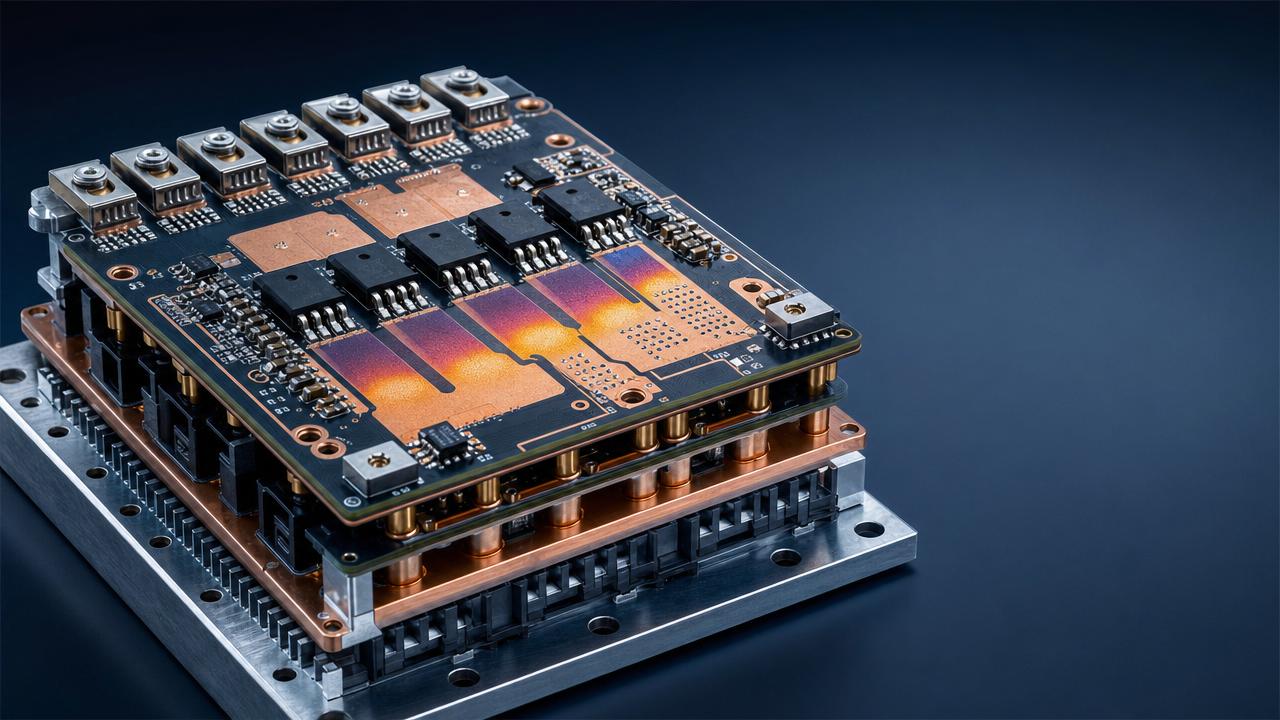
In advanced electronics, a thermal management PCB is no longer just a design choice—it is a critical safeguard against performance loss, reliability failures, and rising project risk.
Heat now shapes product stability, compliance outcomes, warranty exposure, and sourcing decisions across the wider electronics value chain.
When power density increases and footprints shrink, a poorly planned thermal management PCB can turn minor temperature rise into a major design risk.
For engineering validation, supplier benchmarking, and lifecycle control, thermal behavior must be assessed early, measured consistently, and managed across real operating scenarios.
Why Thermal Risk Varies by Application Scenario
Not every board faces the same thermal stress. The correct thermal management PCB strategy depends on power load, enclosure limits, duty cycle, and reliability targets.
A sensor node, an LED module, and a motor controller may all use multilayer boards, yet their thermal failure modes differ sharply.
This is why scenario-based judgment matters. Material selection, copper balance, via architecture, and heat spreading should match actual use conditions, not assumptions.
Independent benchmarking also matters. Laboratory data on dielectric behavior, solder joint stability, and hotspot distribution can reveal risks hidden by generic datasheets.
Scenario 1: High-Power Control Boards Where Local Hotspots Trigger Early Failure
Power conversion boards often concentrate heat near MOSFETs, drivers, resistors, and inductive elements. In these layouts, hotspot control defines product survival.
A thermal management PCB for this scenario must reduce junction temperature, flatten thermal gradients, and protect nearby signal paths from drift.
Core judgment points include copper thickness, thermal via density, stack-up symmetry, and whether heat can escape through chassis or airflow.
If these factors are missed, boards may pass functional testing but fail under repeated peak loads, long duty cycles, or elevated ambient temperature.
What to verify first
- Peak current paths and copper bottlenecks
- Thermal coupling between power and control zones
- Via fill quality and plating consistency
- Board warpage risk during thermal cycling
Scenario 2: Compact Consumer Devices Where Heat Damages User Experience
In wearables, handheld tools, and compact smart devices, available space is limited and passive cooling options are narrow.
Here, a thermal management PCB must balance heat spreading with tight routing, battery safety, and surface temperature expectations.
The design risk is not only failure. It also includes throttled performance, shortened battery life, adhesive degradation, and poor touch comfort.
A dense board may need selective copper pours, low-loss laminates, and careful separation between charging circuits, RF sections, and temperature-sensitive components.
Core decision signals
- Skin-contact temperature limits
- Battery proximity to heat sources
- Impact of shielding cans on heat trapping
- Long-term reliability under charge-discharge cycles
Scenario 3: Industrial and Outdoor Electronics Facing Harsh Temperature Swings
Industrial gateways, control modules, and outdoor equipment face a different challenge. Heat is combined with cold starts, vibration, dust, and moisture exposure.
In this scenario, the thermal management PCB must support stable expansion behavior and maintain solder integrity through repeated thermal cycling.
Material mismatch becomes a major issue. Copper, laminate, solder, and mounted packages expand differently and can create hidden mechanical stress.
The right solution may involve higher Tg materials, controlled CTE behavior, reinforced mounting points, and qualification beyond room-temperature testing.
High-risk indicators
- Frequent start-stop thermal cycling
- Sealed enclosures with weak airflow
- Heavy components near unsupported board areas
- Wide ambient temperature range requirements
How Scenario Needs Differ for a Thermal Management PCB
The same thermal management PCB principles apply broadly, but priorities shift by use case. A comparison view helps define the right trade-offs faster.
Practical Fit Recommendations Before Finalizing the Board
A thermal management PCB should be selected and reviewed through a structured decision path. Early discipline reduces redesign cost and schedule disruption.
- Map major heat sources by actual duty cycle, not nominal power.
- Define acceptable temperature rise for components, enclosure, and nearby circuits.
- Match laminate, copper weight, and stack-up to real thermal stress.
- Review thermal vias for manufacturability, plating quality, and void control.
- Test prototypes under worst-case ambient and repeated load transitions.
- Compare independent reliability data instead of relying only on marketing claims.
For complex programs, benchmark reports can clarify whether a thermal management PCB design is limited by material choice, assembly precision, or packaging interaction.
This is especially valuable when multiple suppliers offer similar specifications but deliver different thermal consistency in production.
Common Misjudgments That Turn Heat Into a Design Risk
Many failures come from reasonable assumptions that were never tested against real conditions. Several errors appear repeatedly across industries.
- Assuming thicker copper alone solves every thermal management PCB challenge
- Ignoring enclosure effects during board-level thermal simulation
- Using room-temperature validation for products facing extreme cycles
- Treating component datasheet limits as safe operating targets
- Overlooking solder fatigue near repeated hotspot regions
- Failing to compare supplier process capability for via and layer consistency
These mistakes often remain invisible until field returns appear. By then, corrective action becomes more expensive and disruptive.
What the Next Step Should Look Like
If heat is affecting performance targets, the next move is not guesswork. It is structured review, measured validation, and scenario-specific design refinement.
Start by identifying where the thermal management PCB must perform: peak power, confined space, or long environmental exposure.
Then compare material data, stack-up behavior, assembly precision, and reliability evidence from independent technical sources.
SiliconCore Metrics supports this process with data-driven benchmarking across PCB fabrication, SMT assembly, components, and thermal packaging.
When a thermal management PCB is evaluated as a system risk, not a single layout feature, design decisions become faster, safer, and more defensible.
Recommended News
- Heat DissipationHow to prevent overheating in automotive PCB power distributionPrevent overheating in automotive PCB power distribution with practical tips on copper layout, thermal paths, and testing. Discover how to reduce hotspots and improve reliability.
- Heat DissipationCan heat spreading intelligence identify hot spots in PCB designs?Discover how heat spreading intelligence identifies PCB hot spots before fabrication. Learn to assess thermal models, validate predictions, and choose design changes that improve reliability.
- Heat DissipationWhich heat sink materials suit high-power electronics made in Germany?Heat sink materials Germany: compare aluminum, copper, graphite, and hybrid designs for high-power electronics. Find the right balance of thermal performance, weight, cost, and manufacturability.
- Heat DissipationHow to assess a graphite materials supplier's capability for thermal partsGraphite materials supplier assessment starts with more than machining. Discover how to evaluate thermal performance, purity, precision, cleanliness, traceability, and testing for reliable thermal parts.
- Heat DissipationHow to assess a heat dissipation supplier before placing an orderHeat dissipation supplier assessment guide: verify thermal performance, materials, process control, samples, capacity, and total risk before placing an order.
- Heat DissipationHow automotive PCB material selection affects thermal reliabilityAutomotive PCB material selection shapes thermal reliability. Explore CTE, Tg, moisture resistance, stack-up design, and proven qualification strategies for demanding vehicle electronics.