
PCB Alternatives: Cost, Lifespan, and Trade-Offs
DETAILS
Evaluating PCB alternatives requires more than comparing upfront prices. For procurement teams, the real decision depends on lifespan, performance stability, thermal behavior, qualification effort, and long-term supply risk.
In practice, there is no universal “best” substitute for a standard PCB. The right choice depends on operating temperature, electrical requirements, expected service life, manufacturing complexity, and total cost of ownership.
For buyers in high-precision electronics, the key question is simple: which material or board architecture delivers acceptable performance without creating hidden reliability, sourcing, or compliance problems later?
What Procurement Teams Usually Mean by “PCB Alternatives”
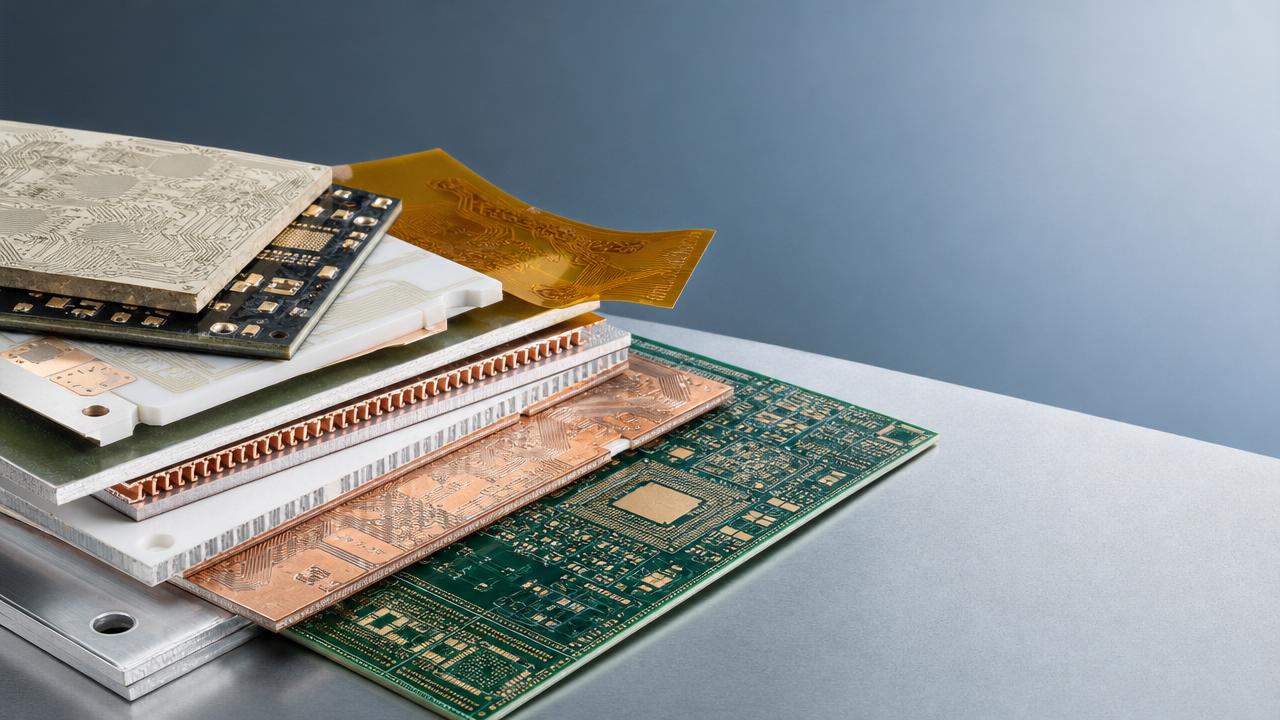
When buyers search for PCB alternatives, they are rarely looking for a complete escape from printed circuit boards. More often, they are comparing substrate materials, flexible constructions, ceramic options, metal-core boards, and hybrid packaging routes.
In sourcing discussions, “alternative” can refer to replacing FR-4 with high-frequency laminates, moving from rigid boards to flex or rigid-flex, or using ceramic substrates where heat and dimensional stability matter more than raw board price.
It can also mean evaluating substitutes at the assembly level. In some products, a thicker copper stack-up, insulated metal substrate, or direct-bonded ceramic may outperform a conventional multilayer board in thermal or power applications.
That is why cost comparisons must stay tied to use case. A cheaper board that fails under thermal cycling, moisture stress, or high-speed signal conditions is not a true cost advantage for procurement.
Start with Total Cost, Not Unit Price
The most common sourcing mistake is comparing PCB alternatives only by quoted piece price. Unit cost matters, but procurement decisions should also include scrap rates, qualification expense, field reliability, logistics complexity, and second-source availability.
A lower-cost laminate may appear attractive during bid review. However, if it causes yield loss during drilling, warpage during reflow, or unstable impedance during volume production, the total program cost rises quickly.
For this reason, experienced buyers often use a broader model. They compare acquisition cost, process compatibility, expected lifespan, warranty exposure, engineering revalidation effort, and supply continuity over the full product cycle.
In high-mix or highly regulated production, the cost of change control can be substantial. Even a technically acceptable substitute may lose its financial advantage if validation, documentation, and customer approvals take too long.
How FR-4 Compares with Common PCB Alternatives
FR-4 remains the default baseline because it offers a strong balance of price, manufacturability, and broad supplier availability. For many commercial and industrial applications, it still provides the lowest-risk sourcing option.
Its limitations appear when designs face high frequency loss, continuous thermal stress, aggressive dimensional tolerance demands, or repeated mechanical flexing. In those conditions, procurement may need to review specialized alternatives instead of standard FR-4.
High-frequency laminates, such as PTFE-based or hydrocarbon ceramic-filled materials, support better signal integrity and lower dielectric loss. The trade-off is higher material cost, tighter process sensitivity, and sometimes a narrower approved supplier base.
Polyimide-based boards can offer improved thermal endurance compared with standard FR-4. They are often considered for aerospace, automotive, and harsh-environment use, but prices are typically higher and fabrication control becomes more critical.
Metal-core PCBs, especially aluminum-backed designs, improve heat spreading in LED, power conversion, and motor-control applications. They can reduce thermal bottlenecks, though they introduce constraints in routing density and multilayer design flexibility.
Ceramic substrates, including alumina and aluminum nitride, deliver excellent thermal conductivity, dimensional stability, and high-temperature performance. Their drawbacks are usually cost, brittleness, specialized processing, and more limited manufacturing ecosystems.
Flexible and rigid-flex alternatives solve space and weight challenges while reducing connectors and interconnect points. Yet procurement must account for more complex fabrication, longer lead times, and qualification risks tied to bend reliability.
Lifespan: The Hidden Variable Behind Real Value
For procurement professionals, lifespan is where many PCB alternatives prove their value or expose their weakness. Boards that survive initial testing may still fail early in service due to thermal fatigue, delamination, CAF risk, or material aging.
A longer-lasting substrate can justify a higher purchase price when the end product operates in difficult environments. This is especially true in industrial controls, automotive electronics, telecom infrastructure, and power systems with long replacement cycles.
Material selection affects solder joint integrity, coefficient of thermal expansion matching, moisture resistance, and dielectric stability over time. These factors directly influence maintenance cost, field returns, and long-term customer confidence.
For example, ceramic-based options may dramatically outlast conventional organic laminates in high-heat applications. On paper, they look expensive. In lifecycle terms, they may reduce downtime, warranty claims, and redesign frequency.
By contrast, some lower-cost substitutes work well only within narrow environmental windows. If the product sees humidity swings, vibration, or repeated thermal shocks, the apparent savings can disappear after deployment.
Thermal Performance Often Decides the Right Alternative
Many alternative board materials are selected for one reason above all others: heat. As power density rises, thermal performance becomes a procurement issue, not just an engineering issue.
Excess heat shortens component life, shifts electrical behavior, and increases failure rates in both active and passive devices. When a standard laminate cannot move heat effectively, sourcing teams should compare alternatives based on thermal conductivity and heat path design.
Metal-core boards are often suitable where heat needs to be spread quickly away from LEDs or power devices. Ceramic options become more attractive when both electrical insulation and superior heat transfer are required.
However, thermal capability must be evaluated with the full assembly in mind. A premium substrate alone will not solve poor heat sinking, weak via design, or enclosure-level airflow limitations.
Procurement should therefore request data beyond a simple material datasheet. Useful inputs include thermal cycling results, junction temperature reduction estimates, and reliability performance under actual load conditions.
Electrical Performance Trade-Offs Matter in Advanced Designs
For high-speed digital, RF, and microwave applications, many PCB alternatives are chosen because standard materials introduce too much signal loss or dielectric inconsistency. Here, electrical behavior can outweigh all other selection criteria.
Low-loss laminates improve insertion loss and impedance control, supporting more reliable transmission at higher frequencies. This can be essential in telecom, advanced computing, radar, and precision sensor platforms.
Still, buyers should not assume that a premium electrical material automatically produces better system value. Some alternatives require tighter handling, different drilling parameters, or more specialized fabrication expertise, which can affect yield and lead time.
A practical procurement review should connect material performance with supplier process capability. If a vendor cannot hold the required tolerances consistently, the theoretical benefit of the alternative may never reach production reality.
Supply Chain Risk Can Outweigh Material Benefits
One of the most overlooked trade-offs in PCB alternatives is supply resilience. A technically superior material may create sourcing fragility if only a small number of approved fabricators can process it reliably.
This matters especially during demand spikes, geopolitical disruptions, or raw material shortages. Procurement teams need to know whether an alternative has a healthy global supply base or depends on one region, one mill, or one specialty converter.
Lead time volatility should also be considered. Some advanced laminates and ceramics have longer replenishment cycles, stricter minimum order quantities, or less inventory buffering across the distribution network.
Second-source qualification is another critical checkpoint. If a chosen PCB alternative cannot be dual-sourced without major redesign or revalidation, the business may inherit avoidable continuity risk.
For strategic programs, the right question is not only “Can we buy this now?” but also “Can we buy it consistently for the next three to seven years under changing market conditions?”
How to Compare PCB Alternatives in a Procurement Framework
Procurement teams benefit from using a structured scorecard rather than informal material comparisons. This makes trade-offs visible and helps cross-functional stakeholders align on what matters most for the product category.
A practical framework usually includes six dimensions: unit price, manufacturability, lifecycle reliability, thermal performance, electrical suitability, and supply security. Depending on the application, compliance and traceability may deserve separate weighting.
For example, consumer electronics may prioritize cost and scalability. Industrial control systems may prioritize lifespan and field reliability. RF systems may prioritize dielectric stability and insertion loss. Power modules may prioritize heat dissipation and expansion matching.
Scoring each PCB alternative against weighted business and engineering criteria prevents overreliance on a single variable such as material cost. It also creates a documented basis for supplier discussions and executive approval.
Where possible, buyers should request comparative evidence: failure analysis history, thermal cycle data, IST results, warpage metrics, dielectric tolerance data, and field-return statistics from similar applications.
Questions Buyers Should Ask Suppliers Before Switching Materials
Supplier quotes often summarize only thickness, copper weight, and price. That is not enough when evaluating PCB alternatives for mission-critical products or long-life equipment.
Buyers should ask which process windows are most sensitive for the proposed material. This includes drilling, lamination, plating, solder mask adhesion, reflow behavior, and dimensional stability across production lots.
It is also important to ask for reliability evidence under realistic conditions. Accelerated thermal cycling, humidity exposure, vibration testing, and solder joint performance provide more useful insight than generic marketing claims.
Another key question concerns supply depth. Procurement should confirm raw material source, approved alternates, regional manufacturing options, and any recent lead time instability linked to the material family.
Finally, ask whether the alternative changes downstream cost. A board that requires slower throughput, special handling, or tighter storage controls may increase EMS costs even if the bare board price seems competitive.
When a Higher-Cost Alternative Is the Smarter Buy
There are many cases where paying more upfront is the rational procurement decision. If the alternative reduces field failures, lowers thermal stress, enables miniaturization, or supports compliance, it may improve total commercial performance.
Medical devices, aerospace electronics, power converters, and harsh-environment industrial systems often benefit from materials chosen for stability rather than minimum board cost. In these segments, failure carries outsized business consequences.
A more expensive board can also reduce costs indirectly by simplifying the mechanical design, reducing external cooling needs, eliminating connectors, or extending maintenance intervals. These savings rarely appear in a bare-board quote.
For procurement leaders, the goal is not to buy the cheapest PCB alternative. The goal is to secure the most economically defensible option across performance, risk, service life, and supply continuity.
Conclusion
PCB alternatives should be evaluated through a lifecycle lens, not a price-only lens. Cost, lifespan, thermal behavior, electrical performance, and sourcing resilience all shape whether a substitute is truly advantageous.
FR-4 remains the best fit for many mainstream applications because it is cost-effective and widely available. But in high-heat, high-frequency, flexing, or long-life environments, specialized alternatives can deliver better long-term value.
For procurement teams, the most reliable path is a structured comparison backed by supplier process data and application-specific reliability evidence. That approach turns material selection from guesswork into a defensible sourcing strategy.
In advanced electronics manufacturing, hardware should be treated as a performance system, not a commodity line item. The strongest procurement decisions come from understanding the trade-offs before they become field failures, delays, or hidden cost escalations.
Recommended News
- HDI TechnologyHow to vet PCB suppliers in a directory before requesting quotesPCB suppliers directory guide: learn how to verify capabilities, certifications, traceability, and quote assumptions before selecting a reliable PCB partner.
- HDI TechnologyHow UAE engineering data repositories improve design traceabilityEngineering data repository UAE solutions strengthen design traceability by linking requirements, revisions, supplier evidence, and manufacturing data. Explore practical ways to reduce risk and accelerate releases.
- HDI TechnologyHow to verify UL recognition for printed circuit boardsPrinted circuit boards UL verification made clear: learn how to check UL marks, file numbers, factory scope, stack-ups, and traceability for audit-ready compliance.
- HDI TechnologyMulti layer PCB design guide for controlling signal crosstalkMulti layer PCB design guide for controlling signal crosstalk with stackup, spacing, return-path, and validation strategies for reliable high-density boards.
- HDI TechnologyHow tighter manufacturing tolerances change HDI PCB pricesMicro tolerance manufacturing price explained: see how tighter HDI PCB tolerances affect yield, inspection, supplier options, and sourcing costs.
- HDI TechnologyHow automotive PCB impedance control prevents signal failuresAutomotive PCB impedance control prevents reflections, noise, and timing errors in ADAS, EV, and infotainment systems. Learn how to build reliable signal paths.