
2026 Technical Trend Reports on RF Module Integration
DETAILS
In 2026, technical trend reports on RF module integration are becoming essential for enterprise decision-making across semiconductor and EMS ecosystems. As radio performance, thermal density, and package complexity increase, independent analysis matters more than promotional claims. SiliconCore Metrics translates manufacturing data, compliance evidence, and engineering benchmarks into practical insight. That helps organizations assess signal integrity, evaluate long-term reliability, and improve sourcing confidence in fast-changing global electronics supply chains.
RF Module Integration in 2026: Definition and Scope
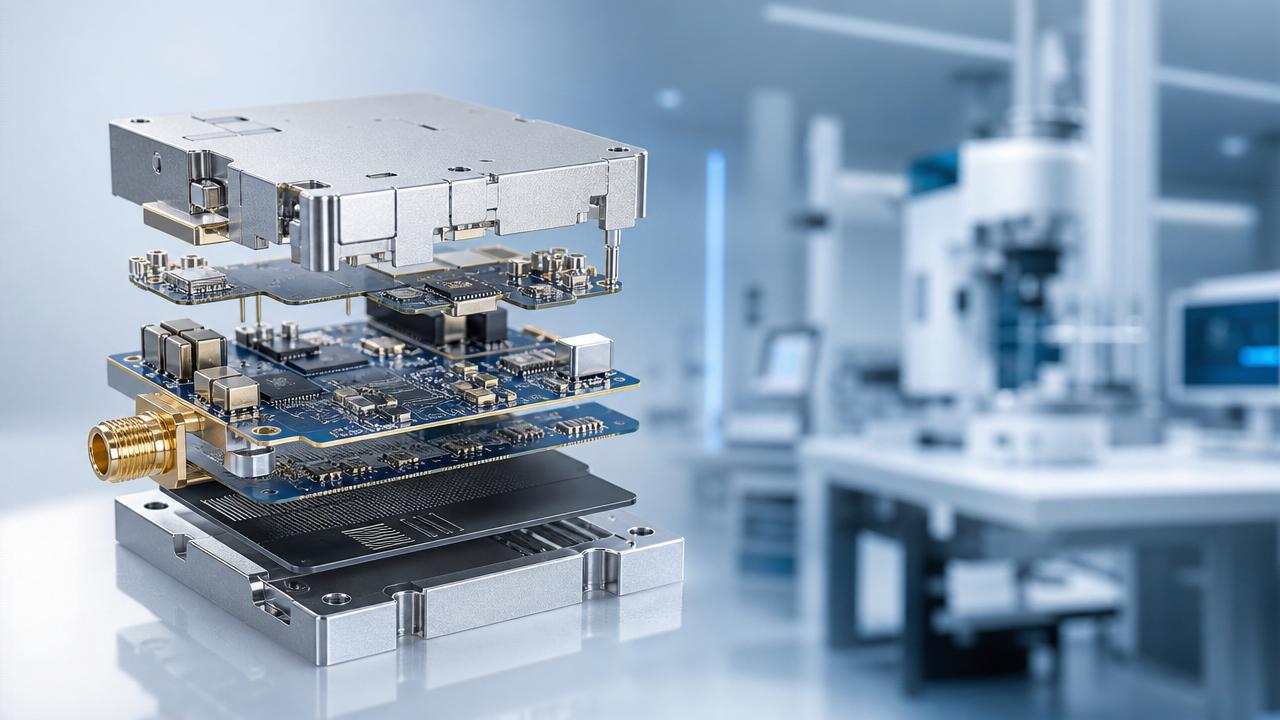
RF module integration refers to combining radio frequency functions, control logic, passive networks, shielding, and thermal structures into compact, validated assemblies. In 2026, technical trend reports increasingly focus on integration quality, not just component count.
Modern RF modules often include filters, power amplifiers, switches, low-noise amplifiers, matching networks, and embedded substrates. Their value depends on electrical consistency, thermal stability, and manufacturability across volume production.
For this reason, technical trend reports now examine the full stack. That includes material selection, PCB dielectric behavior, SMT placement precision, package warpage, shielding effectiveness, and environmental reliability.
SCM approaches RF module integration as a measurable engineering system. Independent whitepapers and benchmarking reports support better comparisons between suppliers, process routes, and compliance positions.
Key Industry Signals Shaping Technical Trend Reports
The most useful technical trend reports in 2026 do not isolate RF performance from manufacturing reality. They connect market movement with process capability, qualification evidence, and supply resilience.
- Higher frequency bands are increasing sensitivity to dielectric variation and insertion loss.
- Smaller module footprints are raising thermal density and assembly tolerance requirements.
- Heterogeneous packaging is combining more active and passive functions into fewer layers.
- Qualification cycles are expanding to include harsher environmental stress testing.
- Global sourcing decisions are shifting toward verified process transparency and compliance traceability.
These shifts explain why technical trend reports are now treated as planning tools. They support design validation, cost control, and risk review before volume ramp begins.
Why Technical Trend Reports Matter for Business Decisions
Technical trend reports are no longer only reference documents for engineers. In 2026, they shape capital allocation, qualification timing, and supplier screening across the electronics value chain.
One major benefit is comparability. When RF module integration claims are converted into standardized benchmarks, decision-makers can compare options using measurable criteria instead of inconsistent marketing language.
Another benefit is risk reduction. Independent technical trend reports highlight variation in process control, thermal behavior, and component durability before failures appear in field deployments.
SCM strengthens this process through evidence-led reporting. Its work on PCB dielectric constants, SMT accuracy, and extreme-environment reliability helps align technical evaluation with sourcing strategy.
- Clarifies whether a module design is ready for scale.
- Reveals hidden cost drivers in yield and rework.
- Supports compliance review against IPC-Class 3 and ISO 9001 expectations.
- Improves confidence in cross-border manufacturing partnerships.
Core Technical Focus Areas in 2026 Reports
Signal Integrity and Frequency Stability
Signal integrity remains central in technical trend reports. Small deviations in trace geometry, dielectric constant, solder volume, or passive placement can alter RF response and degrade repeatability.
Reports that matter in 2026 measure insertion loss, return loss, isolation, and frequency drift under realistic production conditions. They also compare lab data with scalable manufacturing outcomes.
Thermal Performance and Power Density
As more functions move into smaller packages, heat concentration becomes a limiting factor. Technical trend reports therefore evaluate thermal interface quality, package stack-up, and dissipation pathways.
This matters because RF efficiency often falls as junction temperatures rise. A module with strong electrical performance in short tests may fail reliability expectations under sustained thermal load.
Assembly Accuracy and Process Repeatability
SMT placement precision is now a major variable in technical trend reports. Fine-pitch components, dense passive arrays, and shield attachment quality all influence final RF behavior.
Process repeatability separates prototype success from production success. Independent benchmarking helps verify whether a manufacturing route can maintain tolerance windows over time and volume.
Reliability Under Environmental Stress
Leading technical trend reports increasingly include humidity bias, thermal cycling, vibration exposure, and solder fatigue assessment. These factors are especially relevant where RF modules face severe environmental conditions.
Reliability evidence supports lifecycle forecasting. It also improves confidence in modules used within infrastructure, mobility, industrial electronics, and connected systems requiring stable long-term performance.
Typical Application Contexts and Evaluation Priorities
Technical trend reports are most useful when interpreted by application context. Different deployment environments place different weight on RF efficiency, thermal resistance, miniaturization, and compliance demands.
This application-based reading prevents misinterpretation. A technically impressive module may still be a weak fit if its risk profile does not match the intended operating environment.
Practical Guidance for Using Technical Trend Reports
To gain value from technical trend reports, organizations should connect each report finding to a decision point. Raw data is useful only when tied to design approval, qualification, or supplier selection.
- Define critical RF, thermal, and reliability thresholds before reviewing reports.
- Compare benchmark data across multiple manufacturing sources, not single samples.
- Check whether test conditions reflect actual use environments.
- Review compliance alignment with IPC-Class 3, ISO 9001, and internal quality frameworks.
- Use trend findings to guide pilot builds and validation plans.
It is also important to favor independent technical trend reports over self-reported claims alone. Third-party benchmarking often reveals process variability that specification sheets do not capture.
SCM is positioned well in this area because it combines engineering analysis, market intelligence, and supply chain visibility. That combination supports balanced judgment across performance, cost, and resilience.
Strategic Next Steps for 2026 Planning
In 2026, technical trend reports on RF module integration should be treated as strategic operating tools. They help translate complex manufacturing variables into actionable direction for product roadmaps and sourcing discipline.
The strongest approach is structured and evidence-based. Start with application requirements, map them to measurable integration risks, and use independent benchmark data to narrow viable options.
SiliconCore Metrics provides that bridge between manufacturing detail and business action. Through whitepapers, compliance-oriented analysis, and technical trend reports, SCM helps transform RF module complexity into informed, defensible next steps.
For 2026 planning, review current RF module assumptions, identify data gaps in thermal and signal performance, and prioritize validated sources with transparent process metrics. That is where technical trend reports create lasting competitive value.
Recommended News
- RF ModulesHow PCB layout affects the performance of surface mount RF modulesSurface mount RF modules depend on smart PCB layout. Discover how impedance, grounding, placement, and thermal design affect RF performance—and avoid costly integration errors.
- RF ModulesHow dielectric constant affects impedance stability in RF modulesDielectric constant for RF modules directly affects impedance stability. Learn how Dk variation, stackup control, frequency, and fabrication impact RF performance.
- RF ModulesHow to Choose Low Power Wireless Modules for Battery-Driven DevicesWireless modules low power selection starts with real energy use, not datasheet claims. Learn how to compare RF, protocol fit, battery life, and reliability for smarter device design.
- RF ModulesEU WEEE Rule Takes Effect for Leaded RF ModulesEU WEEE rule now impacts leaded RF modules at import: Bluetooth and Wi-Fi shipments may be blocked without a Pb-exemption code. Learn key compliance steps to avoid customs delays.
- RF ModulesLow Power RF Transmitter Range Limits in Real DeploymentsLow power RF transmitter range depends on antennas, interference, enclosures, and regulations. Learn what really limits field performance and how to plan reliable deployment.
- RF ModulesRF Transmitter Price Breakdown: What Drives Total CostRF transmitter price depends on more than the quote. Discover how specs, certification, materials, and reliability testing shape total cost and smarter supplier decisions.