
Glyphosate Herbicide Wholesale: Price, Compliance, and Supply Checks
DETAILS
Glyphosate Herbicide Wholesale: Price, Compliance, and Supply Checks
For procurement teams evaluating glyphosate herbicide wholesale options, price alone is never enough.
Buyers also need clear visibility into supplier compliance, formulation consistency, logistics reliability, and risk exposure across global sourcing channels.
This guide explains the checks that matter most before placing volume orders.
The goal is simple: compare offers accurately, avoid preventable disruptions, and build a glyphosate herbicide wholesale plan that supports stable cost control.
Why glyphosate herbicide wholesale decisions require deeper review
At first glance, wholesale sourcing can look straightforward.
A supplier quotes a competitive price, promises fast shipment, and shares a basic specification sheet.
In practice, that is rarely enough for a sound purchasing decision.
Glyphosate herbicide wholesale buying carries exposure across formulation quality, registration status, packaging standards, and regional handling rules.
Even a small documentation gap can delay customs clearance or trigger downstream complaints.
That also means the lowest quote may become the highest total cost once rework, freight changes, and inventory risk are included.
Start with the real price, not the quoted price
A wholesale quote only becomes useful when all commercial variables are visible.
Many buyers compare offers by unit price per drum or per metric ton.
That method is too narrow for glyphosate herbicide wholesale sourcing.
A better comparison uses total landed cost and formulation-adjusted value.
- Active ingredient concentration and formulation type
- Incoterms and port handling charges
- Packaging size, material, and pallet efficiency
- Lead time reliability and booking flexibility
- Payment terms, currency exposure, and insurance
- Testing, document preparation, and compliance costs
Two offers can look similar on paper and still perform very differently in cost.
One supplier may use stronger packaging and reduce leakage risk during transport.
Another may offer lower pricing but require tighter payment timing and accept less liability.
For glyphosate herbicide wholesale evaluation, cost benchmarking should always normalize these factors before ranking suppliers.
Check formulation consistency before comparing suppliers
Formulation consistency has a direct impact on product performance and customer confidence.
This is one of the most overlooked issues in glyphosate herbicide wholesale procurement.
The active ingredient may match the specification, while supporting properties vary too much between batches.
That variation can affect storage behavior, application stability, and acceptance in the destination market.
Before approval, request batch-level evidence for the following points.
- Certificate of Analysis for recent production lots
- Declared concentration and tolerance range
- pH, density, and physical appearance records
- Shelf life under defined storage conditions
- Retest or stability data if goods were produced earlier
If the supplier cannot provide recent and consistent test records, that is a warning sign.
In actual purchasing work, stable quality usually creates more value than a short-term price drop.
Compliance review is a core part of glyphosate herbicide wholesale sourcing
Regulatory alignment should be checked before commercial negotiation is finalized.
This matters even more when one supplier serves several export destinations.
Different markets may require different labels, registrations, language formats, or transport declarations.
A supplier that understands one region well may still be weak in another.
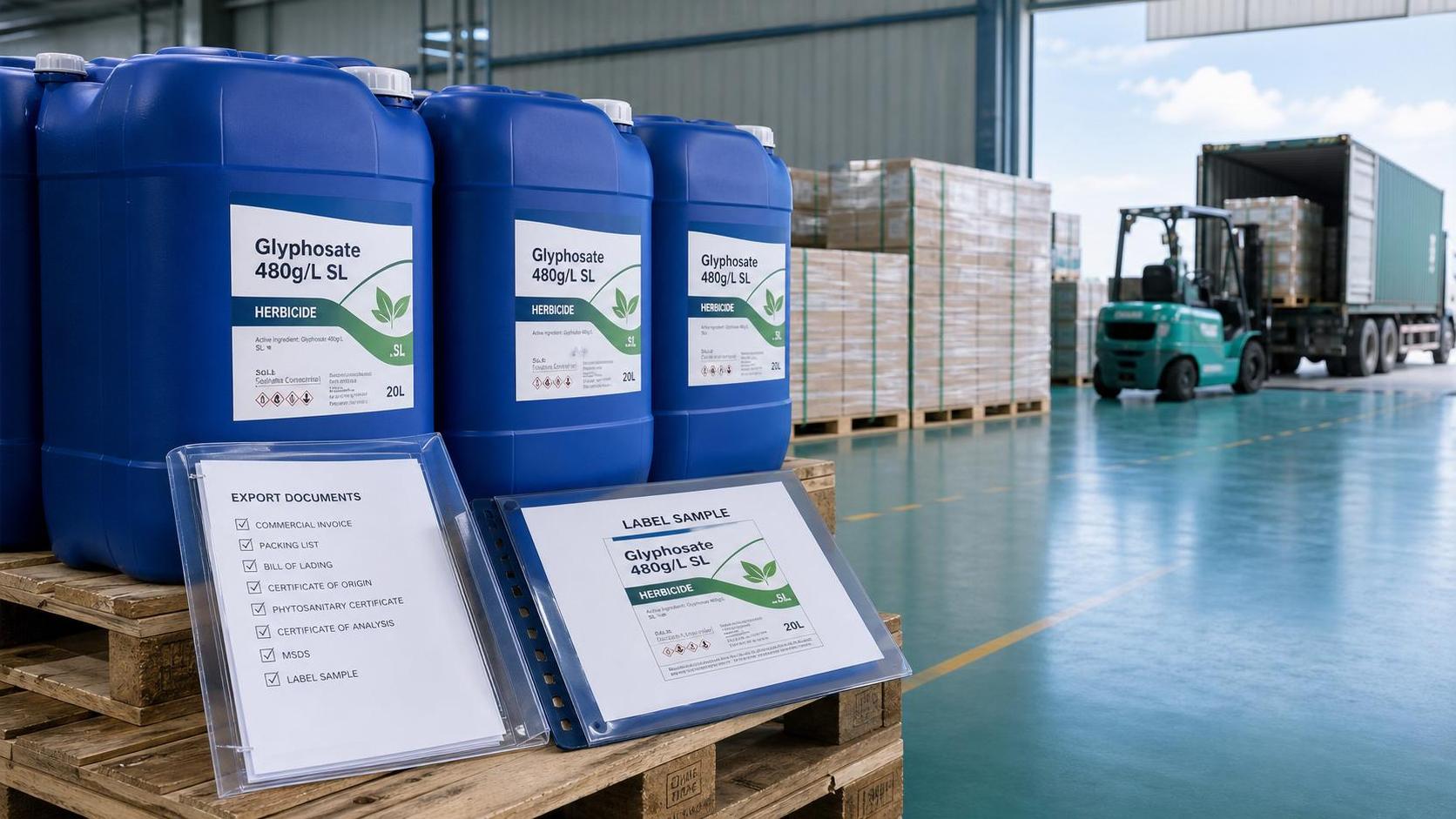
For glyphosate herbicide wholesale buying, confirm document readiness early.
- Product registration or market access status
- Safety Data Sheet and transport classification
- Label content and packaging compliance
- Country-specific restrictions or residue concerns
- Factory certifications and traceability procedures
This review should not be treated as paperwork after the deal is signed.
It is part of supplier qualification, cost planning, and delivery risk control from the start.
Supplier capability matters as much as product availability
A supplier with stock is not automatically a reliable wholesale partner.
Procurement decisions should include production discipline, communication quality, and export execution history.
This becomes especially important when demand rises unexpectedly or shipping conditions tighten.
During glyphosate herbicide wholesale screening, ask practical questions instead of broad claims.
- What is the average monthly output for this formulation?
- How many export markets are supplied regularly?
- What percentage of shipments are delivered on schedule?
- How are quality complaints handled and closed?
- Can the supplier support urgent replenishment if demand spikes?
Stronger suppliers answer with records, dates, and process details.
Weaker suppliers often stay at the level of marketing language and general assurances.
Use a simple risk matrix when reviewing glyphosate herbicide wholesale offers
A structured comparison helps remove bias from negotiations.
It also keeps internal reviews focused on the issues that change total purchasing performance.
This kind of matrix makes glyphosate herbicide wholesale decisions easier to defend internally and easier to repeat across suppliers.
Short-term buying pressure should not weaken supplier checks
Market pressure can push teams toward faster decisions.
That is understandable, especially when seasonal demand or freight volatility increases.
Still, the better response is usually a shorter checklist, not a weaker one.
For glyphosate herbicide wholesale transactions under time pressure, keep five checks non-negotiable.
- Recent batch documents
- Confirmed compliance pack
- Shipment schedule with named milestones
- Clear liability terms for quality issues
- Backup source or emergency supply option
These checks reduce the chance that an urgent order becomes an expensive problem later.
A practical way to choose the right glyphosate herbicide wholesale partner
The strongest wholesale decision usually comes from balanced scoring, not aggressive bargaining alone.
Price matters, but it should sit beside compliance readiness, product consistency, and delivery discipline.
From a purchasing perspective, that balance is what protects margins over time.
When reviewing glyphosate herbicide wholesale suppliers, move in a clear order.
- Normalize quotes into landed cost
- Validate formulation and batch consistency
- Confirm compliance by destination market
- Assess delivery capability and backup plans
- Finalize commercial terms with documented accountability
That sequence keeps negotiations grounded in facts instead of assumptions.
It also helps identify which supplier can support repeat orders without constant intervention.
In the end, good glyphosate herbicide wholesale sourcing is not only about buying cheaper.
It is about buying with fewer surprises, stronger control, and a supply base that holds up when the market gets tighter.
Recommended News
- HDI TechnologyHow to vet PCB suppliers in a directory before requesting quotesPCB suppliers directory guide: learn how to verify capabilities, certifications, traceability, and quote assumptions before selecting a reliable PCB partner.
- HDI TechnologyHow UAE engineering data repositories improve design traceabilityEngineering data repository UAE solutions strengthen design traceability by linking requirements, revisions, supplier evidence, and manufacturing data. Explore practical ways to reduce risk and accelerate releases.
- HDI TechnologyHow to verify UL recognition for printed circuit boardsPrinted circuit boards UL verification made clear: learn how to check UL marks, file numbers, factory scope, stack-ups, and traceability for audit-ready compliance.
- HDI TechnologyMulti layer PCB design guide for controlling signal crosstalkMulti layer PCB design guide for controlling signal crosstalk with stackup, spacing, return-path, and validation strategies for reliable high-density boards.
- HDI TechnologyHow tighter manufacturing tolerances change HDI PCB pricesMicro tolerance manufacturing price explained: see how tighter HDI PCB tolerances affect yield, inspection, supplier options, and sourcing costs.
- HDI TechnologyHow automotive PCB impedance control prevents signal failuresAutomotive PCB impedance control prevents reflections, noise, and timing errors in ADAS, EV, and infotainment systems. Learn how to build reliable signal paths.