
Electrical Enclosure Installation: Dos and Don'ts
DETAILS
Electrical Enclosure Installation: Dos and Don'ts
Proper electrical enclosure installation is critical for ensuring optimal electronic shielding, EMI protection, and thermal management in industrial applications. This guide covers essential dos and don'ts for installing protective enclosures, from selecting appropriate heat sinks and cooling solutions to maintaining proper cable connectors and relay switches integrity. Whether you're a project manager, procurement specialist, or maintenance technician, these best practices will help you achieve reliable performance while meeting safety standards for industrial enclosures in demanding environments.
Key Considerations Before Installation
Selecting the right electrical enclosure requires careful evaluation of environmental factors and operational requirements. Industrial environments typically expose equipment to temperature fluctuations (-40°C to 85°C), humidity levels (5% to 95% RH), and potential chemical exposure.
For mission-critical applications, consider enclosures with UL 508A certification and NEMA 4X ratings for maximum protection. The material choice (stainless steel, polycarbonate, or aluminum) should align with both environmental conditions and EMI shielding requirements.
Installation Best Practices (Dos)
Proper installation techniques can extend enclosure lifespan by 30-50% while reducing maintenance frequency. Follow these essential practices:
Structural Mounting
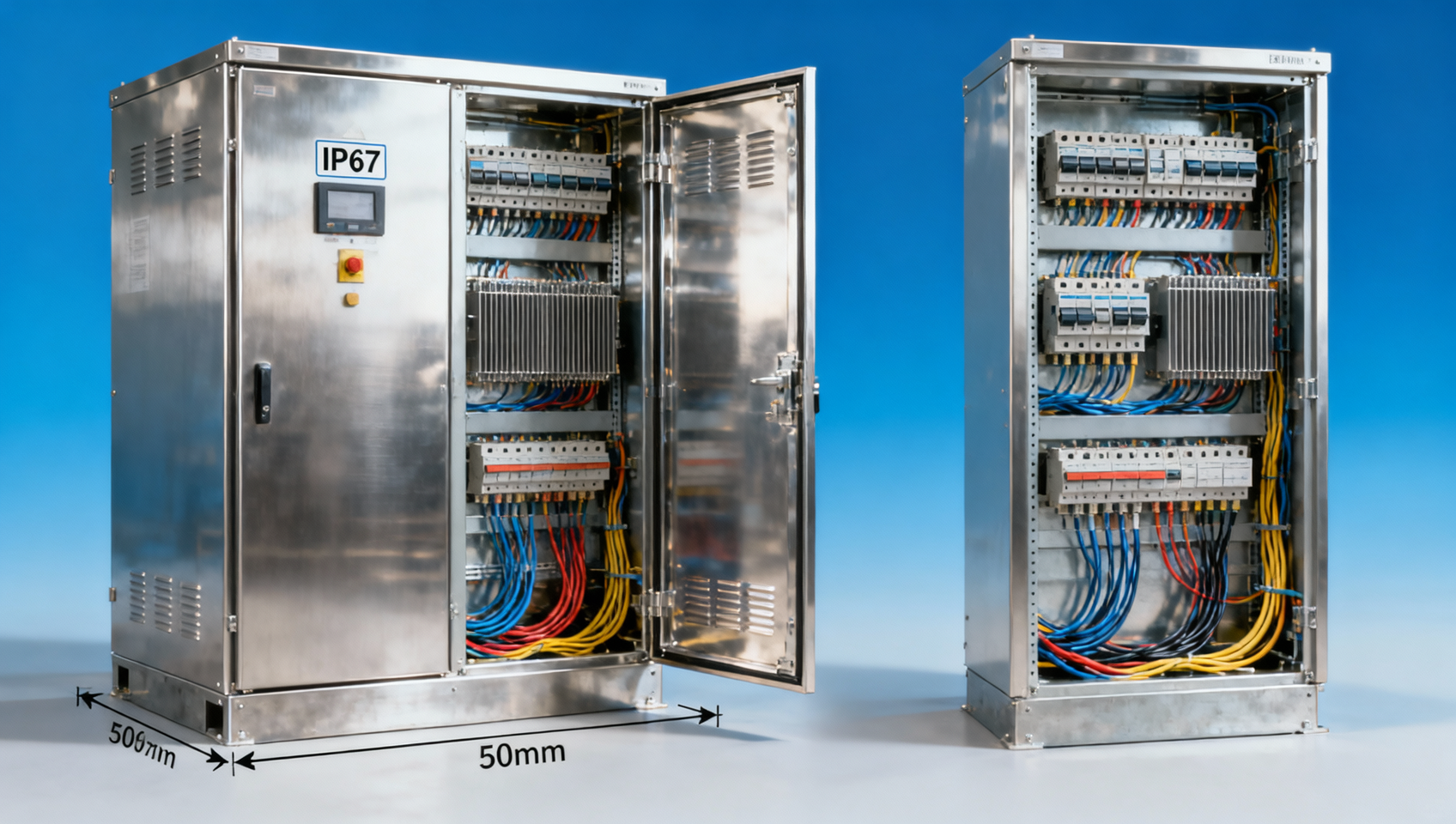
Ensure secure mounting with vibration-resistant fasteners (M8 or larger for industrial applications). Maintain minimum clearance of 50mm on all sides for proper airflow and service access.
Thermal Management
Implement active cooling when internal temperatures exceed component ratings by more than 10°C. For every 10°C above recommended operating temperature, component lifespan decreases by approximately 50%.
- Use thermal pads (3-5W/mK conductivity) for direct component cooling
- Install fans with CFM ratings matching the enclosure volume
- Consider liquid cooling for power densities above 500W/ft³
Cable Management
Proper cable routing prevents EMI interference and maintains signal integrity. Use shielded cables for sensitive signals and maintain minimum bend radii (typically 8x cable diameter).
Common Installation Mistakes (Don'ts)
These frequent errors account for 60-70% of premature enclosure failures in industrial settings:
Maintenance and Inspection Protocols
Regular maintenance preserves enclosure integrity and prevents 80% of field failures. Implement these inspection intervals:
- Monthly visual inspections for seal integrity and corrosion
- Quarterly thermal scans (FLIR imaging recommended)
- Annual torque checks on all fasteners (20-25Nm for M8 bolts)
- Biannual cleaning of cooling fins and filters
Environmental Monitoring
Install IoT-enabled sensors to track internal temperature (±1°C accuracy), humidity (±3% RH), and vibration (0-10G range). Threshold alerts should trigger at 80% of maximum rated values.
Frequently Asked Questions
How often should enclosure gaskets be replaced?
Silicone gaskets typically last 5-7 years, while EPDM offers 7-10 year service life in moderate environments. Replace immediately if compression set exceeds 30% or visible cracks appear.
What's the minimum safe working clearance around enclosures?
NFPA 70E requires minimum 36" front access and 30" side clearance for 600V systems. For higher voltages, add 12" per additional 1000V.
When should active cooling be considered?
Implement active cooling when passive methods can't maintain internal temperatures below the lowest component rating (typically 10-15°C safety margin).
Conclusion and Next Steps
Proper electrical enclosure installation requires attention to mechanical, thermal, and electrical factors. By following these best practices, industrial facilities can achieve 99.5% uptime while meeting safety standards like UL 508A and IEC 61439.
For customized enclosure solutions or technical consultation, contact our engineering team to discuss your specific application requirements and environmental challenges.
Recommended News
- Heat DissipationHow to prevent overheating in automotive PCB power distributionPrevent overheating in automotive PCB power distribution with practical tips on copper layout, thermal paths, and testing. Discover how to reduce hotspots and improve reliability.
- Heat DissipationCan heat spreading intelligence identify hot spots in PCB designs?Discover how heat spreading intelligence identifies PCB hot spots before fabrication. Learn to assess thermal models, validate predictions, and choose design changes that improve reliability.
- Heat DissipationWhich heat sink materials suit high-power electronics made in Germany?Heat sink materials Germany: compare aluminum, copper, graphite, and hybrid designs for high-power electronics. Find the right balance of thermal performance, weight, cost, and manufacturability.
- Heat DissipationHow to assess a graphite materials supplier's capability for thermal partsGraphite materials supplier assessment starts with more than machining. Discover how to evaluate thermal performance, purity, precision, cleanliness, traceability, and testing for reliable thermal parts.
- Heat DissipationHow to assess a heat dissipation supplier before placing an orderHeat dissipation supplier assessment guide: verify thermal performance, materials, process control, samples, capacity, and total risk before placing an order.
- Heat DissipationHow automotive PCB material selection affects thermal reliabilityAutomotive PCB material selection shapes thermal reliability. Explore CTE, Tg, moisture resistance, stack-up design, and proven qualification strategies for demanding vehicle electronics.