
Active Cooling vs Natural Convection: Which to Choose
DETAILS
Active Cooling vs Natural Convection: Which to Choose
In today's high-performance electronics landscape, thermal management is a critical design consideration. This technical analysis compares active cooling vs natural convection solutions for electronic shielding and thermal enclosures, evaluating key factors like EMI protection, heat dissipation efficiency, and long-term reliability. Whether you're an engineer specifying cooling solutions for industrial relays or a procurement professional sourcing cable connectors, our data-driven insights will help you make informed decisions for your next-generation electrical enclosures and PCB assemblies.
Understanding the Core Technologies
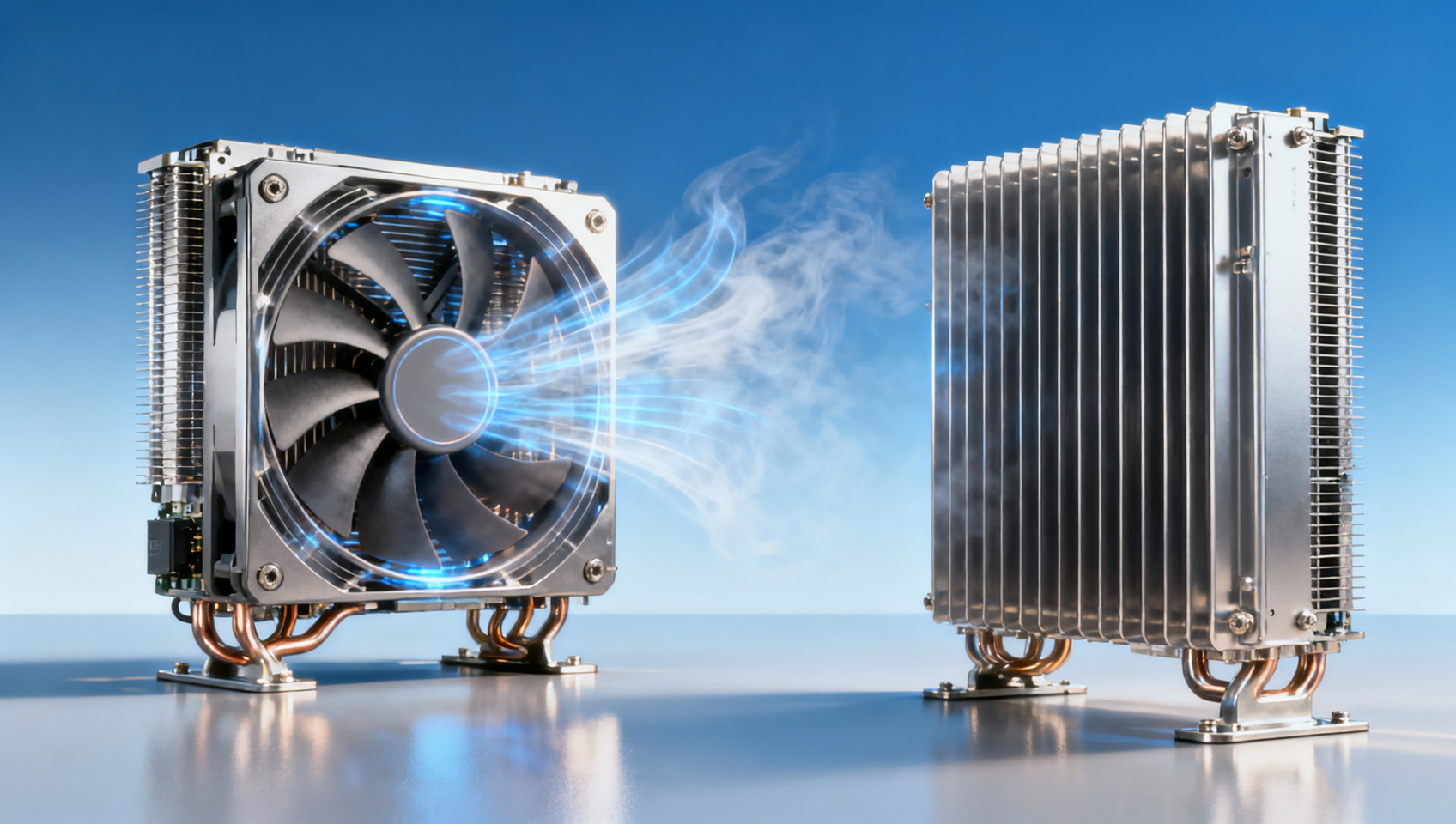
Active cooling systems rely on powered components like fans, pumps, or thermoelectric coolers to forcibly dissipate heat. These systems typically achieve 3-5x greater heat transfer rates compared to passive solutions, with forced-air convection capable of removing 50-200W of heat per square inch in high-density PCB applications.
Natural convection leverages passive heat transfer through:
- Thermal radiation (accounting for 15-30% of total heat dissipation)
- Conduction through mounting surfaces (5-15W/m·K for typical aluminum enclosures)
- Buoyancy-driven airflow (effective for heat loads below 25W/cm²)
The table above highlights critical performance differences. Active cooling excels in high-power applications but introduces moving parts that reduce reliability. Natural convection offers silent operation and perfect reliability but has limited heat dissipation capacity.
Application-Specific Selection Criteria
Choosing between these thermal management approaches requires evaluating six key parameters:
1. Thermal Load Requirements
For power densities below 0.5W/cm³, natural convection often suffices. Industrial control systems with 1-3W/cm³ typically require forced air cooling, while high-performance computing (5-10W/cm³) demands liquid cooling solutions.
2. Environmental Conditions
Natural convection performs poorly in:
- Still air environments (reducing effectiveness by 40-60%)
- High-altitude applications (above 3000m)
- Dusty or corrosive atmospheres (fouling heat sinks)
3. Reliability Expectations
Mission-critical applications like aerospace or medical devices often prefer natural convection's 99.999% reliability over active systems' 99.9% MTBF, despite the thermal performance trade-off.
Cost and Maintenance Considerations
The total cost of ownership (TCO) varies significantly between approaches:
Initial Costs
Natural convection enclosures typically cost $20-150 per unit for small/medium designs. Active cooling systems range from $50-500 depending on:
- Fan quality (30,000-100,000 hour lifespan)
- Control sophistication (PWM vs. fixed speed)
- Redundancy requirements
Ongoing Maintenance
Active systems require:
- Quarterly filter cleaning (2-4 hours labor per rack)
- Fan replacement every 3-5 years ($15-150 per fan)
- Energy costs of 5-50W continuous draw
Emerging Trends and Hybrid Solutions
Modern thermal management increasingly combines both approaches:
Phase-Change Materials
New PCM-enhanced enclosures can absorb 100-300kJ/kg during peak loads, delaying active cooling activation and reducing energy use by 15-40%.
Smart Thermal Management
IoT-enabled systems now:
- Monitor 10-15 thermal zones per enclosure
- Dynamically adjust fan speeds (0-100% in 5% increments)
- Predict maintenance needs with 90% accuracy
Implementation Recommendations
Follow this 5-step selection process:
- Calculate maximum expected heat load (W/cm²)
- Evaluate environmental constraints (IP rating, altitude)
- Determine reliability requirements (MTBF, maintenance windows)
- Model thermal performance using CFD simulations
- Prototype and validate under real-world conditions
Conclusion and Next Steps
The choice between active and passive cooling hinges on your specific thermal, reliability, and cost requirements. For most industrial applications processing 1-5W/cm², hybrid solutions now offer the optimal balance between performance and longevity.
Contact our thermal engineering specialists to analyze your specific application requirements and receive a customized cooling solution recommendation. Our team can provide detailed thermal simulations, component selection guidance, and lifecycle cost projections for your next enclosure design.
Recommended News
- Heat DissipationHow to prevent overheating in automotive PCB power distributionPrevent overheating in automotive PCB power distribution with practical tips on copper layout, thermal paths, and testing. Discover how to reduce hotspots and improve reliability.
- Heat DissipationCan heat spreading intelligence identify hot spots in PCB designs?Discover how heat spreading intelligence identifies PCB hot spots before fabrication. Learn to assess thermal models, validate predictions, and choose design changes that improve reliability.
- Heat DissipationWhich heat sink materials suit high-power electronics made in Germany?Heat sink materials Germany: compare aluminum, copper, graphite, and hybrid designs for high-power electronics. Find the right balance of thermal performance, weight, cost, and manufacturability.
- Heat DissipationHow to assess a graphite materials supplier's capability for thermal partsGraphite materials supplier assessment starts with more than machining. Discover how to evaluate thermal performance, purity, precision, cleanliness, traceability, and testing for reliable thermal parts.
- Heat DissipationHow to assess a heat dissipation supplier before placing an orderHeat dissipation supplier assessment guide: verify thermal performance, materials, process control, samples, capacity, and total risk before placing an order.
- Heat DissipationHow automotive PCB material selection affects thermal reliabilityAutomotive PCB material selection shapes thermal reliability. Explore CTE, Tg, moisture resistance, stack-up design, and proven qualification strategies for demanding vehicle electronics.