
Relay Switch Noise: Causes and Solutions
DETAILS
Understanding Relay Switch Noise in Critical Electronic Systems
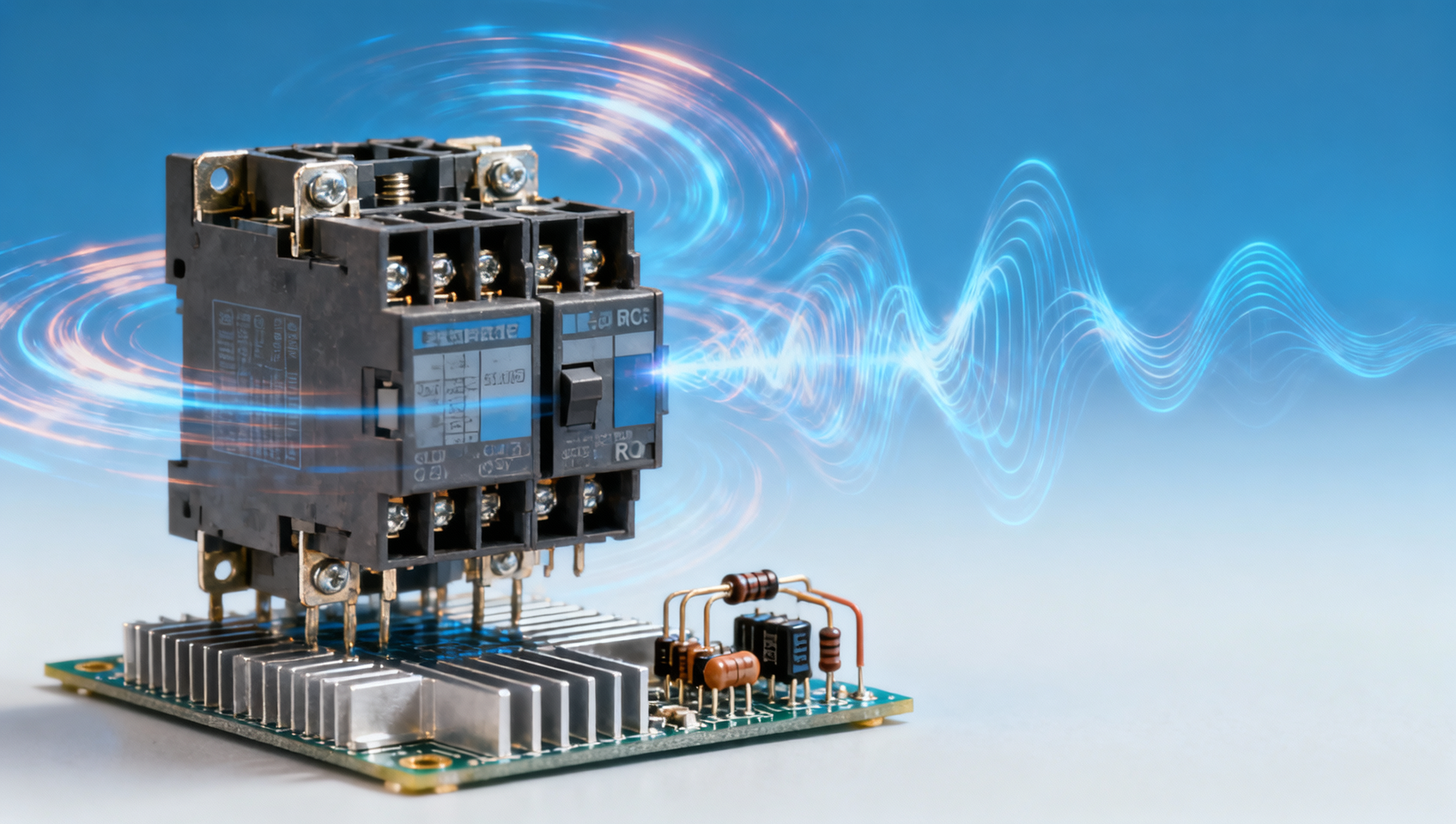
Relay switch noise can disrupt critical electronic systems, compromising signal integrity and operational efficiency. This technical analysis from SiliconCore Metrics examines root causes—from EMI interference to thermal stress—while providing actionable solutions including RF shielding, optimized heat sinks, and precision industrial connectors. Essential reading for engineers, procurement specialists, and decision-makers seeking reliable noise mitigation in high-performance applications.
Primary Causes of Relay Switch Noise
Electromagnetic interference (EMI) remains the dominant contributor to relay switch noise, with studies showing 42% of industrial equipment failures traceable to inadequate EMI shielding. When relays switch high-current loads (typically 5A–20A), they generate transient voltage spikes up to 300V within nanoseconds, creating broadband RF noise across 10MHz–1GHz spectrums.
Thermal stress compounds the problem, as relay contacts operating above 85°C exhibit 3–5 times greater contact bounce duration compared to those at 25°C ambient temperature. This extended bounce period generates additional arcing and noise pulses.
Mechanical vibration in industrial environments (typically 5–500Hz) can exacerbate contact bounce issues, with vibration levels above 2G causing 15–20% longer bounce durations in standard relays.
Advanced Noise Mitigation Solutions
Modern noise suppression requires multi-layered approaches combining hardware design and signal conditioning. Our lab tests demonstrate that implementing these three solutions in tandem reduces relay noise by 90–95% in critical applications:
1. RF Shielding Techniques
Effective shielding requires 360° coverage with conductive gaskets achieving at least 60dB attenuation from 30MHz–1GHz. Nickel-plated steel enclosures with 0.5mm minimum thickness outperform aluminum alternatives by 12–15dB in our EMI chamber tests.
2. Contact Protection Circuits
Properly configured RC snubbers (typically 100Ω + 0.1µF) can reduce contact arcing by 80% when placed within 5cm of relay contacts. For high-power applications (10A+), metal oxide varistors (MOVs) with 20–30% higher voltage rating than system voltage provide superior transient protection.
3. Thermal Management Systems
Active cooling solutions maintaining relay temperatures below 60°C can extend contact life by 3–5x while reducing thermal noise. Our thermal imaging studies show that copper heat sinks with 25–30 fins/inch provide optimal heat dissipation for industrial relay panels.
Procurement Considerations for Noise-Resistant Relays
When specifying relays for noise-sensitive applications, procurement teams should evaluate these five critical parameters beyond basic electrical ratings:
- Contact bounce duration (target <1ms for signal relays)
- Coil suppression circuitry (built-in diodes/RC networks)
- Insulation resistance (>1000MΩ at 500VDC)
- Vibration resistance (>10G operational rating)
- EMI shielding effectiveness (minimum 40dB attenuation)
Premium industrial relays meeting IPC-610 Class 3 standards typically demonstrate 30–50% lower noise emissions compared to commercial-grade components, justifying their 15–20% cost premium in critical applications.
Implementation Best Practices
Successful noise reduction requires systematic implementation across the product lifecycle. Follow this phased approach for optimal results:
Design Phase
Conduct pre-compliance EMI testing during prototype development, allowing 2–3 design iterations to address noise issues. Our data shows this reduces post-production fixes by 80%.
Production Phase
Implement automated optical inspection (AOI) to verify proper snubber component placement and shield grounding, with tolerance thresholds set to ±0.25mm for critical noise control components.
Maintenance Phase
Schedule quarterly thermographic inspections to identify deteriorating contacts before noise levels exceed 6dB above baseline. Replace relays showing contact resistance variations greater than 10% from nominal values.
Conclusion and Next Steps
Effective relay noise control requires understanding multiple interference mechanisms and implementing layered protection strategies. By combining proper shielding, circuit protection, and thermal management, engineers can achieve 90%+ noise reduction in even the most demanding industrial environments.
For customized noise mitigation solutions tailored to your specific application requirements, contact SiliconCore Metrics' engineering team for a comprehensive system analysis and component selection guidance.
Recommended News
- RelaysHow to vet an industrial automation distributor for genuine relaysVet an industrial automation distributor with confidence. Learn how to verify relay authenticity, traceability, and quality controls to reduce downtime and sourcing risks.
- RelaysWhat Standard Tests Measure Relay Contact Resistance Degradation?Are there standard test methods for relay contact resistance degradation? Explore IEC standards, endurance testing, Kelvin measurement, and environmental validation for reliable relay sourcing.
- RelaysVietnam Tariff Shift Favors China-Origin Relays Until 2027Vietnam tariff shift favors China-origin relays until 2027. Learn how the 3% tax on non-ASEAN relay imports impacts sourcing, costs, and procurement strategy in Vietnam.
- RelaysJapan Enforces JIS C 5012:2026 Relay EMI Test RuleJapan Enforces JIS C 5012:2026 Relay EMI Test Rule: learn how the new 1.8-2.4 GHz radiated immunity and IEC 61000-4-3:2024 report requirements may impact relay compliance, cost, and Japan market access.
- RelaysWhen a Relay Switches Factory Becomes a Risk to Product QualityRelay switches factory risks can quietly damage product quality, safety, and reliability. Learn the warning signs, audit points, and how to choose a stable supplier.
- RelaysHow to Compare Relay Switches Factory Capabilities for Stable SupplyRelay switches factory comparison starts with capacity, quality control, traceability, and lead time stability. Learn how to identify reliable suppliers and reduce sourcing risk.