
Choosing Passive and Electromechanical Components for Reliable Control Panels
DETAILS
Choosing Passive and Electromechanical Components for Reliable Control Panels
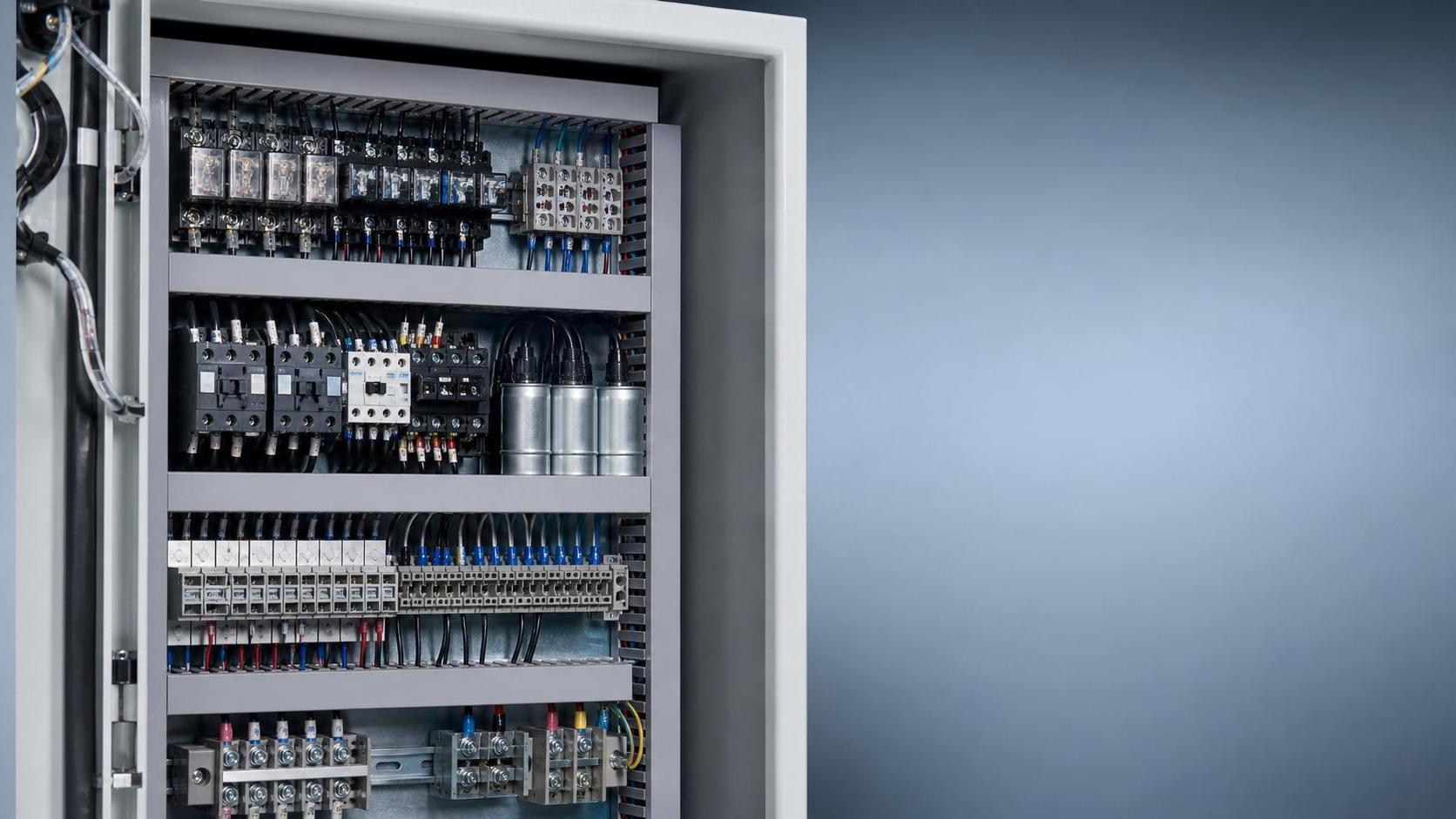
Selecting passive & electromechanical components for control panels shapes uptime, safety, and service cost from day one.
A panel may look simple on paper. In operation, small component choices decide whether it stays stable under heat, vibration, dust, and switching stress.
That is why passive & electromechanical components for control panels deserve the same attention as PLCs, drives, and software architecture.
The core challenge is not just picking parts that work today. It is choosing parts that stay predictable across the full operating life.
In practical projects, reliability failures often begin with contact wear, capacitor drift, loose terminals, or underrated protection elements.
This also means selection decisions should balance electrical performance, environmental durability, compliance, sourcing resilience, and maintenance reality.
A structured review process makes passive & electromechanical components for control panels easier to compare and far less risky to approve.
Why These Components Matter More Than They First Appear
Control panels depend on hundreds of supporting parts.
Resistors, capacitors, relays, contactors, terminal blocks, switches, connectors, fuses, and suppression devices rarely get headline attention.
Still, they carry the burden of signal conditioning, power distribution, circuit protection, and mechanical interface stability.
A single weak relay contact can stop a motor sequence.
A poorly specified capacitor can shift timing behavior or fail early in a hot cabinet.
An undersized terminal can loosen under thermal cycling and create intermittent faults that are hard to diagnose.
When reviewing passive & electromechanical components for control panels, the real goal is system consistency, not isolated datasheet wins.
From a lifecycle view, stable low-cost parts usually outperform cheaper options that add hidden downtime, rework, and field failure exposure.
Start with the Actual Operating Profile
Good selection starts with conditions, not catalogs.
Before comparing passive & electromechanical components for control panels, define the real electrical and environmental profile of the installation.
- Continuous and peak voltage levels
- Inrush current and switching frequency
- Ambient and internal cabinet temperature
- Humidity, dust, chemical exposure, and vibration
- Safety category and required certifications
- Expected service interval and maintenance access
This step sounds basic, but it removes many weak candidates immediately.
More importantly, it prevents common errors like selecting by nominal current while ignoring surge, enclosure heat rise, or duty cycle.
In recent projects, harsher thermal conditions and denser panel layouts have made this first filter even more important.
Key Selection Criteria for Passive Components
Passive components often fail quietly before they fail completely.
That is why passive & electromechanical components for control panels should be screened for long-term parameter stability, not just initial tolerance.
Resistors and Networks
Check resistance tolerance, temperature coefficient, pulse capability, and derating behavior.
For sensing and signal conditioning, drift matters more than purchase price.
Capacitors
Review dielectric type, ripple current rating, ESR, expected life at temperature, and failure mode.
In many control panel applications, capacitor lifetime is strongly linked to cabinet heat and switching transients.
Protection Devices
Fuses, MOVs, TVS devices, and thermistors should match realistic fault energy and surge exposure.
Protection that looks sufficient on paper may age quickly under frequent line disturbances.
For passive & electromechanical components for control panels, derating is usually the simplest way to buy reliability without major redesign.
What to Check in Electromechanical Components
Electromechanical parts carry both electrical and mechanical wear mechanisms.
That combination makes their real-life behavior more sensitive to application detail.
Relays and Contactors
Focus on contact material, load type, switching cycles, coil consumption, and arc suppression compatibility.
AC resistive ratings alone are not enough for inductive loads, solenoids, heaters, and motor starts.
Terminal Blocks and Connectors
Check conductor range, clamping technology, insulation material, vibration resistance, and field service ergonomics.
This is especially relevant where maintenance teams must swap modules quickly without wiring errors.
Switches and Interface Hardware
Operator switches, selector units, and emergency stop assemblies need verified endurance and compliance alignment.
Ingress protection and tactile consistency also matter because poor operator feedback can trigger misuse.
When assessing passive & electromechanical components for control panels, mechanical robustness should be treated as a measurable performance factor.
A Practical Evaluation Matrix
A weighted decision matrix keeps selection disciplined.
It also helps internal stakeholders compare passive & electromechanical components for control panels without drifting into brand preference alone.
This approach is simple, but it creates a clearer record when design reviews or procurement approvals become time-sensitive.
Common Selection Mistakes That Raise Risk
Several issues appear repeatedly across control panel programs.
- Using nominal ratings without thermal derating inside the enclosure.
- Ignoring contact life differences between resistive and inductive loads.
- Treating all capacitor technologies as interchangeable.
- Approving low-cost connectors without vibration validation.
- Failing to check supplier change control and traceability practices.
- Skipping surge and transient analysis in electrically noisy facilities.
Each mistake looks minor at purchase stage.
Together, they can turn passive & electromechanical components for control panels into a reliability bottleneck that surfaces only after commissioning.
How Better Data Improves Selection Decisions
This is where independent technical benchmarking becomes useful.
SiliconCore Metrics supports the semiconductor and EMS supply chain with data-led evaluation across materials, precision manufacturing, and component reliability.
That perspective matters because control panel reliability depends on more than a catalog promise.
It depends on process consistency, tolerance control, thermal behavior, and supplier discipline under real operating stress.
Independent whitepapers, compliance reporting, and supply chain intelligence can shorten the path from shortlist to justified approval.
For teams comparing passive & electromechanical components for control panels, better evidence usually leads to fewer late-stage substitutions and fewer field surprises.
Final Decision Framework
A reliable decision process can stay straightforward.
- Define operating stress clearly.
- Screen for derating and expected life.
- Verify mechanical endurance and serviceability.
- Check compliance, traceability, and alternate sources.
- Use independent reliability data when available.
The strongest passive & electromechanical components for control panels are rarely the cheapest line items.
They are the parts that stay stable under load, survive the environment, and remain available through the product lifecycle.
That is the standard worth using when panel reliability, compliance confidence, and lifecycle cost all matter at once.
A disciplined review of passive & electromechanical components for control panels gives every later project decision a stronger foundation.
Recommended News
- RelaysHow to vet an industrial automation distributor for genuine relaysVet an industrial automation distributor with confidence. Learn how to verify relay authenticity, traceability, and quality controls to reduce downtime and sourcing risks.
- RelaysWhat Standard Tests Measure Relay Contact Resistance Degradation?Are there standard test methods for relay contact resistance degradation? Explore IEC standards, endurance testing, Kelvin measurement, and environmental validation for reliable relay sourcing.
- RelaysVietnam Tariff Shift Favors China-Origin Relays Until 2027Vietnam tariff shift favors China-origin relays until 2027. Learn how the 3% tax on non-ASEAN relay imports impacts sourcing, costs, and procurement strategy in Vietnam.
- RelaysJapan Enforces JIS C 5012:2026 Relay EMI Test RuleJapan Enforces JIS C 5012:2026 Relay EMI Test Rule: learn how the new 1.8-2.4 GHz radiated immunity and IEC 61000-4-3:2024 report requirements may impact relay compliance, cost, and Japan market access.
- RelaysWhen a Relay Switches Factory Becomes a Risk to Product QualityRelay switches factory risks can quietly damage product quality, safety, and reliability. Learn the warning signs, audit points, and how to choose a stable supplier.
- RelaysHow to Compare Relay Switches Factory Capabilities for Stable SupplyRelay switches factory comparison starts with capacity, quality control, traceability, and lead time stability. Learn how to identify reliable suppliers and reduce sourcing risk.