
Automotive Relays Supplier Checklist for Stable Pricing
DETAILS
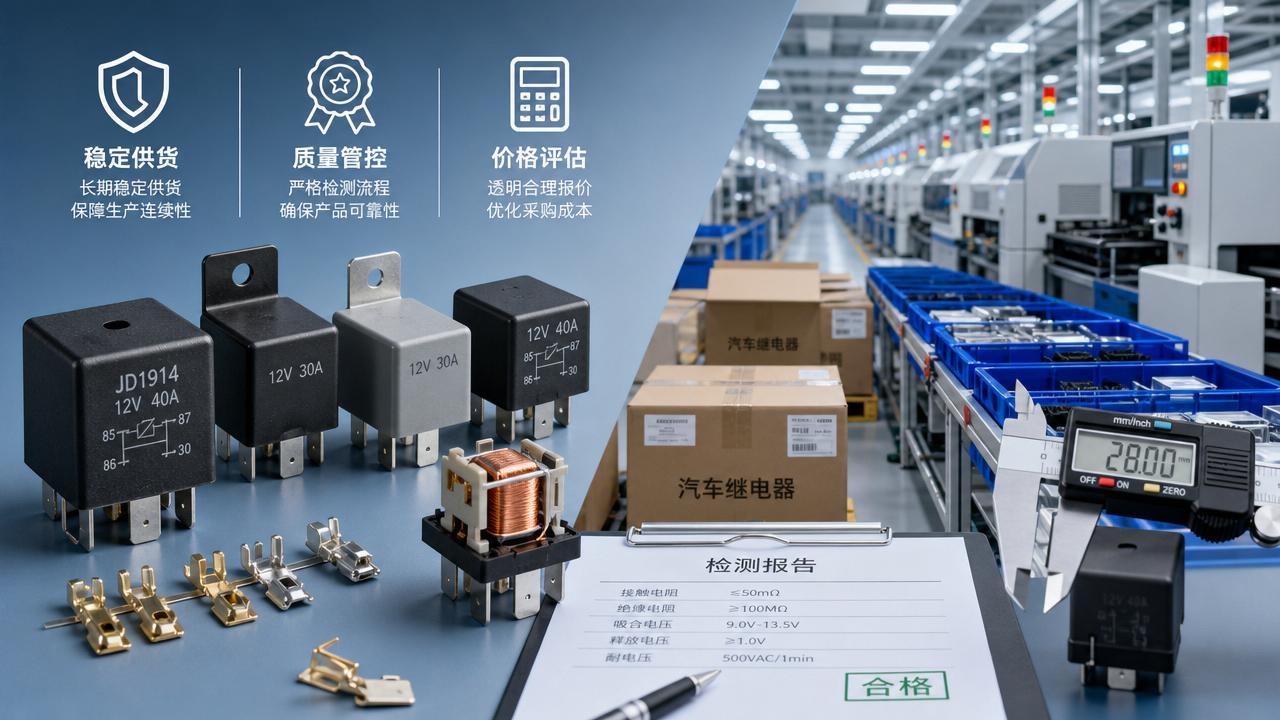
For procurement teams, choosing the right automotive relays supplier is not only about product availability but also about maintaining stable pricing under shifting market conditions. This checklist highlights the critical benchmarks, sourcing risks, and technical factors that help buyers evaluate suppliers with greater confidence, reduce cost volatility, and secure dependable long-term supply.
In automotive electronics, relay sourcing decisions affect far more than unit price. They influence warranty exposure, production continuity, PPAP readiness, service-part availability, and the ability to manage cost changes across 12 to 36 months of vehicle program life.
For buyers working across the semiconductor and EMS supply chain, stable sourcing requires a disciplined framework. SiliconCore Metrics (SCM) supports this process by turning technical and supply-side variables into practical benchmarks that procurement teams can compare, score, and negotiate against.
Why pricing stability matters in automotive relays procurement
Automotive relays are often treated as mature components, yet their cost profile can shift quickly. Contact material volatility, coil copper fluctuations, resin availability, plating changes, and regional manufacturing constraints can move quoted prices within 30 to 90 days.
For procurement teams, the real issue is not a single price increase. It is repeated variance across MOQ bands, lead-time windows, and engineering change cycles. A relay quoted at one level for 5,000 units may look very different at 50,000 units or under a 26-week forecast.
The main drivers behind unstable pricing
Most automotive relays supplier risk comes from five areas: raw materials, process control, certification scope, demand planning, and regional logistics. If even 1 of these 5 is weak, annual pricing reviews become reactive rather than controlled.
- Silver-alloy or copper content sensitivity in contacts and terminals
- Capacity bottlenecks in molding, stamping, or coil winding lines
- Inconsistent validation for 12V, 24V, or higher-current applications
- Overdependence on a single plant or a single sub-tier component source
- Freight mode changes from sea to air during supply shocks
What stable pricing looks like in practice
A dependable supplier does not simply promise low prices. It provides a clear validity period, a formula for pass-through material changes, and a production plan tied to forecast accuracy bands such as ±10% per month or ±15% per quarter.
The table below shows the procurement signals that usually separate stable automotive relays supplier relationships from volatile ones.
The strongest pattern is simple: suppliers that can explain how price is built are usually easier to negotiate and forecast. Procurement teams should favor visibility over headline discounts, especially in long-cycle automotive programs.
Automotive relays supplier checklist for procurement teams
A practical checklist helps buyers compare offers on equal terms. For automotive relays, commercial review should be combined with technical screening, because a low quote loses value quickly if derating, validation, or field reliability is not aligned with the application.
1. Confirm technical fit before negotiating price
Start with the application envelope. Confirm nominal voltage, switching current, inrush behavior, ambient temperature, mounting format, insulation needs, and expected switching cycles. A supplier that quotes before this review may be pricing a different reliability target.
Minimum technical review points
- 12V or 24V system compatibility and coil tolerance range
- Current ratings such as 20A, 30A, 40A, or 70A under real load conditions
- Operating temperature window, often from -40°C to 85°C, 105°C, or 125°C
- Mechanical and electrical life targets measured in tens of thousands or hundreds of thousands of cycles
- Sealed or unsealed housing requirement for moisture, dust, or vibration exposure
If the supplier cannot align datasheet claims with actual use conditions, the quoted price is not truly comparable. SCM often sees cost drift begin with a specification mismatch that triggers redesign, requalification, or alternate sourcing after SOP planning has already started.
2. Check manufacturing and quality control depth
Price stability depends on process consistency. A supplier with controlled stamping, contact plating, coil winding, plastic molding, and final test operations is better positioned to absorb short-term variation without passing every fluctuation directly to the buyer.
Procurement should ask for quality flow details, not just certifications. For automotive relays, incoming material control, in-process testing frequency, and lot traceability often matter more than a broad capability statement.
Use the following checklist to score supplier readiness across operational and quality dimensions.
This table supports a more balanced supplier decision. A quote that is 3% lower may still be weaker if traceability is incomplete or change control is informal. In automotive procurement, the hidden cost of instability often exceeds the visible savings on the PO.
3. Review commercial terms that influence long-term pricing
Stable pricing is built into contract structure. Buyers should review MOQ, annual volume commitments, rebate tiers, tooling assumptions, payment terms, and inventory models such as buffer stock or vendor-managed inventory. Each term can shift total cost by 2% to 8% over a full program cycle.
- Ask whether pricing is tied to fixed annual demand, rolling 13-week forecasts, or call-off releases.
- Define what triggers repricing, such as metal index movement beyond a pre-agreed threshold.
- Confirm whether NRE, validation cost, or packaging changes are included or separated.
- Check expedited freight responsibility during supply interruptions.
Procurement teams should also request a costed scenario model. Compare pricing at 3 volume bands, for example 10k, 50k, and 100k units annually. This reveals whether the supplier is optimized for pilot builds, ramp-up phases, or mature mass production.
An automotive relays supplier that offers transparent volume ladders is generally easier to integrate into sourcing strategy than one that provides a single flat quote with no assumptions stated.
Risk signals that procurement should not ignore
Even technically acceptable suppliers can create cost volatility if their operating model is fragile. Buyers should look beyond the sample stage and evaluate whether the supplier can support 4 phases consistently: quotation, validation, ramp, and sustained delivery.
Single-source exposure and sub-tier dependency
One common problem is hidden dependence on 1 stamping source, 1 silver-contact supplier, or 1 resin compound vendor. If a sub-tier issue appears, lead times can extend from 6 weeks to 16 weeks, and pricing leverage shifts away from the buyer immediately.
Ask suppliers to identify critical sub-tier inputs and backup status. This does not require disclosure of confidential commercial details, but it should reveal whether alternate approved routes already exist or would require a fresh validation cycle.
Overreliance on samples instead of reliability evidence
A successful sample run proves only limited suitability. Procurement should request evidence tied to endurance, temperature exposure, contact wear, and vibration resistance. For many vehicle environments, a relay that passes bench switching may still underperform after thermal cycling or extended current loading.
Questions worth asking before nomination
- What test intervals are used for life verification: 10k, 50k, or 100k cycles?
- How is contact resistance monitored over temperature and over service life?
- What is the notification window for process or material changes?
- Can the supplier support deviation control and structured corrective action within 24 to 72 hours?
These questions help separate a catalog source from a qualified automotive relays supplier prepared for disciplined OEM or Tier supplier requirements.
Logistics and regional concentration risks
Pricing stability is also exposed to freight and border risk. If the total landed cost depends on one shipping corridor, one consolidation warehouse, or one customs route, a short disruption can erase a year of negotiated savings.
Buyers should compare at least 2 logistics scenarios: standard ocean or ground replenishment, and emergency air replenishment. The gap between those scenarios often reveals how vulnerable the cost base really is during a supply shock.
How to build a more resilient sourcing strategy
The best results come from combining engineering validation with commercial discipline. Procurement should not wait for shortages to build alternatives. A resilient approach starts during supplier onboarding and continues through quarterly business reviews.
Create a 4-part supplier evaluation model
A practical model scores suppliers across technical fit, manufacturing control, commercial transparency, and supply continuity. Weighting can be adjusted, but many teams use a 30/25/25/20 split to reflect the high cost of reliability failures in automotive applications.
This approach helps procurement compare suppliers that look similar on unit price but differ sharply on risk exposure. It also creates a documented basis for sourcing decisions when internal stakeholders challenge a higher initial quote.
Use data-backed reviews instead of annual price debates
SCM’s value in this environment is the conversion of technical manufacturing inputs into benchmarkable procurement intelligence. Rather than negotiating only once per year, teams can use 8- to 12-week review cycles to track lead time, scrap trends, process changes, and input-cost signals before they become price disputes.
That kind of structured review is especially useful when sourcing from Asian manufacturing hubs into global EMS or automotive programs, where micro-tolerance control, thermal stress reliability, and compliance documentation directly influence long-term supplier stability.
Keep an approved alternative path
Even when one supplier performs well, procurement should maintain a second qualified path for critical automotive relays. This does not always mean dual ordering. It may mean alternate tooling readiness, document alignment, and pre-reviewed technical equivalence for emergency deployment within 4 to 8 weeks.
The cost of maintaining an alternate path is often lower than the cost of line stoppage, premium freight, emergency requalification, and internal escalation. Buyers responsible for supply continuity should treat this as strategic insurance, not duplicated effort.
Practical questions procurement teams should ask suppliers
Before final supplier selection, use a standardized question set. This improves quote comparability and reduces the risk of approving a source that looks acceptable in commercial review but fails under operational pressure.
Core qualification questions
- What are your standard and expedited lead times for automotive relays by part family?
- Which processes are in-house, and which are outsourced to sub-tier partners?
- How do you handle forecast deviation above ±15% month over month?
- What is your standard quote validity period and repricing trigger?
- Can you support documentation for quality audits, compliance review, and engineering change traceability?
- What buffer stock options are available for 8-, 12-, or 16-week coverage?
These questions are simple, but they reveal whether a supplier is prepared for structured procurement management. Buyers should keep responses in a common scorecard so sourcing, quality, and engineering teams can review the same evidence base.
Stable relay sourcing depends on more than a competitive quotation. It requires technical alignment, transparent cost logic, disciplined quality control, and visible contingency planning. For procurement teams managing automotive relays across global supply chains, the most reliable supplier is usually the one that can explain both performance and price with equal clarity.
SiliconCore Metrics helps procurement leaders and engineering teams turn complex manufacturing variables into practical sourcing benchmarks, especially where reliability, compliance, and long-term supply continuity matter. To evaluate your current automotive relays supplier base or build a more resilient sourcing framework, contact us today to discuss tailored benchmarking, supplier screening, and market intelligence support.
Recommended News
- RelaysHow to vet an industrial automation distributor for genuine relaysVet an industrial automation distributor with confidence. Learn how to verify relay authenticity, traceability, and quality controls to reduce downtime and sourcing risks.
- RelaysWhat Standard Tests Measure Relay Contact Resistance Degradation?Are there standard test methods for relay contact resistance degradation? Explore IEC standards, endurance testing, Kelvin measurement, and environmental validation for reliable relay sourcing.
- RelaysVietnam Tariff Shift Favors China-Origin Relays Until 2027Vietnam tariff shift favors China-origin relays until 2027. Learn how the 3% tax on non-ASEAN relay imports impacts sourcing, costs, and procurement strategy in Vietnam.
- RelaysJapan Enforces JIS C 5012:2026 Relay EMI Test RuleJapan Enforces JIS C 5012:2026 Relay EMI Test Rule: learn how the new 1.8-2.4 GHz radiated immunity and IEC 61000-4-3:2024 report requirements may impact relay compliance, cost, and Japan market access.
- RelaysWhen a Relay Switches Factory Becomes a Risk to Product QualityRelay switches factory risks can quietly damage product quality, safety, and reliability. Learn the warning signs, audit points, and how to choose a stable supplier.
- RelaysHow to Compare Relay Switches Factory Capabilities for Stable SupplyRelay switches factory comparison starts with capacity, quality control, traceability, and lead time stability. Learn how to identify reliable suppliers and reduce sourcing risk.