
Time Delay Relays: Common Setup Mistakes to Avoid
DETAILS
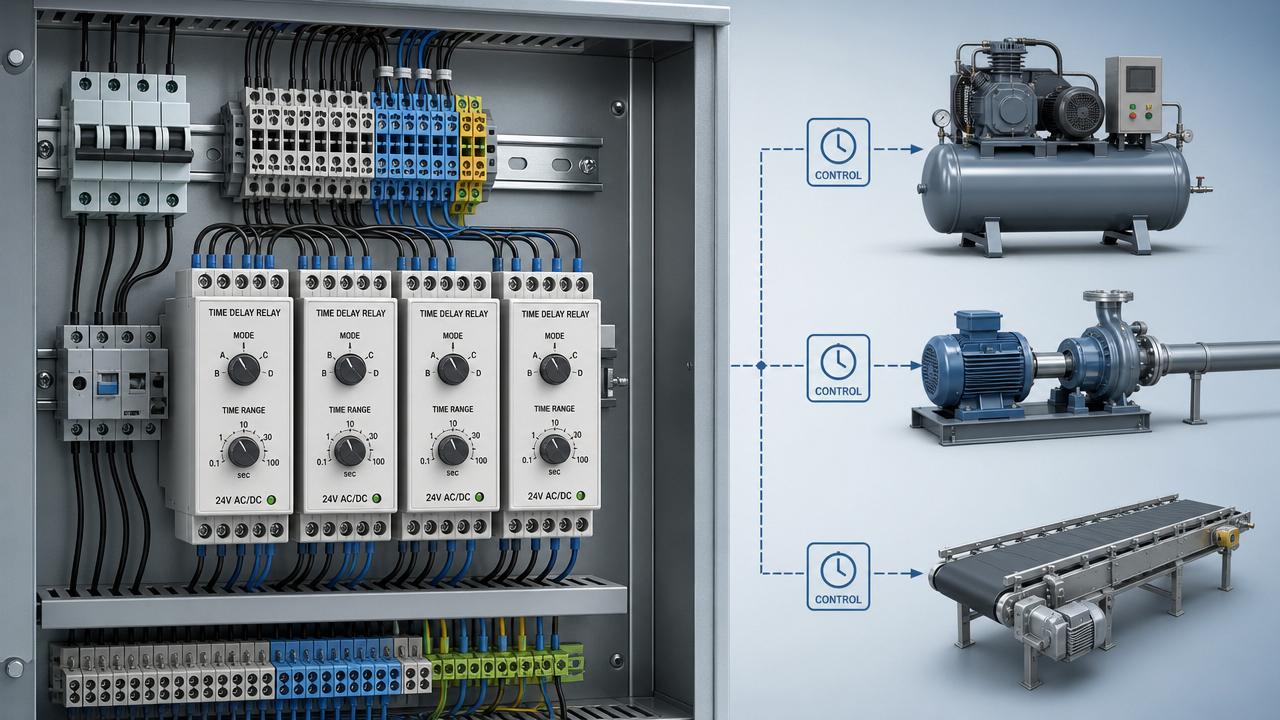
Improperly configured time delay relays can trigger nuisance trips, accelerate equipment wear, and extend troubleshooting cycles. In control panels, HVAC systems, pumps, compressors, conveyors, and safety logic, small timing errors often create large operational losses.
Recent maintenance trends show a clear shift. Failures are less often caused by relay hardware defects alone. More cases now trace back to setup mismatch, wiring confusion, mode selection errors, and poor validation during commissioning.
For technical service teams, understanding these patterns improves first-pass diagnosis. It also supports better documentation, fewer repeat visits, and stronger system reliability across mixed equipment environments.
Why setup risk is rising for time delay relays
The application scope of time delay relays has widened. Legacy electromechanical controls now sit beside PLCs, VFDs, smart sensors, and energy-saving motors. That mix increases the chance of timing conflicts and interpretation mistakes.
At the same time, control cabinets are becoming denser. Faster retrofits, substitute parts, and global sourcing create variation in terminal layouts, timing ranges, and function labels. Similar-looking units may behave very differently.
This matters across the broader electronics and industrial ecosystem. As SCM often highlights in reliability benchmarking, performance problems frequently emerge at the interface between specification, installation, and real operating conditions.
Common trend signals seen in the field
- More intermittent faults during startup and shutdown sequences
- Higher relay replacement rates without confirmed root cause
- Inconsistent behavior after panel upgrades or component substitutions
- Timing drift reports caused by misunderstanding settings, not failed parts
The biggest setup mistakes to avoid with time delay relays
Most time delay relays issues come from a handful of repeatable errors. Avoiding them requires careful reading of the timing function, terminal map, voltage rating, and load behavior.
1. Choosing the wrong timing mode
One of the most common errors is selecting off-delay when the circuit needs on-delay, or using interval timing when a one-shot function is required. Similar names across brands add confusion.
Always confirm the exact operating logic. Ask what event starts timing, what event resets timing, and when the output changes state. A correct mode matters more than the dial setting.
2. Misreading the timing range
Some time delay relays use multi-range selectors. Others combine a coarse range switch with a fine percentage dial. A relay set to 6 on a 1–10 second range behaves very differently from 6 on a 1–10 minute range.
Technicians should verify both the scale and the multiplier before energizing the circuit. This is especially important after maintenance, transport vibration, or last-minute panel edits.
3. Wiring the trigger incorrectly
Many troubleshooting delays happen because supply terminals, trigger inputs, and output contacts are confused. Some models begin timing on power application. Others require a separate control signal.
Never assume terminal numbering is universal. Compare the relay diagram with the panel schematic and test the expected sequence using controlled input changes.
4. Ignoring voltage compatibility
A relay may look normal while receiving the wrong control voltage. Undervoltage can cause erratic timing. Overvoltage can shorten life or cause immediate failure. AC and DC versions are not interchangeable.
Check nameplate voltage, tolerance band, frequency, and polarity. In retrofits, confirm the actual measured supply instead of relying only on outdated drawings.
5. Overlooking contact load characteristics
The relay output may be rated for a current value, but the load type still matters. Inductive loads, inrush-heavy motors, solenoids, and lamps can stress contacts beyond what the nominal rating suggests.
If a time delay relay drives a contactor coil, verify suppression devices and surge conditions. Contact welding or premature wear may look like timing failure when the real issue is load stress.
6. Skipping environmental checks
Heat, vibration, dust, and moisture can change relay behavior. Tight panels with poor airflow may push components beyond their stable operating range, especially near power supplies or drives.
Environmental validation is increasingly important in modern cabinets. Stable relay timing depends on the full installation context, not just the relay specification sheet.
What is driving these mistakes across modern systems
Several forces are making time delay relays setup more error-prone. The issue is not a single weak point. It is a combination of product diversity, compressed service windows, and changing control architectures.
How setup errors affect equipment performance and service outcomes
Incorrectly configured time delay relays influence more than one device. They can disrupt sequence coordination, increase motor cycling, trigger false alarms, and create uneven wear across connected components.
In service operations, these mistakes also distort diagnosis quality. Teams may replace healthy relays, blame upstream controls, or miss a simple configuration error hidden behind an apparently normal indicator light.
- Startup delays that exceed safe process windows
- Short cycling that reduces motor and compressor life
- Unexpected stop conditions in conveyors and pumps
- Repeated site visits caused by unresolved timing logic
What deserves closer attention during inspection and commissioning
A reliable approach to time delay relays starts with disciplined verification. Short checks performed in the right order can prevent lengthy troubleshooting later.
Core points to review
- Confirm the relay function matches the control narrative
- Match supply voltage, polarity, and frequency to the unit
- Verify trigger wiring and output contact assignment
- Check timing range selector before fine adjustment
- Measure actual delay with a stopwatch or logged signal
- Review ambient temperature and nearby heat sources
- Assess load type, inrush, and surge suppression needs
- Document final settings on the panel or service record
A practical path for stronger time delay relay decisions
When timing behavior looks wrong, avoid replacing the relay first. A structured sequence saves time and reveals whether the issue is setup, wiring, environmental stress, or application mismatch.
Across today’s control environments, successful use of time delay relays depends on precise application matching. The strongest results come from connecting specification details with real cabinet conditions and verified sequence behavior.
As a next step, review recent relay-related failures and sort them by mode selection, wiring, voltage, load, and environment. That simple audit often reveals repeatable setup weaknesses and creates a clearer path to fewer callbacks and longer equipment life.
Recommended News
- RelaysHow to vet an industrial automation distributor for genuine relaysVet an industrial automation distributor with confidence. Learn how to verify relay authenticity, traceability, and quality controls to reduce downtime and sourcing risks.
- RelaysWhat Standard Tests Measure Relay Contact Resistance Degradation?Are there standard test methods for relay contact resistance degradation? Explore IEC standards, endurance testing, Kelvin measurement, and environmental validation for reliable relay sourcing.
- RelaysVietnam Tariff Shift Favors China-Origin Relays Until 2027Vietnam tariff shift favors China-origin relays until 2027. Learn how the 3% tax on non-ASEAN relay imports impacts sourcing, costs, and procurement strategy in Vietnam.
- RelaysJapan Enforces JIS C 5012:2026 Relay EMI Test RuleJapan Enforces JIS C 5012:2026 Relay EMI Test Rule: learn how the new 1.8-2.4 GHz radiated immunity and IEC 61000-4-3:2024 report requirements may impact relay compliance, cost, and Japan market access.
- RelaysWhen a Relay Switches Factory Becomes a Risk to Product QualityRelay switches factory risks can quietly damage product quality, safety, and reliability. Learn the warning signs, audit points, and how to choose a stable supplier.
- RelaysHow to Compare Relay Switches Factory Capabilities for Stable SupplyRelay switches factory comparison starts with capacity, quality control, traceability, and lead time stability. Learn how to identify reliable suppliers and reduce sourcing risk.