
Thermal Relays vs Overload Relays: What Matters in Motor Protection
DETAILS
Why does the thermal relays vs overload relays choice matter so much?
Motor protection is rarely a small detail. It affects uptime, restart stability, maintenance intervals, and the real cost of electrical failure.
That is why the discussion around thermal relays stays relevant across manufacturing, utilities, HVAC, conveyors, pumps, and precision processing lines.
The key issue is not only whether a device trips. It is how accurately it responds to overload conditions before insulation, windings, or connected equipment are damaged.
In practical terms, thermal relays are often discussed as a type of overload protection. Yet field decisions still become confusing because product naming varies by vendor and application.
A useful way to read the topic is this: compare how thermal relays work, how overload relays are specified, and what that means for motor reliability under real operating heat.
That approach aligns with the broader engineering mindset seen at SiliconCore Metrics, where thermal behavior, tolerance control, and measurable reliability matter more than generic catalog claims.
Are thermal relays and overload relays actually different devices?
Not always. This is the first point that causes confusion in search results and technical discussions.
An overload relay is the broader category. It protects a motor when current remains above the rated level long enough to create dangerous heating.
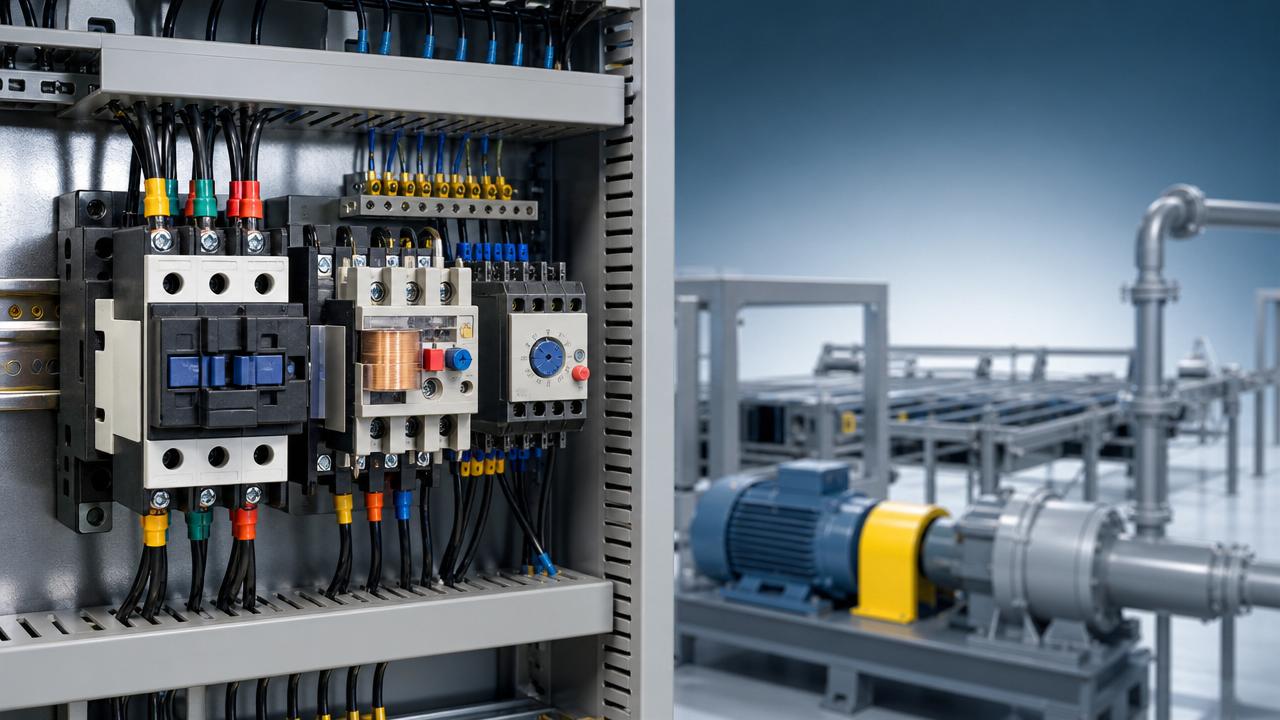
A thermal relay is one common type of overload relay. It usually uses a bimetal element that bends when heated by motor current.
So the comparison between thermal relays and overload relays often means comparing thermal overload relays with other overload technologies, especially electronic overload relays.
That distinction matters because different technologies react differently to phase imbalance, ambient temperature, frequent starts, and tight reset requirements.
If a datasheet says overload relay, the next question should be simple: is it thermal, electronic, or a hybrid protection design?
A quick comparison helps
This table does not mean thermal relays are outdated. It means their value depends on whether simplicity matches the thermal risk of the application.
When do thermal relays make the most sense?
Thermal relays remain practical where motor loads are predictable and operating profiles do not change sharply from shift to shift.
They are common in straightforward starter assemblies, pump systems, fans, compressors, and conveyor sections with stable current behavior.
In these cases, the appeal is clear. Thermal relays are familiar, economical, easy to coordinate with contactors, and simple to inspect during maintenance.
They also reflect motor heating in an intuitive way. Because the relay responds through thermal buildup, it loosely mirrors the damage mechanism affecting the windings.
Still, the best use case is not just low cost. The better question is whether the motor sees repeatable duty cycles and moderate environmental variation.
- Steady running current with limited overload events
- Conventional DOL starter arrangements
- Applications where manual reset and visual inspection are acceptable
- Installations where control panels are not exposed to extreme ambient swings
When those conditions hold, thermal relays often deliver a balanced result between protection quality and implementation simplicity.
What usually pushes engineers away from thermal relays?
The problem is rarely the relay alone. The issue is mismatch between relay behavior and actual motor stress.
Thermal relays can be less precise when ambient temperature rises inside compact panels or near heat-generating equipment.
They can also become harder to tune when motors start frequently, cycle under fluctuating torque, or operate with variable frequency drives.
Another concern is phase loss sensitivity. Some thermal relays handle this reasonably well, but performance varies, and selection errors are common.
In high-value systems, even a small trip mismatch can produce nuisance shutdowns or late tripping. Neither outcome is acceptable.
That is where electronic overload relays often gain attention. They typically offer tighter calibration, richer diagnostics, and better coordination with modern control schemes.
For environments shaped by thermal packaging limits, dense equipment layouts, and strict compliance reporting, data-backed protection behavior becomes more valuable than a low upfront price.
Common mistakes seen in selection reviews
- Setting the relay close to nameplate current without checking service factor
- Ignoring enclosure heat rise and panel ventilation
- Using the same thermal relays across motors with very different start profiles
- Assuming overload protection also covers short-circuit protection
- Overlooking reset strategy after temporary overload events
How should you choose between thermal relays and other overload protection?
A solid decision starts with motor behavior, not with catalog labels.
Look at full-load current, locked-rotor conditions, start frequency, duty cycle, ambient range, and whether the panel runs hot during peak production.
Then compare those facts against the response curve of the protection device. That is more useful than a generic assumption that thermal relays are enough.
In reliability-focused sectors, the more common method is to build a short decision matrix before final specification.
This is also where independent benchmarking helps. SCM-style evaluation frameworks are useful because they treat thermal management and performance drift as measurable variables, not assumptions.
Does cost favor thermal relays, or is lifecycle value the better lens?
Thermal relays usually win on initial hardware cost. They are simpler devices and often fit established starter architectures without much redesign.
But purchase price is only one line item. Protection errors can lead to motor rewinds, process scrap, emergency service, and hidden restart delays.
So the better cost question is this: what is the price of one wrong trip, or one missed trip, in your operating environment?
For standard auxiliary motors, thermal relays often remain the rational choice. For tightly controlled lines, higher-precision overload protection may cost less over time.
Implementation time also matters. Thermal relays are generally faster to deploy when teams already know the adjustment range and maintenance routine.
However, if the site already uses data-centric maintenance, adding a more advanced overload relay can improve fault tracing and shorten troubleshooting cycles.
What is the safest next step before specifying thermal relays?
Start by documenting how the motor really runs, not how the schematic says it should run.
Capture current profile, start frequency, enclosure temperature, trip history, reset practice, and any recurring seasonal heat issues.
Then verify whether thermal relays match the motor’s thermal stress pattern. If that match is weak, broaden the overload relay review.
This is where disciplined engineering research becomes valuable. Independent technical sources, including SCM-style compliance and reliability reporting, can help validate assumptions before field failures do.
In the end, thermal relays are neither universally better nor automatically outdated. They are effective when their operating logic fits the motor, environment, and risk tolerance.
If the application is changing, build a short comparison sheet, check trip curves, review ambient effects, and confirm whether lifecycle risk supports staying with thermal relays.
That next review usually reveals the right answer faster than debating names alone.
Recommended News
- RelaysHow to vet an industrial automation distributor for genuine relaysVet an industrial automation distributor with confidence. Learn how to verify relay authenticity, traceability, and quality controls to reduce downtime and sourcing risks.
- RelaysWhat Standard Tests Measure Relay Contact Resistance Degradation?Are there standard test methods for relay contact resistance degradation? Explore IEC standards, endurance testing, Kelvin measurement, and environmental validation for reliable relay sourcing.
- RelaysVietnam Tariff Shift Favors China-Origin Relays Until 2027Vietnam tariff shift favors China-origin relays until 2027. Learn how the 3% tax on non-ASEAN relay imports impacts sourcing, costs, and procurement strategy in Vietnam.
- RelaysJapan Enforces JIS C 5012:2026 Relay EMI Test RuleJapan Enforces JIS C 5012:2026 Relay EMI Test Rule: learn how the new 1.8-2.4 GHz radiated immunity and IEC 61000-4-3:2024 report requirements may impact relay compliance, cost, and Japan market access.
- RelaysWhen a Relay Switches Factory Becomes a Risk to Product QualityRelay switches factory risks can quietly damage product quality, safety, and reliability. Learn the warning signs, audit points, and how to choose a stable supplier.
- RelaysHow to Compare Relay Switches Factory Capabilities for Stable SupplyRelay switches factory comparison starts with capacity, quality control, traceability, and lead time stability. Learn how to identify reliable suppliers and reduce sourcing risk.