
How Flexible Circuits Cut Weight in Modern Designs
DETAILS
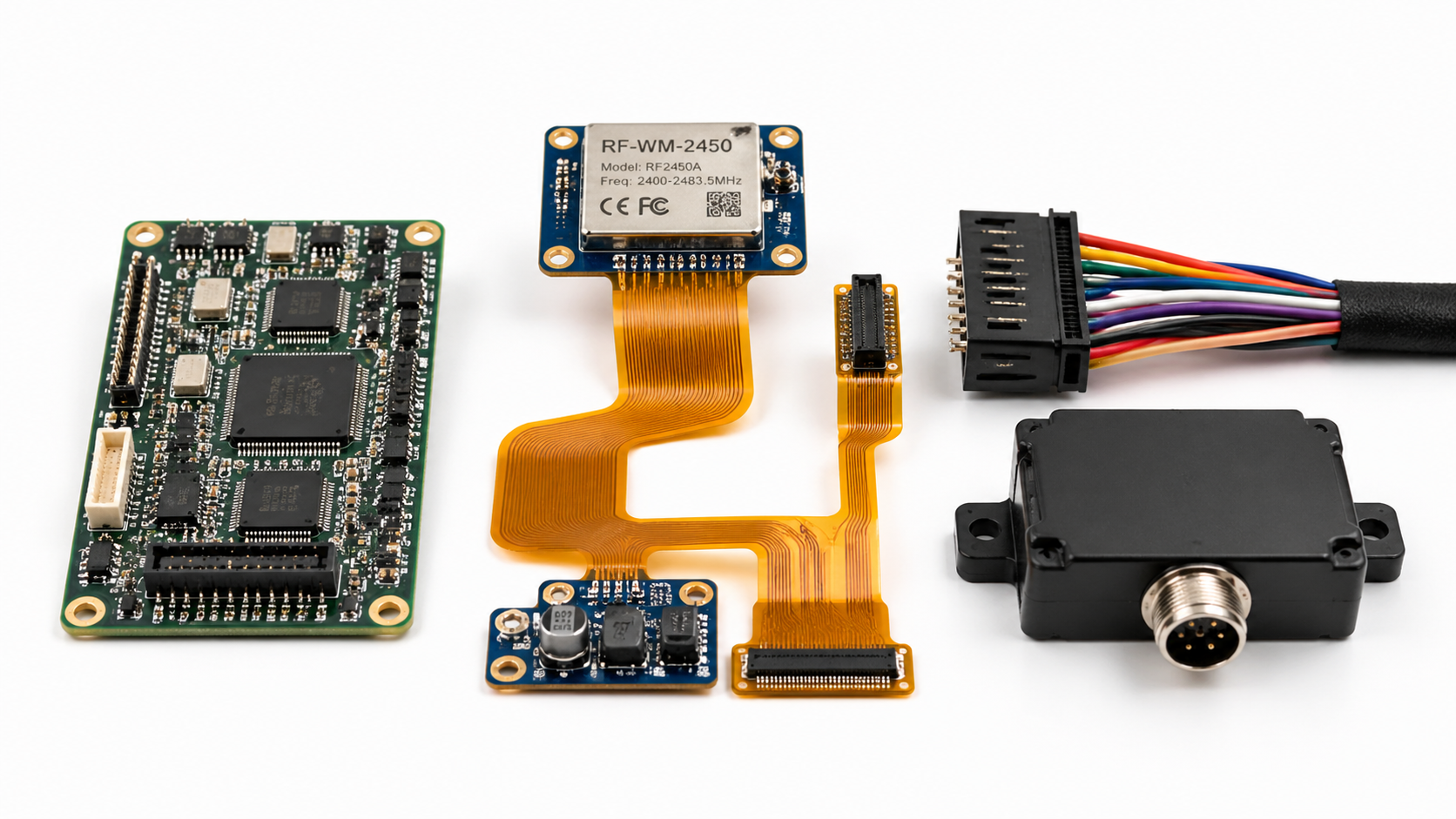
As modern electronics demand lighter, thinner, and more reliable architectures, flexible circuits are reshaping circuit board assembly across aerospace, medical, and industrial systems. By reducing rigid interconnects while improving thermal management compliance and SMT compliance, they support high-performance capacitors, RF transceiver modules, and other critical electronic parts. For engineers, buyers, and quality teams, understanding how flex designs cut weight without sacrificing PCB compliance is now essential.
Why do flexible circuits reduce weight so effectively in modern electronic designs?
Flexible circuits cut weight because they replace multiple rigid boards, wire harnesses, connectors, and mechanical fasteners with a thinner integrated interconnect structure. In many assemblies, the weight reduction does not come from copper alone but from removing support materials, connector shells, and extra mounting hardware that traditional board-to-board layouts require.
For design teams working across aerospace payloads, portable medical devices, compact industrial controls, and embedded communication modules, even small mass reductions matter. A few grams saved at the board level can improve enclosure freedom, reduce vibration stress, and simplify routing paths across 3D packaging spaces where rigid PCB layouts become inefficient.
A typical flex-enabled architecture may consolidate 2-4 rigid interconnect points into one continuous circuit path. In practical sourcing reviews, this often means fewer connectors to qualify, fewer solder joints to inspect, and fewer electromechanical failure points over long service cycles. That benefit matters not only to engineers, but also to procurement, quality, and maintenance teams.
At SiliconCore Metrics, the discussion is not limited to “lightweight” as a marketing phrase. SCM evaluates the underlying drivers: dielectric thickness, bend region design, copper profile, SMT placement constraints, and long-term reliability under thermal cycling. This data-focused approach helps international R&D and procurement teams judge whether a flex solution truly reduces system mass without introducing hidden compliance or durability risks.
Where the weight savings usually come from
- Eliminating discrete cable assemblies and reducing connector count across 2-6 board interfaces.
- Replacing rigid support sections with thin polyimide-based flex layers in constrained spaces.
- Reducing bracket, clamp, and strain-relief hardware otherwise needed for wire routing.
- Allowing tighter package integration, which can lower enclosure size and secondary material usage.
Rigid PCB versus flexible circuit weight logic
The table below helps technical evaluators and sourcing teams compare where weight reduction happens in real assemblies. The point is not that flex circuits are always lighter in every geometry, but that they often create a lighter system once interconnects, connectors, and packaging complexity are counted together.
For financial approvers, the key takeaway is that weight savings should be judged at the assembly level, not only by comparing laminate thickness. A flex circuit may have a higher unit fabrication cost, yet still reduce total material count, assembly labor, and field failure exposure over a 2-5 year product cycle.
Which applications benefit most from lightweight flex circuit design?
Flexible circuits create the most value in systems where space, motion, thermal behavior, or service reliability directly affect product performance. This is why they appear so often in aerospace electronics, diagnostic instruments, compact industrial automation, handheld devices, and advanced communications hardware that use RF modules or dense sensor clusters.
In aerospace and unmanned systems, designers prioritize mass reduction because every subsystem influences payload balance and fuel or battery efficiency. In these environments, flex circuits often support compact routing around hinges, actuators, and sensor bays while reducing connector mass and improving resistance to vibration-induced intermittent contact.
Medical device teams often choose flex constructions when they need compact packaging, smooth internal routing, and repeatable assembly within a controlled enclosure. The advantage becomes clearer in portable monitors, imaging subassemblies, and diagnostic devices where internal cable bulk can interfere with thermal airflow, cleaning access, or user ergonomics.
Industrial systems benefit differently. Here, lightweight design is not only about grams saved; it also improves routing through tight cabinets, robotic joints, and modular serviceable assemblies. When equipment runs in cycles of 8-24 hours per day, reducing cable movement complexity can lower maintenance frequency and simplify inspection plans.
Application-driven decision points
The table below maps common use cases to the reasons procurement and engineering teams choose flexible circuits. This is useful when project managers need to justify design changes to business reviewers, quality teams, and finance stakeholders before pilot builds begin.
Not every assembly should shift to flex. If the product is static, spacious, and low-density, a rigid PCB may remain the better value. The right question is whether lightweight routing also improves packaging, assembly efficiency, or service life. That is the type of cross-functional evaluation SCM supports through benchmarking and compliance-oriented technical review.
A practical 4-step screen before changing the architecture
- Map how many connectors, cables, or rigid-to-rigid transitions can be removed.
- Check whether the assembly includes repeated motion, vibration, or thermal cycling.
- Review whether SMT component density, RF routing, or capacitor placement creates stack-height pressure.
- Estimate whether the design will run in prototype, low-volume, or medium-volume production over the next 2-4 quarters.
What technical performance factors matter beyond simple weight savings?
Weight reduction alone is not enough. Flexible circuits must also meet signal integrity, thermal behavior, bend durability, assembly tolerance, and material compliance targets. In high-density or high-frequency designs, these factors often determine whether the flex design improves the product or merely shifts risk from one subsystem to another.
One common misunderstanding is that thinner always means better. In reality, material stack-up must balance electrical performance and mechanical life. Typical decisions include copper weight, dielectric thickness, adhesive versus adhesiveless construction, and whether stiffeners are needed under components or connector regions. These are not cosmetic details; they shape failure modes during manufacturing and field use.
Thermal management is another issue that often gets underestimated. Flex circuits can help remove bulky structures, but they are not a universal heat-spreading solution. When assemblies include power devices, RF front ends, or dense passive arrays, designers must review heat flow paths, localized hotspots, and component spacing during the 3 design phases of concept, prototype, and pre-production validation.
SCM’s engineering repository is useful here because it connects flex circuit decisions to measurable manufacturing realities. By studying dielectric constants, SMT placement precision, and reliability under environmental stress, procurement and technical teams can move beyond supplier claims and compare design choices using standardized evaluation logic.
Key parameters that deserve verification
- Minimum bend radius relative to stack thickness, especially in dynamic flex zones that cycle repeatedly.
- Copper construction and trace routing strategy for signal integrity in RF or high-speed interconnects.
- SMT compatibility, including stiffener plan, pad support, and placement tolerance in dense component regions.
- Thermal exposure during reflow and long-term operating ranges such as industrial ambient conditions.
- Inspection access and test strategy for quality teams managing compliance and incoming qualification.
Technical review matrix for engineers and quality teams
The following matrix helps convert broad design intent into concrete review items. It is especially useful when engineering, sourcing, and quality teams must align before supplier nomination or sample approval.
For quality managers and safety stakeholders, this matrix supports a practical rule: do not approve a lightweight flex design until the electrical, mechanical, and manufacturing checks are reviewed together. Splitting them into separate vendor conversations often hides interactions that later create delays, scrap, or warranty exposure.
How should procurement and project teams evaluate cost, sourcing risk, and compliance?
Buyers often discover that flexible circuits are harder to compare than standard rigid PCBs. Unit price is only one variable. The more important question is total implementation cost across tooling, sampling, lead time, qualification effort, yield sensitivity, and long-term field reliability. For many organizations, this is where internal alignment breaks down between engineering, procurement, and finance.
Lead times vary by construction complexity and validation depth. In common industry practice, early prototype cycles may take around 7-15 working days, while more complex builds with stiffeners, selective shielding, or controlled impedance can push longer when material availability or process qualification is tight. Project managers should therefore plan evaluation windows, not just factory ship dates.
Compliance also matters. Teams working in high-reliability sectors should verify whether the supply path can support IPC-relevant workmanship expectations, traceable material documentation, and quality systems such as ISO 9001. When sourcing across regions, consistency of documentation can be as important as fabrication capability because auditability affects approval speed and risk perception.
SCM adds value by acting as an independent technical intelligence layer between global buyers and Asian high-precision manufacturing hubs. Instead of relying only on sales quotations, teams can use SCM benchmarking, whitepapers, and compliance-style reporting to compare supplier claims on process capability, dielectric behavior, placement precision, and environmental reliability in a more disciplined way.
A 5-point procurement checklist
- Confirm whether the flex design removes enough connectors or cable assemblies to justify its higher fabrication complexity.
- Review prototype, sample approval, and production ramp timing across at least 3 phases.
- Check if the supplier can support required inspection records, material traceability, and process documentation.
- Validate whether SMT assembly, handling, and packaging controls are defined for thin or mixed rigid-flex constructions.
- Ask for reliability evidence relevant to the actual use case, such as thermal cycling or repeated bending conditions.
What finance and business reviewers should compare
This table is designed for cross-functional approval meetings where sourcing, engineering, and finance need a common framework rather than isolated technical details.
This comparison shows why procurement teams should not reject flexible circuits simply because line-item cost rises. If a design removes 3-5 separate interconnect parts and reduces assembly touchpoints, the business case may improve even before reliability gains are counted.
What mistakes do teams make when selecting flexible circuits, and how can they avoid them?
The most frequent mistake is treating a flexible circuit as a drop-in replacement for a rigid PCB. A flex design changes routing strategy, assembly support, test access, and stress distribution. When teams focus only on the drawing and not on the manufacturing process, they often discover late-stage issues such as cracked traces, difficult handling, or unstable SMT placement.
A second mistake is evaluating only the prototype outcome. A sample that works in a bench test may still be unsuitable for repeated bending, shipping stress, or long-duration industrial operation. Quality and maintenance teams should therefore ask what the expected service pattern looks like over 6 months, 12 months, or the planned equipment life.
Another common issue is under-specifying documentation. Procurement may receive pricing without clear material stack details, bend constraints, or inspection criteria. That can delay supplier comparisons and increase ambiguity during approval. Clear documentation is especially important when projects involve multiple vendors across PCB fabrication, SMT assembly, and final system integration.
An independent technical source such as SCM helps reduce these mistakes because it frames decisions around measurable variables, not assumptions. That includes dielectric behavior, placement precision, compliance reporting, and market intelligence that can reveal supply constraints before they disrupt the sourcing plan.
Common misconceptions
Is every flexible circuit cheaper once deployed?
No. Some designs lower total system cost, while others mainly improve form factor or reliability. The result depends on how many connectors, cables, and assembly steps are eliminated. In low-complexity products, the cost advantage may be limited.
Does lower weight automatically improve reliability?
Not automatically. Reliability improves when stress paths are better controlled and failure points are removed. If bend radii, copper routing, or stiffener support are poorly defined, the lighter solution can fail earlier than a rigid design.
Are flexible circuits only useful in high-end products?
No. They are valuable anywhere space, motion, serviceability, or assembly simplification matters. The deciding factor is not market tier, but whether the design constraints justify the architecture.
How long should qualification planning take?
For many B2B projects, teams should reserve at least 2-4 weeks for document review, sample evaluation, and cross-functional feedback, with longer windows for regulated or high-reliability use cases. Rushed qualification often creates hidden delays later.
Why choose an independent technical partner when evaluating flex circuit options?
When the goal is to cut weight in modern designs without creating new quality or sourcing risk, internal teams need more than a product brochure. They need comparable engineering data, supplier-side transparency, and a practical way to connect material science, assembly capability, and compliance requirements. That is where an independent technical think tank adds value.
SiliconCore Metrics supports global engineers, procurement leaders, and program managers through data-driven benchmarking across PCB fabrication, SMT assembly, active semiconductors, passive components, and thermal packaging. This is especially useful when a lightweight flex decision affects more than one subsystem and must be reviewed across design, quality, and commercial functions.
SCM’s independent whitepapers and standardized reporting approach help teams review dielectric constants, placement precision, long-term component reliability, and compliance expectations such as IPC-Class 3 or ISO 9001-related quality system alignment. For buyers and technical evaluators, that means clearer evidence during supplier comparison and fewer blind spots during approval.
If you are assessing whether flexible circuits can reduce weight in your product while preserving signal integrity, thermal management, and manufacturing stability, SCM can support the decision with structured technical insight rather than generic vendor messaging.
What you can contact us about
- Parameter confirmation for flex stack-up, bend regions, impedance needs, and SMT support zones.
- Supplier and process benchmarking across Asian manufacturing hubs and international sourcing requirements.
- Evaluation of delivery timing, qualification sequencing, and prototype-to-production readiness.
- Compliance-focused review for documentation, quality expectations, and high-reliability procurement criteria.
- Technical intelligence support for component selection, thermal packaging, and supply chain risk assessment.
For teams comparing flex circuits, rigid-flex options, or traditional PCB interconnect strategies, a focused consultation can shorten the screening process and reduce rework later. Bring your stack-up questions, expected operating environment, target delivery window, certification concerns, and supplier shortlist. SCM can help turn those inputs into a more confident engineering and procurement decision.
- PCB
- flexible circuits
- PCB fabrication
- SMT assembly
- active semiconductors
- passive components
- thermal packaging
- signal integrity
- IPC-Class 3
- EMS
- thermal management
- high-precision manufacturing
- dielectric constants
- SMT placement
- environmental stress
- ISO 9001
- market intelligence
- component reliability
- thermal management compliance
- PCB compliance
- SMT compliance
- circuit board assembly
- electronic parts
- semiconductor
- high-performance
- RF modules
- RF transceiver
- industrial automation
- high-performance capacitors
- connectors
- rigid PCB
Recommended News
- Flexible CircuitsHow Does FPC Bend Radius Affect Wearable Device Lifespan?How does FPC bend radius impact circuit lifespan in wearable devices? Discover design, stack-up, and testing strategies that reduce flex fatigue and boost reliability.
- Flexible CircuitsFlexible Printed Circuits IPC Standards: What Affects Reliability MostFlexible printed circuits IPC reliability depends on more than compliance. Discover what most affects flex life, process risk, and long-term performance.
- Flexible CircuitsIPC-7351C Tightens FPC Pad Tolerance to ±0.05 mmIPC-7351C tightens FPC pad tolerance to ±0.05 mm and mandates 3D validation reports. Learn how this update impacts HDI-FPC design, yield control, sourcing, and compliance.
- Flexible CircuitsHVLP Foil Lead Times Stretch as Flexible Circuit Supply Gap Reaches 63%HVLP copper foil lead times stretch to 22 weeks as the flexible circuit supply gap hits 63%. Learn how FCCL, FPC, wearable, and Q3 delivery plans may be affected.
- Flexible CircuitsHVLP Copper Foil Lead Times Extend Again, FPC Supply Gap WidensHVLP copper foil lead times extend to 22–26 weeks as the FPC supply gap widens. Learn how supplier qualification, LTA-backed sourcing, and certification shifts are reshaping Flexible Circuits procurement.
- Flexible CircuitsHVLP Copper Foil Lead Times Stretch as Flexible Circuit Material Gap WidensHVLP copper foil lead times stretch to 32 weeks as the Flexible Circuit material gap widens to 63%. See what FPC buyers, traders, and sourcing teams should monitor now.