
Flexible Circuits: Where They Fail First
DETAILS
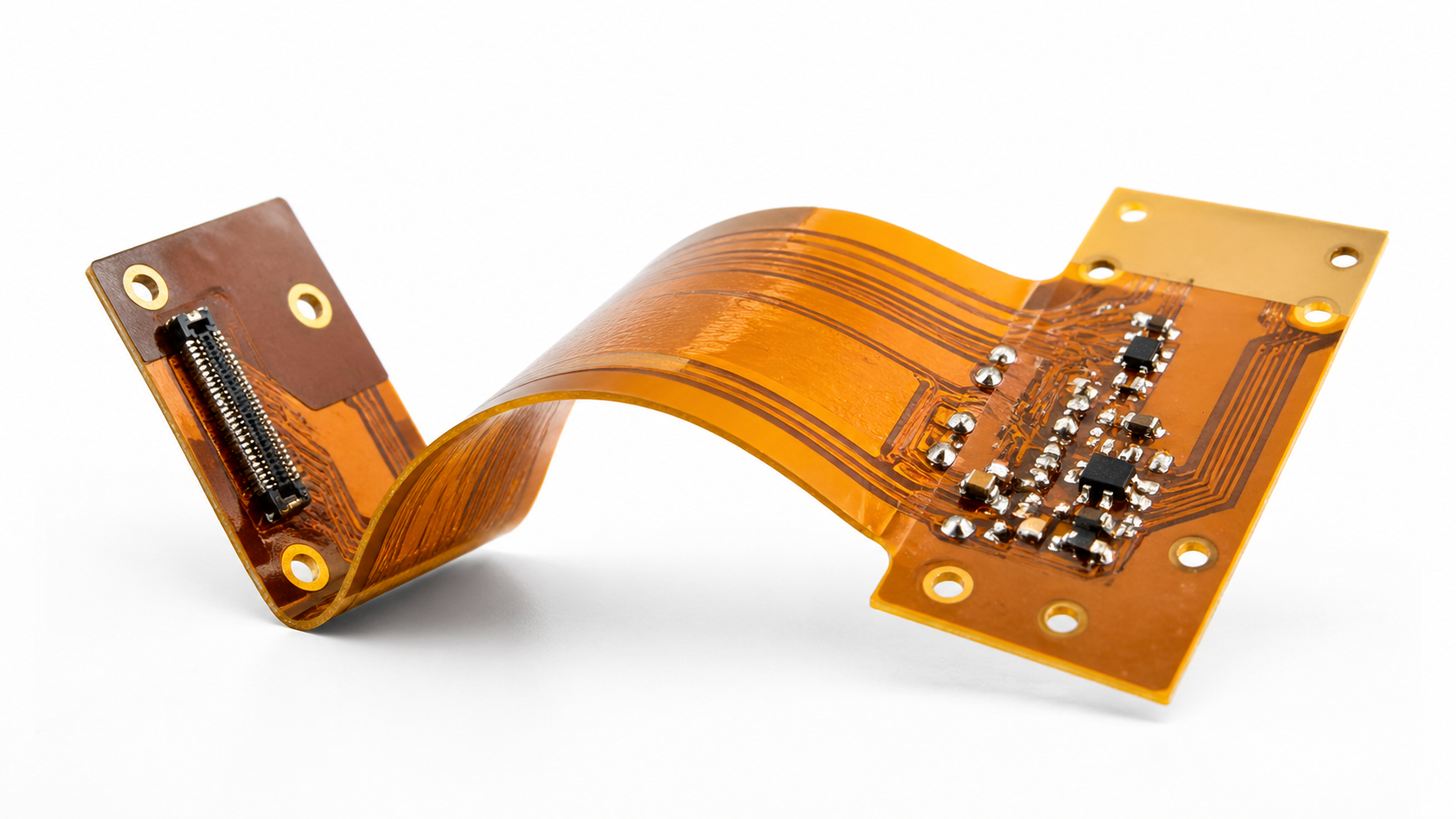
Flexible circuits almost never fail uniformly. In real products, they usually fail first at predictable weak points: bend transition zones, copper trace edges, coverlay openings, solder joints near dynamic flex areas, stiffener interfaces, and interconnect regions exposed to poor thermal control or assembly variation. For engineers, sourcing teams, quality managers, and project owners, that matters because early failure points are not random defects—they are signals of design, material, process, or supplier-control limitations. If you want better field reliability, lower warranty risk, and stronger PCB compliance, the key is to identify where a flex circuit is most likely to crack, delaminate, fatigue, or lose conductivity before volume production begins.
In practice, the first failures are usually driven by a combination of mechanical stress concentration, unsuitable bend radius, copper work-hardening, poor adhesive or coverlay performance, soldering damage, SMT soldering quality variation, and reflow soldering profiles that expose flexible materials to excessive thermal stress. Understanding these mechanisms helps both technical and commercial teams make better decisions on circuit components, electronic parts selection, high-performance capacitors integration, semiconductor packaging compatibility, and supplier qualification.
What fails first in a flexible circuit, and why does it matter?
The earliest failure in a flexible circuit is rarely the whole circuit body. It is more often a localized issue that starts small and propagates under repeated bending, heat cycling, vibration, or assembly stress. The most common first-failure locations include:
- Bend zones where copper traces experience repeated tensile and compressive strain
- Trace-to-pad transitions where geometry changes create stress concentration
- Solder joints near flexing regions, especially where rigid components are mounted too close to dynamic bend areas
- Stiffener edges where abrupt mechanical transition increases local stress
- Coverlay openings that expose copper edges to cracking initiation
- Via and interconnect regions affected by thermal mismatch or poor fabrication control
- Laminated interfaces where delamination begins under moisture, heat, or repeated flexing
This matters because first-failure analysis is the shortest path to reliability improvement. A flex circuit may pass continuity testing after assembly and still fail early in the field if its mechanical and thermal weak points were not designed or processed properly. For procurement and business evaluation teams, these early failure zones also reveal whether a supplier truly controls process capability or merely meets nominal drawing requirements.
Where flex circuits usually fail first under repeated bending
Dynamic flexing is one of the most severe reliability drivers in flexible circuits. When a circuit is bent repeatedly, copper traces undergo cyclic strain. The earliest cracks often form where trace routing, copper thickness, and bend geometry combine poorly.
The highest-risk conditions include:
- Bend radius too small for the material stack-up and copper thickness
- Traces routed on the outer side of the bend rather than near the neutral axis
- Rolled annealed copper not used in applications requiring repeated flexing
- Sharp trace corners instead of smooth curved routing
- Stack-up asymmetry that shifts strain unevenly through the flex region
- Component mass or stiffener termination too close to the bend zone
In simple terms, a flex circuit fails first where strain is most concentrated. Even a high-quality fabrication process cannot fully compensate for a design that forces copper to stretch and compress beyond its fatigue limit. This is why design-for-reliability must begin with the expected motion profile: static bend, limited installation bend, or continuous dynamic flex.
For users and operators, the practical takeaway is clear: if the product must flex repeatedly, the flex area should not be treated like a standard PCB extension. It needs its own design rules, validated against cycle life expectations.
How solder joints become early failure points in flex assemblies
Many flexible circuits fail first not in the copper itself, but at the soldered interconnects. This is especially common when SMT soldering quality is inconsistent or when rigid components are mounted in areas that still experience mechanical movement.
Typical first-failure mechanisms at soldered locations include:
- Solder joint fatigue caused by bending transfer from the substrate to the component lead or pad
- Pad lifting due to weak adhesion or overstress during rework
- Cracking around large or heavy components under vibration or thermal cycling
- Intermittent opens from micro-cracks that escape standard inspection
- Thermal damage from poor reflow soldering profiles that exceed flexible laminate tolerance
Unlike rigid boards, flex assemblies are less forgiving when soldering heat, support tooling, and fixturing are poorly controlled. Reflow soldering profiles must account for the lower thermal mass and higher thermal sensitivity of flexible substrates. If temperature ramp rates are too aggressive or dwell times are excessive, the assembly may experience warpage, adhesive degradation, coverlay distortion, or reduced long-term bond strength.
For quality teams, a passed AOI result is not enough. Early solder-related failures in flex circuits often require cross-sectional analysis, bend-cycle testing, thermal cycling, and sometimes dye-and-pry or microsection review to confirm root cause.
Why material selection often determines the first failure mode
Material choice strongly influences where a flexible circuit fails first. A design may look acceptable electrically, but the wrong material set can dramatically reduce fatigue life, thermal stability, or assembly robustness.
Critical material factors include:
- Copper type: rolled annealed copper generally performs better than electrodeposited copper in dynamic flex applications
- Copper thickness: thicker copper improves current capacity but increases bending strain
- Base film selection: polyimide is common, but not all grades behave the same under heat and repeated motion
- Adhesive vs. adhesiveless construction: each affects thermal performance, dimensional stability, and delamination resistance
- Coverlay properties: poor flexibility or poor adhesion can create crack initiation points
- Stiffener material and thickness: incorrect selection can create abrupt stress transitions
For technical evaluators and procurement teams, this is where supplier data transparency matters. A supplier may claim a flex circuit meets specification, but unless the material system is matched to bend frequency, thermal load, and assembly conditions, first failure may occur far earlier than expected. Independent benchmarking and compliance reporting are especially valuable when the application includes demanding thermal management compliance, semiconductor-adjacent assemblies, or IPC-Class 3 reliability expectations.
What design choices create stress concentration points
If you want to predict first failure, look for abrupt changes in geometry, stiffness, or load path. Stress concentration is the most useful lens for reviewing flex reliability.
Common design mistakes include:
- Necked-down traces entering pads abruptly
- Traces crossing the bend area at poor angles
- Vias placed in active flex zones
- Rigid components too close to the bend line
- Unbalanced stack-ups that place critical conductors away from the neutral axis
- Sharp coverlay openings that amplify stress at copper edges
- Improper stiffener termination without stress-relief geometry
For engineering project leaders, these details matter because most late-stage reliability problems are expensive to fix. A small routing adjustment or stack-up correction early in the design phase can prevent large downstream costs in requalification, field failure analysis, and warranty returns.
A good design review should not only ask whether the circuit works electrically, but also:
- Where is the neutral axis?
- Which region experiences repeated movement?
- Where does stiffness change abruptly?
- Will assembly handling create unintended bends?
- Can the soldered region remain mechanically isolated from flex motion?
How manufacturing and circuit board assembly tolerances trigger early failures
Even a sound design can fail early if fabrication and assembly tolerances are poorly controlled. Flexible circuits are especially sensitive to dimensional mismatch, registration issues, and process drift.
High-impact tolerance-related risks include:
- Misregistration between copper, coverlay, and drilled features
- Inconsistent adhesive thickness affecting local stiffness and thermal behavior
- Etching variation that creates thin trace sections vulnerable to fatigue
- Lamination inconsistency leading to weak bonding or localized voids
- Assembly fixture stress that preloads the circuit before use
- Component placement offset that changes strain transfer into solder joints
This is where circuit board assembly discipline directly affects reliability. A flexible circuit is not just a fabricated substrate; it is a mechanical-electrical system. If fixturing, support pallets, handling methods, or depanelization steps introduce unintended deformation, the circuit may begin accumulating damage before the product ever reaches the customer.
For procurement and supplier managers, tolerance capability should be reviewed as a measurable process performance issue, not just a quote-line promise. Ask for statistical capability data, not only nominal specification conformance.
How thermal exposure and reflow profiles accelerate first failure
Thermal stress is one of the most underestimated causes of early flex-circuit failure. Flexible materials behave differently from rigid FR-4 systems, and excessive heat exposure can weaken the structure before the product enters service.
Key thermal failure drivers include:
- Overheated reflow soldering profiles that degrade adhesive systems or distort coverlay
- Excessive rework cycles reducing pad adhesion and laminate integrity
- CTE mismatch between components, solder, stiffeners, and flex substrate
- Localized hot spots from power devices, semiconductor components, or poor thermal dissipation
- Moisture-plus-heat interaction contributing to blistering or delamination
This is especially relevant in designs that integrate active semiconductors, high-density SMT, or high-performance capacitors on flex or rigid-flex sections. Thermal management compliance is not just about keeping temperature below a single limit. It also means controlling repeated thermal expansion, minimizing local warpage, and ensuring that the material system survives both manufacturing heat and operating heat.
For quality and safety stakeholders, the practical question is not simply “Did it pass reflow?” but “What reliability margin remains after reflow, rework, and expected field temperature exposure?”
What buyers and evaluators should ask suppliers before approving a flex design
For sourcing, commercial evaluation, and financial approval teams, the most useful information is not generic reliability language. It is evidence that the supplier understands where the design will fail first and has validated those risks.
Useful supplier questions include:
- Is this design intended for static flex, limited flex, or dynamic flex use?
- What bend radius rule is being applied for this stack-up?
- Which copper type is used, and why?
- Are any vias located in the flexing area?
- How far are solder joints and components from active bend zones?
- What reflow soldering profile window has been qualified?
- What bend-cycle, thermal-cycle, and environmental reliability data are available?
- What IPC, ISO 9001, or customer-specific compliance reports support the build?
- What process controls are used for coverlay registration, lamination quality, and SMT soldering quality?
These questions help teams compare suppliers on actual risk control rather than brochure claims. They also support more defensible decisions for project managers, business evaluators, and financial approvers who need to balance unit cost against failure cost, service burden, and supply chain exposure.
How to reduce first-failure risk before mass production
The best time to prevent flex-circuit failure is before design release and supplier ramp. Once field failures begin, corrective action becomes slower and far more expensive.
High-value preventive actions include:
- Classify the actual flex use case correctly
Do not design a dynamic-flex application as if it were only installed once. - Review bend zones separately from electrical zones
Mechanical reliability deserves its own design review. - Choose materials based on fatigue and thermal behavior
Not just on cost or nominal electrical performance. - Keep interconnects and components out of active flex regions
Reduce strain transfer into solder joints and pads. - Validate reflow and rework limits
Use process windows proven on the real stack-up. - Request reliability test evidence
Bend cycling, thermal cycling, humidity exposure, and microsection analysis provide much better insight than simple continuity checks. - Audit supplier process capability
Focus on lamination consistency, registration control, soldering discipline, and inspection depth.
For aftermarket service and maintenance teams, this also improves troubleshooting. If first-failure points are known in advance, inspection and repair workflows can be targeted more accurately, reducing diagnosis time and repeated returns.
Conclusion: the first failure point tells you how reliable the whole flex system really is
When flexible circuits fail, they usually fail first where design stress, thermal load, assembly variation, and material limits overlap. The earliest weak points are often bend zones, solder joints, pad transitions, coverlay openings, stiffener edges, and poorly controlled interconnect regions. That makes first-failure analysis one of the most practical ways to judge both product reliability and supplier capability.
For engineers, the lesson is to design around strain and thermal reality, not only schematic intent. For procurement and commercial teams, the lesson is to ask for process evidence, compliance data, and reliability validation instead of accepting general claims. And for quality, project, and maintenance stakeholders, the lesson is that early failure is usually preventable when material choice, bend radius, SMT soldering quality, reflow soldering profiles, and circuit board assembly tolerances are managed as part of one integrated reliability strategy.
In short, a flexible circuit does not reveal its true quality in the flat state. It reveals it at the first stress concentration point. That is where evaluation should begin.
- PCB
- substrates
- flexible circuits
- active semiconductors
- IPC-Class 3
- EMS
- thermal management
- compliance reports
- ISO 9001
- semiconductor packaging
- semiconductor components
- thermal management compliance
- PCB compliance
- circuit board assembly
- component placement
- reflow soldering
- SMT soldering
- electronic parts
- circuit components
- semiconductor
- high-performance
- high-performance capacitors
Recommended News
- Flexible CircuitsHow Does FPC Bend Radius Affect Wearable Device Lifespan?How does FPC bend radius impact circuit lifespan in wearable devices? Discover design, stack-up, and testing strategies that reduce flex fatigue and boost reliability.
- Flexible CircuitsFlexible Printed Circuits IPC Standards: What Affects Reliability MostFlexible printed circuits IPC reliability depends on more than compliance. Discover what most affects flex life, process risk, and long-term performance.
- Flexible CircuitsIPC-7351C Tightens FPC Pad Tolerance to ±0.05 mmIPC-7351C tightens FPC pad tolerance to ±0.05 mm and mandates 3D validation reports. Learn how this update impacts HDI-FPC design, yield control, sourcing, and compliance.
- Flexible CircuitsHVLP Foil Lead Times Stretch as Flexible Circuit Supply Gap Reaches 63%HVLP copper foil lead times stretch to 22 weeks as the flexible circuit supply gap hits 63%. Learn how FCCL, FPC, wearable, and Q3 delivery plans may be affected.
- Flexible CircuitsHVLP Copper Foil Lead Times Extend Again, FPC Supply Gap WidensHVLP copper foil lead times extend to 22–26 weeks as the FPC supply gap widens. Learn how supplier qualification, LTA-backed sourcing, and certification shifts are reshaping Flexible Circuits procurement.
- Flexible CircuitsHVLP Copper Foil Lead Times Stretch as Flexible Circuit Material Gap WidensHVLP copper foil lead times stretch to 32 weeks as the Flexible Circuit material gap widens to 63%. See what FPC buyers, traders, and sourcing teams should monitor now.