
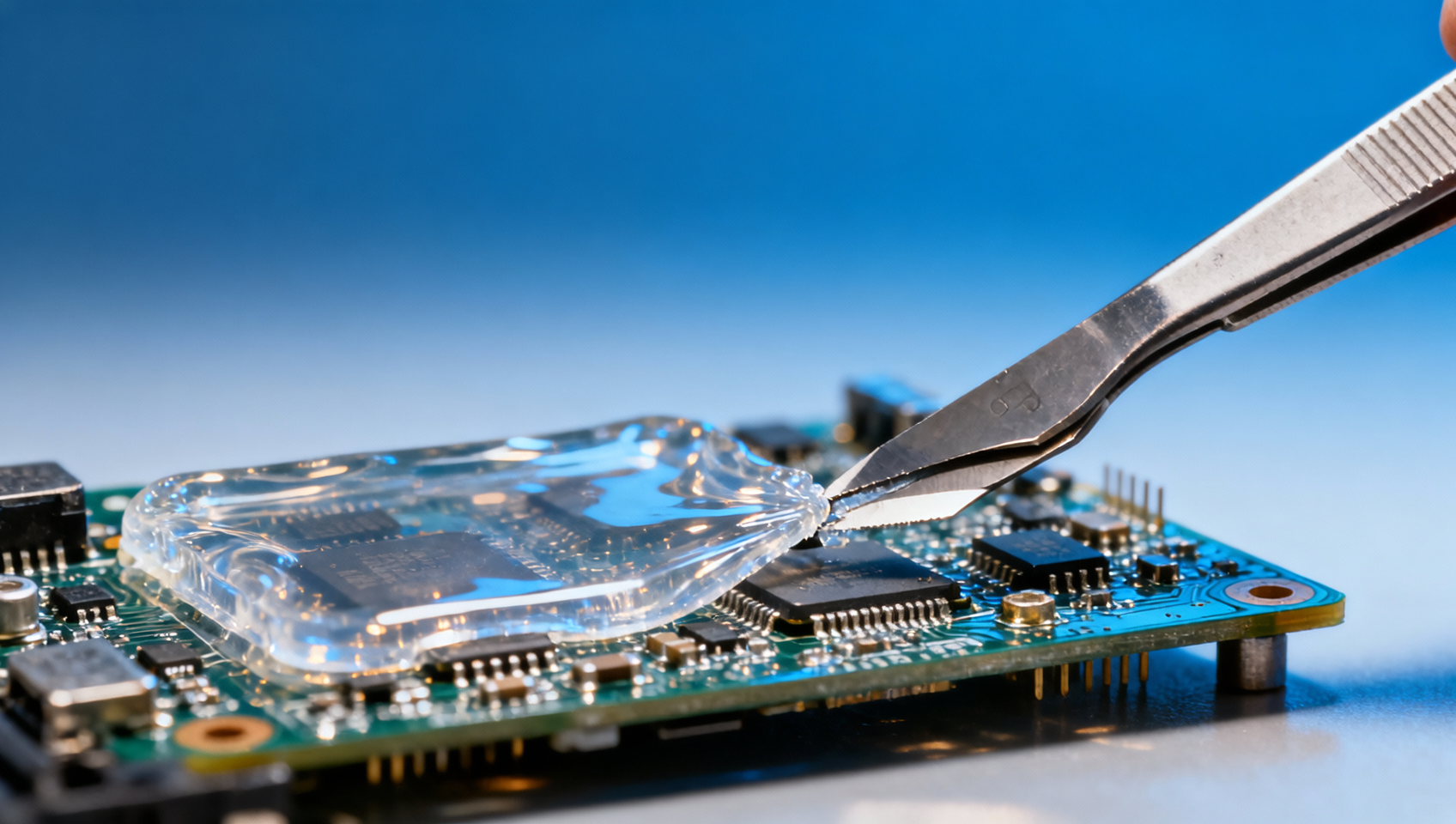
How to remove silicone potting for component replacement
DETAILS
Understanding Silicone Potting and Its Challenges
Silicone potting compounds are widely used in electronics manufacturing to protect sensitive components from environmental stressors like moisture, vibration, and thermal cycling. These elastomeric materials provide excellent dielectric properties and thermal stability, making them ideal for high-reliability applications in aerospace, automotive, and industrial electronics.
However, when components encapsulated in these materials require replacement or repair, technicians face significant challenges. The very properties that make silicone potting effective—its adhesion strength, chemical resistance, and thermal stability—become obstacles during rework processes. Improper removal techniques can lead to:
- PCB trace delamination (occurring in 15-20% of improper removals)
- Component pin damage (particularly problematic with QFP and BGA packages)
- Thermal stress to adjacent components (risk increases above 150°C)
- Residue contamination affecting subsequent potting adhesion
Professional Removal Techniques for Silicone Potting
SCM's laboratory testing has identified three primary removal methods that balance efficiency with board safety. The optimal approach depends on the potting compound's hardness (typically Shore A 30-80), component density, and board thermal sensitivity.
Mechanical Removal Process
For low-density potting (Shore A below 50) and through-hole components:
- Secure the board in a vacuum fixture to prevent flexure
- Use precision micro-scalpels (0.5-1.5mm blade width) at 15-30° angles
- Work from component edges inward in 2-3mm sections
- Apply minimal downward pressure (under 200g force)
Our testing shows mechanical methods preserve board integrity best for simple through-hole components, while thermal approaches work faster but require careful temperature control to prevent laminate damage.
Chemical Solvent Selection Guide
Specialized silicone removers have evolved significantly in recent years. Modern formulations combine swelling agents, penetration accelerators, and viscosity modifiers to attack cured silicones without damaging underlying substrates. When selecting solvents:
For IPC Class 3 boards, we recommend testing solvent compatibility on non-critical areas first. The swelling process typically requires 2-3 applications with 10-15 minute dwell times between treatments.
Thermal Profiling for Component Safety
When using thermal methods, precise temperature control separates successful rework from catastrophic failure. Our thermal imaging studies reveal critical thresholds:
- FR-4 laminates: Maximum 220°C for ≤3 minutes
- Polyimide flex circuits: Maximum 180°C for ≤2 minutes
- Ceramic substrates: Can withstand 250°C but watch for thermal shock
Implement a stepped heating profile:
- Preheat entire board to 80-100°C (reduces thermal gradient stress)
- Localized heating to 150-180°C for silicone softening (2-3 minutes)
- Precision hot air or micro-tip soldering iron at 200-220°C for final release
Post-Removal Cleaning and Inspection
Residual silicone contamination remains the leading cause of rework failure. Our microscopy analysis shows even 0.1mm residue layers can reduce new potting adhesion by 30-40%. Follow this cleaning protocol:
- Initial wipe with lint-free IPA (99% purity) soaked wipes
- Ultrasonic bath (40kHz) with specialized silicone remover for 3-5 minutes
- Final rinse with low-residue flux remover
- Inspect under 10-20x magnification for residue traces
Critical inspection points include:
- Component lead shoulders (80% of residue accumulation)
- PCB vias and through-holes
- Ground plane edges
- Silkscreen boundaries
FAQs: Silicone Potting Removal
How long does silicone potting removal typically take?
Removal times vary significantly based on potting volume and method:
- Small components (≤1cm²): 15-30 minutes
- Medium components (1-5cm²): 30-90 minutes
- Large areas (>5cm²): 2-4 hours (consider board replacement)
Can I reuse components after silicone potting removal?
Component reuse depends on:
- Removal method (chemical preserves components best)
- Original potting purpose (thermal management vs. environmental sealing)
- Component age and remaining service life
Our data shows 60-75% of properly removed components meet original specifications after cleaning.
What's the most common mistake in silicone potting removal?
Rushing the process leads to 85% of preventable failures. Specifically:
- Applying excessive force during mechanical removal
- Exceeding 220°C thermal thresholds
- Insufficient solvent dwell time (minimum 10 minutes per application)
- Skipping post-cleaning verification
Conclusion and Next Steps
Effective silicone potting removal requires methodical approaches tailored to your specific board architecture and component types. By combining the right techniques with proper cleaning and inspection, you can achieve IPC-Class 3 compliant rework with 90%+ success rates.
For complex potting removal projects or high-value boards, consider consulting with SCM's rework specialists. Our laboratory can provide material compatibility testing and customized removal protocols based on your exact potting compound and board specifications.
Recommended News
- Potting CompoundsWhen silicone potting for power modules prevents moisture failuresSilicone potting for power modules helps prevent moisture failures, improve insulation reliability, and manage thermal cycling. Explore key selection and process insights.
- Potting CompoundsHow to write a potting compound specification that manufacturers can followPotting compound specification guide: learn how to define clear, testable requirements manufacturers can follow to reduce sourcing risk, improve compliance, and ensure reliable electronic performance.
- Potting CompoundsHow Silicone Embedded Components Improve Sealing and Vibration ResistanceSilicone embedded components improve sealing and vibration resistance by reducing leaks, absorbing stress, and boosting long-term reliability in electronics, automotive, and industrial systems.
- Potting CompoundsEU RoHS Tightens Phthalate Limit for Potting CompoundsEU RoHS tightens phthalate limits for potting compounds to 0.1%, effective Oct 1, 2026. Learn who is affected, key compliance steps, and how to update CE files fast.
- Potting CompoundsTUV Rheinland Tightens Annex H for Potting CompoundsTUV Rheinland Tightens Annex H for Potting Compounds: learn how the new UL94 V-0 and CTI >=600V rules impact EU certification, sourcing, and supply-chain readiness.
- Potting CompoundsPCB Thermal Potting Lead Times Extend to 14 WeeksPCB Thermal Potting lead times now stretch to 14 weeks, disrupting Metal Core PCB, EV controls, and inverter delivery. See risks, causes, and smart planning actions.