
When High Temperature PCB Material Choice Starts to Fail
DETAILS
When high temperature PCB performance begins to fail, the consequences can ripple across reliability, safety, and procurement costs. From PCB for LED lighting and aluminum PCB designs to low loss PCB, high speed PCB, and heavy copper PCB applications, material selection directly shapes thermal endurance and lifecycle value. This article helps engineers, buyers, and PCB distributor teams evaluate risks, compare PCB OEM options, and make smarter PCB quotation decisions for demanding sectors such as PCB for military.
Why high temperature PCB material choice fails earlier than expected
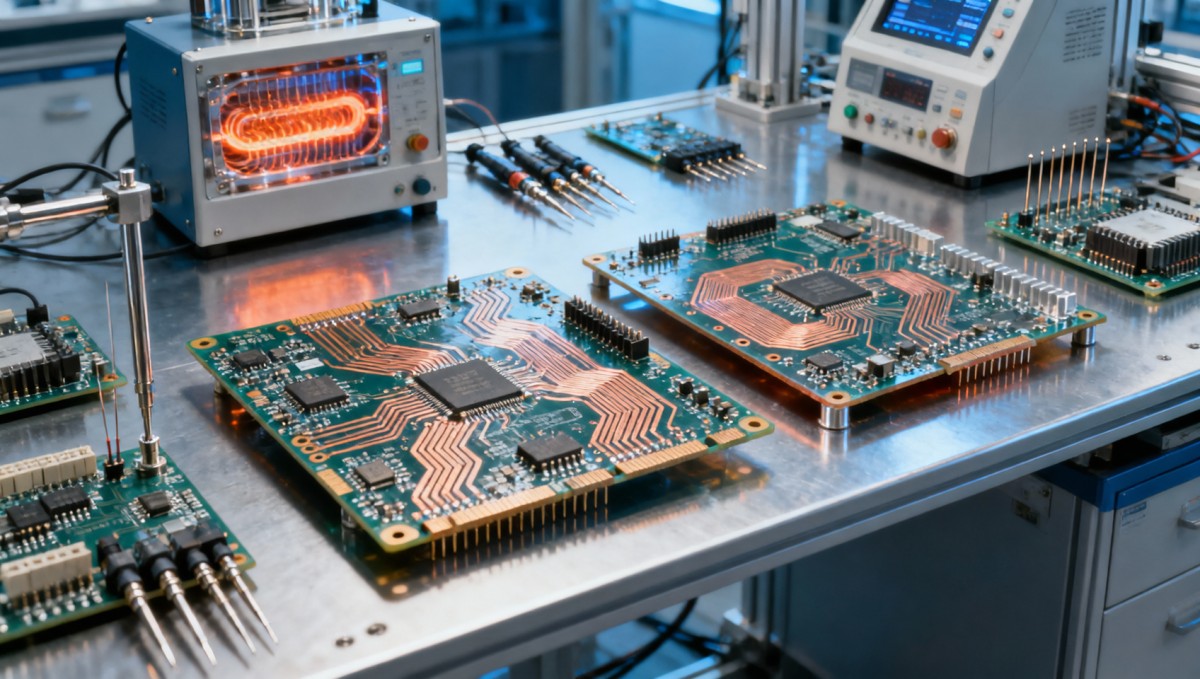
High temperature PCB failure rarely starts with a dramatic burn mark. In most projects, it begins as gradual dielectric drift, copper adhesion loss, resin fatigue, warpage, CAF risk, or unstable solder joints after repeated thermal cycling. For technical evaluators and quality teams, the real problem is that a board may pass initial function tests yet degrade after 500 to 1,000 operating hours, 3 to 6 reflow exposures, or repeated field temperature swings.
The material decision becomes even more critical when the board serves heat-dense applications such as PCB for LED lighting, automotive control modules, power conversion units, heavy copper PCB layouts, and high speed PCB assemblies where thermal stress and signal integrity must be managed together. A laminate that looks cost-effective in quotation comparison can become expensive once scrap, rework, warranty events, and second-source delays are included.
Procurement teams often focus on Tg alone, but Tg is not enough. A reliable high temperature PCB assessment should examine at least 5 core indicators: Tg, Td, CTE in Z-axis, moisture absorption, and delamination resistance under assembly conditions. For low loss PCB and high frequency designs, Dk and Df stability across temperature ranges also matter because electrical performance may fail before the substrate shows visible damage.
SCM supports cross-functional decision making by translating laboratory test logic into sourcing language. Instead of treating PCB material as a generic commodity, SCM benchmarks multilayer dielectric behavior, thermal endurance windows, and manufacturing consistency so engineers, project leaders, and business evaluators can understand where performance risk starts and how early supplier assumptions should be challenged.
- Early warning sign 1: dimensional instability after 2 to 4 thermal cycles during prototype assembly.
- Early warning sign 2: rising insertion loss or impedance variation in low loss PCB and high speed PCB builds.
- Early warning sign 3: pad lifting, barrel cracking, or solder fatigue in thick copper and high-current boards.
- Early warning sign 4: procurement variance between approved sample boards and volume production lots.
Which material properties matter most in demanding thermal environments?
When selecting a high temperature PCB material, the correct question is not simply “What temperature can this board survive?” The better question is “Under which process, duty cycle, stack-up, and operating duration will this material remain electrically and mechanically stable?” A board used in 24/7 power electronics faces a different thermal profile than a board exposed to short bursts at 150°C during industrial control events.
Key parameters that should be reviewed before PCB quotation approval
For engineering and sourcing teams, parameter review should cover at least 6 checkpoints before final PCB quotation approval: glass transition temperature, decomposition temperature, coefficient of thermal expansion, thermal conductivity, dielectric stability, and process compatibility with drilling, plating, lamination, and assembly. This is especially important when comparing FR-4 variants with aluminum PCB, ceramic-filled systems, or advanced low loss PCB materials.
The table below helps map typical property focus areas across common high temperature PCB options. These are selection dimensions rather than fixed values, because the actual performance window depends on stack-up, copper weight, resin system, and final end-use conditions.
A practical takeaway is that the “best” material depends on the dominant failure mechanism. If heat spreading is the main issue, aluminum PCB may outperform a standard laminate. If signal quality at elevated temperature matters, low loss PCB with controlled dielectric behavior may be the better route. If current density and plating durability dominate, heavy copper PCB design rules become central.
What technical teams should verify in the lab or supplier file
Technical review should not stop at a supplier datasheet. Ask whether the values were measured before or after moisture conditioning, whether thickness and copper weight match your stack-up, and whether the data reflects single-sheet testing or finished-board validation. In many sourcing disputes, the gap appears between material-level data and assembled-board reality.
- Confirm if the board must survive 2, 3, or more lead-free assembly cycles without delamination risk.
- Review thermal cycling expectations such as -40°C to 125°C or application-specific industrial ranges.
- Check whether Dk and Df are specified at the relevant frequency band, not only at 1 MHz.
- For PCB for military or harsh-environment electronics, verify reliability screening and documentation depth.
How do failure risks change by application scenario?
Different sectors create different stress combinations, which is why a one-size-fits-all material list often fails. Information researchers and project managers need scenario-specific logic: heat source type, on-off cycle frequency, assembly exposure, mechanical loading, and compliance expectations. In some sectors, electrical drift is the first symptom; in others, substrate cracking or solder fatigue appears earlier.
Application mapping for common high temperature PCB decisions
The matrix below is useful for buyers, PCB distributor teams, and engineering leaders who need a faster way to align application type with material concerns, procurement risk, and review focus before volume release.
This comparison shows why the same PCB quotation can be misleading across sectors. A lower-cost board may work for intermittent service but fail in continuous-duty lighting, high-layer signal systems, or defense-linked rugged use. SCM helps teams compare risk using test-based benchmarking rather than relying only on generic supplier claims.
For operators and reliability staff, one useful rule is to separate peak temperature from total thermal exposure. A board facing 120°C for short periods is not equivalent to one operating at 90°C continuously for 8,000 to 20,000 hours. Duty cycle, assembly profile, enclosure ventilation, and copper distribution all influence the failure threshold.
For distributors and sourcing managers, the practical implication is clear: quote comparison should include at least 4 scenario variables—operating temperature range, assembly cycles, signal speed requirement, and expected service life. Without that, “equivalent material” statements are often too broad to support real procurement accountability.
What should buyers and engineers check before approving a PCB OEM?
A capable PCB OEM is not defined only by price, sample speed, or list of materials. In high temperature PCB programs, the more decisive issue is whether the manufacturer can keep material behavior, process window, and finished-board quality aligned from prototype to mass production. This matters for purchasing, quality control, and commercial reviewers because many field failures originate from process variation, not only from laminate selection.
A 6-point procurement review framework
Before approving a PCB OEM or comparing PCB quotation packages, build a review around 6 checkpoints. This keeps technical and business teams aligned while reducing re-qualification risk and late-stage change costs.
- Material traceability: confirm exact laminate family, copper weight, prepreg build, and lot control method.
- Thermal process capability: verify compatibility with lead-free reflow, press cycles, hole wall integrity, and warpage control.
- Electrical consistency: check impedance control, dielectric tolerance, and low loss PCB handling in production.
- Reliability validation: ask what tests are done at material level and what is validated on the finished board.
- Documentation: review IPC-Class 3 relevance, ISO 9001 process discipline, and change notification practices.
- Capacity and lead time: compare prototype windows of 7 to 15 days with realistic production schedules of 2 to 6 weeks, depending on complexity.
Why independent benchmarking reduces sourcing blind spots
Supplier documents are necessary, but they do not always answer cross-supplier comparability questions. SCM fills that gap by providing an independent technical lens across PCB fabrication, SMT assembly, active and passive components, and thermal packaging. This is valuable when procurement leaders need to compare Asian high-precision manufacturing sources against internal reliability targets without relying on sales language alone.
For enterprise decision makers, the procurement risk is often not a single board failure but a chain effect: NPI delays, inconsistent second-source behavior, field return investigations, and qualification repetition across regions. A structured review can prevent 3 costly mistakes: approving by datasheet only, over-prioritizing unit price, and treating thermal performance as separate from signal integrity and assembly stress.
For quality and safety managers, request a clear response plan when substitutions are proposed. Even seemingly minor changes in resin content, glass weave, or insulation layer in an aluminum PCB can shift long-term reliability. Change control discipline is often as important as the initial material choice.
Common misconceptions, cost trade-offs, and what to do next
One common misconception is that a higher Tg board automatically solves all heat problems. In reality, Tg is only one part of the decision. If your project needs faster heat spreading, aluminum PCB may be more suitable. If transmission loss is critical, low loss PCB design may outperform a general high-Tg material. If current density is high, heavy copper PCB architecture and plating reliability may dominate the outcome.
Another misconception is that the lowest PCB quotation represents the best sourcing result. The true cost should include material qualification time, process yield, assembly rework, warranty exposure, and replacement lead time. For many B2B projects, a 5% to 12% board cost increase can be justified if it prevents schedule slips, retesting, or failure investigation across multiple sites.
FAQ for engineers, buyers, and distributors
How do I know if standard FR-4 is no longer enough?
If your design sees repeated lead-free assembly, sustained elevated temperature, tight impedance targets, or high current concentration, standard FR-4 may become marginal. Review thermal cycling range, service duration, Dk/Df stability, and via reliability together. If at least 2 of those factors are aggressive, a more specialized material review is justified.
Is aluminum PCB always better for heat?
Not always. Aluminum PCB improves heat spreading, especially in PCB for LED lighting and power modules, but it may impose design and routing constraints. The right choice depends on whether heat evacuation, insulation endurance, multilayer complexity, or signal behavior is the primary challenge.
What should I ask in a PCB quotation request?
Include stack-up, copper weight, expected operating range, number of assembly cycles, reliability expectations, compliance needs, and target lead time. For high speed PCB or low loss PCB, specify impedance and frequency conditions. For PCB for military or rugged applications, request traceability and documentation scope early.
Why choose us for material benchmarking and sourcing decisions
SCM is built for teams that need more than generic market content. We connect engineering data, compliance interpretation, and supply-chain evaluation across PCB fabrication, SMT assembly, semiconductors, passive components, and thermal packaging. Our value is especially relevant when you need an independent view on material suitability, process consistency, and sourcing risk before committing budget or volume.
You can contact SCM to discuss 6 concrete topics: laminate parameter confirmation, high temperature PCB material comparison, PCB OEM evaluation, expected lead time windows, compliance and documentation expectations, and sample or quotation review logic. If your project involves PCB for LED lighting, aluminum PCB, low loss PCB, high speed PCB, heavy copper PCB, or PCB for military environments, we can help you frame the right technical and procurement questions before failure costs appear downstream.
Recommended News
- Heat DissipationHow to prevent overheating in automotive PCB power distributionPrevent overheating in automotive PCB power distribution with practical tips on copper layout, thermal paths, and testing. Discover how to reduce hotspots and improve reliability.
- Heat DissipationCan heat spreading intelligence identify hot spots in PCB designs?Discover how heat spreading intelligence identifies PCB hot spots before fabrication. Learn to assess thermal models, validate predictions, and choose design changes that improve reliability.
- Heat DissipationWhich heat sink materials suit high-power electronics made in Germany?Heat sink materials Germany: compare aluminum, copper, graphite, and hybrid designs for high-power electronics. Find the right balance of thermal performance, weight, cost, and manufacturability.
- Heat DissipationHow to assess a graphite materials supplier's capability for thermal partsGraphite materials supplier assessment starts with more than machining. Discover how to evaluate thermal performance, purity, precision, cleanliness, traceability, and testing for reliable thermal parts.
- Heat DissipationHow to assess a heat dissipation supplier before placing an orderHeat dissipation supplier assessment guide: verify thermal performance, materials, process control, samples, capacity, and total risk before placing an order.
- Heat DissipationHow automotive PCB material selection affects thermal reliabilityAutomotive PCB material selection shapes thermal reliability. Explore CTE, Tg, moisture resistance, stack-up design, and proven qualification strategies for demanding vehicle electronics.