
When do microcontrollers become the bottleneck in smart devices?
DETAILS
Microcontrollers power countless smart devices, but as chipsets grow more complex and demand higher energy efficiency, thermal conductivity, and real-time control, they can quickly become the hidden bottleneck. From industrial automation and power electronics to wire connectors and other electronic components, understanding when performance limits appear is essential for building high-performance systems, reducing risk, and making smarter engineering and procurement decisions.
How do microcontrollers become the bottleneck in smart devices?
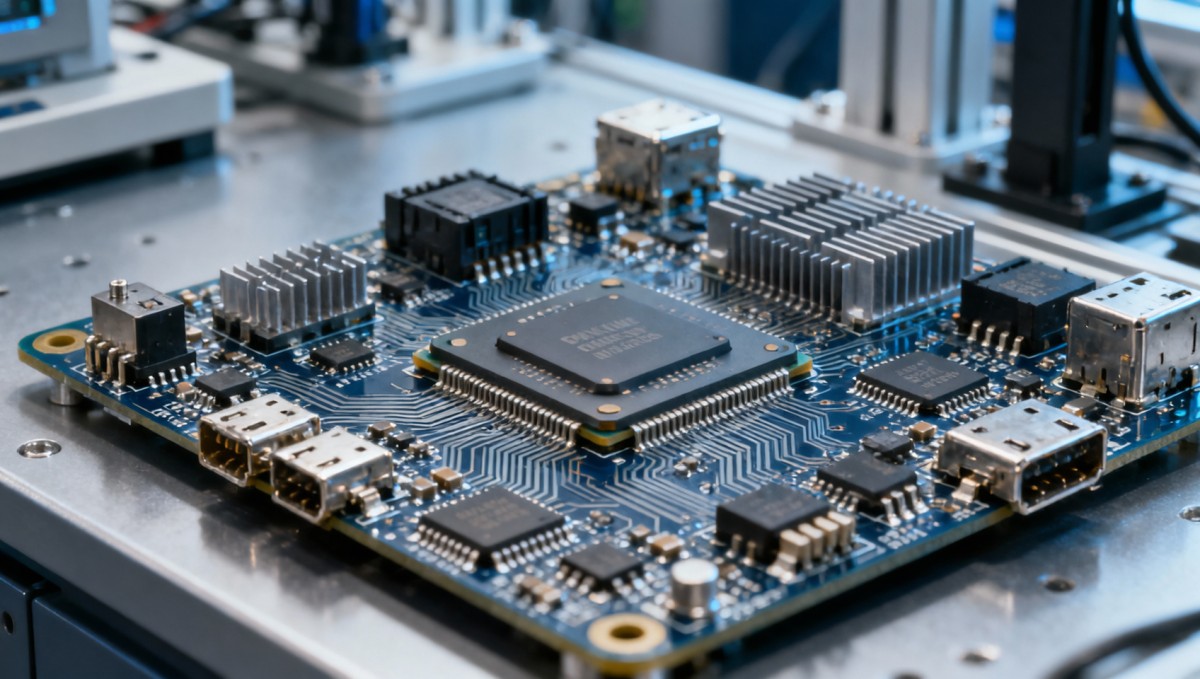
A microcontroller becomes the bottleneck when the total system demand grows faster than its ability to process data, manage timing, handle communications, and sustain thermal stability. In many smart devices, the MCU was originally chosen for a narrow control task, but later product revisions add sensors, connectivity, edge logic, safety functions, and tighter response windows. What worked in version 1 can become the limiting node in version 3.
This issue affects more than consumer electronics. It appears in industrial control panels, battery management systems, motor drives, smart connectors, medical peripherals, test instruments, and embedded modules used across the semiconductor and EMS supply chain. Once cycle time rises above the available processing headroom, small delays compound into packet loss, unstable control loops, poor power efficiency, and inconsistent field performance.
In practical engineering reviews, the first warning signs often emerge in 3 areas: CPU utilization sustained above roughly 70%–80%, memory margins falling below planned update reserves, and interrupt latency expanding during peak communication bursts. These are not universal thresholds, but they are common decision triggers used by technical teams before a design enters pilot build or scale production.
Why this matters for engineering and procurement teams
For operators and users, an overloaded MCU looks like slow response, unstable behavior, or unexplained resets. For technical evaluators, it raises concerns about timing closure, thermal drift, and firmware complexity. For procurement and business reviewers, it creates hidden cost through redesign cycles, qualification delays, and supplier change risk. In many B2B programs, a late MCU upgrade can extend validation by 2–6 weeks and trigger board, power, and software revisions at the same time.
This is where data transparency matters. SiliconCore Metrics supports engineering and sourcing decisions with independent benchmarking across PCB behavior, SMT precision, semiconductor reliability, passive component endurance, and thermal packaging. That perspective helps teams evaluate the MCU not as a standalone chip, but as part of a broader electromechanical system where signal integrity, assembly tolerance, and long-term reliability all affect real performance.
- Processing bottlenecks appear when control, sensing, communications, and diagnostics compete for limited CPU cycles.
- Thermal bottlenecks appear when package, PCB stack-up, or enclosure design prevents stable operation under continuous load.
- Integration bottlenecks appear when the MCU cannot efficiently coordinate with power devices, connectors, memories, or mixed-signal subsystems.
What are the clearest technical warning signs?
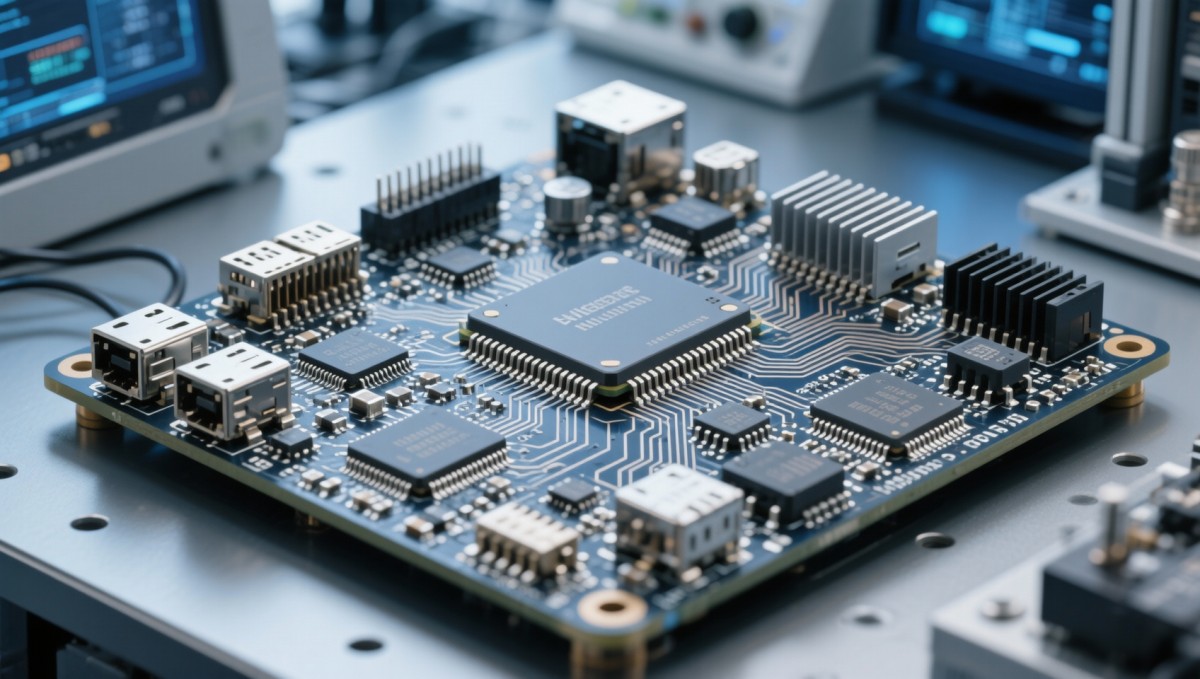
Most smart devices do not fail because one specification is missed on paper. They fail because several margins shrink together. A microcontroller that looks adequate in a single-function test can struggle in a full-load environment with multiple buses active, ADC sampling windows compressed, and firmware services running concurrently. Evaluation must therefore combine compute, memory, I/O, timing, and thermal behavior.
A practical review often starts with a 4-part check: average and peak CPU loading, RAM and flash occupancy after security and update features are included, bus throughput under simultaneous traffic, and junction temperature behavior during continuous operation. In many embedded programs, teams target 20%–30% performance headroom to accommodate firmware growth, field updates, and environmental variation.
The table below summarizes common bottleneck indicators and what they usually mean in device development and sourcing discussions.
These indicators should be read together, not in isolation. A device with moderate CPU load can still be constrained by memory fragmentation or thermal concentration around the package. SCM’s cross-domain analysis is valuable here because SMT placement quality, multilayer PCB material behavior, and thermal path design can influence whether an MCU performs as expected in production, not just on the bench.
Where bottlenecks often hide
Communication-heavy designs
Devices with Ethernet, CAN, RS-485, USB, BLE, Wi-Fi, or multi-sensor fusion can saturate the MCU through protocol handling rather than raw control logic. The issue is common when one controller is asked to manage data collection, encryption, local analytics, and user interface tasks within millisecond-level timing windows.
Thermally stressed assemblies
Power electronics, LED drivers, motor systems, and compact industrial nodes often expose the MCU to elevated board temperature. Even if ambient temperature remains within specification, local hot spots caused by MOSFETs, regulators, or dense passive arrays can reduce timing margin and long-term reliability. This is why package layout and thermal packaging should be reviewed alongside chip selection.
Feature creep during product revision
Many bottlenecks appear after launch, not before it. Over a 12–24 month product cycle, firmware updates may add diagnostics, cybersecurity, predictive maintenance, or remote monitoring. If the original MCU was selected with minimal reserve, the product eventually hits a ceiling that forces a redesign sooner than expected.
Which application scenarios reach MCU limits fastest?
Not every smart device reaches a microcontroller bottleneck at the same pace. The risk grows fastest where real-time control, power density, environmental stress, and communication complexity converge. For project managers and sourcing teams, identifying these patterns early helps prevent late-stage changes in silicon, PCB stack-up, connectors, heat spreaders, and qualification plans.
The next table compares several common application scenarios across the electronics and EMS landscape. It is designed for technical evaluation and procurement alignment rather than for theoretical comparison alone.
The most important takeaway is that the bottleneck is often system-specific. A moderate-speed MCU may be sufficient in a stable appliance, but inadequate in a compact industrial node exposed to vibration, elevated temperature, and frequent data exchange. This is why SCM connects semiconductor selection with PCB fabrication data, SMT precision metrics, passive component reliability, and thermal packaging insight.
Three scenario-based judgment rules
If the device must run continuous control loops while handling network traffic every few milliseconds, prioritize timing determinism over nominal clock speed. If the board sits close to power stages or dense connector zones, review thermal spreading and package placement before assuming the MCU itself is undersized. If the product roadmap includes diagnostics, logging, and remote updates within the next 2–3 releases, protect memory and CPU headroom from the start.
- High-mix, low-volume projects benefit from wider design margin because feature shifts are frequent.
- Mid-volume industrial products should align MCU choice with qualification and supply continuity, not just launch cost.
- Long-life platforms should assess lifecycle availability and second-source strategy early in the procurement stage.
How should teams evaluate selection, cost, and alternatives?
When a microcontroller becomes the bottleneck, the instinct is often to choose a faster or larger device. That may solve the immediate issue, but it can also introduce new cost, power, PCB, and supply-chain complications. A better method is to compare 3 paths: optimize firmware and task allocation, move to a higher-tier MCU, or offload selected functions to dedicated devices such as communication controllers, DSP elements, PMIC logic, or external memory.
For procurement personnel, the decision is not only about unit price. It includes redesign scope, lead-time sensitivity, package availability, test complexity, and certification impact. In some projects, a modest firmware and layout refinement avoids a silicon migration. In others, staying with an undersized MCU increases total program cost through repeated debug cycles and field service exposure.
A practical 5-point selection checklist
- Measure actual peak load, not only average load, under the most demanding 3–5 operating modes.
- Reserve capacity for at least one major firmware revision cycle, especially if diagnostics or connectivity are expected to grow.
- Check package and PCB implications, including pinout migration effort, copper distribution, and thermal path continuity.
- Review compliance and quality requirements such as IPC-Class 3 build expectations, reliability screening, and traceability needs.
- Compare lifecycle and supply stability, especially for platforms expected to remain active for 5–10 years.
When optimization is enough
Optimization can be sufficient when the MCU still has measurable headroom and the main issue is inefficient code structure, polling overhead, memory handling, or bus scheduling. Improvements such as DMA use, interrupt prioritization, protocol tuning, and task partitioning may recover enough margin to support the next release without changing silicon.
When migration is the safer decision
Migration is usually safer when CPU load is already persistently high, memory reserve is thin, or thermal margin is narrow under continuous operation. It is also justified when safety, cybersecurity, or communication requirements are increasing and validation must remain predictable. In regulated or quality-sensitive environments, repeated optimization on an undersized platform can become more expensive than a controlled upgrade.
SCM helps teams make this call with evidence rather than assumption. By combining component-level intelligence with manufacturing and reliability context, SCM supports vendor comparison, component benchmarking, tolerance review, and supply-chain risk screening before a bottleneck becomes a field issue.
What standards, reliability checks, and quality controls should not be ignored?
Microcontroller performance cannot be separated from compliance and quality execution. A device may pass functional tests while still carrying risk in solder joint integrity, dielectric behavior, connector interface stability, or long-duration thermal exposure. For quality managers and safety reviewers, the key question is whether the system remains stable across temperature variation, vibration, electrical noise, and production tolerance spread.
In practice, verification should cover at least 4 domains: electrical timing and signal margin, thermal endurance during sustained operation, assembly quality across critical interconnects, and documentation traceability for sourcing and change control. Common references in the supply chain include IPC-oriented build expectations and ISO 9001 process discipline, but program-specific requirements may add further screening, environmental testing, or customer audits.
Common mistakes that distort MCU evaluation
- Using lab firmware rather than release-level firmware when measuring CPU, memory, and thermal behavior.
- Checking ambient temperature but not local board hot spots around regulators, power devices, or dense passive networks.
- Ignoring SMT placement tolerance and solder quality, which can affect long-term signal integrity and thermal conduction.
- Selecting components by nominal specification only, without reviewing lifecycle, sourcing resilience, and second-source options.
FAQ for technical and procurement teams
How much headroom should an MCU design keep?
There is no single number for every product, but many engineering teams aim to preserve about 20%–30% compute and memory headroom after all intended functions are enabled. Designs expected to add remote diagnostics, cybersecurity, or analytics may need more reserve. The right target depends on lifecycle plans, environmental stress, and validation cost.
Can thermal packaging make a capable MCU look inadequate?
Yes. A suitable MCU can behave like a bottleneck if the package sits in a local hot zone, if copper spreading is insufficient, or if enclosure airflow is constrained. That is why chip evaluation should be tied to PCB materials, layout strategy, and thermal packaging performance instead of being handled as an isolated semiconductor question.
When should procurement get involved?
Procurement should be involved as soon as there is a realistic chance of MCU migration or supplier change. Lead-time, lifecycle status, package availability, and qualification scope can affect launch timing as much as the technical decision itself. Early alignment reduces the risk of redesigning around a part that later proves difficult to source or validate.
Is a more powerful MCU always the best answer?
Not always. A larger MCU may add cost, power draw, board changes, and software complexity. In some devices, offloading communication, adding memory, improving firmware structure, or refining thermal layout achieves a better result. The most effective path depends on the true bottleneck: compute, memory, I/O, timing, or heat.
Why work with SCM when MCU limits affect product and sourcing decisions?
When a microcontroller becomes the bottleneck, the decision is rarely limited to one component. It touches PCB material behavior, SMT precision, active and passive component reliability, connector performance, thermal management, and compliance documentation. SiliconCore Metrics brings these variables into one decision framework so engineering, procurement, quality, and business stakeholders can work from the same evidence base.
SCM’s value is especially strong for global teams that need independent technical insight across Asian manufacturing ecosystems and international product requirements. By translating complex manufacturing parameters into standardized reports and practical benchmarking guidance, SCM helps reduce ambiguity in supplier comparison, risk review, and performance validation.
What you can discuss with us
- Whether your current MCU is nearing a processing, memory, or thermal bottleneck under real operating conditions.
- How PCB stack-up, SMT quality, passive selection, and thermal packaging may be amplifying control or reliability limits.
- How to compare alternative components or manufacturing paths based on compliance, lifecycle risk, and system-level performance.
- What to expect for parameter confirmation, sample evaluation support, qualification planning, lead-time discussion, and quotation communication.
If your team is assessing smart device architecture, reviewing sourcing risk, or preparing a redesign triggered by MCU constraints, contact SCM for a data-driven discussion. We can support parameter review, component selection logic, supplier benchmarking, thermal and assembly considerations, compliance expectations, and practical next steps for pilot, scale-up, or procurement alignment.
Recommended News
- MCU & ChipsetsWhat Drives Electronics Content Cost in Modern Device DesignElectronics content cost is shaped by component volatility, PCB complexity, SMT precision, thermal design, and compliance. Learn the real cost drivers and make smarter device approval decisions.
- MCU & ChipsetsMCU Vendor Evaluation: 7 Criteria That Matter Beyond Unit PriceMCU vendor evaluation made practical: discover 7 criteria beyond unit price, from supply continuity and quality control to lifecycle support and total cost risk.
- MCU & ChipsetsHow to Use an Electronics Research Platform for Faster Component ScreeningElectronics research platform best practices for faster component screening: compare specs, validate reliability, reduce sourcing risk, and make smarter engineering decisions faster.
- MCU & ChipsetsActive Components Pricing: What Drives Cost Swings in 2026Active components pricing in 2026 is driven by AI demand, wafer access, energy, and compliance. See what causes cost swings and how to protect margins early.
- MCU & ChipsetsApplication Note Pricing Model: What Drives Cost and ValueApplication note pricing model explained: discover what drives cost, how to judge value, and when higher-priced technical notes can reduce risk, save budget, and speed decisions.
- MCU & ChipsetsISO 9001 Electronics for Compliance: What Actually MattersISO 9001 electronics for compliance explained: learn which controls, traceability, and reliability signals truly reduce supplier risk and improve electronics quality.