
Waterproof vs Water-Resistant Cable Connectors
DETAILS
Understanding the Critical Differences: Waterproof vs. Water-Resistant Cable Connectors
In mission-critical electronic systems, the choice between waterproof and water-resistant cable connectors directly impacts reliability and safety. This technical guide examines IP ratings, material science, and environmental stress factors to help engineers, procurement specialists, and project managers select optimal industrial connectors for harsh operating conditions. Discover how advanced sealing technologies in wire connectors and electrical enclosures prevent corrosion while maintaining signal integrity in RF shielding applications.
IP Ratings: The Decoding Guide for Environmental Protection
The International Protection (IP) rating system provides a standardized method to evaluate connector performance against environmental factors. For cable connectors operating in wet conditions, two digits define protection levels:
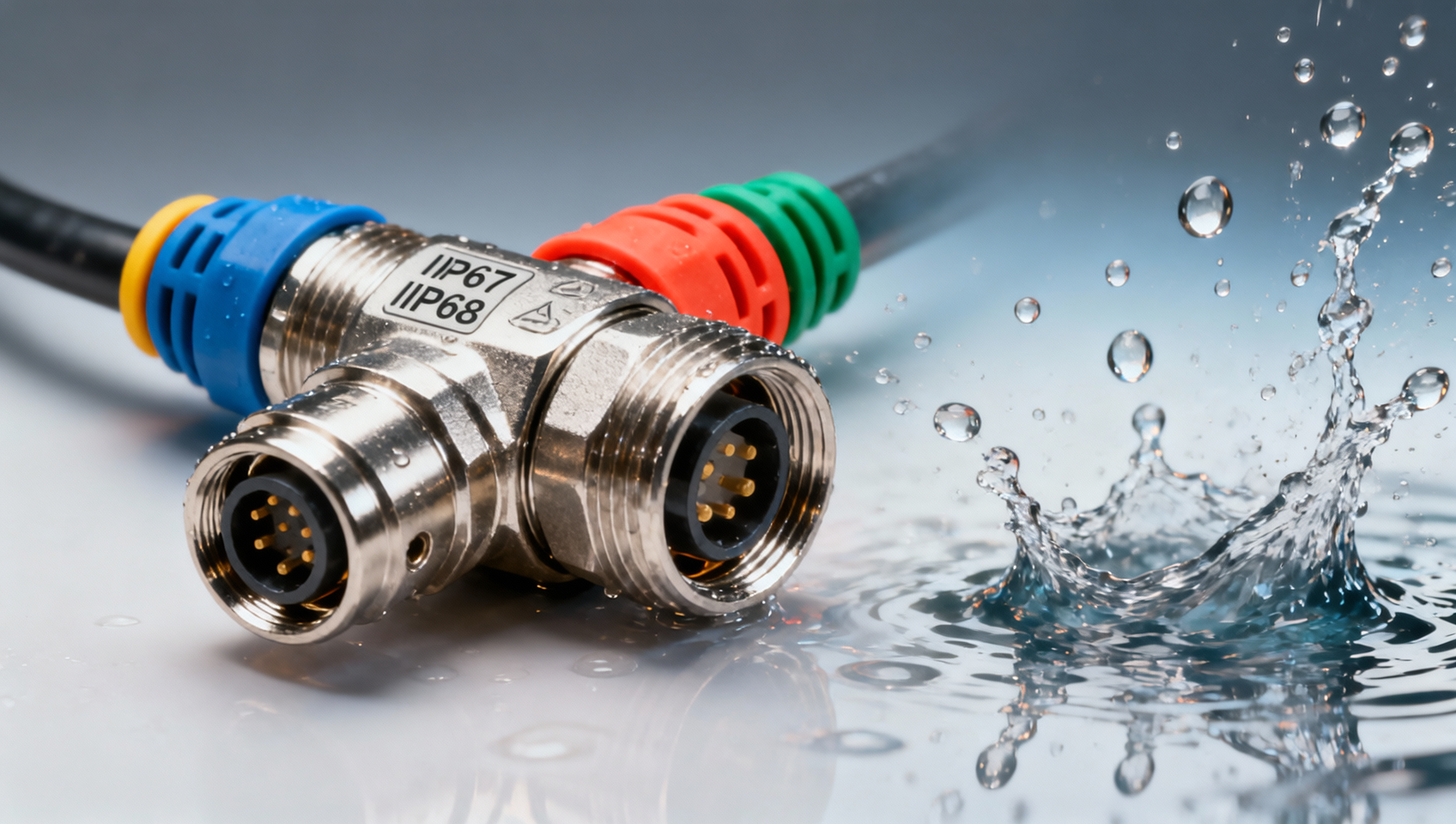
Water-resistant connectors typically achieve IP54 to IP65 ratings, suitable for temporary exposure to moisture. Waterproof variants meet IP67 to IP69K standards, capable of withstanding prolonged submersion at depths up to 3 meters for 30 minutes (IP68) or high-pressure steam cleaning (IP69K).
Material Science and Sealing Technologies
The chemical composition and mechanical design of connector components determine their environmental resilience. Advanced polymers and metal alloys work in concert to create reliable barriers against moisture intrusion:
Key Material Properties
- Thermoplastic elastomers (TPE) with 70-90 Shore A hardness for compression seals
- Fluoropolymer coatings (0.05-0.2mm thickness) for chemical resistance
- 316L stainless steel housings with 0.1-0.3µm surface finishes
- Nitrile rubber gaskets (30-50 IRHD) for dynamic sealing applications
Multi-stage sealing systems combine radial compression (15-25% deflection) with axial compression (20-30% deflection) to create redundant barriers. High-performance connectors may incorporate up to three independent sealing zones with progressive compression ratios.
Environmental Stress Testing Protocols
Industry-standard testing validates connector performance under simulated operating conditions. These protocols help procurement teams verify manufacturer claims:
Waterproof connectors must maintain dielectric withstand voltages above 1000V after environmental testing, while water-resistant versions typically maintain 500V thresholds. Insulation resistance measurements should exceed 1000MΩ at 500VDC for both types.
Application-Specific Selection Criteria
Choosing between waterproof and water-resistant solutions requires analyzing operational parameters and failure consequences:
Industrial Automation
Food processing plants with washdown requirements (IP69K) demand stainless steel waterproof connectors with 0.5-1.5mm thick silicone gaskets. The 3A sanitary standard specifies crevice-free designs with radiused corners for cleanability.
Renewable Energy
Solar farm combiner boxes require IP67-rated connectors with UV-stabilized housings (5000+ hours QUV testing) and tin-plated copper contacts (≥8µm thickness) to resist corrosion in coastal environments.
Total Cost of Ownership Analysis
While waterproof connectors carry 20-40% higher initial costs than water-resistant alternatives, their lifecycle benefits often justify the premium:
- 50-70% reduction in maintenance interventions
- 3-5x longer service intervals in harsh environments
- 30-50% lower failure rates in high-moisture applications
For mission-critical infrastructure with MTBF requirements exceeding 50,000 hours, the additional 0.5-1.5dB insertion loss of waterproof designs becomes an acceptable tradeoff for reliability.
Implementation Best Practices
Proper installation ensures connectors achieve their rated performance:
Cable Preparation
- Maintain 3-5mm jacket protrusion beyond braid termination
- Apply dielectric grease (0.1-0.3mm film thickness) on contacts
- Use torque-controlled tools (0.5-2.5Nm range) for gland nuts
Field Testing
Post-installation verification should include:
- Insulation resistance ≥1000MΩ at 500VDC
- Contact resistance ≤5mΩ for power circuits
- Visual inspection under 10x magnification for seal integrity
Conclusion and Technical Advisory
The decision between waterproof and water-resistant cable connectors requires careful evaluation of environmental exposure, reliability requirements, and lifecycle costs. Waterproof solutions provide superior protection for permanent installations in wet locations, while water-resistant connectors offer cost-effective solutions for occasional moisture exposure.
For mission-critical applications where failure carries significant safety or financial consequences, the additional investment in IP68/IP69K waterproof connectors typically delivers measurable ROI through reduced downtime and maintenance costs. Consult our technical team for application-specific recommendations based on your environmental parameters and performance requirements.
Recommended News
- Heat DissipationHow to prevent overheating in automotive PCB power distributionPrevent overheating in automotive PCB power distribution with practical tips on copper layout, thermal paths, and testing. Discover how to reduce hotspots and improve reliability.
- Heat DissipationCan heat spreading intelligence identify hot spots in PCB designs?Discover how heat spreading intelligence identifies PCB hot spots before fabrication. Learn to assess thermal models, validate predictions, and choose design changes that improve reliability.
- Heat DissipationWhich heat sink materials suit high-power electronics made in Germany?Heat sink materials Germany: compare aluminum, copper, graphite, and hybrid designs for high-power electronics. Find the right balance of thermal performance, weight, cost, and manufacturability.
- Heat DissipationHow to assess a graphite materials supplier's capability for thermal partsGraphite materials supplier assessment starts with more than machining. Discover how to evaluate thermal performance, purity, precision, cleanliness, traceability, and testing for reliable thermal parts.
- Heat DissipationHow to assess a heat dissipation supplier before placing an orderHeat dissipation supplier assessment guide: verify thermal performance, materials, process control, samples, capacity, and total risk before placing an order.
- Heat DissipationHow automotive PCB material selection affects thermal reliabilityAutomotive PCB material selection shapes thermal reliability. Explore CTE, Tg, moisture resistance, stack-up design, and proven qualification strategies for demanding vehicle electronics.