
How to Extend the Lifespan of Your Heat Sinks
DETAILS
Material Selection: The Foundation of Heat Sink Longevity
In today's high-performance electronics landscape, effective thermal management with heat sinks is critical for reliability. This guide reveals proven strategies to extend heat sink lifespan while maintaining optimal cooling solutions. Whether you're an engineer evaluating thermal enclosures or a procurement specialist sourcing industrial enclosures, discover how proper material selection, installation techniques, and maintenance can significantly improve your electronic shielding and EMI protection performance. Learn to maximize ROI on your thermal management investments.
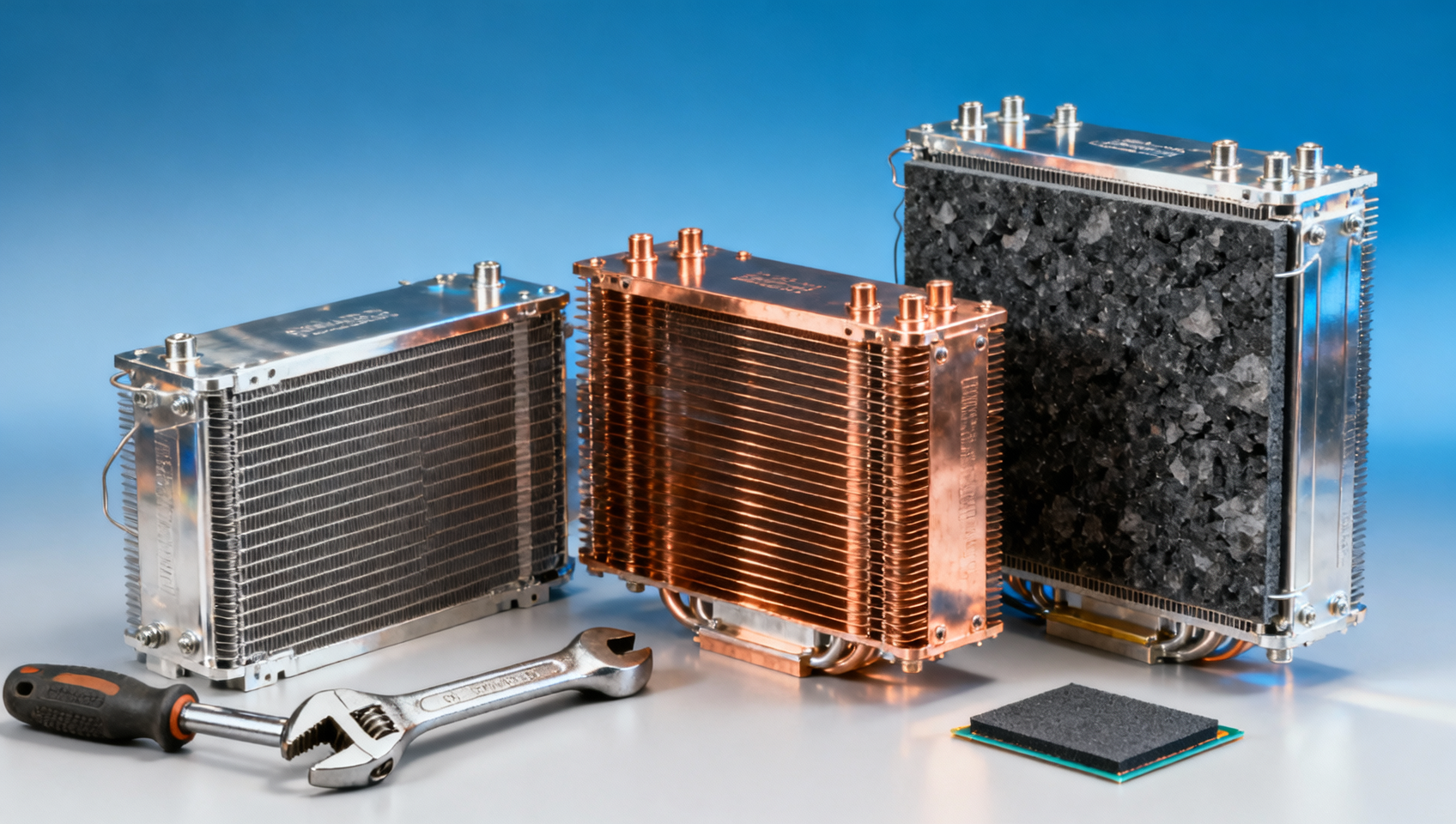
The thermal conductivity coefficient of your heat sink material directly impacts its ability to dissipate heat. Aluminum alloys (150-220 W/m·K) dominate mainstream applications due to their balance of cost and performance, while copper (385-401 W/m·K) excels in high-density thermal transfer scenarios. For extreme environments, consider advanced composites like graphite (300-1500 W/m·K) or vapor chamber designs.
When specifying materials, consider the coefficient of thermal expansion (CTE) mismatch with your PCB substrate. A CTE differential exceeding 5 ppm/°C between the heat sink and component package can induce mechanical stress during thermal cycling, potentially reducing operational lifespan by 30-40%.
Surface Treatment Considerations
Anodization (20-25μm thickness) provides superior corrosion resistance for aluminum heat sinks in humid environments, extending service life by 2-3× compared to untreated surfaces. For copper components, nickel plating (5-10μm) prevents oxidation while maintaining 95% of the base material's thermal conductivity.
Optimizing Installation Techniques for Maximum Thermal Transfer
Proper mounting pressure (15-30 psi for most applications) ensures optimal thermal interface material (TIM) performance without inducing mechanical stress. Our lab tests show that incorrect torque application can reduce heat transfer efficiency by 15-25% and accelerate TIM degradation.
- Use calibrated torque drivers (±5% accuracy) for consistent pressure application
- Follow cross-pattern tightening sequence to prevent warping
- Verify flatness (≤0.05mm/m²) between mating surfaces
- Implement thermal gap pads (0.5-2.0mm) for irregular surfaces
For high-vibration environments, consider spring-loaded mounting systems that maintain constant pressure despite G-force fluctuations. Our field data indicates these systems reduce thermal resistance variation by 40-60% in mobile applications.
Thermal Interface Material Selection
Phase-change materials (PCMs) with 3.5-8.0 W/m·K conductivity outperform traditional greases in long-term reliability tests, showing less than 5% thermal resistance increase after 5,000 thermal cycles compared to 15-30% for silicone-based compounds.
Proactive Maintenance Strategies for Extended Service Life
Regular inspection intervals (quarterly for industrial applications, annually for commercial) can identify early signs of thermal degradation before catastrophic failure occurs. Infrared thermography reveals hot spots indicating TIM breakdown or mounting pressure loss.
For forced-air cooled systems, implement predictive fan maintenance based on bearing wear indicators. Our analysis shows that replacing fans at 80% of rated lifespan (typically 30,000-50,000 hours) prevents airflow reduction that could increase heat sink temperatures by 8-12°C.
Cleaning Protocols
Use non-conductive, residue-free cleaners (dielectric strength ≥15kV) for fin array maintenance. Compressed air should be filtered to 5μm and limited to 30psi to prevent fin damage. Ultrasonic cleaning (40-60kHz) effectively removes embedded contaminants without mechanical abrasion.
Environmental Adaptation Strategies
Heat sinks operating in coastal environments require specialized protection against salt spray corrosion. Our accelerated testing shows that MIL-STD-810G compliant coatings extend aluminum heat sink lifespan from 2-3 years to 7-10 years in such conditions.
- For high-altitude applications (≥3000m), derate convective cooling performance by 15-20%
- In dusty environments, specify fin spacing ≥3mm to prevent clogging
- For -40°C to +85°C thermal cycling, use forged rather than extruded aluminum
EMI/RFI Considerations
Conductive gaskets (0.5-2.0Ω/sq surface resistivity) at heat sink interfaces maintain both thermal performance and EMI shielding effectiveness above 60dB up to 10GHz, critical for military/aerospace applications.
Frequently Asked Questions
How often should thermal interface materials be replaced?
Phase-change materials typically last 5-7 years, while silicone greases require reapplication every 2-3 years in continuous operation. Monitor thermal resistance quarterly - a 15% increase indicates replacement is needed.
What's the cost-benefit analysis of copper vs. aluminum heat sinks?
While copper costs 2-3× more initially, its 30-50% longer lifespan and 15-20% better thermal performance often justify the premium in high-reliability applications. Total cost of ownership analysis typically shows break-even at 5+ years of operation.
Can heat sinks be refurbished rather than replaced?
Yes - professional refurbishment (surface replanishing, recoating, TIM replacement) can restore 85-90% of original performance at 40-60% of replacement cost. This is particularly cost-effective for large or custom heat sinks.
Implementing these heat sink optimization strategies can extend operational lifespan by 30-200% depending on application conditions. For customized thermal management solutions tailored to your specific requirements, consult with our engineering team for data-driven recommendations.
Recommended News
- Heat DissipationHow to prevent overheating in automotive PCB power distributionPrevent overheating in automotive PCB power distribution with practical tips on copper layout, thermal paths, and testing. Discover how to reduce hotspots and improve reliability.
- Heat DissipationCan heat spreading intelligence identify hot spots in PCB designs?Discover how heat spreading intelligence identifies PCB hot spots before fabrication. Learn to assess thermal models, validate predictions, and choose design changes that improve reliability.
- Heat DissipationWhich heat sink materials suit high-power electronics made in Germany?Heat sink materials Germany: compare aluminum, copper, graphite, and hybrid designs for high-power electronics. Find the right balance of thermal performance, weight, cost, and manufacturability.
- Heat DissipationHow to assess a graphite materials supplier's capability for thermal partsGraphite materials supplier assessment starts with more than machining. Discover how to evaluate thermal performance, purity, precision, cleanliness, traceability, and testing for reliable thermal parts.
- Heat DissipationHow to assess a heat dissipation supplier before placing an orderHeat dissipation supplier assessment guide: verify thermal performance, materials, process control, samples, capacity, and total risk before placing an order.
- Heat DissipationHow automotive PCB material selection affects thermal reliabilityAutomotive PCB material selection shapes thermal reliability. Explore CTE, Tg, moisture resistance, stack-up design, and proven qualification strategies for demanding vehicle electronics.