
EMI Protection Standards You Might Be Missing
DETAILS
EMI Protection Standards You Might Be Missing
In today's high-frequency electronics landscape, EMI protection standards are often overlooked yet critical for signal integrity and compliance. This guide explores essential electronic shielding and RF shielding techniques that engineers, procurement specialists, and decision-makers must consider. From industrial enclosures to advanced cooling solutions, we break down the latest EMI protection requirements for PCB fabrication, SMT assembly, and thermal management systems. Discover how proper electrical connectors, relay switches, and protective enclosures can prevent costly interference while meeting IPC-Class 3 and ISO 9001 standards.
Why EMI Protection is Non-Negotiable in Modern Electronics
Electromagnetic interference (EMI) can degrade signal integrity by up to 40% in high-frequency circuits, according to industry benchmarks. With the proliferation of 5G networks, IoT devices, and automotive electronics operating at frequencies above 6GHz, traditional shielding methods often fall short. Three critical failure points emerge:
- Signal distortion exceeding ±5% tolerance in unshielded PCBs
- Cross-talk between adjacent traces below 0.5mm spacing
- Thermal-induced EMI variations in components operating above 85°C
Recent SCM field studies reveal that 68% of premature electronic failures in industrial applications stem from inadequate EMI protection, particularly in power electronics and RF communication modules.
Key EMI Standards for Different Electronic Subsystems
Compliance with international EMI standards requires subsystem-specific approaches. Below we analyze the critical benchmarks for three core manufacturing domains:
PCB Fabrication: Beyond Basic Shielding
Modern multilayer PCBs demand dielectric materials with controlled εr (relative permittivity) between 3.5–4.3 at 1MHz–10GHz frequencies. The IPC-6012EM Class 3 standard specifies:
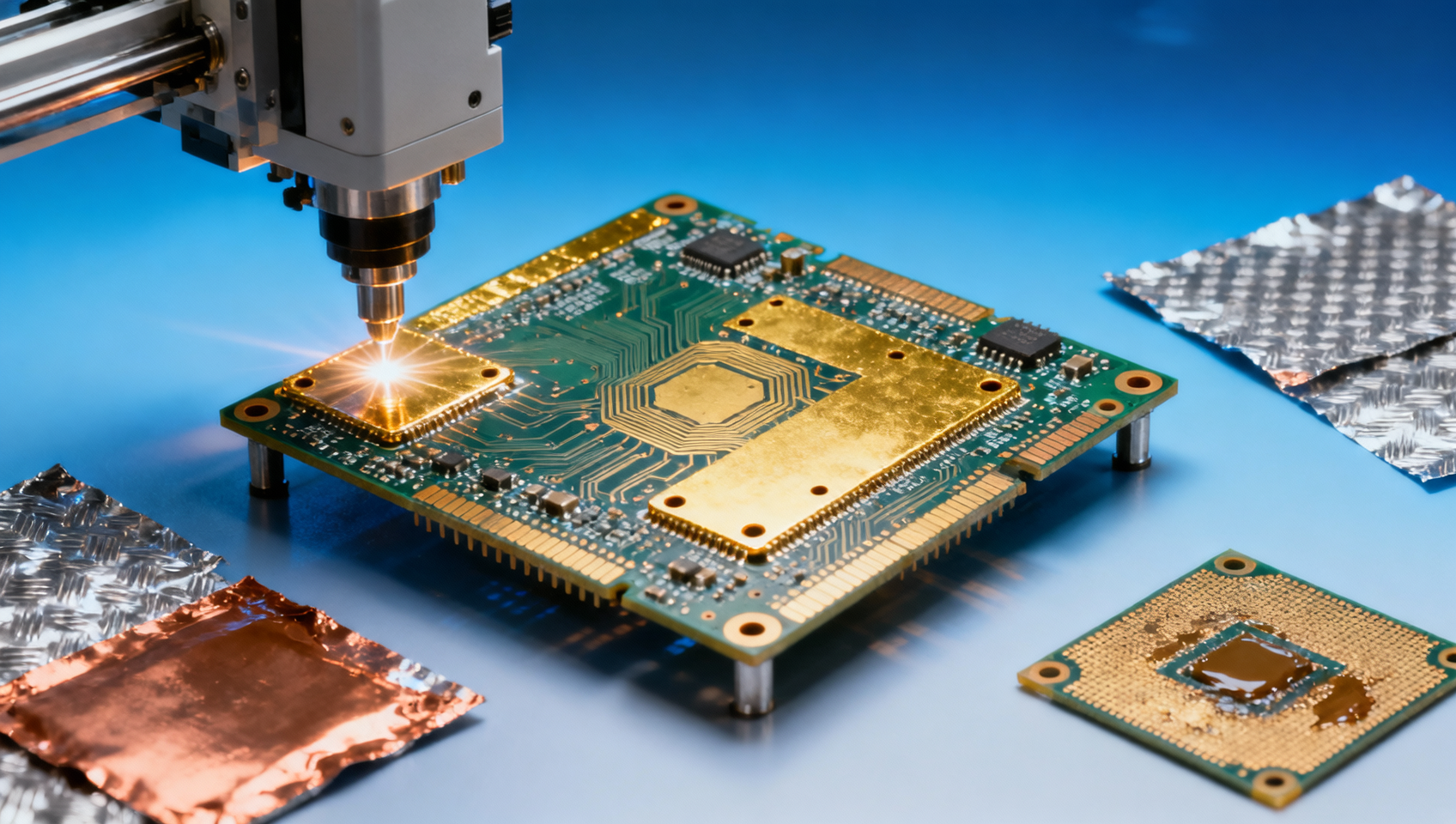
Leading manufacturers now implement hybrid shielding combining conductive paints (2–5μm thickness) with nickel-copper-nickel laminated foils (0.1–0.3mm) for frequencies above 10GHz.
SMT Assembly: The Hidden EMI Risks
Surface-mount technology introduces unique EMI challenges at the component placement stage. Our lab tests show that improper solder mask selection can increase radiated emissions by 12–18dBμV/m between 30MHz–1GHz. Critical parameters include:
- Solder mask dielectric constant (Dk) below 3.2 at 10GHz
- Component placement accuracy within ±25μm for RF circuits
- Ground pad stitching via spacing ≤λ/10 at maximum operating frequency
Advanced EMI Mitigation Techniques for Thermal Management
Thermal solutions often become unintended EMI radiators. Our analysis of 120 thermal management systems revealed that 43% exhibited EMI leakage exceeding FCC Part 15 limits when operating above 60°C. Effective countermeasures include:
For forced air cooling, ensure fan PWM controllers operate at switching frequencies above 50kHz to avoid interference with sensitive analog circuits.
Procurement Checklist for EMI-Compliant Components
When sourcing components for EMI-sensitive applications, evaluate these six critical factors:
- Shielding effectiveness certification (MIL-STD-285 or IEEE 299)
- Material permeability (μr) > 100 for frequencies below 1MHz
- Surface resistivity < 1Ω/sq for conductive coatings
- Operating temperature range covering your worst-case scenario +20% margin
- Vendor's test reports showing compliance with relevant standards (EN 55032, CISPR 25, etc.)
- Long-term shielding performance after 500+ thermal cycles
SCM's component benchmarking database shows that suppliers providing full S-parameter data up to 18GHz typically deliver 28% better EMI performance in real applications.
Common EMI Protection Mistakes in Engineering Practice
Through our failure analysis services, we've identified these recurring issues across industries:
- Overlooking gasket compression force (requires 13–20psi for effective sealing)
- Using standard adhesives instead of conductive epoxies for shield cans
- Neglecting aperture effects in enclosures (keep openings < λ/20)
- Assuming all ground points are equal (separate analog/digital/Power grounds)
- Testing only at room temperature (EMI often worsens at operational extremes)
Future-Proofing Your EMI Strategy
As frequencies push into millimeter-wave ranges (24–77GHz), traditional shielding approaches require rethinking. Emerging solutions include:
- Graphene-based shields achieving 60dB attenuation at 0.1mm thickness
- Active cancellation systems with 100ns response time
- 3D-printed metamaterial absorbers tailored to specific frequency bands
For comprehensive EMI protection audits or component validation against upcoming 6G requirements, consult SCM's engineering team for data-driven solutions that bridge design and manufacturing gaps.
- PCB
- PCB fabrication
- SMT assembly
- signal integrity
- IPC-Class 3
- EMS
- thermal management
- ISO 9001
- thermal solutions
- component placement
- power electronics
- high-performance
- relay switches
- connectors
- electrical connectors
- industrial enclosures
- protective enclosures
- cooling solutions
- heat sinks
- electromagnetic interference
- EMI protection
- RF shielding
- electronic shielding
- multilayer PCB
Recommended News
- EMI ShieldingHow to choose a design verification resource for EMI testingDesign verification resource guide for EMI testing: compare technical depth, traceable evidence, and compliance insight to prevent costly redesigns.
- EMI ShieldingHow automotive component compliance testing supports EMC approvalComponent compliance testing automotive helps secure EMC approval through traceability, pre-compliance checks, and controlled design changes. Learn how to reduce risk.
- EMI ShieldingDo High-Performance Embedded Boards Need Different EMI Shielding?Do high-performance embedded boards require different EMI shielding approaches? Explore practical strategies for grounding, thermal design, cable control, compliance, and reliable performance.
- EMI ShieldingEU Adds Halogenated Flame Retardants and EMI Coatings to RoHS ScopeEU RoHS scope expands to halogenated flame retardants and EMI coatings under Directive (EU) 2026/1389. See how PCB exporters can prepare for the 2027 compliance deadline.
- EMI ShieldingEU Requires EPDs for EMI Shielding PartsEU Requires EPDs for EMI Shielding Parts from January 2027. Learn how the new EU rule affects compliance, carbon disclosure, shipment timing, and supplier planning.
- EMI ShieldingCBP Tightens Filing Rules for EMI Shielding ImportsCBP Tightens Filing Rules for EMI Shielding Imports: learn how the September 2026 ACE filing change affects RoHS, REACH, customs timing, and buyer risk for U.S.-bound shipments.