
How Ambient Temperature Affects Heat Sink Performance
DETAILS
The Thermodynamic Principles Behind Heat Sink Efficiency
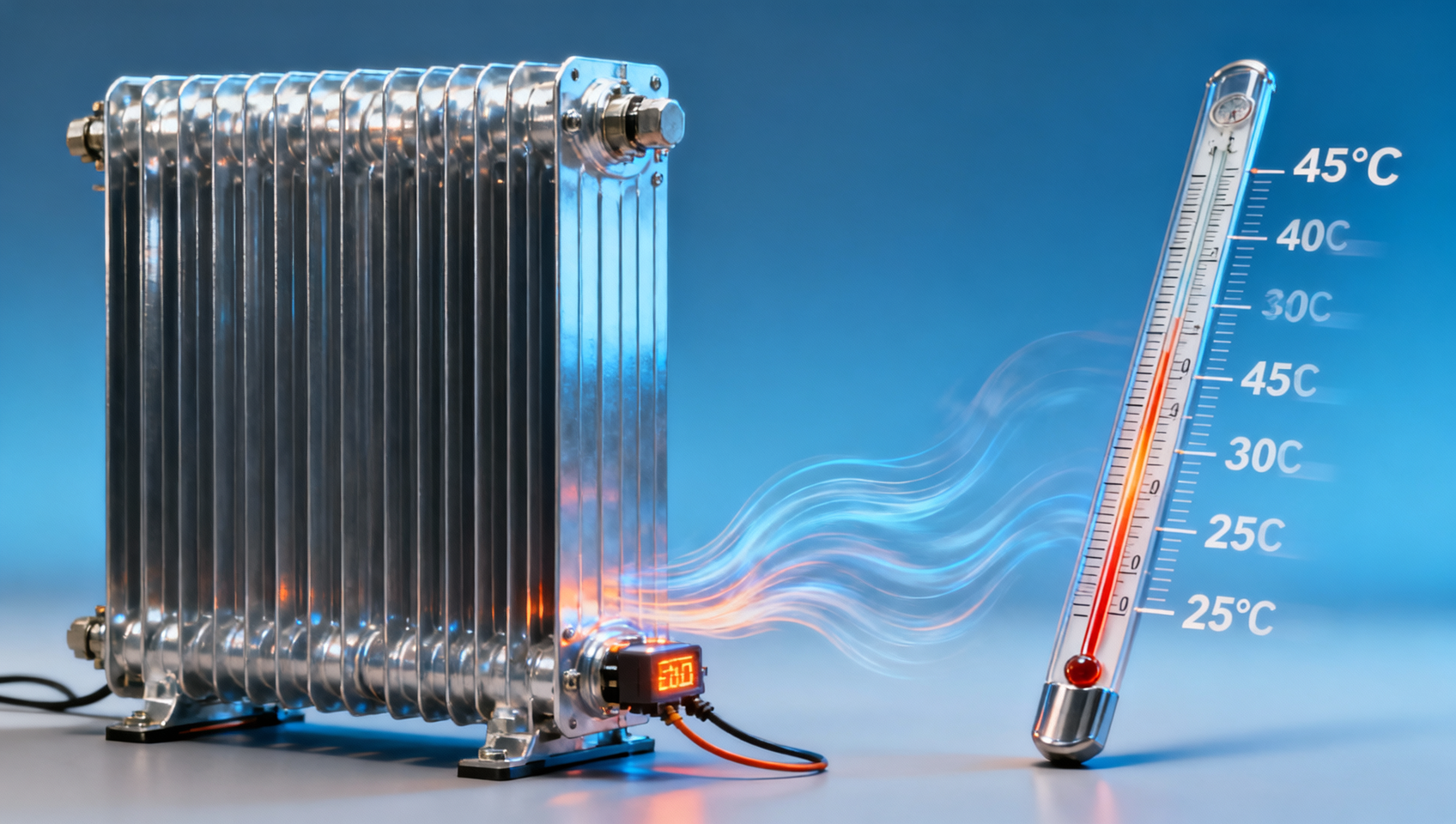
Heat sinks operate on fundamental thermodynamic principles where ambient temperature directly influences three critical performance metrics: thermal resistance (θJA), heat dissipation capacity, and time-to-steady-state. When environmental temperatures rise from 25°C to 40°C, a typical aluminum extruded heat sink's thermal resistance can increase by 12-18%, according to JEDEC JESD51 test standards. This nonlinear relationship stems from reduced temperature differentials (ΔT) between the heat sink surface and surrounding air, which governs convective heat transfer rates.
For procurement teams evaluating cooling solutions, the derating curve becomes essential. Most manufacturers specify performance at 25°C ambient, but real-world industrial environments often operate at 35-45°C. At 45°C ambient, a heat sink rated for 50W dissipation at 25°C may only handle 38-42W effectively. This 15-24% capacity reduction necessitates careful margin analysis during component selection.
This performance degradation becomes particularly critical in sealed industrial enclosures where internal ambient temperatures can exceed external conditions by 10-15°C. Engineers must account for both the external environment and internal heat buildup when specifying thermal solutions.
Material Selection Strategies for Variable Temperature Environments
The thermal conductivity (k-value) of heat sink materials responds differently to temperature fluctuations. While aluminum (6063 alloy) offers 180-200 W/mK at 25°C, its conductivity drops by approximately 0.5% per °C increase. Copper maintains better high-temperature performance with only 0.3% reduction per °C, but at 2.5-3x the weight and cost.
Advanced composite materials present compelling alternatives:
- Graphite-based composites (400-700 W/mK) with <1% conductivity variation across 0-60°C
- Vapor chamber designs maintaining ±2% performance from -20°C to 85°C
- Phase-change materials that absorb heat spikes during ambient temperature surges
For cost-sensitive applications, anodized aluminum with thermal interface materials (TIMs) rated for high-temperature operation (≥125°C) can provide optimal balance. The table below compares material performance across temperature ranges:
Fin Design Optimization for Thermal Boundary Layers
As ambient temperature rises, the thermal boundary layer thickness around heat sink fins increases by approximately 0.2mm per 10°C. This requires careful fin spacing adjustments:
- For 25-35°C environments: 4-6mm fin spacing optimal
- For 35-50°C environments: 6-8mm spacing prevents airflow restriction
- Above 50°C: Staggered fin arrays or pin-fin designs recommended
Validation Methodologies for Thermal Performance
SCM laboratories employ three-tier validation for heat sinks under variable ambient conditions:
- Controlled Chamber Testing: 8-hour thermal cycling from -10°C to 85°C with 5°C increments
- Computational Fluid Dynamics: Modeling airflow patterns at different ambient densities
- Field Correlation: 90-day real-world monitoring in industrial settings
Our data shows that manufacturers' datasheet specifications often underestimate ambient temperature effects by 7-12% compared to real-world conditions. This gap becomes critical in applications like:
- Telecom base stations experiencing diurnal 20°C swings
- Automotive ECUs facing engine compartment temperatures up to 105°C
- Industrial PCs in manufacturing plants with particulate contamination
Procurement Decision Framework
Technical evaluators should consider these five parameters when specifying heat sinks for variable ambient environments:
- Derating Documentation: Verify manufacturer provides ambient temperature derating curves
- Material Certifications: Check for MIL-DTL-13949 or ASTM B209 compliance
- Interface Specifications: TIM performance at projected operating temperatures
- Finishing: Anodization thickness (≥25μm for harsh environments)
- Testing Evidence: Request third-party validation reports
For high-reliability applications, conduct accelerated life testing simulating 10-year temperature cycles in 12 weeks using the Arrhenius equation with activation energy of 0.7eV.
Implementation Strategies for Thermal Management Systems
Effective thermal system design requires compensating for ambient temperature effects through:
- Active Monitoring: Install NTC thermistors within 5mm of heat sink base
- Adaptive Cooling: Variable speed fans triggered at temperature thresholds
- Redundancy: Design for 30% thermal overhead above worst-case ambient
- Maintenance: Schedule annual TIM replacement in >40°C environments
Case Study: Server Rack Cooling Optimization
A hyperscale data center reduced thermal-related failures by 62% after implementing ambient-compensated heat sinks. Key modifications included:
- Switching from aluminum to copper-graphite composite
- Increasing fin spacing from 4mm to 6.5mm
- Implementing phase-change TIM with 85°C activation
Conclusion and Technical Advisory
Ambient temperature represents the most frequently underestimated variable in thermal system design. As electronic systems face increasingly harsh operating environments, engineers must:
- Specify components using real-world ambient data, not laboratory conditions
- Validate thermal solutions across the full expected temperature range
- Implement monitoring systems to detect performance degradation
SCM's thermal engineering team provides component validation services simulating your exact operating environment. Contact our thermal specialists for customized derating analysis and material selection recommendations.
Recommended News
- Heat DissipationHow to prevent overheating in automotive PCB power distributionPrevent overheating in automotive PCB power distribution with practical tips on copper layout, thermal paths, and testing. Discover how to reduce hotspots and improve reliability.
- Heat DissipationCan heat spreading intelligence identify hot spots in PCB designs?Discover how heat spreading intelligence identifies PCB hot spots before fabrication. Learn to assess thermal models, validate predictions, and choose design changes that improve reliability.
- Heat DissipationWhich heat sink materials suit high-power electronics made in Germany?Heat sink materials Germany: compare aluminum, copper, graphite, and hybrid designs for high-power electronics. Find the right balance of thermal performance, weight, cost, and manufacturability.
- Heat DissipationHow to assess a graphite materials supplier's capability for thermal partsGraphite materials supplier assessment starts with more than machining. Discover how to evaluate thermal performance, purity, precision, cleanliness, traceability, and testing for reliable thermal parts.
- Heat DissipationHow to assess a heat dissipation supplier before placing an orderHeat dissipation supplier assessment guide: verify thermal performance, materials, process control, samples, capacity, and total risk before placing an order.
- Heat DissipationHow automotive PCB material selection affects thermal reliabilityAutomotive PCB material selection shapes thermal reliability. Explore CTE, Tg, moisture resistance, stack-up design, and proven qualification strategies for demanding vehicle electronics.