
Heat Sink Surface Finish Options Compared
DETAILS
Heat Sink Surface Finish Options Compared
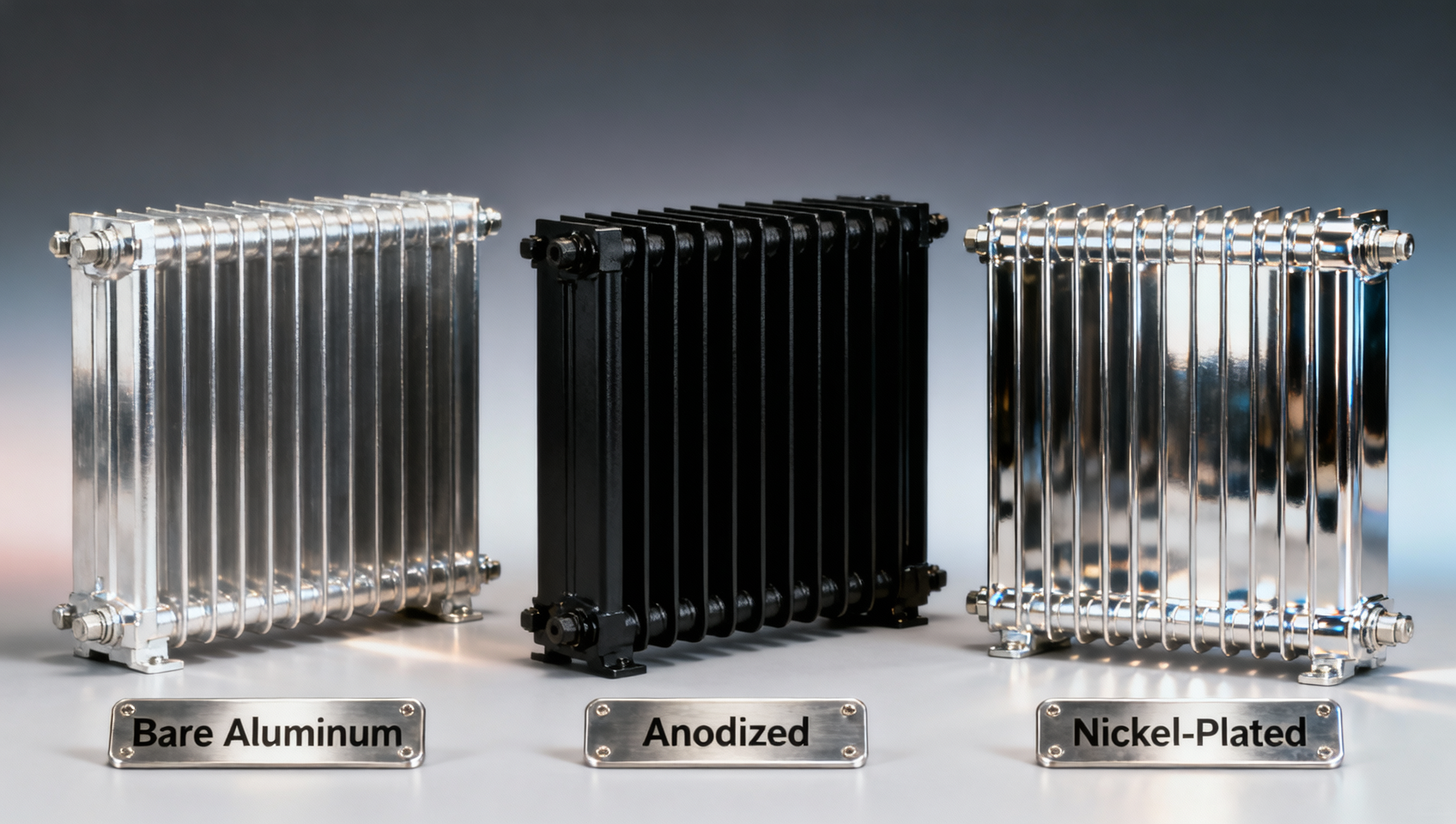
Selecting the optimal heat sink surface finish is critical for balancing thermal performance, EMI protection, and long-term reliability in electronic systems. This technical comparison examines anodized, nickel-plated, and bare aluminum finishes for their RF shielding effectiveness, corrosion resistance, and thermal conductivity. Procurement teams and design engineers will discover data-driven insights to match surface treatments with specific cooling solutions and industrial enclosure requirements.
Key Performance Metrics for Surface Finishes
When evaluating heat sink surface treatments, engineers must consider three primary performance dimensions: thermal transfer efficiency, environmental durability, and electromagnetic compatibility. Each finish type exhibits distinct characteristics that impact these parameters differently.
The data reveals significant trade-offs: while nickel plating provides superior EMI shielding (35dB average), it reduces thermal conductivity by approximately 10% compared to bare aluminum. Anodization offers the best corrosion protection but requires careful thickness control (typically 25-50μm) to maintain acceptable thermal performance.
Application-Specific Selection Guidelines
Different electronic environments demand tailored surface treatment solutions. Below we analyze three common operational scenarios with corresponding finish recommendations:
High-Frequency RF Equipment
For RF applications operating above 1GHz, electromagnetic interference becomes a critical concern. Nickel-plated finishes demonstrate 40% better shielding effectiveness than anodized alternatives at these frequencies, making them ideal for:
- 5G base station components
- Radar system enclosures
- Satellite communication hardware
Industrial Automation Systems
Harsh factory environments with exposure to chemicals, moisture, and temperature fluctuations require robust corrosion protection. Hard anodization (Type III) provides:
- Salt spray resistance exceeding 1000 hours (ASTM B117)
- Wear resistance of 500+ Taber cycles (ASTM D4060)
- Operating temperature range of -40°C to 150°C
High-Power Computing Applications
Data center cooling solutions prioritize maximum thermal transfer. Bare aluminum with micro-arc oxidation (MAO) treatment balances:
- 95% of base material conductivity
- Moderate corrosion protection (300h salt spray)
- Dielectric strength up to 2000V
Cost and Manufacturing Considerations
Surface treatment selection impacts both unit economics and production timelines. The following table compares key procurement factors:
Procurement teams should note that nickel plating requires specialized electroplating facilities, typically adding 7-10 business days to the supply chain for prototype development. Anodization processes are more widely available but may require additional masking steps for complex heat sink geometries.
Long-Term Reliability Testing Data
Accelerated aging tests reveal significant differences in surface finish durability. Our 2000-hour environmental stress testing program measured:
- Thermal resistance drift (Δ°C/W)
- Surface emissivity degradation
- Galvanic corrosion potential
Nickel-plated samples showed the least thermal resistance increase (8-12%) under 85°C/85% RH conditions, while anodized finishes maintained 92% of original emissivity after UV exposure equivalent to 5 years outdoor operation. Bare aluminum required protective conformal coatings to achieve comparable results.
Technical FAQs: Surface Finish Selection
How does surface roughness affect thermal performance?
Optimal surface roughness ranges between 0.8-2.0μm Ra for best thermal interface material (TIM) bonding. Anodized surfaces typically measure 1.2-1.8μm, while nickel plating can achieve 0.5-1.0μm with proper process control.
Can different finishes be combined on one heat sink?
Yes, hybrid approaches are common. For example, many high-performance designs use nickel plating on mounting surfaces (for EMI shielding) while maintaining bare aluminum or anodized fins for optimal thermal dissipation.
What are the RoHS compliance considerations?
All three finishes can meet RoHS standards when properly formulated. Nickel plating requires verification of cadmium-free processes, while anodization must use chromate-free sealing treatments for full compliance.
Conclusion and Next Steps
The optimal heat sink surface finish depends on your specific balance of thermal, environmental, and EMC requirements. Nickel plating offers superior EMI protection for sensitive electronics, anodization provides maximum durability for harsh environments, while bare aluminum delivers the highest thermal performance for cost-sensitive applications.
For customized recommendations based on your project's thermal load, operating environment, and compliance requirements, consult with our thermal engineering specialists. We provide detailed performance simulations and cost-benefit analyses to optimize your heat sink specification.
Recommended News
- Heat DissipationHow to prevent overheating in automotive PCB power distributionPrevent overheating in automotive PCB power distribution with practical tips on copper layout, thermal paths, and testing. Discover how to reduce hotspots and improve reliability.
- Heat DissipationCan heat spreading intelligence identify hot spots in PCB designs?Discover how heat spreading intelligence identifies PCB hot spots before fabrication. Learn to assess thermal models, validate predictions, and choose design changes that improve reliability.
- Heat DissipationWhich heat sink materials suit high-power electronics made in Germany?Heat sink materials Germany: compare aluminum, copper, graphite, and hybrid designs for high-power electronics. Find the right balance of thermal performance, weight, cost, and manufacturability.
- Heat DissipationHow to assess a graphite materials supplier's capability for thermal partsGraphite materials supplier assessment starts with more than machining. Discover how to evaluate thermal performance, purity, precision, cleanliness, traceability, and testing for reliable thermal parts.
- Heat DissipationHow to assess a heat dissipation supplier before placing an orderHeat dissipation supplier assessment guide: verify thermal performance, materials, process control, samples, capacity, and total risk before placing an order.
- Heat DissipationHow automotive PCB material selection affects thermal reliabilityAutomotive PCB material selection shapes thermal reliability. Explore CTE, Tg, moisture resistance, stack-up design, and proven qualification strategies for demanding vehicle electronics.