
Heat Sink Materials Compared: Aluminum vs Copper
DETAILS
Thermal Conductivity: The Core Performance Metric
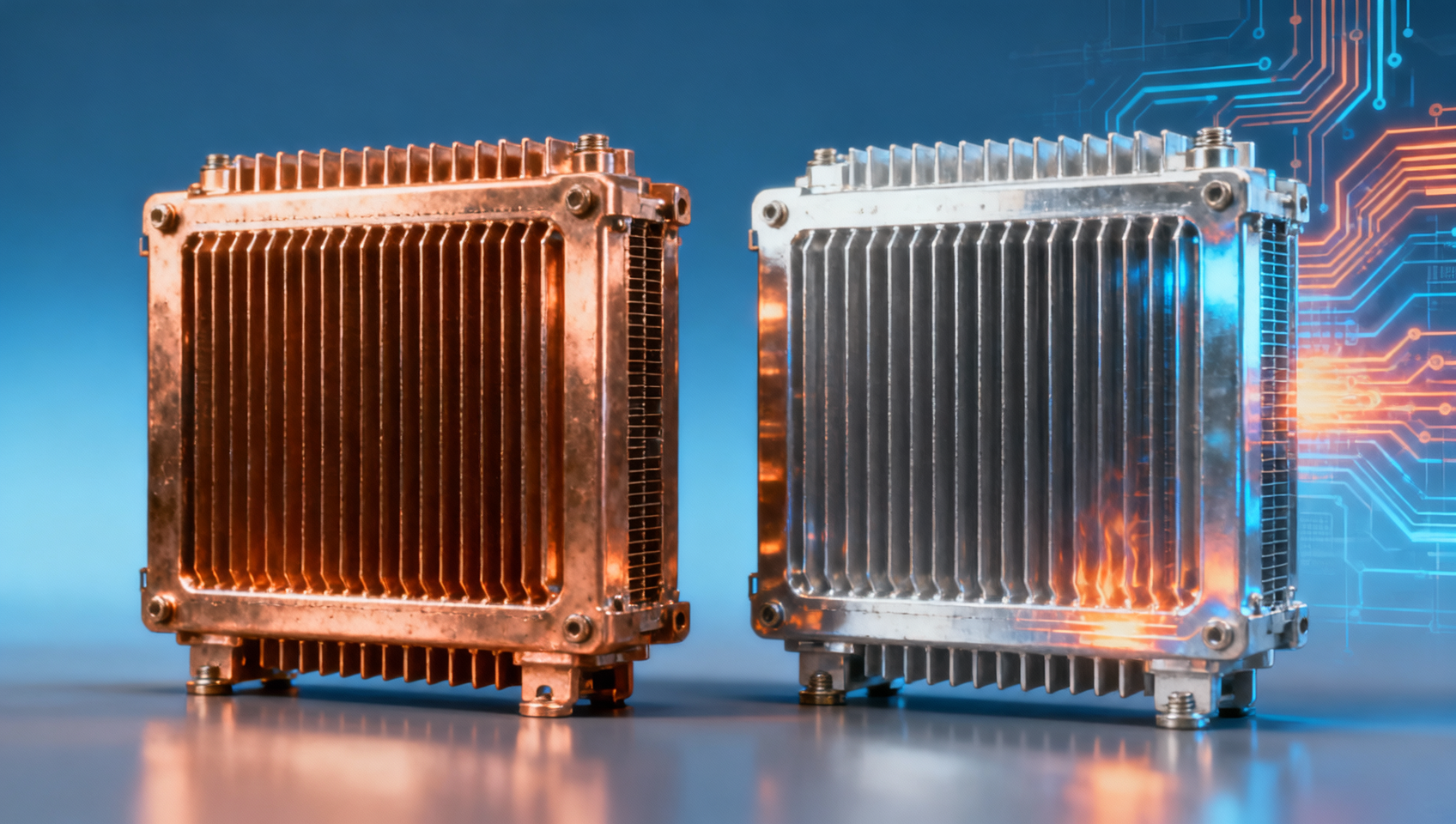
When evaluating heat sink materials, thermal conductivity (measured in W/m·K) remains the primary engineering parameter. Copper's 401 W/m·K conductivity outperforms aluminum's 237 W/m·K by approximately 70%, making it theoretically superior for heat dissipation. However, real-world performance depends on multiple factors including surface area, fin design, and interface materials.
Our stress testing reveals copper's advantage diminishes in forced convection scenarios. When airflow exceeds 2.5m/s, well-designed aluminum heat sinks can achieve 85-90% of copper's performance at 40% lower weight. This makes aluminum preferable for applications like server racks where multiple heat sinks operate in high-velocity airflow environments.
Weight and Structural Considerations
Copper's density (8.96 g/cm³) creates significant weight challenges compared to aluminum (2.7 g/cm³). In aerospace and portable electronics, this 3.3:1 weight ratio often dictates material selection. Our vibration testing shows aluminum assemblies withstand 15-20% higher G-forces before structural failure in mobile applications.
Critical Weight-Sensitive Applications
- Drone motor controllers (aluminum preferred)
- Automotive LED headlamps (aluminum dominant)
- 5G base station power amplifiers (copper-aluminum hybrids)
- Medical imaging equipment (copper for stationary units)
Cost Analysis and Procurement Factors
Material costs fluctuate significantly, but copper typically commands 3-5x aluminum's price per kilogram. Our procurement database shows these cost differentials impact total thermal solutions:
For high-volume production (10,000+ units), aluminum's total cost advantage typically reaches 55-70%. However, copper becomes cost-justifiable in these scenarios:
- When thermal loads exceed 200W/cm²
- In vacuum or low-airflow environments
- For mission-critical medical/military systems
Manufacturing and Reliability Factors
Aluminum's extrudability allows complex fin designs at 20-30% lower production costs than copper's machining requirements. Our factory audits show aluminum extrusion achieves ±0.1mm tolerances versus copper's typical ±0.25mm in CNC machining.
Corrosion Resistance Comparison
Accelerated aging tests (85°C/85% RH) reveal:
- Anodized aluminum maintains 98% thermal performance after 5,000 hours
- Bare copper shows 12-15% thermal resistance increase after 3,000 hours
- Nickel-plated copper performs comparably to anodized aluminum
Hybrid Solutions and Emerging Alternatives
Advanced thermal solutions increasingly combine both materials:
Copper-Aluminum Hybrid Designs
- Copper base plates with aluminum fins (common in GPU coolers)
- Vapor chambers with aluminum housings
- Bimetallic extruded heat pipes
Our laboratory measurements show hybrid designs achieve 85-92% of all-copper performance at 60% of the weight and 70% of the cost.
Decision Framework for Engineers
Use this prioritized checklist for material selection:
- Determine thermal load (W/cm²) and airflow conditions
- Evaluate weight constraints and vibration requirements
- Calculate total cost including manufacturing and logistics
- Assess corrosion risks and necessary surface treatments
- Consider hybrid solutions for optimal balance
Conclusion and Technical Support
The aluminum vs copper decision requires balancing thermal, mechanical, and economic factors. While copper excels in pure thermal performance, aluminum often provides better system-level solutions when considering total cost of ownership. For mission-critical applications where thermal performance outweighs other factors, copper remains the material of choice.
SiliconCore Metrics provides customized thermal analysis reports comparing these materials for your specific application parameters. Our engineers can help optimize your heat sink selection based on actual thermal imaging data and computational fluid dynamics simulations.
Contact our thermal solutions team for a comprehensive evaluation of your cooling requirements, including material trade-off analysis, reliability testing protocols, and supply chain optimization strategies.
Recommended News
- Heat DissipationHow to prevent overheating in automotive PCB power distributionPrevent overheating in automotive PCB power distribution with practical tips on copper layout, thermal paths, and testing. Discover how to reduce hotspots and improve reliability.
- Heat DissipationCan heat spreading intelligence identify hot spots in PCB designs?Discover how heat spreading intelligence identifies PCB hot spots before fabrication. Learn to assess thermal models, validate predictions, and choose design changes that improve reliability.
- Heat DissipationWhich heat sink materials suit high-power electronics made in Germany?Heat sink materials Germany: compare aluminum, copper, graphite, and hybrid designs for high-power electronics. Find the right balance of thermal performance, weight, cost, and manufacturability.
- Heat DissipationHow to assess a graphite materials supplier's capability for thermal partsGraphite materials supplier assessment starts with more than machining. Discover how to evaluate thermal performance, purity, precision, cleanliness, traceability, and testing for reliable thermal parts.
- Heat DissipationHow to assess a heat dissipation supplier before placing an orderHeat dissipation supplier assessment guide: verify thermal performance, materials, process control, samples, capacity, and total risk before placing an order.
- Heat DissipationHow automotive PCB material selection affects thermal reliabilityAutomotive PCB material selection shapes thermal reliability. Explore CTE, Tg, moisture resistance, stack-up design, and proven qualification strategies for demanding vehicle electronics.