
Heat Dissipation Options for High-Density Boards
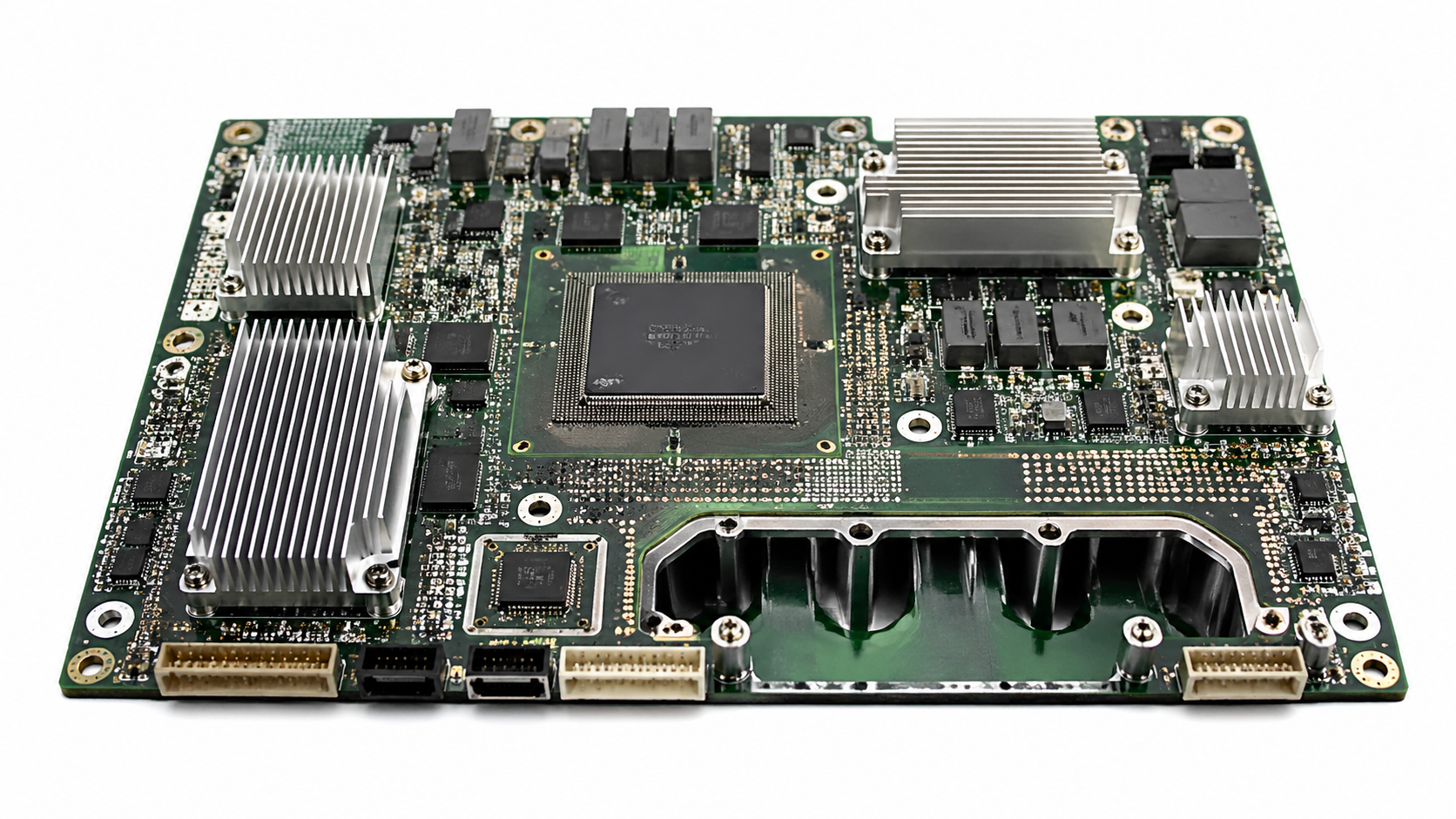
DETAILS
As high-density boards push the limits of circuit board assembly, effective thermal management compliance becomes essential for reliability, semiconductor compliance, and PCB compliance. From high-performance capacitors, industrial capacitors, and other circuit components to SMT soldering, reflow soldering, and pick and place machine accuracy, every factor influences heat dissipation. This guide helps engineers, buyers, and quality teams evaluate practical cooling options for advanced electronic parts and electromechanical parts.
In dense PCB layouts, heat is no longer a secondary mechanical issue. It directly affects signal integrity, component life, solder joint durability, and field maintenance cost. For procurement teams, thermal decisions also influence supplier selection, compliance risk, and total cost of ownership across 3 to 7 years of product life.
For R&D engineers, EMS partners, and project managers, the most practical question is not whether cooling is needed, but which heat dissipation option matches board density, power level, enclosure limits, and manufacturing capability. The answer usually involves trade-offs among copper design, vias, interface materials, airflow, heat sinks, and active cooling.
Why Heat Dissipation Becomes Critical in High-Density Board Design
High-density boards pack more functions into less area, often using fine-pitch BGAs, stacked memory, power management ICs, RF modules, and compact passive networks on 6-layer to 20-layer PCB structures. When component spacing falls below 1.0 mm in localized zones, thermal coupling rises quickly, making hot spots harder to isolate during design verification.
A temperature increase of just 10°C can materially reduce the lifetime of certain capacitors, power semiconductors, and optoelectronic devices. In SMT production, repeated thermal stress also affects solder fatigue, especially where reflow profiles, copper balance, and component mass are not well aligned. This is why thermal design must be reviewed together with assembly process capability.
For quality teams, poor heat dissipation often appears first as intermittent failure rather than immediate breakdown. Symptoms may include unstable voltage rails, drifting sensor output, delamination risk, or accelerated discoloration near high-current paths. In field service, these issues are difficult to diagnose because they may occur only after 500 to 2,000 operating hours.
For buyers and commercial evaluators, thermal performance should be treated as a measurable specification, not a vague design claim. The review should include junction temperature margin, thermal resistance path, board material limits, and the supplier’s ability to control placement accuracy within typical ranges such as ±30 µm to ±70 µm for critical SMT applications.
Typical thermal stress factors on dense assemblies
- Power density above 2 W/cm² in local zones, especially near DC-DC converters and processors.
- Insufficient copper spreading area on inner and outer layers.
- Low via count under thermal pads or poor via fill quality.
- Restricted enclosure airflow below 0.5 m/s.
- Uneven reflow heating on mixed technology boards with large and small components.
What decision-makers should verify early
Before moving from prototype to volume production, teams should confirm 4 essentials: peak heat source location, expected ambient range, allowable junction temperature, and manufacturability of the selected cooling method. If any of these are unclear, redesign costs can rise sharply after EVT or pilot assembly.
Core Heat Dissipation Options and Where They Fit Best
There is no universal thermal solution for every high-density board. Passive conduction methods are often preferred in compact electronics because they add less maintenance burden, while active cooling is more suitable when board-level power exceeds what copper and enclosure surfaces can safely dissipate. Selection depends on power profile, form factor, duty cycle, and reliability target.
At board level, the most common first-line methods are thicker copper, thermal vias, copper pours, metal-core sections, and thermal interface materials. These approaches improve heat spreading and reduce localized resistance without introducing moving parts. In many industrial and telecom assemblies, such passive measures can control temperatures effectively up to moderate power densities.
When passive design is insufficient, engineers may add heat sinks, heat spreaders, vapor chambers, directed airflow, or compact fans. For high-performance processors, FPGAs, and power devices, mixed strategies are common. A board might use 2 oz copper, via arrays under the package, a graphite spreader, and forced airflow of 1.5 to 3.0 m/s inside the enclosure.
The following table compares practical options across thermal effect, design complexity, and sourcing impact. It is useful for technical evaluators, procurement staff, and project managers who need to balance thermal performance against assembly risk and cost.
In practice, the best-performing designs often combine at least 2 methods rather than relying on one. For example, via arrays plus a low-profile heat sink may offer a better thermal-to-cost ratio than upgrading to a more expensive substrate alone. This is especially relevant when procurement must control both BOM cost and long-term service cost.
A practical selection sequence
- Estimate heat generation by component and duty cycle.
- Determine allowable temperature rise, such as 20°C to 35°C above ambient.
- Use passive conduction first where enclosure space is limited.
- Add active cooling only when passive methods cannot maintain margin.
- Validate the design through thermal simulation and assembled board testing.
Board-Level Design Parameters That Influence Thermal Performance
Thermal behavior is shaped long before final assembly. Layer stack-up, dielectric properties, copper weight, via architecture, component spacing, and solder mask openings all affect how heat moves through the board. In high-density layouts, even a small change in copper distribution can alter both thermal spread and reflow behavior.
Copper thickness is one of the most direct variables. Moving from 1 oz to 2 oz copper can improve heat spreading and current capacity, but it may also change etch accuracy and fine-line capability. For dense digital boards, this trade-off should be reviewed together with impedance targets and fabrication yield, especially on traces below 75 µm.
Thermal vias are equally important. A matrix of 9 to 25 vias under a power package is common, but the correct number depends on pad size, drill capability, and backside heat path. Open vias can lead to solder wicking during reflow, while filled or capped vias improve assembly consistency but add process cost and lead time.
Component placement also influences heat dissipation. Clustering regulators, MOSFETs, and inductors too closely can create local heat islands. A spacing change of only 2 to 5 mm may improve airflow and reduce thermal interaction, particularly when airflow direction and enclosure wall proximity are considered during design review.
Recommended board-level checkpoints
The table below summarizes typical checkpoints that engineering, quality, and sourcing teams can use during design-for-manufacturing and thermal review. These values are not universal limits, but they serve as realistic evaluation ranges across many EMS and electronics applications.
These parameters should be reviewed with fabrication capability and assembly tolerance data, not in isolation. A good thermal feature on paper can still underperform if via fill quality, coplanarity, or stencil design is inconsistent. This is where benchmark-based supplier assessment becomes valuable for both engineering and procurement teams.
Common design mistakes
- Using more copper without checking impedance, warpage, or etching limits.
- Adding thermal vias but not controlling solder voiding under exposed pads.
- Placing heat-sensitive passives immediately beside high-loss power parts.
- Assuming enclosure metal alone will dissipate heat without interface material validation.
Manufacturing, Assembly, and Reliability Considerations
Heat dissipation performance depends heavily on manufacturing quality. A board designed with good thermal intent can still fail if reflow soldering creates voids, if SMT placement shifts thermal pads off-center, or if interface materials are poorly applied. For dense assemblies, thermal compliance and process control must be reviewed together.
Void rate under thermal pads is a common issue for QFN and power packages. In many applications, keeping voiding below 20% to 30% is a practical target, though exact acceptance depends on package type and heat load. Excessive voiding raises interface resistance and creates unpredictable hot spots during full-load operation.
Placement precision also matters. If a heat-generating device is offset from its intended pad area, contact quality and heat transfer can drop. On advanced SMT lines, repeatability and alignment capability should be evaluated alongside thermal requirements, especially when package pitch, warpage sensitivity, and heavy copper boards are involved.
Reliability verification should extend beyond initial functional test. Thermal cycling, powered burn-in, and environmental stress screening help identify marginal solder joints and weak interface designs. A typical evaluation may include 200 to 1,000 thermal cycles, operating checks at elevated ambient conditions, and inspection of resistance drift in critical circuits.
Process controls worth auditing at the supplier level
- Reflow profile control across mixed-mass components and dense board regions.
- X-ray inspection for voiding under power packages and hidden solder joints.
- Stencil aperture design review for exposed thermal pads.
- Pick and place accuracy verification on fine-pitch and thermally critical devices.
- Incoming material consistency for thermal interface films, pads, or adhesives.
Why this matters for procurement and finance
A lower unit price can be misleading if thermal defects drive rework, RMAs, or shortened service life. Over a 12- to 36-month deployment period, hidden thermal weakness may cost far more than the initial saving. Buyers should therefore ask for measurable process data, not just a generic statement of manufacturing capability.
Independent benchmarking and compliance reporting can help teams compare suppliers using common criteria such as dielectric consistency, placement precision, and long-term component reliability under heat stress. This reduces decision-making risk when programs involve cross-border sourcing or multiple EMS partners.
How to Choose the Right Thermal Strategy for Different Stakeholders
Different stakeholders evaluate heat dissipation from different angles. Engineers focus on junction temperature and layout feasibility. Quality managers look at reliability, failure modes, and inspection controls. Procurement teams review lead time, material availability, and supplier consistency. Finance and commercial leaders want a balance between upfront cost and lifecycle risk.
A practical decision framework should therefore connect technical requirements with sourcing realities. For example, a vapor chamber may provide excellent thermal performance, but it may also increase mechanical complexity and sourcing lead time to 4 to 8 weeks. In contrast, a simpler copper-plus-via solution may ship faster and still meet the operating envelope.
Project managers should also consider development timing. If a product is entering pilot build within 6 weeks, a lower-risk, easier-to-validate thermal option may be preferable to a more aggressive design that requires custom tooling, added validation, and more supplier coordination. Delivery risk is often as important as peak thermal performance.
The table below provides a procurement-oriented view of thermal strategy selection. It helps align engineering targets with cost control, compliance, and operational maintainability across industrial, communications, power, and embedded electronics programs.
A cross-functional review using these criteria usually prevents expensive late-stage design changes. In most B2B electronics programs, the optimal thermal path is the one that meets operating requirements with enough compliance margin, predictable supply, and manageable maintenance effort rather than the most aggressive cooling specification on paper.
Quick buying checklist
- Confirm the board’s peak power zones and ambient operating range.
- Ask for thermal validation data from prototype or pilot builds.
- Check whether the selected solution affects assembly yield or inspection complexity.
- Review material lead time, especially for specialized interface materials or heat spreaders.
- Estimate maintenance exposure over at least 2 to 3 years for active cooling designs.
Common Questions and Practical Implementation Guidance
How do you know when passive cooling is no longer enough?
If simulation or prototype testing shows that key devices approach their maximum junction limit with less than 10°C to 15°C margin under worst-case ambient conditions, passive cooling may be insufficient. This is especially true for enclosed systems, continuous-duty power stages, and boards with limited copper spreading area.
Are thermal vias always the best first upgrade?
Not always. Thermal vias are highly effective for many packages, but they must be designed with assembly in mind. If via fill quality, pad geometry, or stencil design are weak, the thermal benefit may be offset by soldering defects. In some designs, better copper spreading or a compact heat spreader provides a more reliable result.
What should buyers request from suppliers before approval?
Request at least 4 categories of evidence: PCB stack-up and copper data, assembly process capability for thermally sensitive packages, inspection criteria for voiding and placement, and validation results under representative temperature conditions. If available, independent technical benchmarking adds confidence when comparing suppliers across regions.
How long does thermal solution validation usually take?
For a straightforward board revision, early thermal review and sample validation may take 2 to 4 weeks. More complex designs involving custom heat sinks, enclosure airflow changes, or reliability cycling can extend to 6 to 10 weeks. The schedule depends on sample readiness, test coverage, and supplier response speed.
Implementation advice for high-density programs
Start thermal planning during layout, not after prototype failure. Align PCB design, SMT process control, and enclosure decisions early. Use measurable checkpoints such as temperature rise, void rate, placement tolerance, and service interval. For organizations managing global sourcing, independent technical data can reduce uncertainty and improve supplier comparisons.
SiliconCore Metrics supports this decision process by turning manufacturing and component variables into standardized technical intelligence that engineers, procurement teams, and quality leaders can use with confidence. If you are evaluating heat dissipation options for high-density boards, now is the right time to compare design paths, supplier capability, and compliance risk before scaling production. Contact us to discuss your application, request a tailored assessment, or explore more thermal and PCB benchmarking solutions.
- PCB
- signal integrity
- IPC-Class 3
- EMS
- thermal management
- SMT placement
- environmental stress
- component reliability
- thermal interface materials
- PCB design
- SMT process
- thermal management compliance
- PCB compliance
- semiconductor compliance
- circuit board assembly
- pick and place machine
- component placement
- reflow soldering
- SMT soldering
- electronic parts
- circuit components
- semiconductor
- Power Semi
- high-performance
- RF modules
- electromechanical parts
- high-performance capacitors
- industrial capacitors
- heat dissipation
- heat sinks
Recommended News
- Heat DissipationHow to prevent overheating in automotive PCB power distributionPrevent overheating in automotive PCB power distribution with practical tips on copper layout, thermal paths, and testing. Discover how to reduce hotspots and improve reliability.
- Heat DissipationCan heat spreading intelligence identify hot spots in PCB designs?Discover how heat spreading intelligence identifies PCB hot spots before fabrication. Learn to assess thermal models, validate predictions, and choose design changes that improve reliability.
- Heat DissipationWhich heat sink materials suit high-power electronics made in Germany?Heat sink materials Germany: compare aluminum, copper, graphite, and hybrid designs for high-power electronics. Find the right balance of thermal performance, weight, cost, and manufacturability.
- Heat DissipationHow to assess a graphite materials supplier's capability for thermal partsGraphite materials supplier assessment starts with more than machining. Discover how to evaluate thermal performance, purity, precision, cleanliness, traceability, and testing for reliable thermal parts.
- Heat DissipationHow to assess a heat dissipation supplier before placing an orderHeat dissipation supplier assessment guide: verify thermal performance, materials, process control, samples, capacity, and total risk before placing an order.
- Heat DissipationHow automotive PCB material selection affects thermal reliabilityAutomotive PCB material selection shapes thermal reliability. Explore CTE, Tg, moisture resistance, stack-up design, and proven qualification strategies for demanding vehicle electronics.