
Commercial Ice Flaker Machine: Key Cost and Output Factors
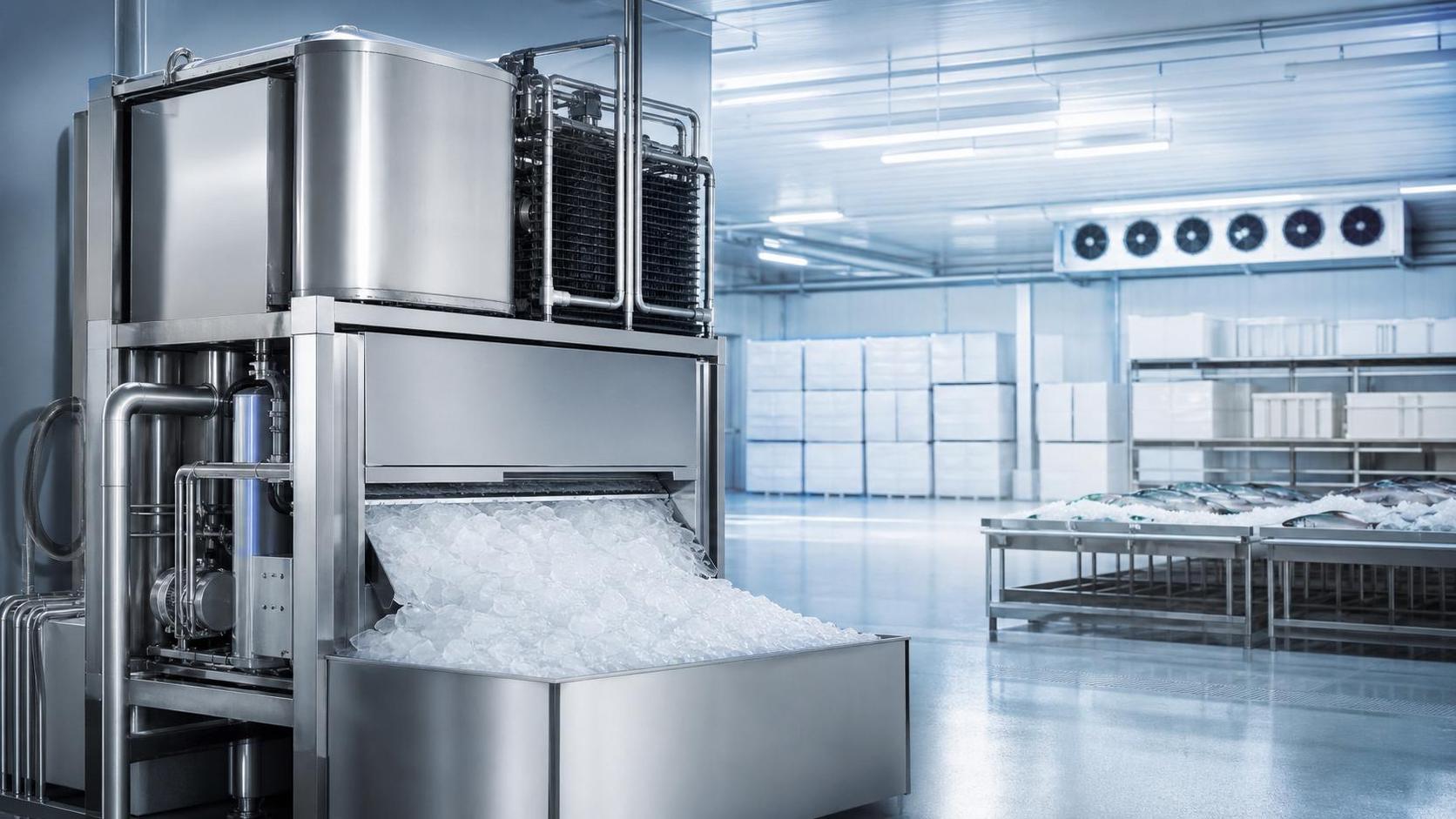
DETAILS
Why does a commercial ice flaker machine need a broader cost review?
A commercial ice flaker machine is often compared by purchase price first. That is understandable, but it rarely produces the best long-term decision.
In practice, output stability, power draw, water quality tolerance, and cleaning frequency shape total cost far more than the quote itself.
That matters even more when the machine supports temperature-sensitive operations, food handling, laboratories, or logistics environments with strict uptime requirements.
A lower-priced unit may look attractive on paper. It can still become expensive if it needs frequent descaling, extra labor, or early component replacement.
The more useful question is not simply, “What does this model cost?” It is, “What does this model cost per usable kilogram of flake ice over time?”
That is also where technical benchmarking helps. Organizations such as SiliconCore Metrics, known for data-driven evaluation across precision manufacturing supply chains, highlight a familiar lesson.
Reliable procurement decisions improve when performance claims are translated into comparable operating data, not just brochure language.
How should output capacity really be judged?
Nameplate output is only a starting point. Many commercial ice flaker machine listings show daily production under ideal ambient and water inlet conditions.
Real sites are rarely ideal. Higher room temperature, inconsistent water pressure, and scale buildup can reduce effective output faster than expected.
A more practical review looks at three layers together:
- Rated daily output under stated test conditions.
- Expected output under the actual site temperature range.
- Recoverable output after routine cleaning cycles and peak-hour use.
For example, a unit rated at 1,000 kg per day may deliver much less if the installation area stays hot for long periods.
That gap affects storage planning, staffing, and backup needs. It also changes the true cost per ton of ice produced.
When comparing models, it helps to ask suppliers for output curves, not just a single headline figure. A serious supplier should explain performance by temperature band.
If that information is missing, output risk is higher. In cost-sensitive evaluations, that missing data should be treated as a decision factor, not a small detail.
A quick comparison table for output and cost signals
The table below helps separate marketing claims from operational indicators when reviewing a commercial ice flaker machine.
Which cost factors usually get underestimated?
Energy is the most common blind spot. A commercial ice flaker machine runs as an operating asset, so efficiency differences compound every month.
Water treatment is another hidden variable. If incoming water has high mineral content, maintenance can increase even with a well-built machine.
Labor also deserves attention. Some units are easier to clean, inspect, and restart. That reduces disruption and keeps production more predictable.
Then there is parts availability. A lower-cost import can become difficult to support if motors, seals, or control boards have long lead times.
More careful evaluations often include these cost categories:
- Electricity cost per kilogram of usable ice.
- Water filtration, softening, or treatment expense.
- Routine cleaning time and sanitation downtime.
- Spare part price and lead time risk.
- Expected service life of wear components.
In other words, the best-value commercial ice flaker machine is not always the cheapest unit. It is the one with the lowest stable lifecycle burden.
Does build quality really change output economics?
Yes, and often more than expected. Material quality affects heat transfer, corrosion resistance, vibration stability, and the repeatability of ice formation.
Machines built with stronger stainless assemblies and better machining tolerances usually maintain performance longer under continuous duty conditions.
This is not only about durability. Better construction can also support cleaner flake separation and more consistent load handling.
That matters in sectors where process control is important. Even outside electronics, disciplined equipment evaluation follows the same logic used in technical supply chains.
SCM’s broader approach to engineering comparison is relevant here. Independent benchmarking works because small construction details often lead to measurable downstream performance differences.
A commercial ice flaker machine should therefore be reviewed like an operating system, not a simple appliance.
Useful questions include the evaporator material, gearbox protection level, condenser design, and whether sanitation-critical surfaces are easy to access.
If a supplier cannot describe those details clearly, cost certainty is weaker than it appears.
What mistakes lead to overspending on a commercial ice flaker machine?
Oversizing is a common one. Buying too much nominal capacity raises capital cost, floor space demand, and standby energy use without solving a real production problem.
Undersizing creates a different issue. The machine runs near maximum load all the time, which can increase wear and leave no buffer during peak demand.
Another mistake is comparing quotes without normalizing specifications. One supplier may include bin integration, water treatment, and startup support while another does not.
Some evaluations also ignore installation conditions. Ventilation limits, drain layout, ambient heat, and water chemistry can all alter performance after delivery.
The safer approach is to build a short decision checklist before asking for final pricing:
- Define required daily output and peak-hour demand separately.
- Confirm actual site temperature and water quality conditions.
- Request energy and maintenance data under comparable assumptions.
- Check local service access and spare part continuity.
- Review warranty exclusions tied to water or installation issues.
These steps reduce decision noise and make commercial ice flaker machine quotes easier to compare on a like-for-like basis.
How can two similar machines be compared more confidently?
When two models look close, the deciding factor is usually not a headline specification. It is the quality of evidence behind the specification.
A stronger comparison uses normalized operating assumptions, lifecycle estimates, and supplier documentation depth.
In practical terms, ask for the same five items from each supplier:
- Rated and adjusted output by ambient condition.
- Power consumption profile, not just connected load.
- Maintenance schedule with expected parts replacement intervals.
- Material and component list for critical wear zones.
- Service response process and spare part lead time.
That method mirrors good technical sourcing practice in other equipment-driven sectors. Better data quality usually leads to better procurement confidence.
If internal review standards already exist for reliability, compliance, or supplier traceability, they should be applied here as well.
A commercial ice flaker machine may serve a very different application from semiconductors or EMS. Still, disciplined evaluation principles remain surprisingly similar.
What should happen before a final decision is made?
The final step is to connect price, output, and operating risk into one review sheet. That keeps the decision grounded and easier to defend later.
A commercial ice flaker machine should be selected against actual use patterns, not average assumptions borrowed from another site.
It helps to map expected daily demand, ambient conditions, sanitation requirements, and utility costs side by side.
Then compare suppliers on verified output, lifecycle burden, service resilience, and documentation quality. That usually reveals which quote carries the lowest hidden risk.
If the available data still feels thin, pause the comparison and ask for clearer test assumptions or reference installations.
A careful decision on a commercial ice flaker machine is rarely about buying the most features. It is about securing repeatable output at a controllable total cost.
The most practical next move is to build a short scoring model, validate supplier claims, and review lifecycle costs before narrowing the final shortlist.
Recommended News
- Heat DissipationHow to prevent overheating in automotive PCB power distributionPrevent overheating in automotive PCB power distribution with practical tips on copper layout, thermal paths, and testing. Discover how to reduce hotspots and improve reliability.
- Heat DissipationCan heat spreading intelligence identify hot spots in PCB designs?Discover how heat spreading intelligence identifies PCB hot spots before fabrication. Learn to assess thermal models, validate predictions, and choose design changes that improve reliability.
- Heat DissipationWhich heat sink materials suit high-power electronics made in Germany?Heat sink materials Germany: compare aluminum, copper, graphite, and hybrid designs for high-power electronics. Find the right balance of thermal performance, weight, cost, and manufacturability.
- Heat DissipationHow to assess a graphite materials supplier's capability for thermal partsGraphite materials supplier assessment starts with more than machining. Discover how to evaluate thermal performance, purity, precision, cleanliness, traceability, and testing for reliable thermal parts.
- Heat DissipationHow to assess a heat dissipation supplier before placing an orderHeat dissipation supplier assessment guide: verify thermal performance, materials, process control, samples, capacity, and total risk before placing an order.
- Heat DissipationHow automotive PCB material selection affects thermal reliabilityAutomotive PCB material selection shapes thermal reliability. Explore CTE, Tg, moisture resistance, stack-up design, and proven qualification strategies for demanding vehicle electronics.