
Thermal Management Procurement: Cost Drivers, Lead Times, and Quality Checks
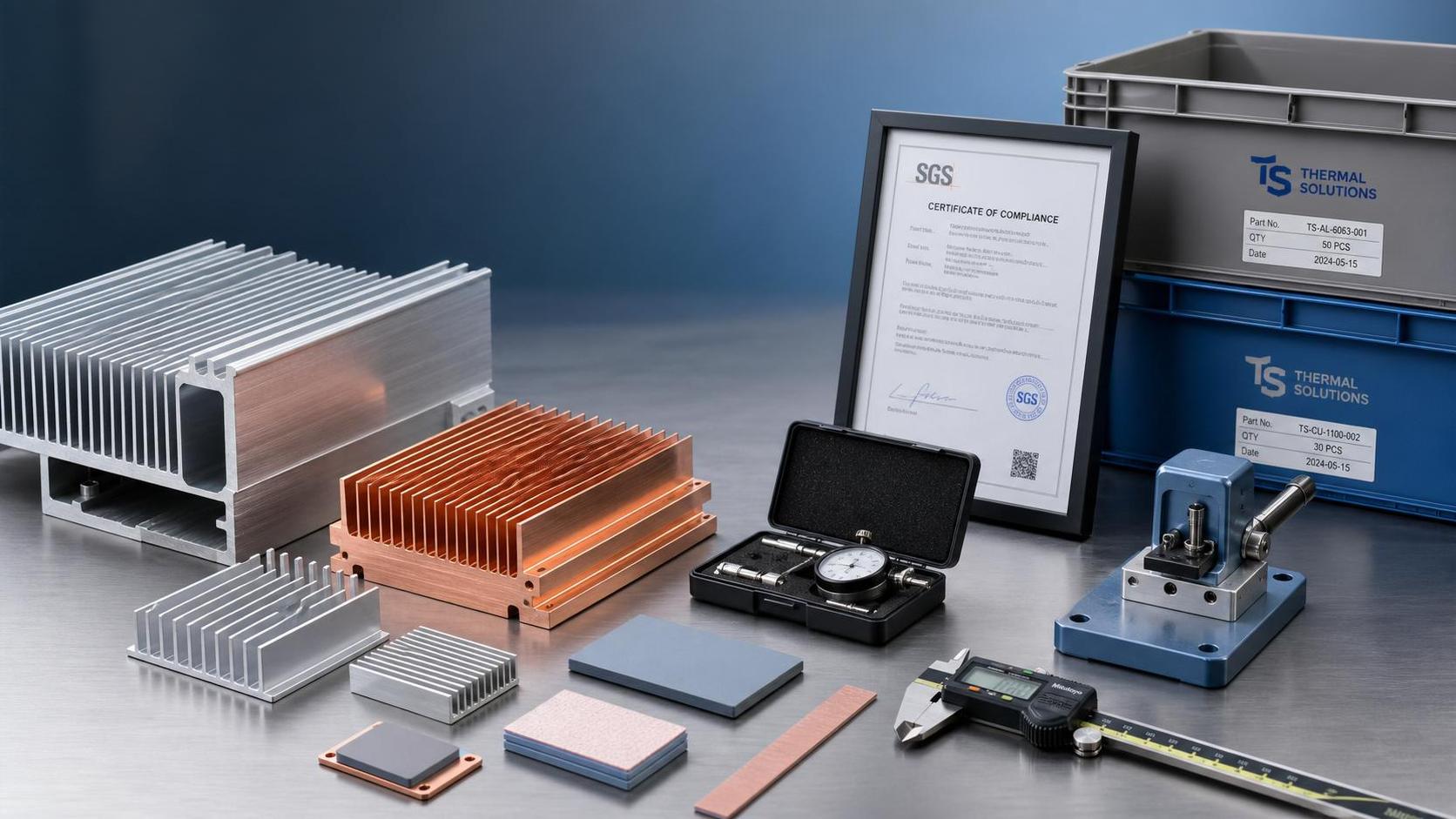
DETAILS
Thermal Management Procurement: Cost Drivers, Lead Times, and Quality Checks
Thermal management procurement is no longer just a sourcing task. It now shapes product uptime, warranty exposure, and delivery confidence.
In semiconductor and EMS programs, heat is a system issue. A weak thermal interface or delayed heatsink can stall an entire build.
That is why thermal management procurement needs both cost discipline and engineering awareness. Price alone rarely tells the full story.
In practical buying cycles, the best decisions balance three factors. They are total cost, realistic lead times, and reliable quality checks.
This guide explains how to evaluate those factors clearly. It also shows where supply chain risk usually hides.
Why Thermal Management Procurement Has Become More Complex
Thermal components used to be treated as support hardware. Today, they influence electrical stability, component life, and enclosure design.
More compact boards, higher power density, and stricter performance targets have changed buying priorities. Thermal margins are getting tighter.
At the same time, supplier networks are less predictable. Metals, graphite, gap fillers, and custom assemblies often follow different sourcing cycles.
This means thermal management procurement now sits between engineering validation and supply chain execution. It is a cross-functional decision, not a simple PO event.
The Main Cost Drivers Behind Thermal Management Procurement
When teams compare quotes, unit price is only the surface layer. The deeper cost structure usually comes from design and process choices.
1. Material Selection
Aluminum is common for heatsinks because it balances weight, machinability, and cost. Copper performs better thermally, but carries a clear price premium.
For thermal interface materials, cost shifts with conductivity ratings, filler chemistry, thickness control, and long-term stability.
A low-cost pad may look attractive. But poor compression set or pump-out behavior can create expensive field failures.
2. Customization Level
Standard catalog items move faster and cost less. Custom extrusions, skived fins, vapor chambers, or cut-to-shape gap pads increase tooling and setup cost.
Even a small hole pattern change can affect fixture cost, scrap rate, and inspection workload. Customization always deserves a landed-cost review.
3. Tolerance and Surface Requirements
Flatness, roughness, coating thickness, and dimensional tolerance matter more than many buyers expect. These specs influence both thermal contact and assembly yield.
Tighter tolerances often require extra machining, secondary processing, and slower inspection steps. That raises both cost and cycle time.
4. Volume and Forecast Stability
Thermal management procurement becomes cheaper when suppliers can plan raw material buys and reserve capacity. Stable forecasts reduce their risk pricing.
On the other hand, volatile schedules increase expedite charges, buffer stock cost, and production changeover losses.
5. Compliance and Reliability Testing
Some programs require IPC-Class 3 alignment, ISO 9001 traceability, RoHS, REACH, UL, or application-specific qualification data.
Those requirements add value, but they also add test cost, documentation effort, and supplier management overhead. In thermal management procurement, compliance is part of the real price.
How to Evaluate Total Landed Cost, Not Just Quote Price
A smart sourcing decision looks beyond the first quotation. The better question is simple: what will this part cost after it reaches production?
In thermal management procurement, total landed cost often includes:
- tooling, sampling, and NPI support fees
- freight mode changes caused by long lead times
- incoming inspection labor and third-party testing
- yield loss from poor fit, flatness, or adhesion
- field returns linked to thermal instability
- inventory carrying cost for safety stock
This is where many low bids lose their appeal. A part that is five percent cheaper may become twenty percent more expensive in use.
From a procurement view, thermal management procurement works best when costing models include engineering, quality, and logistics inputs early.
Lead Times: What Actually Delays Thermal Components
Lead time risk is not always visible in supplier quotations. A stated window may only reflect final production, not the full supply path.
In recent cycles, more delays come from sub-tier constraints than from final assemblers. That is a clear shift.
Common Lead-Time Drivers
- raw material availability for aluminum, copper, graphite, or specialty fillers
- custom tooling creation and approval cycles
- engineering drawing revisions after thermal simulation feedback
- surface treatment queues such as anodizing or plating
- sample validation before mass production release
- cross-border shipping and customs uncertainty
Thermal management procurement improves when buyers ask for a lead-time breakdown by process step. That reveals where schedule risk really sits.
It also helps to separate prototype timing from production timing. A supplier that samples quickly may still struggle at volume.
For high-priority builds, dual sourcing or approved alternates can reduce exposure. The key is to qualify those options before shortages appear.
Quality Checks That Should Never Be Skipped
Quality checks in thermal management procurement should match the failure modes of the part. Generic inspection plans are rarely enough.
For Heatsinks and Metal Parts
- verify dimensions, flatness, and hole position against released drawings
- check burrs, warpage, and cosmetic damage after machining
- confirm coating type, thickness, and adhesion where required
- review material certs for alloy consistency and traceability
For Thermal Interface Materials
- confirm thickness tolerance and hardness range
- verify thermal conductivity test method, not just headline value
- check tack, adhesion, or compression behavior in real assemblies
- review shelf life, storage condition, and lot traceability
For Reliability Assurance
- request thermal cycling or aging data when applications run hot
- review outgassing or contamination risk for sensitive electronics
- confirm lot-to-lot consistency through sample history
- compare supplier claims with independent test data whenever possible
This is where independent benchmarking becomes useful. In thermal management procurement, verified data often prevents expensive assumptions.
Questions to Ask Suppliers Before Awarding Business
Good supplier conversations are specific. Broad promises usually hide weak process control or unclear accountability.
- Which raw materials are stocked, and which are bought to order?
- What part of the lead time depends on outside processors?
- How is thermal performance validated at incoming and outgoing stages?
- What process capability data is available for critical dimensions?
- What change-control method is used for material or process substitutions?
- Can the supplier support forecast swings without expediting every order?
- What documentation is provided for traceability and compliance?
These questions improve thermal management procurement because they test operational depth, not just sales readiness.
A Practical Buying Framework for Better Thermal Management Procurement
A simple framework helps teams make faster and safer decisions. It also keeps cost, quality, and timing in balance.
- Define the thermal function clearly before sourcing begins.
- Separate must-have specs from nice-to-have preferences.
- Compare suppliers on landed cost, not unit price alone.
- Ask for process-level lead-time visibility.
- Align incoming inspection with actual failure risks.
- Use independent data when claims are difficult to verify.
- Qualify backup sources before demand spikes hit.
In day-to-day business, this approach reduces surprises. It also creates better conversations between sourcing, quality, and engineering teams.
For organizations managing advanced electronics programs, thermal management procurement should be treated as a strategic control point.
Heat-related failures rarely begin in the field alone. They often begin earlier, with unclear specifications or weak supplier validation.
The stronger signal in the market is clear. Buyers who understand cost drivers, lead times, and quality evidence make better sourcing decisions.
That also means fewer expedites, fewer quality escapes, and more predictable product performance. Those outcomes matter far beyond procurement.
If the goal is resilient sourcing, start by making thermal management procurement more data-driven, more cross-functional, and more disciplined at every decision point.
Recommended News
- Heat DissipationHow to prevent overheating in automotive PCB power distributionPrevent overheating in automotive PCB power distribution with practical tips on copper layout, thermal paths, and testing. Discover how to reduce hotspots and improve reliability.
- Heat DissipationCan heat spreading intelligence identify hot spots in PCB designs?Discover how heat spreading intelligence identifies PCB hot spots before fabrication. Learn to assess thermal models, validate predictions, and choose design changes that improve reliability.
- Heat DissipationWhich heat sink materials suit high-power electronics made in Germany?Heat sink materials Germany: compare aluminum, copper, graphite, and hybrid designs for high-power electronics. Find the right balance of thermal performance, weight, cost, and manufacturability.
- Heat DissipationHow to assess a graphite materials supplier's capability for thermal partsGraphite materials supplier assessment starts with more than machining. Discover how to evaluate thermal performance, purity, precision, cleanliness, traceability, and testing for reliable thermal parts.
- Heat DissipationHow to assess a heat dissipation supplier before placing an orderHeat dissipation supplier assessment guide: verify thermal performance, materials, process control, samples, capacity, and total risk before placing an order.
- Heat DissipationHow automotive PCB material selection affects thermal reliabilityAutomotive PCB material selection shapes thermal reliability. Explore CTE, Tg, moisture resistance, stack-up design, and proven qualification strategies for demanding vehicle electronics.