
5 Common Mistakes When Installing Electrical Enclosures
DETAILS
Introduction: The Critical Role of Proper Electrical Enclosure Installation
Electrical enclosures are critical for protecting sensitive equipment from environmental hazards, EMI interference, and thermal stress—yet installation errors can compromise their effectiveness. This article exposes 5 common mistakes when deploying industrial enclosures, from improper RF shielding techniques to inadequate cooling solutions. Whether you're a procurement specialist evaluating protective enclosures or an engineer specifying cable connectors and relay switches, these insights will help optimize your next installation for maximum reliability and compliance.
Mistake #1: Ignoring Environmental Sealing Requirements
One of the most frequent oversights in enclosure installation involves inadequate environmental sealing. Industrial environments often expose equipment to moisture, dust, and chemical vapors that can penetrate poorly sealed enclosures. The NEMA (National Electrical Manufacturers Association) rating system provides clear guidelines for different environmental conditions, yet many installations fail to match the enclosure's IP (Ingress Protection) rating with actual site conditions.
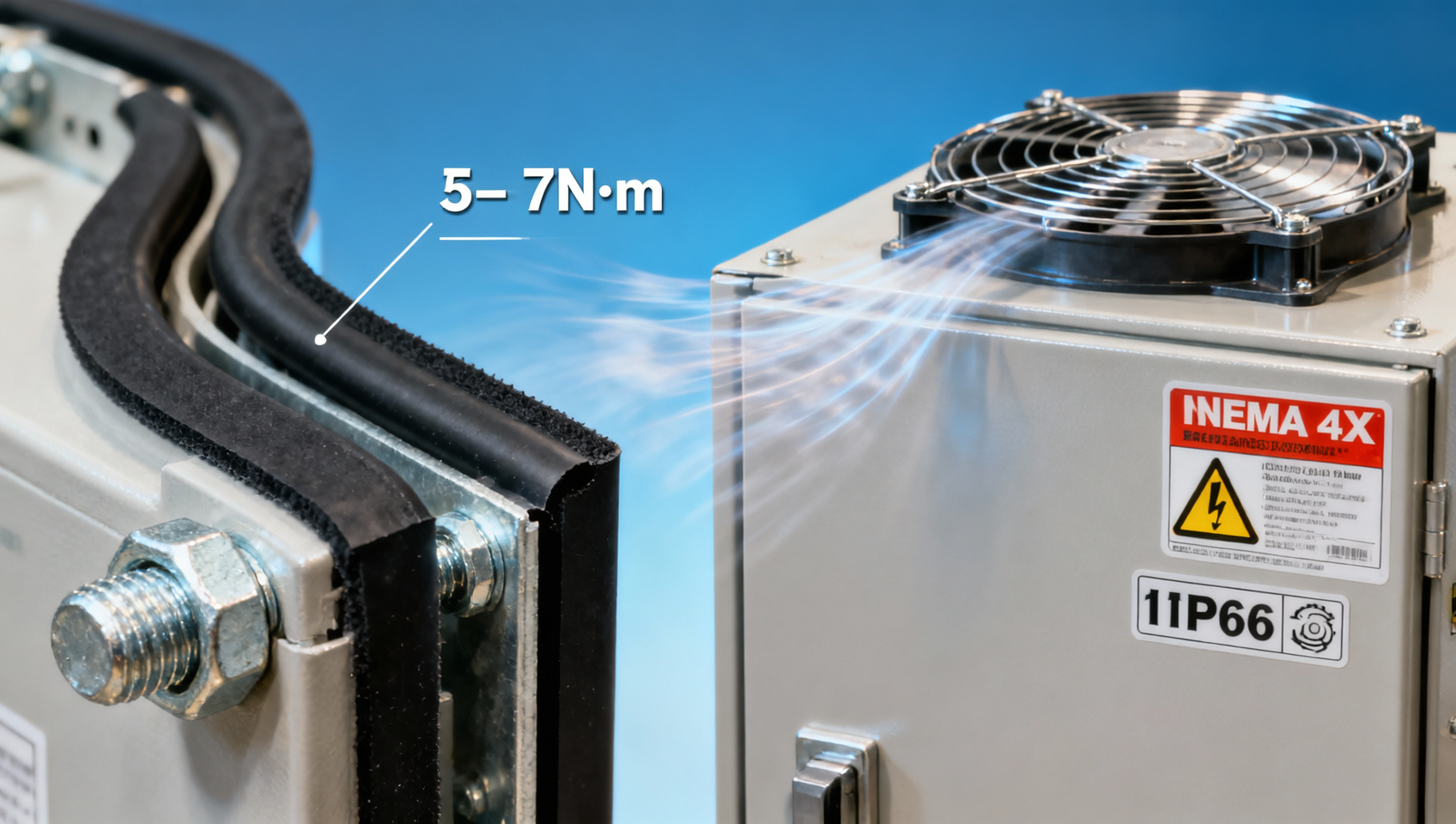
Proper sealing requires attention to gasket compression (typically 30-40% of original thickness), correct torque specifications for enclosure fasteners (usually 5-7 N·m for M6 bolts), and periodic inspection intervals (every 6-12 months depending on environment).
Mistake #2: Inadequate Thermal Management Planning
Heat dissipation represents a critical challenge in electrical enclosure installation, particularly for power electronics and high-current applications. Many installations either underestimate heat generation or overestimate natural convection cooling capabilities. The general rule of thumb suggests that every 10°C increase above rated temperature cuts component lifespan by 50%.
Key thermal management considerations include:
- Heat load calculation (typically 3-5% of total power consumption for control panels)
- Required airflow (minimum 100 CFM per kW of heat dissipation for forced air systems)
- Temperature differential (maintain ≤15°C above ambient for most industrial electronics)
- Heat exchanger sizing (1-2 W/°C per liter of enclosure volume for passive systems)
Mistake #3: Improper Grounding and EMI Shielding
Electromagnetic interference (EMI) protection requires careful attention to grounding practices and shielding effectiveness. Common errors include using paint-covered surfaces for ground connections, creating ground loops, or failing to maintain continuous shielding across enclosure openings.
For optimal EMI protection, maintain surface conductivity ≤10 mΩ across mating surfaces, use star washers under ground lugs, and ensure all cable entries maintain 360° shielding contact.
Mistake #4: Incorrect Cable Entry and Strain Relief
Cable management errors account for approximately 23% of premature enclosure failures according to industry studies. Common issues include:
- Overfilling conduit entries (exceeding 40% fill ratio)
- Inadequate bend radius (minimum 8x cable diameter for power cables)
- Missing drip loops in outdoor installations
- Improper gland selection for cable type (armored vs. unarmored)
For vibration-prone environments, use vibration-resistant cable glands with locking torque of 4-6 N·m and periodic retightening every 6 months. Always maintain separation between power (≥600V) and control cables (minimum 50mm spacing).
Mistake #5: Neglecting Maintenance Accessibility
Many installations fail to account for ongoing maintenance requirements, leading to excessive downtime during service. Key accessibility considerations include:
Clearance Requirements
NFPA 70 (NEC) Article 110.26 mandates minimum working space around electrical equipment:
- 0-150V: 900mm front clearance
- 151-600V: 1.0m front clearance
- 601-2500V: 1.2m front clearance
Service Life Considerations
Design for component replacement cycles:
- Contactors: 100,000-500,000 operations
- Circuit breakers: 10,000 operations
- Power supplies: 7-10 years
Implementation Checklist for Proper Enclosure Installation
To avoid these common mistakes, follow this comprehensive installation checklist:
Conclusion: Optimizing Enclosure Installations for Reliability
Proper electrical enclosure installation requires careful attention to environmental sealing, thermal management, EMI protection, cable management, and service accessibility. By addressing these five common mistakes, engineers and procurement professionals can significantly improve equipment reliability, reduce maintenance costs, and extend operational lifespan.
For organizations requiring specialized guidance on enclosure selection and installation for mission-critical applications, SiliconCore Metrics offers comprehensive technical assessments and performance benchmarking services. Our data-driven approach helps optimize your enclosure systems for maximum reliability and compliance with industry standards.
Recommended News
- Heat DissipationHow to prevent overheating in automotive PCB power distributionPrevent overheating in automotive PCB power distribution with practical tips on copper layout, thermal paths, and testing. Discover how to reduce hotspots and improve reliability.
- Heat DissipationCan heat spreading intelligence identify hot spots in PCB designs?Discover how heat spreading intelligence identifies PCB hot spots before fabrication. Learn to assess thermal models, validate predictions, and choose design changes that improve reliability.
- Heat DissipationWhich heat sink materials suit high-power electronics made in Germany?Heat sink materials Germany: compare aluminum, copper, graphite, and hybrid designs for high-power electronics. Find the right balance of thermal performance, weight, cost, and manufacturability.
- Heat DissipationHow to assess a graphite materials supplier's capability for thermal partsGraphite materials supplier assessment starts with more than machining. Discover how to evaluate thermal performance, purity, precision, cleanliness, traceability, and testing for reliable thermal parts.
- Heat DissipationHow to assess a heat dissipation supplier before placing an orderHeat dissipation supplier assessment guide: verify thermal performance, materials, process control, samples, capacity, and total risk before placing an order.
- Heat DissipationHow automotive PCB material selection affects thermal reliabilityAutomotive PCB material selection shapes thermal reliability. Explore CTE, Tg, moisture resistance, stack-up design, and proven qualification strategies for demanding vehicle electronics.