
EMI Shielding Gaps That Cause Late Test Fails
DETAILS
Late EMI test failures often come from small, overlooked shielding gaps in circuit board assembly, SMT soldering, and thermal management compliance. For engineers, buyers, and quality teams evaluating circuit components, electronic parts, electrical relays, industrial capacitors, circuit capacitors, and RF transceiver systems, understanding how PCB compliance, semiconductor compliance, and pick and place specifications interact is essential to preventing costly redesigns and launch delays.
In semiconductor and EMS programs, EMI shielding is rarely defeated by one dramatic design mistake. More often, test failure appears at the end of validation because 3 to 5 small gaps accumulate across layout, enclosure fit, solder integrity, connector transitions, and thermal interfaces. A product may pass functional checks, survive burn-in, and still fail radiated or conducted emissions in the final compliance window.
For technical evaluators, procurement teams, project managers, and quality leaders, the practical question is not whether shielding matters. It is where the hidden gaps usually emerge, how to verify them before certification, and which manufacturing controls reduce the risk of a late-stage setback. This is especially relevant when sourcing multi-layer PCBs, RF modules, relays, capacitors, and mixed-signal assemblies across global supply chains.
Drawing on the type of benchmarking and compliance-focused analysis associated with SiliconCore Metrics, this article explains the EMI shielding gaps that most often trigger late test failures, the manufacturing variables behind them, and the inspection framework that helps engineering and sourcing teams make more reliable decisions.
Why Late EMI Failures Still Happen in Mature Electronics Programs
Late EMI failures are common even in organizations with documented design reviews, approved vendors, and established qualification plans. The main reason is that EMI control spans several disciplines at once: electrical design, PCB fabrication, SMT assembly, cable routing, enclosure mechanics, and thermal packaging. If each team optimizes its own area without a shared shielding checklist, a gap of less than 1 mm can undermine the full assembly.
In many projects, emissions risk is underestimated because the prototype behaves acceptably in a lab environment. The problem emerges during formal testing when cable position, chamber setup, grounding path, and operating frequency expose resonances that were not visible during bench evaluation. A board that looks clean at 30 MHz can still create trouble in the 200 MHz to 1 GHz range when return paths are interrupted.
Another recurring issue is tolerance stacking. PCB edge plating, shield can flatness, solder paste volume, connector seating height, and heatsink pressure all have acceptable individual ranges. Yet when 4 or 5 of these variables drift toward the limit at the same time, shielding contact weakens. This is why final test failures often appear inconsistent from build to build, even when the bill of materials remains unchanged.
From a sourcing perspective, late failure is also a data problem. Buyers may receive dimensional reports, IPC workmanship evidence, and component conformity documents, but they do not always get the shielding-specific metrics that matter most: contact resistance across seams, coplanarity of shield frames, void rate under ground tabs, or dielectric stability across PCB layers. Without these details, vendor comparison remains incomplete.
The most overlooked cross-functional failure chain
A typical late-stage EMI issue follows a chain reaction. First, the PCB stack-up changes to improve impedance or cost. Second, shield can geometry is left unchanged. Third, pick and place tolerances push one corner slightly high. Fourth, thermal pads alter local planarity. By the time compliance testing begins 6 to 10 weeks later, the team is facing a redesign instead of a simple process correction.
Key warning signs before certification
- Shield cans require manual rework on more than 2% of boards during pilot builds.
- Grounding tabs show inconsistent wetting or solder fillet height across the same panel.
- RF transceiver performance shifts when enclosure screws are tightened or loosened.
- Board-level thermal modifications change emissions behavior after 30 to 60 minutes of operation.
These signs do not guarantee failure, but they indicate that shielding integrity is dependent on assembly variation rather than robust design margin. That is a high-risk condition for regulated or high-reliability electronics.
The Shielding Gaps Most Likely to Cause Final Compliance Problems
Not all EMI shielding gaps are visible to the naked eye. Some are mechanical discontinuities at enclosure joints, while others are electrical discontinuities caused by oxidation, insufficient solder volume, poor grounding layout, or degraded interface pressure. The most expensive failures usually involve gaps that sit between disciplines and therefore escape single-team review.
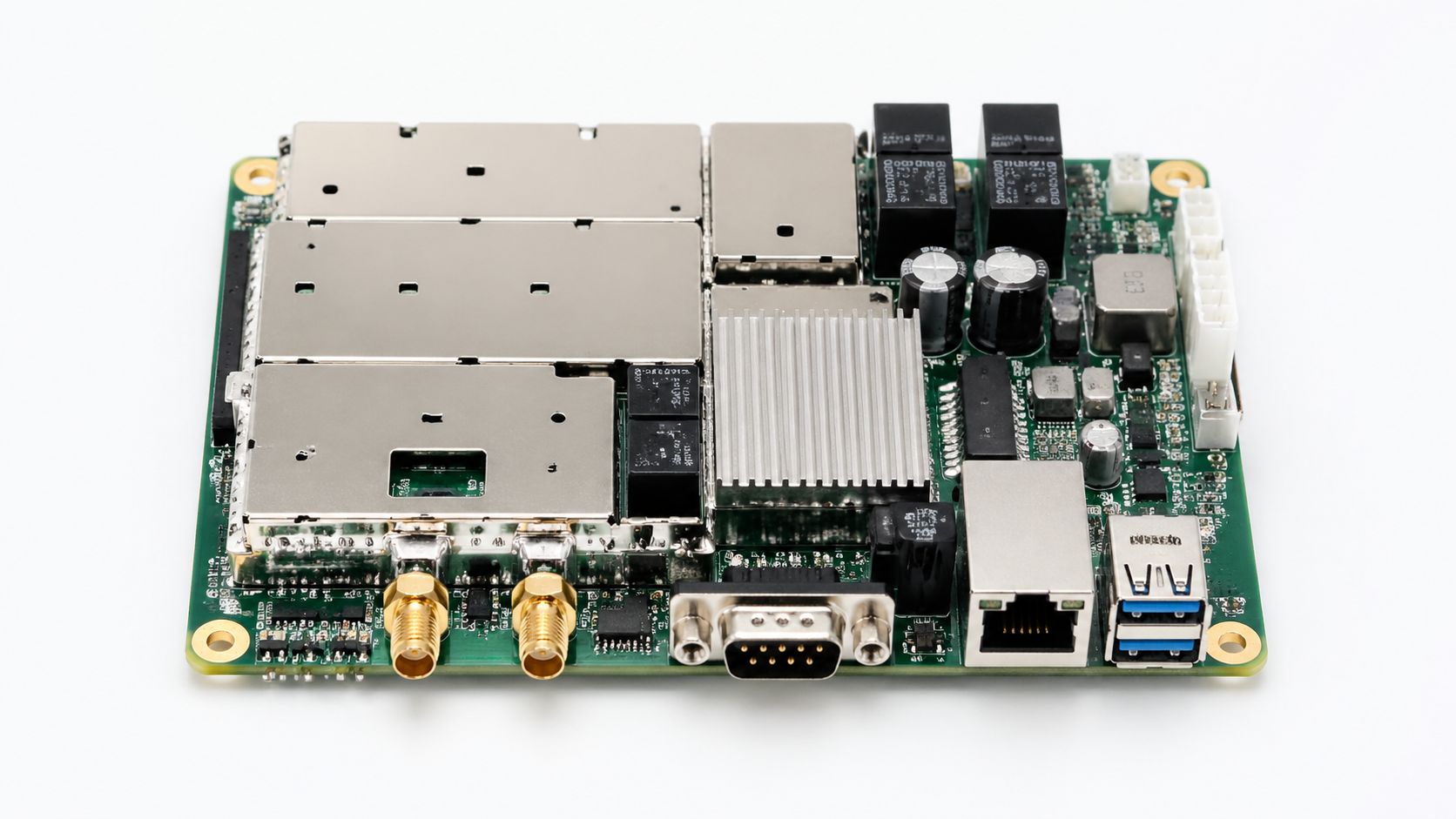
In board assembly, one high-risk area is the perimeter of shield cans over RF and mixed-signal sections. If the frame does not sit flat, or if one side has marginal solder attachment, the opening becomes an unintended slot antenna. Even a narrow seam can increase radiated emissions when the enclosed circuit handles clocks, switching regulators, or high-speed digital harmonics.
Connector transitions are another frequent weak point. Cable shields, board-level grounds, and chassis grounds may all exist, but if the transfer path includes paint, uneven plating, or excessive fastener spacing, high-frequency current will not return cleanly. In practice, a 20 mm to 40 mm interruption in the intended grounding path can be enough to upset chamber results.
Thermal hardware can also create hidden EMI exposure. Heatsinks, gap pads, clips, and frames are often added after the initial board design. If they distort the PCB, reduce shield contact pressure, or create floating metal structures near noisy nodes, emissions can rise late in the build cycle. This is especially relevant in compact assemblies where thermal and RF clearances are less than 2 mm.
Common gap types and their late-stage impact
The table below summarizes the gap categories most often associated with failed or unstable EMI results in electronic manufacturing programs.
The important takeaway is that these are not purely design faults or purely manufacturing faults. They are interface faults, which makes early benchmarking and cross-functional verification essential. Teams that inspect only schematic intent or only SMT workmanship often miss the interaction that actually drives EMI failure.
Where component selection contributes to shielding gaps
Component choice also matters. Industrial capacitors, circuit capacitors, relays, and RF modules affect local current loops, switching edges, and return-path density. A substitute part with similar nominal value but different package parasitics can shift the noise profile enough to expose a marginal shield design. That is why semiconductor compliance and passive component evaluation should include package geometry, grounding behavior, and thermal interaction, not only datasheet equivalence.
How PCB Fabrication, SMT Placement, and Thermal Design Interact
EMI shielding success depends on process capability as much as on circuit intent. A board designed with solid grounding can still fail if PCB flatness, solder deposition, or component placement drift beyond the real process window. In high-density builds, a placement deviation of ±75 µm to ±100 µm may be acceptable for electrical continuity but still problematic for shield-frame seating and mechanical closure.
PCB fabrication variables deserve closer attention than they often receive. Copper balance, dielectric consistency, via quality, and board bow or twist all influence shielding performance indirectly. On a multi-layer PCB, changes in dielectric constant or layer registration can alter impedance and current distribution, while local unevenness near shield attachment points can reduce contact continuity during reflow.
SMT assembly then compounds the issue. If stencil thickness, aperture design, and reflow profile are optimized for general yield rather than shield-tab reliability, the resulting joints may pass visual inspection but still exhibit weak mechanical or electrical continuity. For many shield attachment locations, the question is not simply whether solder is present, but whether the joint maintains stable low-impedance contact through vibration, thermal cycling, and enclosure compression.
Thermal design adds the final layer of complexity. High-power semiconductors, RF transceivers, regulators, and driver sections generate heat that changes material behavior over time. If a thermal interface pad compresses by 10% to 20% after repeated cycles, contact pressure around nearby shielding features can drop. This creates failures that may not appear on day 1, but emerge after environmental preconditioning or extended runtime.
Process variables that should be measured together
The following matrix helps engineering, sourcing, and quality teams align process checks before formal EMI validation.
The table shows why a single incoming inspection report is not enough. Reliable EMI performance comes from correlation across PCB, SMT, and thermal metrics. Independent benchmarking is valuable here because it turns separate factory measurements into a common decision framework for engineering and procurement.
A practical 5-step pre-compliance workflow
- Freeze the PCB stack-up and shield geometry before pilot Lot B, not after final tooling starts.
- Measure placement and coplanarity on at least 10 to 30 representative assemblies from more than one lot.
- Inspect solder integrity specifically at shield tabs, connector grounds, and enclosure contact points.
- Repeat emissions screening after thermal assembly, not only on the bare board.
- Document any component substitutions that change package parasitics, thermal mass, or ground return behavior.
This workflow does not replace certification, but it can prevent the most expensive form of failure: discovering a stack of coupled mechanical and electrical issues only after the chamber booking has begun.
What Buyers, Quality Teams, and Project Managers Should Verify Before Release
EMI shielding decisions are not owned by engineers alone. Procurement, supplier quality, finance approvers, and project leaders all influence whether a program enters validation with enough margin. The wrong commercial decision is often subtle: selecting a supplier based on unit cost and general compliance records, while overlooking process evidence linked specifically to shielding reliability and repeatability.
For buyers, the first priority is process transparency. A vendor should be able to explain how shield attachment is controlled, how PCB dimensional variation is tracked, and how placement capability is verified for the actual geometry involved. Generic statements such as “meets IPC” or “AOI passed” are not sufficient when the risk sits in contact integrity, seam continuity, and thermal-mechanical interaction.
For quality and safety teams, the focus should be on repeatability across lots, not only first-sample appearance. If three pilot runs produce visibly similar boards but one run shows more rework, greater shield warpage, or different thermal compression behavior, the program has hidden compliance risk. A low rework rate under 1% to 2% is useful, but the specific reasons for rework matter more than the headline number.
Project managers and financial approvers should also understand the timing impact. A late EMI failure can add 2 to 8 weeks, depending on whether the fix requires re-layout, enclosure tooling changes, or new component qualification. The direct cost of another test slot may be manageable, but the indirect cost of delayed shipment, engineering diversion, and supplier rescheduling is often far higher.
Supplier evaluation points that reduce late-stage risk
- Ask for shield-specific workmanship criteria, not just standard SMT accept/reject samples.
- Review whether PCB, SMT, and thermal assembly data are linked in one traceable report.
- Confirm how many lots were used to establish process capability, ideally more than a single engineering run.
- Check whether component substitutions trigger renewed EMI review for relays, capacitors, RF parts, and regulators.
- Verify that final assembly testing reflects real enclosure, cable, and heat conditions, not board-only operation.
Decision matrix for sourcing and approval teams
The matrix below helps non-design stakeholders compare suppliers and build plans using criteria that are directly relevant to shielding performance.
This approach supports better commercial decisions because it links technical evidence to schedule and cost control. Instead of discovering risk after certification failure, teams can compare suppliers using the data most likely to predict stable compliance.
Practical Mitigation, Verification, and Ongoing Support
The most effective response to EMI shielding gaps is not a last-minute patch. It is a structured prevention plan that begins before procurement release and continues through pilot production, pre-compliance, and controlled volume ramp. This plan should combine design intent, manufacturing capability, and acceptance criteria in a single review path.
For engineering teams, mitigation starts with defining where shielding contact is mandatory and where tolerance margin is limited. That includes shield-can perimeters, chassis interfaces, cable entries, relay switching zones, capacitor banks, and RF transceiver sections. Each area should have a measurable check, such as seam continuity, mechanical seating, torque effect, or post-thermal inspection status.
For operations and after-sales teams, the key is preserving that margin after product release. Field service events such as enclosure opening, thermal pad replacement, cable swap, or board rework can unintentionally recreate the same shielding gaps that caused trouble during validation. Service instructions should therefore include reassembly torque guidance, grounding contact inspection, and a short checklist for any repaired EMI-sensitive assembly.
Independent technical repositories and benchmark-driven analysis are especially useful when products are sourced across multiple regions. In global EMS programs, engineering may sit in one country, PCB fabrication in another, and final assembly somewhere else. A neutral, data-centered review model helps teams align around measurable facts instead of assumptions, reducing disagreement when late-stage failures appear.
FAQ for teams preparing EMI-sensitive products
How early should EMI shielding verification begin?
It should begin during stack-up, enclosure, and placement planning, not only before certification. A practical benchmark is to complete a shielding-focused design and manufacturing review at least 1 pilot cycle before formal testing, usually 3 to 6 weeks in advance.
Which components are most likely to expose a weak shield design?
RF transceivers, switching regulators, clocked digital devices, relays with fast switching edges, and capacitor networks with high ripple current are common triggers. These parts do not always cause the problem alone, but they can reveal insufficient grounding and poor seam continuity.
What is the most common procurement mistake?
The most common mistake is evaluating a supplier on price, general IPC compliance, and delivery lead time alone while ignoring shield-specific process capability. A vendor with acceptable surface-mount yield may still have weak control over the exact interfaces that matter for EMI.
How long does a late EMI correction usually add to the schedule?
Minor process corrections may take 1 to 2 weeks. If the issue requires PCB changes, enclosure rework, or new component qualification, the delay can extend to 4 to 8 weeks or more, depending on tooling and supply chain response time.
Late EMI test failures are usually the result of small shielding gaps, but their business impact is rarely small. When PCB compliance, semiconductor behavior, SMT placement precision, thermal packaging, and sourcing controls are reviewed together, teams can identify the weak interfaces before they become launch-blocking events.
For organizations working across PCB fabrication, SMT assembly, active semiconductors, passive components, and thermal packaging, the strongest advantage comes from independent, benchmark-based visibility into manufacturing capability and compliance risk. SiliconCore Metrics supports that need by turning complex engineering variables into practical evaluation data for R&D, procurement, quality, and program leadership.
If your team is evaluating EMI-sensitive assemblies, RF systems, or high-reliability electronic components, now is the right time to review shielding gaps before final certification. Contact us to discuss a tailored assessment, request deeper technical benchmarks, or explore more solutions for reducing late-stage compliance risk.
- PCB
- electronic components
- PCB fabrication
- SMT assembly
- active semiconductors
- passive components
- thermal packaging
- EMS
- thermal management
- multi-layer PCB
- SMT placement
- thermal management compliance
- PCB compliance
- semiconductor compliance
- electronic manufacturing
- circuit board assembly
- pick and place specifications
- component placement
- SMT soldering
- electronic parts
- circuit components
- semiconductor
- Power Semi
- RF modules
- RF transceiver
- circuit capacitors
- industrial capacitors
- relays
- electrical relays
- EMI shielding
Recommended News
- EMI ShieldingHow to choose a design verification resource for EMI testingDesign verification resource guide for EMI testing: compare technical depth, traceable evidence, and compliance insight to prevent costly redesigns.
- EMI ShieldingHow automotive component compliance testing supports EMC approvalComponent compliance testing automotive helps secure EMC approval through traceability, pre-compliance checks, and controlled design changes. Learn how to reduce risk.
- EMI ShieldingDo High-Performance Embedded Boards Need Different EMI Shielding?Do high-performance embedded boards require different EMI shielding approaches? Explore practical strategies for grounding, thermal design, cable control, compliance, and reliable performance.
- EMI ShieldingEU Adds Halogenated Flame Retardants and EMI Coatings to RoHS ScopeEU RoHS scope expands to halogenated flame retardants and EMI coatings under Directive (EU) 2026/1389. See how PCB exporters can prepare for the 2027 compliance deadline.
- EMI ShieldingEU Requires EPDs for EMI Shielding PartsEU Requires EPDs for EMI Shielding Parts from January 2027. Learn how the new EU rule affects compliance, carbon disclosure, shipment timing, and supplier planning.
- EMI ShieldingCBP Tightens Filing Rules for EMI Shielding ImportsCBP Tightens Filing Rules for EMI Shielding Imports: learn how the September 2026 ACE filing change affects RoHS, REACH, customs timing, and buyer risk for U.S.-bound shipments.