
Potting Compounds for Outdoor Electronics: Which Works
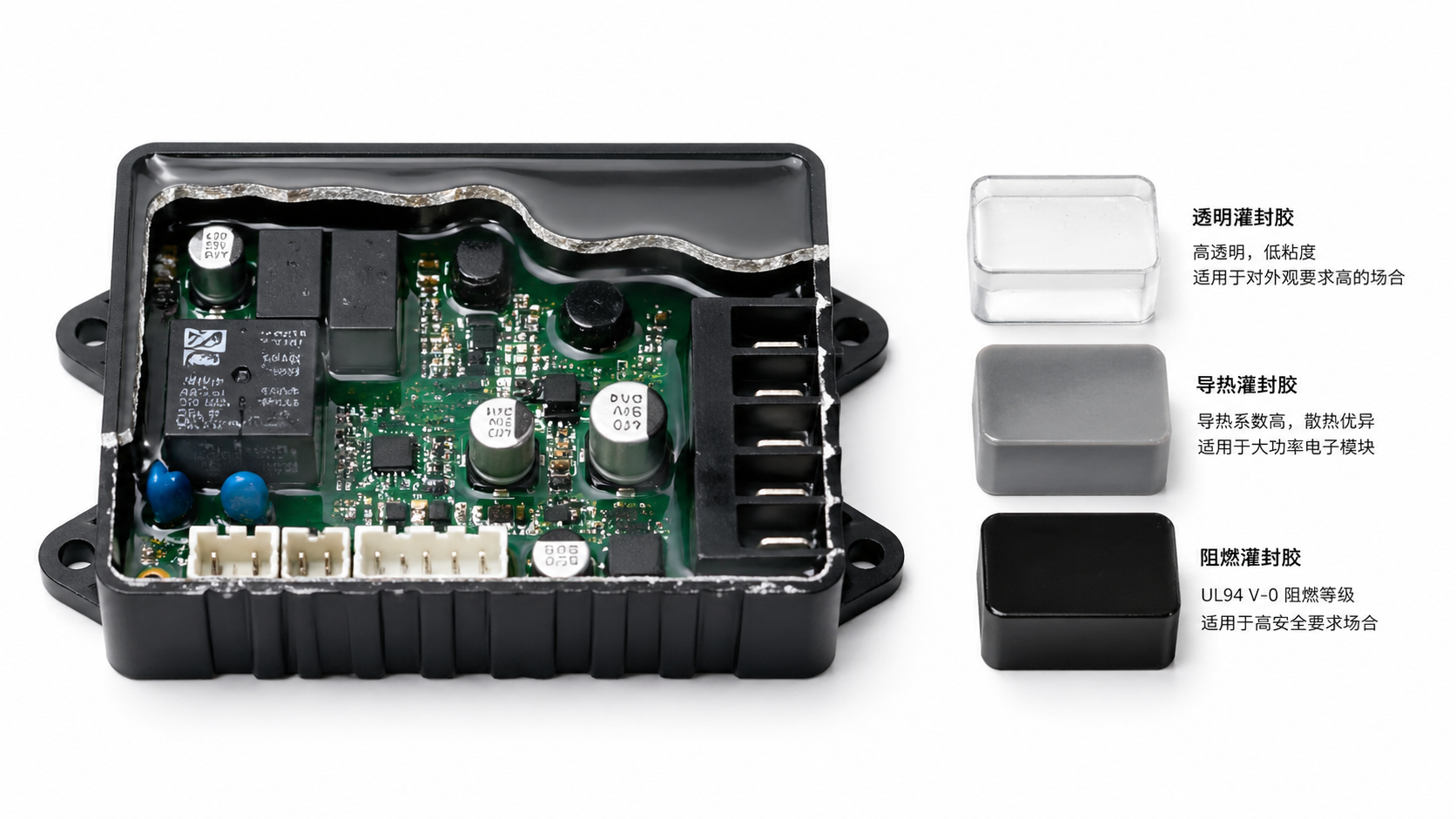
DETAILS
Selecting the right potting compounds for outdoor electronics directly affects circuit components, electronic parts, and long-term thermal management compliance. For engineers, buyers, and quality teams evaluating circuit board assembly in harsh environments, this guide explains which materials work best, how they relate to SMT compliance, PCB compliance, and semiconductor compliance, and why reliable protection matters for electrical relays, industrial capacitors, and other high-performance capacitors exposed to moisture, heat, vibration, and UV.
How do potting compounds protect outdoor electronics in real operating conditions?
Potting compounds are encapsulation materials applied around or over electronic assemblies to improve resistance to water ingress, dust, salt mist, shock, and thermal cycling. In outdoor electronics, the question is rarely whether potting is needed. The real question is which chemistry works for the target duty cycle, service temperature, repair strategy, and compliance requirement. For many assemblies, a wrong potting choice creates as much risk as no protection at all.
In practical terms, outdoor electronics may face daily temperature swings from -40°C to 85°C, periodic UV exposure, and vibration loads that vary by installation type. A sensor node mounted on metal infrastructure behaves differently from a relay box inside a semi-enclosed cabinet. Potting must therefore be evaluated as part of a system that includes PCB layout, component spacing, connector sealing, and thermal pathways rather than as a standalone material purchase.
For technical evaluators and project managers, the most important function of potting is controlled stress management. Encapsulation reduces moisture exposure and mechanical fatigue, but it can also trap heat, strain solder joints, and complicate rework. This is why circuit board assembly teams often assess potting compounds together with SMT process limits, package sensitivity, and expected field maintenance intervals of 12–36 months.
For procurement and finance teams, the material price per kilogram is only one part of the decision. The total cost includes dispensing method, cure time, defect rate, scrap exposure, field failure consequences, and replacement logistics. In high-reliability applications, a compound that shortens process variability by one production stage or reduces moisture-related failure risk during 2–4 seasonal cycles may be more economical than a lower-priced but poorly matched alternative.
What outdoor failures does potting usually target?
- Moisture penetration into PCB assemblies, especially near connectors, relays, transformers, and high-voltage spacing zones.
- Thermal cycling fatigue caused by repeated expansion and contraction between daytime and nighttime operating conditions.
- Vibration and impact stress affecting solder joints, wire bonds, large capacitors, and mechanically tall components.
- Contamination from dust, industrial chemicals, road salts, and condensation in partially sealed housings.
Why material selection is linked to supply chain quality
SiliconCore Metrics (SCM) approaches potting as part of the broader semiconductor and EMS supply chain. Material behavior depends on PCB dielectric characteristics, SMT placement precision, package geometry, and component reliability under stress. If one supplier validates the compound only at room temperature while another assembly partner cures it under a different profile, the final performance can drift well outside the intended design envelope.
That is why independent benchmarking matters. Quality managers and sourcing teams need standardized views of material compatibility, process consistency, and long-term reliability indicators, especially when qualifying Asian manufacturing hubs for international applications with IPC-Class 3 expectations or ISO 9001-driven documentation control.
Which potting compounds work best: silicone, epoxy, or polyurethane?
The most common potting compounds for outdoor electronics are silicone, epoxy, and polyurethane. Each chemistry offers a different balance of flexibility, adhesion, chemical resistance, thermal conductivity, and process behavior. There is no universal winner. The best potting compound depends on whether the assembly prioritizes thermal dissipation, shock absorption, dielectric integrity, or serviceability over a 3–10 year field life.
Silicone potting compounds are often preferred when wide temperature fluctuation and stress relief matter most. They remain flexible over broad operating ranges and are commonly used for outdoor LED drivers, telecom modules, and sensor electronics where thermal cycling is severe. Their softness can reduce stress on delicate semiconductor packages, although lower mechanical rigidity may be a limitation for some high-vibration or tamper-sensitive assemblies.
Epoxy potting compounds are generally chosen when strong adhesion, dimensional stability, and chemical resistance are required. They can work well for assemblies exposed to solvents, mechanical abuse, or rigid structural needs. However, their higher modulus can transmit stress to components during expansion mismatch, which may be problematic for large package differences, ceramic parts, or assemblies with repeated temperature swings.
Polyurethane potting compounds usually sit between silicone and epoxy in flexibility and toughness. They can provide good moisture resistance and mechanical buffering, making them suitable for industrial control modules and outdoor power electronics in moderate thermal environments. Their performance can vary significantly by formulation, so technical review should focus on actual cure profile, hardness, and moisture sensitivity rather than generic chemistry labels alone.
Comparison table for common outdoor electronics needs
The table below helps engineers, buyers, and quality teams compare the three main potting compound families across selection dimensions that matter in outdoor electronics, including thermal cycling, process fit, and field maintenance impact.
A useful procurement rule is to start with the failure mode, not the chemistry. If the main issue is thermal cycling between seasonal extremes, silicone often deserves early consideration. If the main issue is rigid environmental sealing and chemical resistance, epoxy may move higher on the shortlist. If the assembly needs balanced mechanical protection with moderate process cost, polyurethane is often reviewed in the first 2–3 candidate materials.
A practical shortlist by decision priority
- Choose silicone first when thermal cycling, component stress, and delicate package reliability are the top 3 concerns.
- Choose epoxy first when structural protection, chemical resistance, and tamper resistance dominate the use case.
- Choose polyurethane first when you need a middle-ground solution for moisture, shock, and moderate thermal exposure.
Which technical parameters matter most for SMT, PCB, and semiconductor compliance?
Outdoor electronics designers often focus on ingress protection and overlook how potting compounds interact with SMT compliance, PCB compliance, and semiconductor compliance. The material must not only survive the field environment. It must also fit the assembly process, protect clearance and creepage distances, and avoid creating thermal or mechanical stress that shortens component life. For many boards, 5 key checks are more useful than a long generic datasheet review.
First, evaluate operating temperature and thermal cycling range. A material suitable for 25°C indoor controls may fail in an enclosure exposed to -40°C winter starts and 85°C internal heat buildup. Second, assess viscosity and flow behavior to ensure complete fill around fine-pitch SMT areas without trapping air. Third, confirm dielectric performance and insulation behavior for relay contacts, high-voltage spacing, and capacitor terminals.
Fourth, review coefficient of thermal expansion mismatch relative to the PCB, components, and housing. Large mismatches can place repeated strain on solder joints and passive components over 1,000 or more thermal cycles. Fifth, consider thermal conductivity when power semiconductors, drivers, or industrial capacitors generate continuous heat. Potting that seals perfectly but blocks heat release can accelerate aging, discoloration, or drift in electrical performance.
SCM’s engineering perspective is especially useful here because potting decisions should be cross-checked against board-level and component-level data. Multi-layer PCB dielectric behavior, SMT placement precision, and long-term active/passive reliability under stress are not separate topics. They define whether a compound will perform consistently across pilot builds, volume production, and field deployment.
Technical screening table for outdoor electronics potting compounds
Before approving a potting compound for circuit board assembly, many technical teams use a parameter screen like the one below to compare process fit, reliability impact, and compliance relevance.
This kind of structured screening helps procurement and technical approval teams speak the same language. Instead of debating general quality, they can compare 4–6 concrete parameters tied to field risk, process cost, and reliability outcomes. That shortens evaluation cycles and improves supplier alignment.
A simple 5-point engineering checklist
- Map enclosure temperature, not ambient temperature alone.
- Review component heat density and thermal escape paths.
- Verify compatibility with SMT spacing, package sensitivity, and PCB geometry.
- Test for voids, adhesion consistency, and cure repeatability during pilot production.
- Check whether field repair is impossible, limited, or acceptable within service plans.
How should buyers and engineers choose potting compounds for different outdoor applications?
Different outdoor electronics categories call for different potting strategies. A compact sensor board with low power draw may prioritize moisture resistance and flexibility. A power control unit with relays, transformers, or switching devices must also consider heat dissipation and electrical spacing. A telecom or monitoring module may demand long service life with low drift under repeated thermal change over 24/7 operation. Selection should therefore begin with application segmentation.
For procurement teams, one common mistake is using a single approved compound across all outdoor projects to simplify sourcing. That can reduce administrative work in the short term, but it often increases failure risk and overdesign cost. In many organizations, a 3-tier approval strategy works better: one compound for low-power sensing, one for control electronics, and one for power-dense or thermally demanding assemblies.
For operators and after-sales maintenance teams, the service model is critical. If the product is sealed and replaced as a complete unit, a rigid high-protection approach may be acceptable. If partial repair or board-level diagnostics are expected within 12–18 months, heavily rigid encapsulation may create unnecessary maintenance cost. Decision-makers should connect potting choice to the real support workflow, not only the initial build plan.
SCM supports this decision process by connecting material evaluation with manufacturing and supply chain transparency. Independent reviews of PCB fabrication consistency, SMT assembly accuracy, active device reliability, passive component endurance, and thermal packaging behavior help buyers avoid isolated material decisions that look acceptable on paper but fail in integrated production.
Application-based selection guide
The following guide can be used during supplier discussions, RFQ review, or internal qualification meetings when deciding which potting compounds for outdoor electronics are most likely to work.
This application view shows why selection cannot be reduced to a simple “best potting compound” question. Buyers need fit-for-purpose decisions. Engineers need data on process compatibility and reliability. Quality teams need traceable criteria. Finance teams need visibility on total ownership cost across production, field support, and replacement exposure.
What should be included in an RFQ or qualification request?
- Expected operating and storage temperature ranges, including enclosure heat buildup.
- Board type, major component categories, and presence of power semiconductors or large capacitors.
- Required cure time window, such as fast takt production or 24-hour batch processing.
- Maintenance model: non-repairable unit, limited service access, or planned board replacement.
- Compliance expectations tied to customer documentation, IPC-class needs, or supplier traceability.
What are the most common mistakes, compliance gaps, and field risks?
One common mistake is assuming potting alone will solve enclosure design problems. If vents, seals, cable entries, or condensation paths are poorly designed, even a good potting compound may not prevent corrosion or electrical leakage. Another frequent issue is incomplete fill due to trapped air, narrow cavities, or high-density SMT layouts. In field conditions, small voids can become moisture collection points and trigger intermittent failures that are difficult to diagnose.
A second mistake is ignoring cure process control. Mixing ratio, dispensing temperature, humidity, and cure time can shift material properties enough to affect reliability. In volume production, even a 1-stage change in dispensing setup or cure handling can influence hardness consistency and adhesion quality. This matters for semiconductor compliance and PCB reliability because mechanical behavior after cure directly affects how stress transfers into solder joints and component bodies.
A third risk appears when cost pressure leads teams to use a lower-grade material without verifying compatibility with relays, industrial capacitors, or power packages. The initial savings can be erased by field returns, delayed root-cause analysis, and replacement logistics. For business evaluators and financial approvers, this is why lifecycle cost should be reviewed over 2–3 years rather than only at the point of purchase order approval.
From a compliance standpoint, teams should ensure documentation aligns with the intended manufacturing and quality system. Potting compounds do not independently guarantee IPC-Class 3 performance or ISO 9001 conformance, but the selection, traceability, and process controls around them strongly affect whether the final assembly can be produced consistently and audited effectively.
FAQ: questions buyers and engineers ask most often
Is silicone always the best potting compound for outdoor electronics?
No. Silicone is often strong in thermal cycling and stress relief, but it is not automatically the best choice for every outdoor assembly. If the design needs rigid structural protection, strong chemical resistance, or tamper resistance, epoxy may be more suitable. If the application needs a balanced middle option, polyurethane may perform better. The right answer depends on 3 factors: environment, heat load, and service model.
How important is thermal conductivity in potting compounds?
It is critical when the assembly includes power semiconductors, drivers, or capacitors with meaningful self-heating. In low-power sensing electronics, thermal conductivity may be less important than flexibility and moisture resistance. In power modules running continuously for many hours per day, poor thermal management can shorten life even if moisture sealing looks excellent. Always compare heat generation and heat escape together.
Can potted electronics still be repaired?
Sometimes, but the answer depends heavily on compound hardness and assembly architecture. Soft systems may allow limited removal for diagnostics, while rigid epoxy systems often make board-level repair impractical. If maintenance within 12–18 months is expected, this requirement should be defined before qualification. Otherwise, the organization may approve a material that increases after-sales cost and downtime.
What should quality teams ask suppliers before approval?
Ask about cure window, dispensing method, component compatibility, void control, storage conditions, lot traceability, and field-use temperature range. Also ask whether validation considered real assemblies with SMT components, multilayer PCBs, relays, and capacitors rather than only bulk material tests. Those questions usually reveal whether the supplier understands outdoor electronics reliability or only basic material sales.
Why choose SCM when evaluating potting compounds, compliance, and sourcing risk?
For global R&D engineers, procurement leaders, quality teams, and project owners, the hardest part of selecting potting compounds for outdoor electronics is not finding a catalog. It is validating how the material interacts with the full electronics supply chain. SCM helps organizations bridge that gap through independent technical analysis covering PCB fabrication, SMT assembly, active semiconductors, passive components, and thermal packaging rather than treating hardware as a commodity purchase.
This matters when your decision must satisfy multiple stakeholders at once. Engineers need data on stress, heat, and reliability. Procurement needs supplier comparability and sourcing clarity. Quality and safety teams need documentation discipline. Finance wants to understand the difference between upfront material cost and downstream failure cost. SCM supports these decisions with data-driven benchmarking and standardized reporting that align technical evidence with business approval needs.
If you are comparing silicone, epoxy, and polyurethane systems for outdoor circuit board assembly, SCM can help you structure the review around 4 practical areas: parameter confirmation, component compatibility, compliance expectations, and supply chain risk visibility. This is especially useful when qualifying manufacturing partners across regions or when thermal management, signal integrity, and micro-tolerances have direct impact on product performance.
You can contact SCM to discuss candidate potting compounds, PCB and SMT compatibility questions, typical qualification checkpoints, lead-time considerations, documentation needs, and material-selection logic for relays, industrial capacitors, power devices, and other outdoor electronics assemblies. If your team is preparing samples, RFQs, supplier comparison, or internal approval packs within the next 2–4 weeks, a structured technical review can reduce rework, shorten decision cycles, and improve confidence before production commitment.
- PCB
- PCB fabrication
- SMT assembly
- active semiconductors
- passive components
- thermal packaging
- signal integrity
- IPC-Class 3
- EMS
- thermal management
- micro-tolerances
- multi-layer PCB
- SMT placement
- ISO 9001
- component reliability
- SMT process
- SMT components
- PCB reliability
- thermal management compliance
- PCB compliance
- SMT compliance
- semiconductor compliance
- circuit board assembly
- electronic parts
- circuit components
- semiconductor
- Power Semi
- power electronics
- high-performance
- high-performance capacitors
- industrial capacitors
- relays
- electrical relays
- connectors
- heat dissipation
- thermal conductivity
- potting compounds
- epoxy potting
- silicone potting
- multilayer PCB
Recommended News
- Potting CompoundsWhen silicone potting for power modules prevents moisture failuresSilicone potting for power modules helps prevent moisture failures, improve insulation reliability, and manage thermal cycling. Explore key selection and process insights.
- Potting CompoundsHow to write a potting compound specification that manufacturers can followPotting compound specification guide: learn how to define clear, testable requirements manufacturers can follow to reduce sourcing risk, improve compliance, and ensure reliable electronic performance.
- Potting CompoundsHow Silicone Embedded Components Improve Sealing and Vibration ResistanceSilicone embedded components improve sealing and vibration resistance by reducing leaks, absorbing stress, and boosting long-term reliability in electronics, automotive, and industrial systems.
- Potting CompoundsEU RoHS Tightens Phthalate Limit for Potting CompoundsEU RoHS tightens phthalate limits for potting compounds to 0.1%, effective Oct 1, 2026. Learn who is affected, key compliance steps, and how to update CE files fast.
- Potting CompoundsTUV Rheinland Tightens Annex H for Potting CompoundsTUV Rheinland Tightens Annex H for Potting Compounds: learn how the new UL94 V-0 and CTI >=600V rules impact EU certification, sourcing, and supply-chain readiness.
- Potting CompoundsPCB Thermal Potting Lead Times Extend to 14 WeeksPCB Thermal Potting lead times now stretch to 14 weeks, disrupting Metal Core PCB, EV controls, and inverter delivery. See risks, causes, and smart planning actions.