
SMT Procurement Risks in Low-Volume Assembly
DETAILS
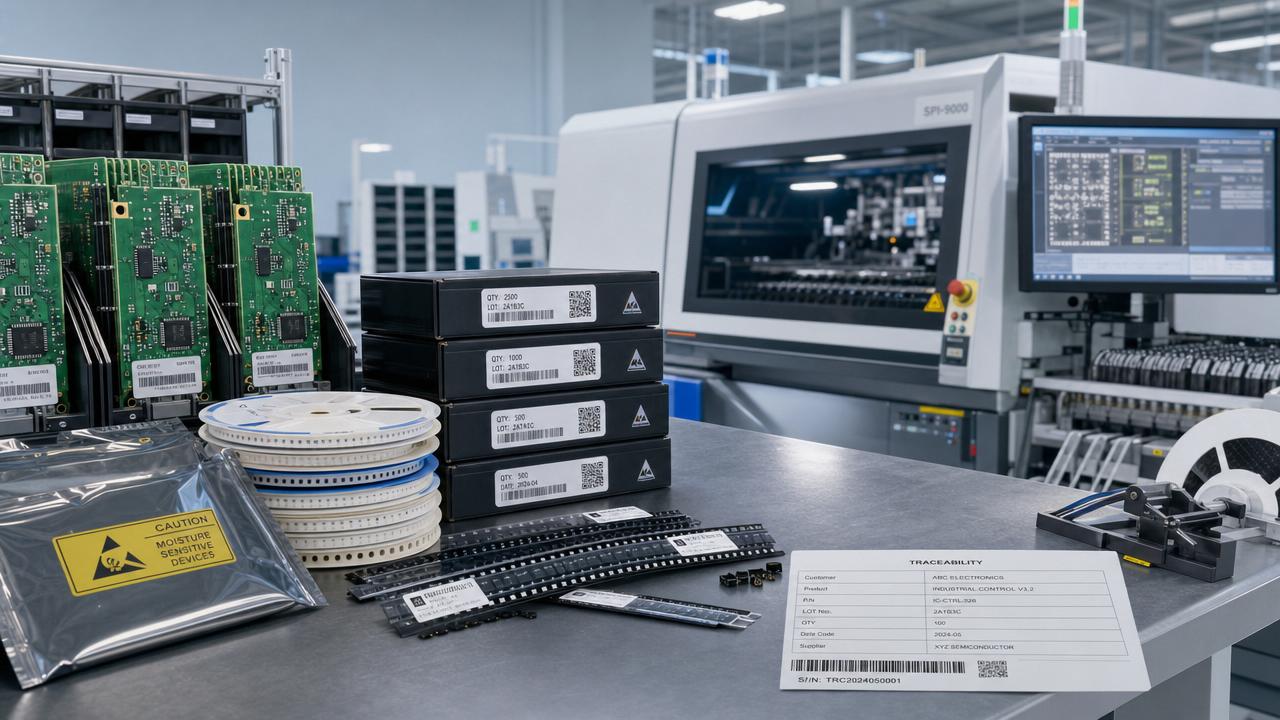
SMT procurement in low-volume assembly presents unique challenges for business evaluators balancing cost, quality, and supply continuity. From component shortages and MOQ pressure to traceability gaps and inconsistent process capability, small-batch sourcing can quickly undermine project timelines and compliance goals. This article examines the most critical risk factors and shows how data-driven supplier assessment can improve decision-making in complex electronics manufacturing environments.
Why does SMT procurement become riskier in low-volume assembly?
Low-volume assembly often looks simple on paper. Fewer boards, fewer parts, and shorter production windows appear manageable. In practice, SMT procurement becomes more fragile because many supply chain economics are built for repeat demand, volume commitments, and stable forecasting.
For business evaluators, the problem is not only price. The real issue is that small-batch sourcing amplifies hidden variables: supplier prioritization, reel splitting quality, lead-time volatility, counterfeit exposure, and process inconsistency between prototype and pilot stages.
This matters across the broader electronics and semiconductor supply chain, where a delayed passive component, an undocumented date code, or an unverified MSL handling practice can stop an entire validation schedule. In sectors where IPC-Class 3 expectations, thermal reliability, and tight placement accuracy matter, procurement errors become engineering risks.
The most common pressure points
- Minimum order quantity conflicts, especially for ICs, specialty passives, connectors, and custom packaging formats.
- Poor lot traceability when partial reels or brokered inventory enter the sourcing plan.
- Inconsistent supplier process capability, where prototype support exists but repeatability at pilot scale is weak.
- Short shelf-life materials, including solder paste, moisture-sensitive devices, and specialty adhesives.
- Fragmented communication between procurement, engineering, quality, and contract manufacturing teams.
A disciplined SMT procurement process must therefore evaluate more than availability. It should test whether the supplier can sustain technical, logistical, and compliance requirements under low-volume conditions without driving disproportionate total cost.
Which SMT procurement risks deserve priority in business evaluation?
Not every sourcing issue has the same business impact. Procurement teams often focus first on quoted unit price, yet low-volume assembly failures usually come from second-order risks that are harder to see during RFQ comparison. A structured matrix helps business evaluators assign attention where risk exposure is highest.
The table below highlights core SMT procurement risks, their operational effect, and the most relevant verification questions during supplier assessment.
This framework is useful because it translates abstract procurement concerns into measurable checkpoints. It also reduces dependence on supplier claims by focusing on documentation, process evidence, and operational fit.
How to rank these risks internally
- Identify parts with no approved substitute and assign them the highest supply continuity score.
- Separate engineering-critical items from commercially interchangeable items.
- Review whether one missing component blocks the entire build or only a non-critical function.
- Calculate the financial effect of delay, not only the purchase price difference.
What should evaluators compare beyond quoted price in SMT procurement?
A low quotation can hide expensive downstream issues. In low-volume assembly, the total cost of SMT procurement includes setup repetition, incoming inspection burden, engineering change exposure, scrap risk, and administrative complexity from fragmented sourcing.
Business evaluators should compare suppliers using commercial and technical criteria together. The goal is not to buy the cheapest batch. It is to avoid paying multiple times through delays, requalification, and non-conforming material handling.
The comparison below supports supplier shortlisting for SMT procurement when the build size is small but the quality expectation remains high.
For finance and sourcing teams, this is often the turning point. A supplier that looks expensive by line item can be more economical once yield protection, compliance support, and planning stability are included.
Commercial questions worth asking during RFQ review
- What assumptions were used for lead time, allocation status, and package format availability?
- Which line items are brokered, non-cancelable, or non-returnable?
- How are shortages escalated, and what is the response time for alternate sourcing proposals?
- Is there evidence of prior support for low-run, high-mix electronics builds?
How can technical data reduce SMT procurement uncertainty?
In electronics manufacturing, procurement quality is inseparable from process data. A supplier may confirm stock, yet fail on placement precision, coplanarity handling, moisture control, or material compatibility. This is why business evaluation should include technical transparency, not only commercial promises.
This is also where an independent technical intelligence resource such as SiliconCore Metrics becomes valuable. SCM bridges procurement and engineering by converting manufacturing variables into comparable benchmarks and compliance-oriented reports. That helps evaluators assess whether a sourcing decision is operationally sound before it becomes a line stoppage or reliability issue.
Data points that materially improve sourcing decisions
- SMT placement precision metrics for similar package sizes and board densities.
- Long-term reliability behavior of active and passive components under thermal cycling or humidity stress.
- Material data such as PCB dielectric characteristics when signal integrity and impedance control affect component selection.
- Benchmark comparisons between manufacturing hubs, suppliers, and process maturity levels.
- Conformity mapping to common standards including IPC-Class 3 and ISO 9001-related quality management expectations.
For business evaluators, this approach improves internal alignment. Procurement gains objective evidence, engineering receives relevant process context, and management gets a clearer view of risk-adjusted cost.
Which procurement workflow works best for low-volume SMT assembly?
A reactive purchasing model rarely performs well in small-batch electronics manufacturing. The better model is stage-gated: qualify the BOM, validate sourcing risk, review process fit, then commit. This reduces late surprises and keeps procurement decisions linked to manufacturing readiness.
Recommended workflow for business evaluators
- Segment the BOM by criticality, lifecycle status, and substitute availability before sending RFQs.
- Request traceability, packaging, and storage details for sensitive or high-risk components.
- Review the assembler’s capability for stencil design, placement accuracy, AOI, rework limits, and lot control.
- Run a cross-functional check with engineering, quality, and procurement before authorizing substitutions.
- Define an escalation path for shortages, EOL parts, and allocation events before production release.
This workflow is especially effective when the program mixes prototype urgency with commercial accountability. It creates a repeatable sourcing discipline without forcing low-volume projects into a high-volume model that does not fit their reality.
What compliance and quality signals should not be overlooked?
Business evaluators should be careful not to treat certification labels as a complete answer. In SMT procurement, compliance is meaningful only when documented process execution supports it. A certificate may indicate a management framework, but it does not automatically prove control over reel handling, incoming verification, or reliability screening.
Instead, review the practical signals behind the claim. Ask for process records, traceability practices, inspection scope, and storage controls that matter to the actual build profile.
Useful compliance checkpoints
- Whether the supplier can map their controls to the quality expectations commonly associated with ISO 9001 environments.
- Whether assembly quality targets align with the end-use class, including high-reliability requirements often linked to IPC-Class 3 builds.
- Whether moisture-sensitive devices are stored, baked, and logged with appropriate discipline.
- Whether nonconformance reporting and corrective action records exist for prior comparable programs.
Common SMT procurement mistakes in small-batch programs
Many procurement failures are not caused by bad intent. They come from assumptions carried over from larger-volume buying. Low-volume assembly needs a different lens because variability per unit is higher and each sourcing decision carries more weight.
Frequent mistakes to avoid
- Choosing by lowest quotation without accounting for setup charges, quality exposure, and delay cost.
- Accepting substitutions based only on electrical equivalence while ignoring package, thermal, or assembly impacts.
- Assuming traceability is less important because the order quantity is small.
- Overlooking long-tail passive components that become schedule blockers despite low unit value.
- Separating procurement decisions from technical validation until too late in the build cycle.
Organizations that correct these mistakes usually improve not only cost control but also design iteration speed. That is critical when a pilot build feeds customer qualification, field testing, or next-round funding milestones.
FAQ: what do buyers often ask about SMT procurement?
How should I assess MOQ risk in SMT procurement?
Start by identifying BOM lines where MOQ materially exceeds program demand. Then check whether the excess creates cash exposure, storage risk, or obsolescence risk. For low-volume assembly, MOQ risk is acceptable only if the part is strategic, reusable across programs, or unavailable in smaller authorized formats.
What matters more: delivery speed or traceability?
The answer depends on the application, but for many high-mix electronics builds, traceability should not be sacrificed blindly for speed. Fast delivery without documented source history can create later failures in compliance review, failure analysis, or warranty investigation. A balanced option is expedited supply with verified documentation.
Can prototype suppliers also support pilot production?
Sometimes, but not automatically. A supplier may handle prototype urgency well while lacking repeatable controls for pilot consistency. Check yield history, placement data, inspection coverage, and shortage management discipline before assuming smooth scale-up from prototype to low-volume production.
When should independent technical benchmarking be involved?
Bring it in when supplier claims are difficult to compare, when reliability risk is high, or when procurement and engineering views are misaligned. Independent data is especially useful for complex boards, high-reliability applications, and sourcing decisions involving unfamiliar manufacturing regions or process capabilities.
Why choose us for risk-informed SMT procurement evaluation?
SiliconCore Metrics supports business evaluators who need more than supplier brochures and price sheets. Our role is to make the electronics and semiconductor supply chain more transparent through data-backed benchmarking, technical whitepapers, and standardized reporting that connects procurement choices to manufacturing outcomes.
Because SCM focuses on PCB fabrication, SMT assembly, active semiconductors, passive components, and thermal packaging, we help procurement teams evaluate sourcing decisions with context that is often missing from conventional vendor comparison. That includes placement precision considerations, long-term component reliability signals, material performance factors, and practical compliance mapping.
If your team is reviewing SMT procurement risk for a low-volume program, you can consult SCM on concrete issues such as BOM risk screening, component selection support, supplier benchmarking, traceability expectations, delivery cycle assessment, alternate part review, compliance-oriented documentation needs, and quotation discussions shaped by technical realities.
This kind of support helps business evaluators move from reactive purchasing to informed decision-making. In a market where one weak sourcing assumption can affect schedule, reliability, and cost at the same time, that shift is often the difference between a controlled pilot and a disrupted launch.
Recommended News
- Pick & Place SpecsIPC Draft Tightens Pad Tolerances for Pick-and-PlaceIPC Draft Tightens Pad Tolerances for Pick-and-Place: learn how IPC-7351C may impact SMT, HDI, MCU and RF Module placement, 3D CAD data, and yield before Q1 2027.
- Pick & Place SpecsPCB Assembly Procurement Planning: Cost Risks That Delay ProductionElectronics procurement planning for PCB assembly reveals the cost risks behind cheap quotes—from BOM substitutions to tolerance and reliability issues that delay production. Learn how to plan smarter.
- Pick & Place Specs0201 Application Notes: Common Placement and Soldering Mistakes0201 application notes explain the most common placement and soldering mistakes, from nozzle wear to reflow imbalance, helping teams cut defects, improve yield, and boost SMT reliability.
- Pick & Place SpecsPCB Assembly Cost Drivers That Impact Quote AccuracyPCB assembly quote accuracy depends on BOM risk, process complexity, testing, and schedule. Learn the key cost drivers to compare suppliers smarter and avoid hidden expenses.
- Pick & Place SpecsHow to Compare SMT Equipment Manufacturers for Stable High-Mix OutputSMT equipment manufacturer comparison guide for stable high-mix output. Learn how to evaluate accuracy, changeover speed, software, support, and total cost for smarter sourcing.
- Pick & Place Specs01005 SMT Components: Placement Accuracy Limits and Yield Risks01005 SMT components demand extreme placement accuracy. Learn how offset, paste variation, and reflow instability drive yield loss, hidden defects, and reliability risk.