
AOI Testing False Calls: How to Reduce Them
DETAILS
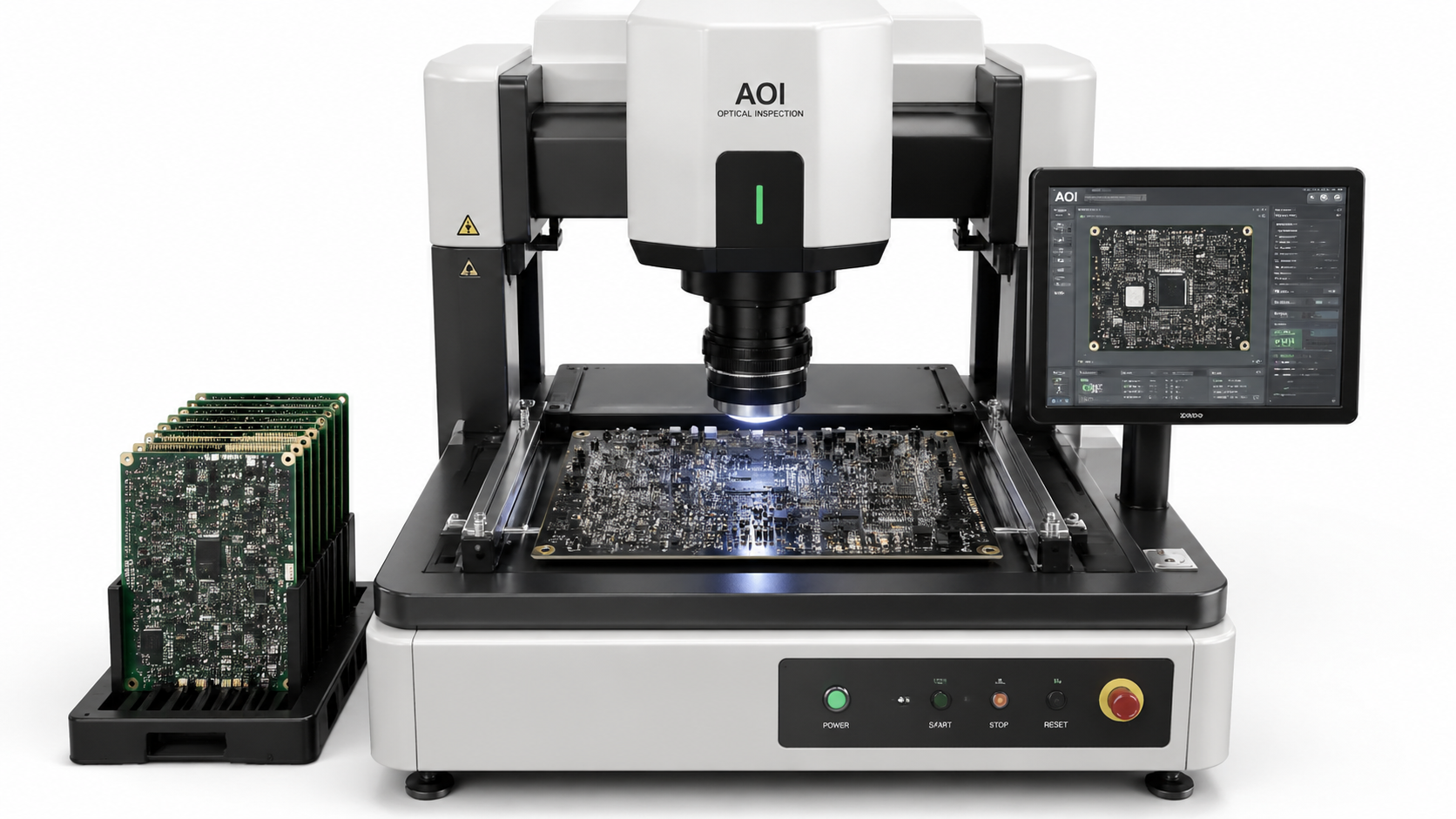
AOI testing false calls can disrupt circuit board assembly, inflate costs, and delay quality decisions across semiconductor compliance and SMT compliance workflows. For engineers, buyers, and quality teams working with electronic parts, circuit components, pick and place machine settings, and SMT soldering processes, reducing false alarms is essential to improving accuracy, yield, and thermal management compliance without slowing production.
Why do AOI testing false calls keep happening in SMT and electronics manufacturing?
AOI testing false calls occur when the inspection system flags a defect that is not a true process failure. In SMT assembly, this usually affects solder joint inspection, polarity checking, missing component detection, lead alignment review, and cosmetic judgment on high-density PCB layouts. For production operators, one false alarm can mean an extra stop. For quality managers, hundreds of false calls per shift can distort yield analysis and slow disposition decisions.
The root cause is rarely a single parameter. False calls usually emerge from a combination of 3 factors: image quality, rule sensitivity, and product variation. If lighting drifts, if the golden board reference is not representative, or if the component library does not reflect actual lot-to-lot tolerances, the AOI engine starts treating normal variation as nonconformance. This is especially common on fine-pitch devices, low-standoff components, and boards with mixed matte and reflective surfaces.
In semiconductor and EMS supply chains, false calls also create a procurement problem. Buyers and business evaluators may see unstable quality data and assume the supplier has a manufacturing weakness, when the real issue is inspection setup rather than process capability. That misunderstanding can affect vendor qualification, cost negotiation, and project timing over a 2–4 week launch window.
SiliconCore Metrics helps reduce that uncertainty by treating AOI data as an engineering discipline. Instead of accepting pass/fail output at face value, SCM focuses on benchmarkable variables such as placement precision, board material behavior, thermal warpage risk, and long-term component consistency. This matters because AOI testing false calls are often symptoms of upstream variation in PCB fabrication, solder paste printing, reflow profiles, or component package geometry.
Common sources of false calls on modern production lines
- Lighting inconsistency across shifts, especially when inspection runs continuously for 8–24 hours and calibration frequency is too low.
- Overly tight thresholds on solder fillet shape, toe coverage, or component offset for packages with normal manufacturing variation.
- Inaccurate part libraries, including wrong body height, lead reflectivity assumptions, or outdated polarity mark references.
- Board-level variation such as mask color changes, copper exposure, warpage, contamination, or laminate texture differences.
- Insufficient linkage between SPI, pick and place machine data, reflow conditions, and AOI rule tuning.
When these variables stack together, the result is not just nuisance inspection. It can increase verification labor, create unnecessary rework loops, and reduce confidence in process control. For technical evaluators and project managers, the goal should not be to lower sensitivity blindly, but to improve discrimination between true defects and acceptable manufacturing signatures.
How should teams diagnose false calls before changing inspection thresholds?
The fastest way to make AOI worse is to edit thresholds without a structured diagnosis. A more reliable method uses a 4-step review path: classify the false call, trace the upstream process condition, verify the component and PCB data, and then tune the inspection rule. This sequence helps prevent situations where a temporary optical issue is mistaken for a permanent quality rule problem.
Start by splitting false calls into at least 3 categories: solder-related, component-related, and surface-related. A solder-related false call may come from paste volume spread or shadowing. A component-related false call may come from package size tolerance, body color, or lead coplanarity. A surface-related false call may come from silkscreen overlap, oxidation marks, or laminate reflectance. This classification often reveals whether the problem sits in AOI programming or in the actual SMT process window.
Next, compare false call frequency by line, shift, lot, and board family over a 7-day or 30-day period. If one line produces consistently higher false alarms, inspect camera condition, conveyor stability, and maintenance history. If one component lot triggers repeated alerts, review supplier dimensional consistency and packaging handling. If one PCB family causes most exceptions, investigate panel warpage, mask registration, and dielectric stack-up effects that may influence flatness and image contrast.
This is where independent benchmarking becomes valuable. SCM’s engineering repository helps teams compare observed AOI behavior with broader manufacturing benchmarks in PCB fabrication, SMT placement precision, component reliability, and thermal packaging. That perspective is useful for procurement teams and finance approvers because it separates a machine-program issue from a genuine supplier-quality risk.
Practical diagnostic checklist before retuning AOI
- Review at least 20–50 recent false call images by defect type instead of relying on summary counts alone.
- Cross-check AOI alerts against SPI data, placement offsets, and reflow profile records for the same board serials.
- Confirm the part library uses current dimensions, lead style, body height, and polarity artwork from the approved source.
- Inspect golden board quality and confirm it represents normal production, not a hand-selected cosmetic outlier.
- Verify maintenance and calibration intervals, especially if the machine has been running multiple product types in the same 1–2 week cycle.
The table below helps teams align symptoms with likely causes and corrective direction. This is useful for operators, quality engineers, sourcing teams, and project owners who need a shared language for reviewing AOI testing false calls.
A table like this prevents teams from treating all false calls as software issues. In many factories, the decisive improvement comes only after inspection engineers, PCB suppliers, component vendors, and process owners review the same evidence set. That cross-functional approach is especially important where IPC-Class 3 expectations or customer-specific acceptance criteria apply.
What process changes reduce AOI testing false calls without hiding real defects?
Tune the process window first, not only the machine rules
If solder paste deposition varies too widely, AOI will see unstable joint geometry even when the product remains functional. That means the real lever may be stencil design, paste type, print pressure, or board support rather than AOI sensitivity. For many lines, improving print repeatability and placement consistency within the normal machine capability band reduces false calls more effectively than aggressive rule editing.
The same logic applies to reflow. Temperature imbalance across large panels, especially with mixed thermal mass components, can change solder appearance from board to board. AOI testing false calls then increase because the inspection program expects a narrower visual profile than the oven actually produces. Reviewing thermal management behavior, soak time range, and cooling stability can remove recurring noise from inspection data.
For fine-pitch packages and bottom-terminated components, link AOI review with X-ray or sample cross-checks during new product introduction. A 3-stage approach works well: initial rule creation, pilot-run verification, and post-ramp review after the first 3–5 production lots. This prevents premature “tightening” based on limited early images and helps distinguish process drift from acceptable variation.
SCM supports this process-led view through independent analysis of SMT placement precision, material behavior, and component reliability under stress. That broader engineering context matters because a visually unusual joint is not always a quality failure, and a visually clean result is not always long-term reliable. Decision-makers need both inspection data and materials insight.
Build a stable inspection library and verification flow
A well-maintained AOI library is one of the highest-value controls in electronics manufacturing. Each approved package should include verified body dimensions, acceptable offset windows, polarity features, and known visual variations from qualified suppliers. For organizations managing multiple EMS sites or Asian manufacturing partners, standardizing this library across locations can reduce setup inconsistency over each quarterly production cycle.
Verification also needs a closed loop. When a false call is dispositioned, the reason should be coded in a way that can be analyzed later. Without consistent coding, factories collect images but do not gain process intelligence. Over 4–8 weeks, recurring codes usually reveal whether the biggest opportunity is lighting, package modeling, board-specific rules, or upstream process control.
Operators and after-sales support teams benefit from this structure too. Fewer unstable alarms mean clearer quality records, easier traceability, and faster customer-response preparation if field questions arise. In regulated or safety-sensitive products, that consistency supports stronger documentation and more defensible corrective action histories.
The table below outlines practical control levers that lower false calls while preserving real defect sensitivity.
These controls are relevant not only to manufacturing engineers but also to procurement and commercial teams. When suppliers can explain how they manage AOI testing false calls through measurable controls, they present lower operational risk and stronger readiness for multi-site programs, tighter launch schedules, and stricter customer audits.
What should buyers, evaluators, and project leaders check before approving an AOI-related quality plan?
A common mistake in sourcing is to ask whether a factory has AOI, but not how the factory controls AOI testing false calls. Equipment ownership alone says little about actual inspection quality. Buyers and technical evaluators should instead assess whether the supplier can correlate inspection results with PCB capability, component consistency, and SMT process stability. That is the difference between a machine list and a quality system.
For purchasing and finance approval, 5 decision points are especially important. First, ask how false calls are measured by product family and by lot. Second, confirm whether there is a closed-loop review with process engineering. Third, review the part library update method when approved vendors change. Fourth, check how often calibration and verification are done. Fifth, understand when the supplier escalates from AOI to X-ray, manual inspection, or failure analysis.
This matters because false calls have hidden cost. They consume operator time, create quarantine inventory, delay shipment release, and may trigger unnecessary rework that adds thermal exposure to the board. In high-mix, low-to-mid volume environments, these indirect costs can outweigh the visible inspection labor. A sourcing decision should therefore consider not only defect escape risk but also false-alarm burden across the full quality workflow.
SCM is well positioned for this kind of evaluation because its work connects market intelligence with engineering evidence. By reviewing PCB fabrication, active and passive component behavior, thermal packaging concerns, and compliance-oriented reporting, SCM gives procurement teams a practical basis for comparing suppliers beyond surface claims.
Supplier assessment questions that improve decision quality
- Can the supplier show false call trends by board type, package type, or line over the last 3 months?
- How are AOI rules validated during NPI, pilot build, and steady-state production?
- What is the response path when a new component lot changes visual behavior but electrical function remains acceptable?
- How does the factory align AOI judgment with IPC workmanship criteria and customer-specific acceptance standards?
- How are PCB flatness, mask finish, and thermal warpage considered when setting inspection references?
A disciplined answer to these questions signals process maturity. It also reduces the risk of project delays caused by quality disputes after pilot approval. For engineering project owners, that can protect launch schedules. For business and finance teams, it can reduce the chance of hidden cost accumulation during ramp-up.
Standards, compliance, and common misconceptions around AOI testing false calls
False calls are not the same as strict quality control
One persistent misconception is that more AOI alerts always mean tighter quality. In reality, excessive false calls can weaken quality control because teams spend too much time clearing normal boards and too little time investigating meaningful defect patterns. Strong inspection is selective, repeatable, and linked to acceptance criteria. It does not punish every visual variation equally.
Another misconception is that AOI alone can validate all defect risks. It cannot. Depending on component type and assembly design, some failure modes need SPI, X-ray, electrical test, microsection review, or environmental reliability evaluation. This is especially true in products where signal integrity, thermal performance, and long-term component stability are critical. AOI is one control layer, not the entire compliance strategy.
From a standards perspective, factories often align inspection practice with IPC workmanship requirements and broader quality management systems such as ISO 9001. But compliance depends on how criteria are applied, documented, and maintained. A supplier can mention standards and still operate with unstable thresholds or weak traceability. That is why data transparency matters more than label-heavy presentations.
SCM’s value in this area is its independent, data-driven viewpoint. Its reports translate complex manufacturing variables into comparable compliance-oriented insights, helping global R&D engineers and procurement executives judge whether a supplier’s inspection performance reflects true capability or simply local interpretation.
FAQ: practical questions from engineers, buyers, and quality teams
How low should an AOI false call rate be?
There is no universal number that fits every product, because package mix, board density, and acceptance criteria differ. A better approach is to compare false calls by defect category, product family, and review burden over a stable period such as 4 weeks. The target should be a rate low enough to keep verification efficient, while still catching true solder, placement, and polarity issues without relaxation of necessary controls.
Which products are most vulnerable to AOI testing false calls?
Boards with fine-pitch ICs, bottom-terminated components, mixed-height assemblies, reflective packages, dark solder mask finishes, and high-density layouts often generate more false alarms. Products with strong thermal gradients or large panel sizes may also show warpage-related image variation. These products usually need more careful library definition, validation samples, and cross-checking with other inspection methods.
Can reducing false calls increase defect escape risk?
Yes, if teams simply widen thresholds without analyzing root cause. No, if the reduction comes from better image consistency, more accurate package data, improved process control, and targeted rule optimization. The safest path is to validate any rule change through controlled lots, engineering review, and comparison with reference methods such as X-ray or manual microscopy where appropriate.
When should a company seek external benchmarking support?
External benchmarking becomes valuable when false calls persist across multiple lines, suppliers, or product families; when procurement needs independent comparison before vendor approval; or when customer audits demand stronger justification for inspection settings. It is also useful during supplier transitions, material changes, or new product ramps where local assumptions may not reflect broader manufacturing reality.
Why choose us for AOI false call analysis, supplier benchmarking, and compliance-focused decision support?
Reducing AOI testing false calls is not only a programming task. It requires understanding SMT assembly, PCB material behavior, component variation, thermal effects, compliance expectations, and procurement risk. SiliconCore Metrics brings those disciplines together through independent technical analysis built for global semiconductor and EMS supply chains. That means your team gets engineering clarity, not just generic quality commentary.
Our support is useful when you need to compare supplier capability, interpret unstable inspection data, review SMT placement precision questions, assess PCB and component consistency, or align inspection output with IPC-Class 3 and ISO 9001-oriented quality expectations. For R&D, sourcing, quality, project management, and after-sales stakeholders, this helps turn scattered factory data into a structured decision basis.
You can contact us for specific discussion on 6 practical topics: AOI false call root-cause review, component and package variability assessment, PCB fabrication impact on inspection stability, SMT process benchmarking, compliance reporting expectations, and supplier comparison for new sourcing or transfer projects. If you are preparing a pilot run or evaluating a current vendor, we can also help frame the right data points before quotation and approval stages.
If your team is dealing with repeated AOI alarms, unclear acceptance boundaries, delayed quality release, or uncertainty in supplier performance, contact SiliconCore Metrics to discuss parameter confirmation, product and process evaluation, delivery-risk review, customized benchmarking scope, standards-related questions, sample support strategy, and quotation communication. The earlier these factors are clarified, the easier it becomes to improve yield without sacrificing real defect detection.
- PCB
- PCB fabrication
- SMT assembly
- thermal packaging
- signal integrity
- IPC-Class 3
- EMS
- thermal management
- procurement executives
- SMT placement
- ISO 9001
- market intelligence
- component reliability
- SMT process
- PCB suppliers
- thermal management compliance
- SMT compliance
- semiconductor compliance
- circuit board assembly
- pick and place machine
- SMT soldering
- electronic parts
- circuit components
- semiconductor
- PCB supplier
Recommended News
- AOI TestingHow to verify ISO 9001 certification when sourcing electronicsISO 9001 certification electronics: learn how to validate certificates, audit scope and accreditation, and reduce quality risks when sourcing PCBs, EMS, and components.
- AOI TestingHow to verify a UL certified PCB assembly before production approvalUL certified PCB assembly verification made practical: review PCB markings, materials, components, traceability, and safety controls before production approval.
- AOI TestingHow to qualify an AOI inspection supplier for PCB defect detectionAOI inspection supplier qualification guide for reliable PCB defect detection. Learn how to validate detection accuracy, control false calls, assess traceability, and choose dependable support.
- AOI TestingHow to catch solder joint defects in through hole assembly testingThrough hole assembly testing: discover how visual inspection, electrical tests, X-ray, and process controls catch hidden solder joint defects before they cause costly failures.
- AOI TestingWhich AOI inspection standards apply to PCB assembly quality control?AOI inspection standards for PCB assembly: learn how IPC-A-610, J-STD-001, IPC-1782, and ISO 9001 guide defect criteria, traceability, validation, and reliable quality control.
- AOI TestingHow AOI testing supports electronics quality control in the USAElectronics quality control USA teams use AOI testing to catch visible PCB assembly defects early, improve traceability, and strengthen reliable production outcomes.