
HDI Technology for Wearables: Is It Necessary
DETAILS
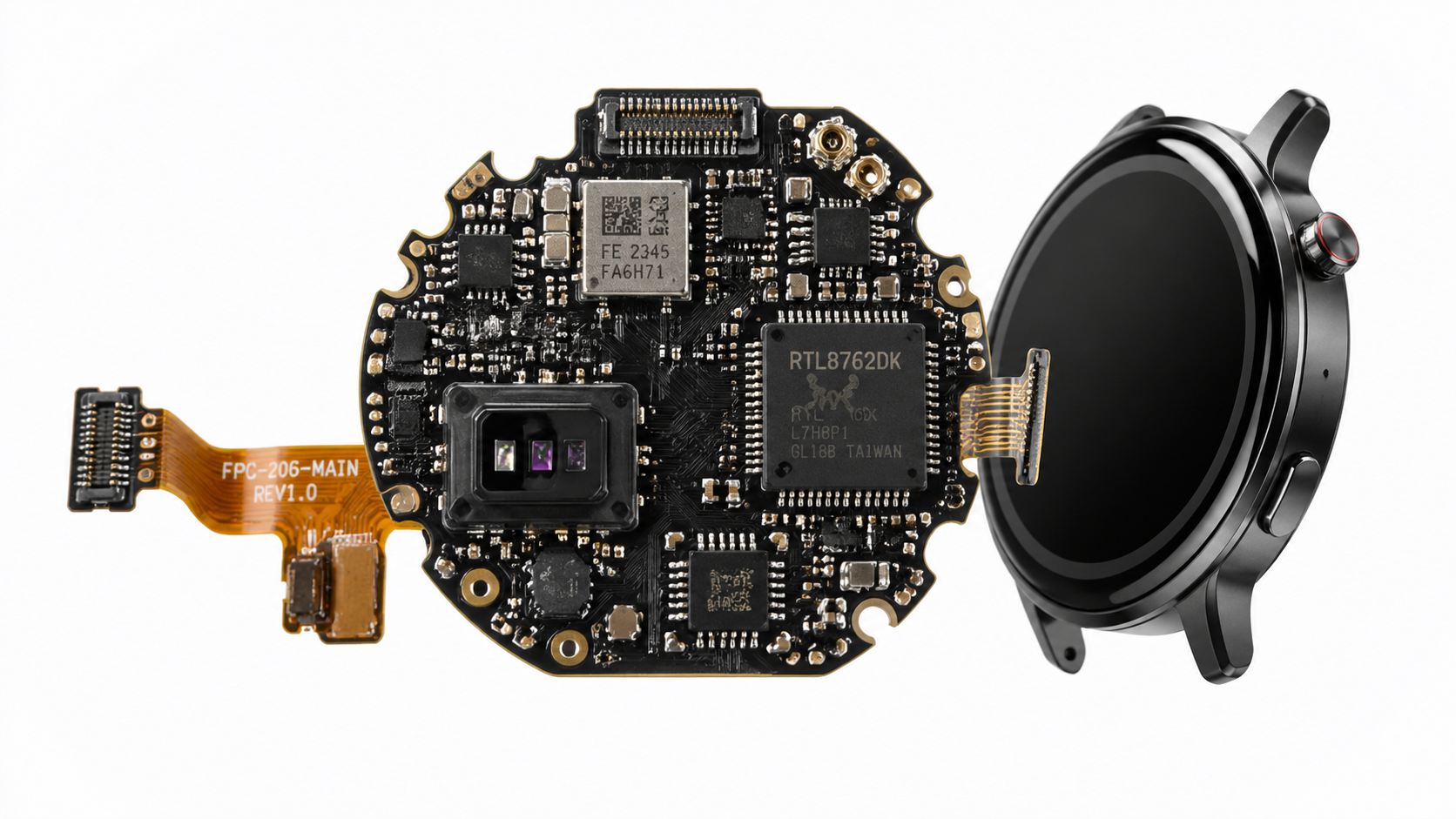
As wearables shrink while performance expectations rise, HDI technology is becoming a decisive factor in circuit board assembly, thermal management compliance, and PCB compliance. For engineers, buyers, and technical evaluators comparing electronic parts, circuit components, high-performance capacitors, and RF transceiver integration, understanding whether HDI is truly necessary can reduce design risk, improve reliability, and support smarter semiconductor compliance and SMT compliance decisions.
For smartwatches, fitness bands, hearables, medical patches, and industrial wearable terminals, the PCB is no longer a passive carrier. It is a density, heat, signal, and assembly problem compressed into a few square centimeters. That is why the question is not simply whether HDI is advanced, but whether conventional PCB structures can still support today’s wearable design targets without excessive compromise.
From the perspective of SiliconCore Metrics (SCM), this is also a procurement and risk-control issue. Engineering teams want routing freedom, QA teams want stable solder joints, sourcing teams want acceptable yield and lead times, and finance teams want to avoid paying for complexity that does not improve field performance. A practical answer requires comparing electrical needs, packaging density, manufacturability, and compliance expectations in one framework.
What HDI Technology Means in Wearable PCB Design
HDI, or High-Density Interconnect, refers to PCB structures that use finer traces, smaller vias, microvias, sequential lamination, and tighter component placement than standard multilayer boards. In wearable products, HDI is commonly associated with line and space values below 75/75 µm, laser-drilled microvias, via-in-pad options, and stack-ups ranging from 4 to 10 layers depending on the processor, RF, sensor, and power architecture.
The reason this matters is simple: wearable devices must integrate Bluetooth, Wi-Fi, GNSS, PMICs, MEMS sensors, memory, charging circuits, antennas, and often a display connector within a constrained footprint. A mainstream smartwatch mainboard may need to support dozens of high-speed and power nets in an area under 25 cm². Traditional through-hole via strategies can consume too much routing real estate and create signal escape limitations around fine-pitch packages.
HDI also changes the thermal and assembly profile of the board. When the package pitch moves toward 0.4 mm or lower, and passive parts are reduced to 0201 or even 01005 in select designs, pad geometry, solder mask registration, and layer symmetry become more critical. In these cases, HDI is not only about density; it affects solder joint consistency, local heat spreading, and rework difficulty.
However, not every wearable requires a high-order HDI stack. A basic activity tracker with a low-pin-count MCU, one RF module, and limited sensing functions may still perform well on a 4-layer conventional board. The necessity of HDI depends on three main variables: interconnect density, signal integrity requirements, and volume-driven manufacturability.
Typical HDI Features Used in Wearables
- Laser microvias with diameters often in the 75–150 µm range for denser layer transitions.
- Sequential lamination for 1+N+1 or 2+N+2 stack-up structures when routing under fine-pitch ICs.
- Finer trace and space, commonly 50–75 µm in advanced consumer and medical wearable layouts.
- Via-in-pad and filled via strategies to reduce breakout congestion around BGAs and RF front-end packages.
The table below summarizes how HDI differs from conventional PCB design in a wearable context. The goal is not to assume that more layers are always better, but to clarify where HDI creates measurable design or assembly advantage.
The key takeaway is that HDI should be treated as a system-level enabler, not a default specification. If the device roadmap includes sensor fusion, multiple radios, or aggressive miniaturization, HDI can become necessary early in development. If the function set is stable and board area is less constrained, a simpler stack-up may be more cost-efficient.
When HDI Is Truly Necessary and When It Is Optional
The strongest case for HDI in wearables appears when electrical density and mechanical packaging collide. If the design includes a fine-pitch application processor, an RF transceiver, memory, battery management, haptic control, and more than 3 sensor types in a compact enclosure, conventional routing can quickly become inefficient. Engineers may end up increasing board size, adding layers without solving escape routing, or compromising antenna and battery placement.
A second trigger is signal quality. Wearables now support faster display interfaces, low-noise sensor paths, and multiple wireless channels. While not every wearable carries high-speed digital interfaces above several Gbps, even lower-speed systems can suffer from impedance inconsistency, return path discontinuity, and EMI sensitivity if the layout becomes congested. HDI can improve layer organization and reduce unnecessary stub effects, especially when compared with dense through-via fields.
The third trigger is mechanical form factor. Curved housings, thin profiles, and split-board architecture often force irregular board outlines and flex-rigid combinations. In these designs, reclaiming even 10%–20% of board area can be decisive. HDI can support that reduction by increasing usable routing channels and enabling denser component escape patterns.
On the other hand, HDI may be optional in lower-complexity products. A wearable temperature logger, access control tag, or simple wellness band may use fewer interfaces, larger package footprints, and modest battery current levels. If the board can be completed in 4 layers with stable impedance control and acceptable SMT yield, forcing HDI into the design may add unnecessary fabrication cost and longer NPI cycles.
Decision Signals for Engineering and Sourcing Teams
- Package pitch at or below 0.5 mm, especially with high pin-count ICs.
- Board utilization consistently above 70% in placement and routing reviews.
- Need for 6–10 layers to maintain signal, power, RF, and thermal partitioning in a small outline.
- Repeated layout compromises affecting antenna clearance, battery shape, or enclosure thickness.
A practical threshold model
If a concept design can meet routing, thermal, and assembly rules on a 4-layer or simple 6-layer board without stacked vias or extreme trace reduction, HDI is often optional. If the same design needs microvias, via-in-pad, or sequential buildup just to complete fan-out and keep the PCB within the industrial design envelope, HDI is functionally necessary rather than premium.
For procurement teams, the distinction matters because HDI can change supplier qualification criteria. Not all PCB fabricators have the same control over laser via reliability, copper filling consistency, registration tolerance, and warpage management. Choosing HDI should therefore trigger a stronger technical audit, not only a price comparison.
Performance, Reliability, and Compliance Impact
In wearable electronics, the value of HDI is often validated through reliability rather than headline specifications. Smaller products face repeated temperature swings during charging, sweat exposure, motion shock, and long daily duty cycles. These conditions put stress on microvias, fine solder joints, and compact passive arrays. A well-designed HDI board can improve product robustness, but a poorly controlled one can fail earlier than a simpler conventional board.
This is why compliance and testability matter. For applications with medical, industrial, or premium consumer positioning, teams should review IPC-oriented workmanship expectations, thermal cycling tolerance, CAF risk control, solder mask registration, and laminate stability. In many real projects, the difference between an acceptable HDI design and a problematic one is not the layout software output, but the fabricator’s process control over drilling, plating, lamination, and final inspection.
Thermal behavior is another often-overlooked issue. Wearables typically operate in enclosed housings with limited convection. If the PCB carries PMICs, wireless power circuits, or high duty-cycle RF bursts, heat concentration can affect battery life, user comfort, and component drift. HDI can help by improving placement freedom and localized copper distribution, but thermal paths still need deliberate modeling. A denser PCB does not automatically mean a cooler PCB.
From an SMT standpoint, HDI also raises the bar for placement precision. With 0201 passives, tight pad spacing, and reduced rework margins, placement offsets that might be tolerable on a larger board can become yield issues. A sourcing team should therefore examine not only the bare board supplier, but the entire EMS chain, including stencil design, paste deposition control, and AOI criteria.
Key reliability checkpoints before approval
The following matrix helps quality, project, and procurement teams decide whether the expected benefit of HDI is supported by the required manufacturing discipline.
The broader conclusion is that HDI improves wearable performance only when PCB fabrication, SMT assembly, and compliance review are aligned. That is why technical benchmarking from organizations such as SCM is valuable: it helps teams compare real process capability instead of relying on generic capability lists.
Cost, Supply Chain Risk, and Procurement Evaluation
A common misconception is that HDI should be avoided because it is always expensive. In reality, the cost equation is more nuanced. Bare board cost per unit does increase with laser drilling, sequential lamination, tighter imaging, and yield sensitivity. Yet in some wearable programs, HDI reduces total product cost by shrinking the PCB, lowering enclosure volume, simplifying flex interconnects, or enabling a more compact battery and antenna layout.
Procurement teams should therefore compare total landed impact, not only PCB piece price. A 15% increase in board cost can still be justified if it removes one connector, cuts assembly steps, or improves first-pass yield. Conversely, if HDI raises board cost by 25%–40% without changing product size or reducing integration risk, the business case becomes weak.
Lead time is another major factor. Standard multilayer wearable boards may move through prototype cycles in about 7–15 days depending on complexity. HDI prototypes, particularly those with filled vias or advanced buildup structures, can extend into the 2–4 week range. For fast consumer product launches, that delay can affect EVT, DVT, and ramp planning more than the board cost itself.
Supply chain resilience matters as well. If only a narrow group of suppliers can reliably produce the target stack-up, purchasing leverage declines and risk rises. SCM’s market intelligence approach is useful here because supplier capability should be benchmarked across fabrication precision, SMT compatibility, material consistency, and long-term reliability under environmental stress rather than viewed as a single quote-line item.
Procurement comparison framework
The following table is a practical screening tool for sourcing, finance, and project stakeholders evaluating whether HDI is justified in a wearable program.
For finance approvers, the most useful question is not “Is HDI more expensive?” but “What cost or schedule penalty appears if we do not use HDI?” In wearable design, avoiding HDI can lead to larger enclosures, delayed layout cycles, more revisions, or weaker field reliability. Those hidden costs often matter more than the PCB quote alone.
How to Select the Right HDI Strategy for a Wearable Program
A disciplined selection process starts with architecture, not fabrication capability. Teams should first define the wearable’s electrical complexity, enclosure limits, thermal profile, duty cycle, and expected production volume. A medical patch with low power and strong reliability demands may require a different HDI strategy than a feature-rich smartwatch with multiple radios and a display-heavy interface.
The second step is early DFM and DFA collaboration. Waiting until routing congestion appears is too late. PCB fabricators, EMS partners, and design teams should align on realistic line/space targets, solder mask capability, microvia rules, and component library assumptions during the first layout planning round. This can reduce redesign loops by 1 or 2 full iterations, which is significant in a compressed product schedule.
Third, teams should separate “must-have HDI” from “nice-to-have HDI.” For example, microvias under a fine-pitch processor may be essential, while stacked-via complexity across the whole board may not be. Selective use of advanced features can preserve performance while keeping cost and risk under control.
Finally, validation should include not just electrical bring-up but reliability stress that reflects actual wearable use. At minimum, this often means thermal cycling, drop or vibration screening, charging-state temperature review, and SMT defect analysis after pilot builds. In many programs, 3 validation gates—prototype, pilot, and pre-ramp—are enough to reveal whether the HDI implementation is robust.
Recommended selection checklist
- Confirm whether package pitch, I/O count, and board outline truly require microvia escape routing.
- Review antenna placement, battery geometry, and thermal hotspots before finalizing stack-up.
- Audit supplier capability for laser via quality, registration, warpage control, and fine-pitch SMT support.
- Compare at least 4 decision dimensions: cost, lead time, yield, and field reliability exposure.
- Use compliance-oriented reporting for IPC workmanship, material consistency, and process traceability.
Who benefits most from this evaluation model
Engineers gain a realistic path to routing closure. Buyers gain clearer supplier comparison criteria. Quality teams gain measurable checkpoints for incoming and pilot qualification. Project leaders gain better forecast visibility on NPI timing. After-sales and maintenance teams benefit indirectly because fewer latent interconnect defects mean lower return and rework exposure after launch.
For companies operating across global EMS networks, an independent benchmark-driven approach is especially useful. SCM’s role in turning fabrication, SMT precision, dielectric behavior, and reliability test results into comparable decision data helps reduce the gap between supplier claims and deployable engineering reality.
Common Questions About HDI for Wearables
Does every smartwatch or fitness band need HDI?
No. Products with limited functions, larger package choices, and relaxed footprint constraints may work well with conventional 4-layer or simple 6-layer boards. HDI becomes more likely when the design combines fine-pitch ICs, multiple radios, dense sensing, and aggressive miniaturization within a thin enclosure.
Is HDI better for RF performance?
Not automatically, but it often helps. HDI can improve routing discipline, reduce congestion near RF sections, and support cleaner reference plane management. RF performance still depends on stack-up planning, controlled impedance, antenna isolation, grounding strategy, and enclosure interaction. A poor HDI layout can still underperform a well-executed conventional design.
What are the main procurement risks?
The biggest risks are narrow supplier capability, longer prototype cycles, variable microvia reliability, and SMT yield sensitivity. Buyers should check at least 5 areas: fabrication capability window, sample cross-section evidence, material consistency, assembly precision, and pilot-run defect data. Price alone is not enough for a reliable decision.
How long does HDI qualification usually take?
For many wearable programs, initial technical review and supplier screening can take 1–2 weeks, prototype fabrication 2–4 weeks, and pilot validation another 2–3 weeks depending on test scope. If the product uses rigid-flex, stacked microvias, or sensitive RF integration, the review cycle may extend further.
HDI technology for wearables is necessary when miniaturization, routing density, signal organization, and product architecture leave conventional PCB methods with too many compromises. It is optional when the device function set, package pitch, and board space remain manageable. The most reliable decision comes from evaluating engineering constraints, SMT readiness, compliance requirements, supplier capability, and total business impact together rather than in isolation.
If your team is comparing PCB fabrication options, validating semiconductor and SMT compliance, or benchmarking suppliers for next-generation wearable devices, SiliconCore Metrics can help translate manufacturing complexity into actionable technical and procurement intelligence. Contact us to discuss your wearable PCB roadmap, request a custom evaluation framework, or learn more about data-driven HDI decision support.
- PCB
- HDI technology
- high-density interconnect
- PCB fabrication
- SMT assembly
- signal integrity
- EMS
- thermal management
- environmental stress
- market intelligence
- PCB design
- thermal management compliance
- PCB compliance
- SMT compliance
- semiconductor compliance
- circuit board assembly
- component placement
- electronic parts
- circuit components
- MCU
- semiconductor
- high-performance
- RF transceiver
- high-performance capacitors
- multilayer PCB
Recommended News
- HDI TechnologyHow to vet PCB suppliers in a directory before requesting quotesPCB suppliers directory guide: learn how to verify capabilities, certifications, traceability, and quote assumptions before selecting a reliable PCB partner.
- HDI TechnologyHow UAE engineering data repositories improve design traceabilityEngineering data repository UAE solutions strengthen design traceability by linking requirements, revisions, supplier evidence, and manufacturing data. Explore practical ways to reduce risk and accelerate releases.
- HDI TechnologyHow to verify UL recognition for printed circuit boardsPrinted circuit boards UL verification made clear: learn how to check UL marks, file numbers, factory scope, stack-ups, and traceability for audit-ready compliance.
- HDI TechnologyMulti layer PCB design guide for controlling signal crosstalkMulti layer PCB design guide for controlling signal crosstalk with stackup, spacing, return-path, and validation strategies for reliable high-density boards.
- HDI TechnologyHow tighter manufacturing tolerances change HDI PCB pricesMicro tolerance manufacturing price explained: see how tighter HDI PCB tolerances affect yield, inspection, supplier options, and sourcing costs.
- HDI TechnologyHow automotive PCB impedance control prevents signal failuresAutomotive PCB impedance control prevents reflections, noise, and timing errors in ADAS, EV, and infotainment systems. Learn how to build reliable signal paths.