
Flexible Circuits vs Rigid Boards: Which to Choose
DETAILS
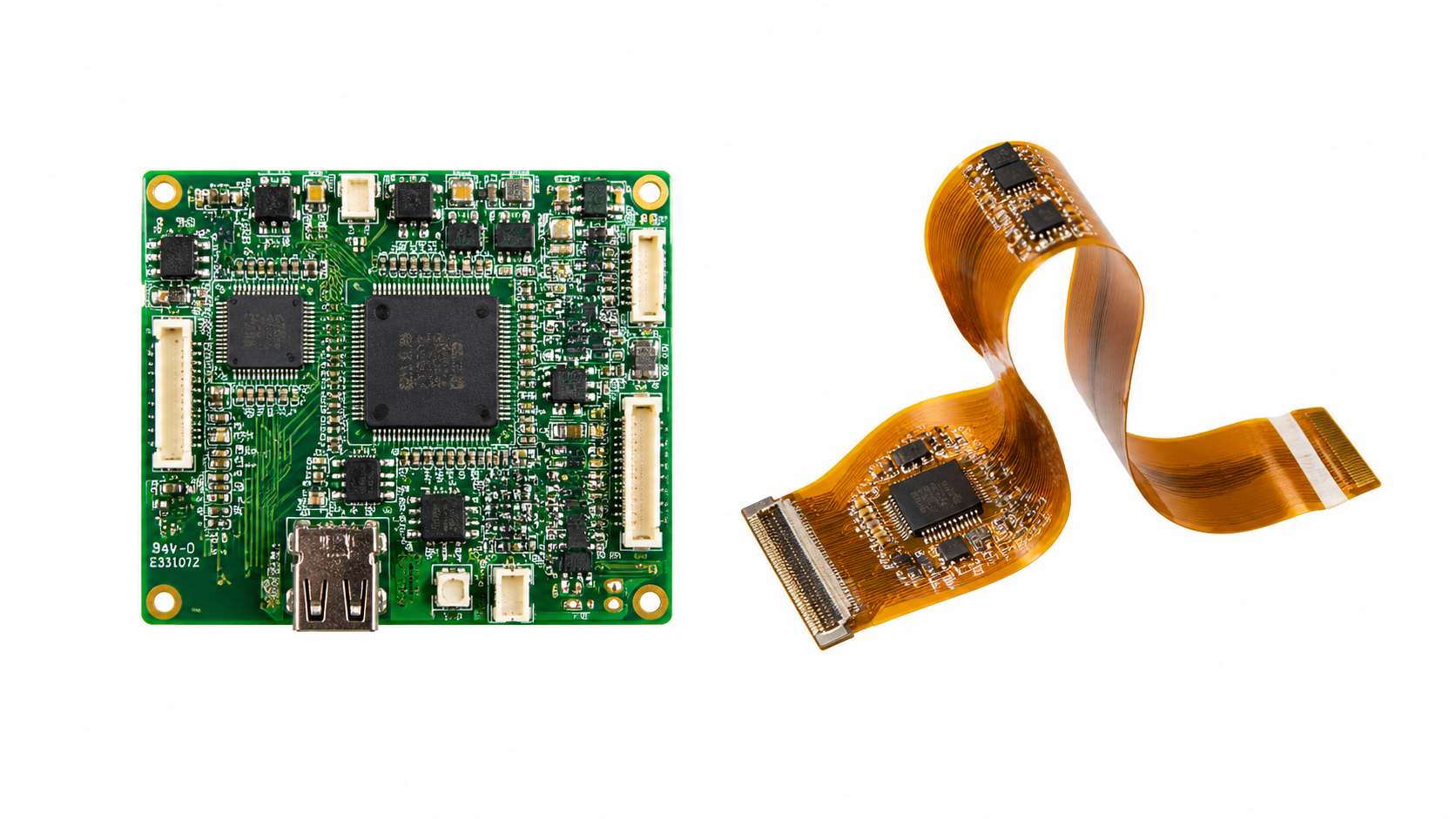
Choosing between flexible circuits and rigid boards affects signal reliability, thermal performance, and total production cost. For engineers, buyers, and project teams evaluating circuit board assembly, SMT soldering, reflow soldering, pick and place specifications, and PCB compliance, this comparison explains how each option supports modern electronic parts, circuit components, and thermal management compliance in demanding applications.
If you need a quick answer, the decision usually comes down to this: choose flexible circuits when space is limited, repeated bending is required, weight matters, or connector reduction improves reliability. Choose rigid boards when cost control, mechanical stability, standard assembly flow, and easier inspection are the priority. In many commercial and industrial products, the best answer is not strictly one or the other, but a design choice based on bending cycles, operating temperature, signal demands, assembly complexity, and lifetime service conditions.
For technical evaluators and procurement teams, the real question is not simply “which is better,” but which board type delivers the required electrical and mechanical performance with acceptable manufacturing risk and total lifecycle cost. That is where a practical comparison matters.
What decision-makers actually need to know first
Most readers searching for “Flexible Circuits vs Rigid Boards: Which to Choose” are trying to make a product, sourcing, or engineering decision. They typically want clarity on five issues:
- Performance: Will the board support signal integrity, thermal performance, and component reliability?
- Mechanical fit: Can it survive vibration, movement, folding, or tight packaging?
- Manufacturing impact: How will it affect SMT assembly, pick and place stability, reflow soldering, yield, and inspection?
- Cost: What is the difference in tooling, material cost, assembly complexity, and failure-related expense?
- Risk: Which option creates fewer compliance, reliability, maintenance, or supplier qualification issues?
That means the most useful comparison is not a generic material overview. It should focus on application fit, process implications, and the trade-offs that influence quality, procurement decisions, and program timelines.
Rigid boards are usually the default choice when cost and process stability matter most
Rigid PCBs remain the standard choice for a large share of electronics because they are easier to design, easier to assemble, easier to inspect, and generally lower in cost at scale. For products that do not require repeated bending or extreme packaging efficiency, rigid boards often provide the best balance of performance and manufacturability.
They are especially suitable when:
- The enclosure has enough space for standard board geometry
- The product benefits from strong mechanical support for components
- Assembly lines are optimized for conventional SMT soldering and reflow soldering
- Test access, debugging, and field replacement are important
- Budget pressure favors widely available materials and mature supply chains
Rigid boards also simplify many production steps. During circuit board assembly, a rigid substrate provides better dimensional stability for solder paste printing, pick and place accuracy, and controlled thermal exposure in reflow. This matters for dense layouts, fine-pitch components, BGAs, and applications where placement precision directly affects yield.
For procurement and business evaluators, rigid boards also benefit from broader supplier availability, more predictable pricing, and less process specialization. That often reduces qualification time and sourcing risk.
Flexible circuits are often the better choice when integration and movement drive the design
Flexible circuits, including flex and rigid-flex designs, are selected when standard rigid boards create space, weight, or interconnect limitations. Their main value is not novelty; it is functional integration. A flexible circuit can replace wires, reduce connectors, fit into irregular spaces, and support dynamic or folded product architectures.
Flexible circuits are commonly preferred when:
- The product needs bending, folding, or dynamic movement
- Internal space is highly constrained
- Connector count must be reduced to improve reliability
- Weight reduction is important
- The application includes wearable, portable, medical, aerospace, automotive, or compact industrial electronics
In the right application, a flex circuit can improve reliability by eliminating mechanical interconnect points that often fail under vibration or repeated handling. It can also help simplify assembly at the system level, even if the PCB itself is more complex to manufacture.
However, flexible circuits are not automatically superior. They require more care in stack-up design, bend radius control, copper routing, stiffener placement, and assembly handling. If the operating environment or bending profile is not properly defined early, reliability issues can appear later in the product life cycle.
How electrical performance compares: signal integrity, impedance, and EMI considerations
For many engineering teams, the board choice must support more than basic connectivity. It must protect signal integrity, maintain predictable impedance, and avoid noise problems as data rates and component density increase.
Rigid boards generally offer easier control of impedance and stack-up consistency because the materials and fabrication processes are more standardized. This helps in high-speed digital systems, RF sections, and mixed-signal designs where dielectric properties and trace geometry must remain tightly controlled.
Flexible circuits can also support demanding electrical performance, but they require closer attention to conductor geometry, shielding strategy, and mechanical movement. Repeated flexing may affect long-term reliability if the design places excessive stress on traces or plated features. Material choice becomes more critical, especially when signal loss, dielectric stability, and environmental durability matter.
When evaluating either option, teams should review:
- Controlled impedance requirements
- Dielectric constant consistency across the stack-up
- Crosstalk risk in dense routing
- Ground return path continuity
- EMI shielding needs
- Long-term performance under temperature cycling and vibration
For high-speed electronic parts and sensitive circuit components, board selection should be validated by simulation, fabrication capability review, and reliability testing rather than assumption.
Thermal performance is often underestimated in the flex vs rigid decision
Thermal management is one of the most overlooked factors in this comparison. The correct board choice can affect not only operating temperature, but also solder joint durability, component aging, and product safety compliance.
Rigid boards usually offer stronger thermal paths, especially when designed with heavier copper, thermal vias, metal-core options, or thicker substrates. For power electronics, LED systems, industrial controls, or processing-intensive assemblies, rigid boards often make thermal design easier and more robust.
Flexible circuits can handle heat in certain applications, but they are rarely the easiest option when significant power dissipation must be managed through the board itself. Their thinner materials may help in some heat-spreading scenarios, but overall thermal strategy is more design-sensitive and may require additional reinforcement or packaging support.
If thermal risk exists, teams should compare both options using:
- Component power density
- Hot spot location
- Ambient operating range
- Airflow conditions
- Thermal interface design
- Compliance expectations for long-term reliability
For quality and safety reviewers, the key issue is whether the selected board architecture supports stable operation under real environmental conditions, not just nominal lab conditions.
Manufacturing and assembly: where many cost assumptions go wrong
A common mistake is comparing only bare board prices. In reality, the better choice often depends on total manufacturing flow, including handling, fixturing, soldering, inspection, and final integration.
Rigid boards fit most standard SMT assembly environments. They move more easily through stencil printing, pick and place, reflow soldering, automated optical inspection, in-circuit testing, and depaneling processes. This typically leads to better throughput and fewer special handling requirements.
Flexible circuits may require carriers, pallets, or stiffeners during assembly. That can affect cycle time, fixture design, and process consistency. Paste deposition, placement stability, and thermal exposure during reflow may need tighter controls. If not planned properly, this increases assembly variation and rework risk.
This does not mean flex is inefficient. In some products, a flexible circuit reduces downstream wiring and manual interconnect steps enough to justify a more specialized front-end assembly process. That is why project teams should assess the entire build, not just the board fabrication quote.
Questions worth asking suppliers include:
- What pick and place tolerances are achievable on this substrate?
- Are carriers or support fixtures required during SMT soldering?
- How does reflow soldering profile control differ for this design?
- What inspection limitations exist due to board geometry?
- What are the expected yield impacts at pilot and full production volume?
Reliability and compliance: which option reduces long-term failure risk?
From a lifecycle and quality perspective, the right answer depends on actual failure modes. A rigid board may be more reliable in a static installation, while a flexible circuit may be more reliable in a product that would otherwise rely on wires and connectors exposed to movement or vibration.
Rigid boards generally present lower risk in static applications because they are mechanically stable and easier to inspect. They are often favored where serviceability, structural support, and standard qualification methods are priorities.
Flexible circuits may outperform rigid boards in applications with repeated motion, provided the bend area, copper pattern, adhesive system, and strain relief are properly designed. But misuse can lead to cracked conductors, delamination, or fatigue-related failures.
Compliance-focused teams should validate against relevant requirements such as:
- IPC design and fabrication expectations
- IPC-Class 3 performance needs for high-reliability products
- Thermal cycling and humidity exposure
- Vibration and shock conditions
- Insulation resistance and dielectric reliability
- Traceability and supplier quality system controls such as ISO 9001
For products serving industrial, medical, automotive, or mission-critical markets, qualification data should carry more weight than theoretical design advantages.
Cost comparison: look beyond unit price to total ownership cost
Rigid boards usually win on initial unit cost, especially in standard multilayer configurations with mature supply chain support. That is why they remain the default option for many commercial products.
But flexible circuits can reduce total ownership cost when they lower system assembly complexity, reduce connector count, save space, cut weight, or improve field reliability. A more expensive board can still be the better financial choice if it reduces labor, returns, failure rates, or product size constraints.
For financial approvers and sourcing teams, the most useful cost comparison should include:
- Bare board fabrication cost
- Tooling and NRE expense
- Assembly fixture and handling cost
- Yield and rework impact
- Connector, cable, and harness elimination value
- Field service and warranty exposure
- Supplier availability and lead-time risk
In short, a rigid board is often cheaper to buy, but not always cheaper to own.
A practical selection framework for engineers, buyers, and project teams
If your team is deciding between flexible circuits and rigid boards, use a structured review instead of preference or habit. A simple framework is:
- Define the physical requirement. Is the board static, folded once during assembly, or dynamically flexed throughout product life?
- Map the electrical requirement. Review signal speed, impedance control, EMI, grounding, and component density.
- Assess thermal load. Identify hot components, ambient conditions, and heat removal paths.
- Evaluate the assembly process. Confirm SMT soldering, pick and place, fixture needs, reflow soldering profile, and inspection capability.
- Estimate full lifecycle cost. Include assembly simplification, field reliability, and service impact.
- Check compliance and supplier capability. Validate that the supplier can meet required process controls, documentation, and reliability standards.
In many advanced products, the final answer may be rigid-flex, which combines the stability of rigid sections with the routing freedom of flexible interconnects. While more complex, rigid-flex can be highly effective where compact packaging and high reliability must coexist.
So, which should you choose?
Choose rigid boards if your product is mechanically stable, cost-sensitive, thermally demanding, and best served by standard PCB fabrication and SMT assembly processes. This is often the right answer for control systems, conventional industrial electronics, power-related designs, and products where inspection and serviceability matter.
Choose flexible circuits if your design must bend, fit into tight spaces, reduce connectors, lower weight, or survive motion and vibration better than a wired interconnect approach. This is often the stronger choice for compact electronics, portable devices, sensors, medical assemblies, and mechanically dynamic systems.
If uncertainty remains, the smartest path is to compare both options through prototype-level review using real requirements: bend life, stack-up control, signal integrity, thermal performance, assembly yield, and compliance data. That approach produces a better decision than choosing based on board type alone.
Ultimately, the best PCB choice is the one that aligns engineering performance, manufacturing capability, sourcing confidence, and lifecycle economics. For teams working across the semiconductor and EMS supply chain, that is the comparison that matters most.
- PCB
- substrates
- flexible circuits
- PCB fabrication
- SMT assembly
- signal integrity
- IPC-Class 3
- EMS
- thermal management
- ISO 9001
- component reliability
- thermal management compliance
- PCB compliance
- circuit board assembly
- pick and place specifications
- reflow soldering
- SMT soldering
- electronic parts
- circuit components
- semiconductor
- power electronics
- connectors
- EMI shielding
- rigid PCB
Recommended News
- Flexible CircuitsHow Does FPC Bend Radius Affect Wearable Device Lifespan?How does FPC bend radius impact circuit lifespan in wearable devices? Discover design, stack-up, and testing strategies that reduce flex fatigue and boost reliability.
- Flexible CircuitsFlexible Printed Circuits IPC Standards: What Affects Reliability MostFlexible printed circuits IPC reliability depends on more than compliance. Discover what most affects flex life, process risk, and long-term performance.
- Flexible CircuitsIPC-7351C Tightens FPC Pad Tolerance to ±0.05 mmIPC-7351C tightens FPC pad tolerance to ±0.05 mm and mandates 3D validation reports. Learn how this update impacts HDI-FPC design, yield control, sourcing, and compliance.
- Flexible CircuitsHVLP Foil Lead Times Stretch as Flexible Circuit Supply Gap Reaches 63%HVLP copper foil lead times stretch to 22 weeks as the flexible circuit supply gap hits 63%. Learn how FCCL, FPC, wearable, and Q3 delivery plans may be affected.
- Flexible CircuitsHVLP Copper Foil Lead Times Extend Again, FPC Supply Gap WidensHVLP copper foil lead times extend to 22–26 weeks as the FPC supply gap widens. Learn how supplier qualification, LTA-backed sourcing, and certification shifts are reshaping Flexible Circuits procurement.
- Flexible CircuitsHVLP Copper Foil Lead Times Stretch as Flexible Circuit Material Gap WidensHVLP copper foil lead times stretch to 32 weeks as the Flexible Circuit material gap widens to 63%. See what FPC buyers, traders, and sourcing teams should monitor now.