
What Affects Electrical Relay Cost in 2026
DETAILS
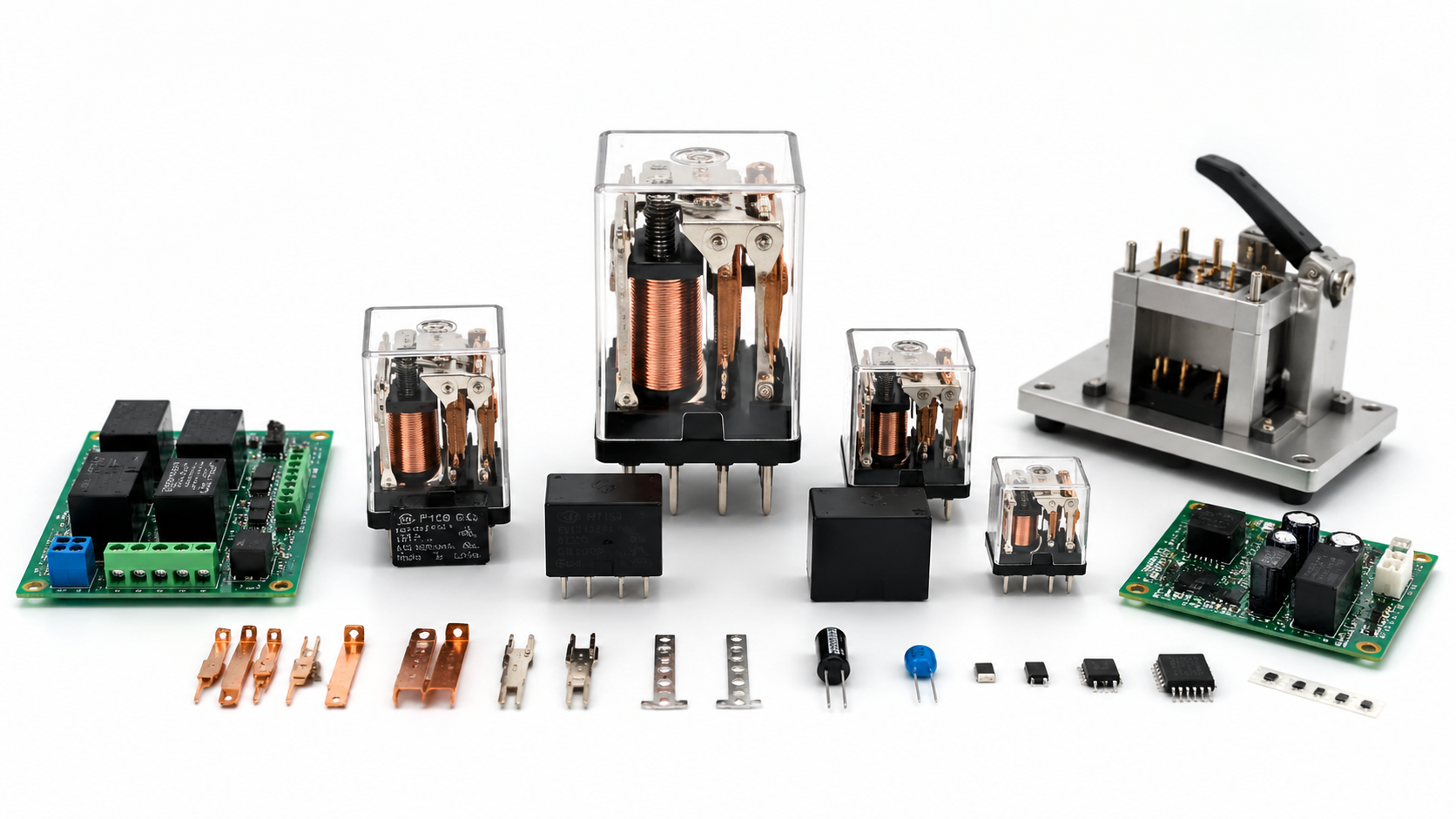
In 2026, the cost of electrical relays is shaped by far more than unit pricing alone. Material volatility, semiconductor compliance, SMT compliance, PCB compliance, thermal management compliance, and circuit board assembly standards all influence sourcing decisions. For engineers, buyers, and project leaders evaluating electronic parts and electromechanical parts, understanding how manufacturing precision, reliability, and supply chain risk affect relay pricing is essential to making cost-effective, high-performance choices.
For B2B teams, relay cost analysis now sits at the intersection of component engineering, sourcing risk, quality control, and lifecycle economics. A relay that appears 8% cheaper on a quotation can become 20% to 35% more expensive after field failures, delayed approvals, extra thermal design work, or inconsistent lot performance are added to the equation.
This is especially relevant in semiconductor equipment, industrial controls, power modules, telecom hardware, automotive-adjacent electronics, and high-reliability EMS programs, where relay selection affects not only BOM cost but also assembly yield, maintenance intervals, and certification readiness. For technical evaluators, procurement leaders, finance approvers, and quality managers, the key question is no longer “What is the relay price?” but “What drives the real relay cost in 2026?”
Material Inputs and Component Architecture Drive the Base Cost
The first layer of electrical relay cost remains the physical bill of materials. Contact metals, coil wire, housing resin, lead frame material, terminal plating, and magnetic core composition all influence the base production cost. In 2026, even a small change in silver alloy content or copper pricing can shift relay quotations by 3% to 12%, especially in medium- to high-volume procurement.
Relay architecture also matters. A simple signal relay with lower switching current, compact housing, and standard pin geometry is structurally less expensive than a power relay designed for 10A, 20A, or 30A loads under elevated temperatures. Latching relays, sealed relays, and relays intended for harsh environments usually carry higher manufacturing costs because they require tighter dimensional tolerances, improved materials, and more demanding validation.
Design complexity extends beyond the relay itself. If the relay is meant to operate on densely populated boards, its thermal footprint, coil power consumption, creepage distance, and solderability become critical. That means the component supplier may need stronger process control during stamping, molding, and plating, which increases the cost before the part even reaches SMT or through-hole assembly.
Procurement teams often miss another hidden factor: package consistency. Relays with tighter coplanarity control, cleaner lead finish, and lower pin deviation can reduce assembly defects by measurable margins, particularly in mixed-technology lines. In high-mix EMS environments, the difference between a relay with ±0.10 mm lead consistency and one with looser tolerances can affect insertion quality, rework rates, and production speed.
Typical cost drivers at the material level
- Silver alloy or silver-tin-oxide contacts for higher switching endurance
- Copper coil and magnetic core quality for stable actuation performance
- High-temperature plastics rated for 105°C to 155°C operating environments
- Sealed housings for dust, humidity, or flux-protection requirements
- Precision terminal plating to improve solder joint reliability and shelf life
The table below summarizes how common design choices influence relay pricing and downstream manufacturing impact.
The main takeaway is that relay cost begins with design intent. A lower-cost relay may be acceptable for non-critical switching, but in applications requiring thermal stability, high cycle life, or controlled assembly performance, a higher initial price often reflects real engineering value rather than supplier margin alone.
Compliance, Testing, and Manufacturing Precision Add Significant Value
In 2026, compliance is no longer a side issue in relay procurement. Semiconductor compatibility, SMT process windows, PCB thermal behavior, and assembly cleanliness can all influence whether a relay is truly production-ready. A relay that passes a basic electrical test but lacks stable solderability, lot traceability, or environmental endurance data can create major qualification delays.
From an EMS perspective, relay cost rises when manufacturers invest in stronger process control. Examples include tighter coil winding consistency, terminal coplanarity inspection, plating thickness control, x-ray or microsection verification for associated assemblies, and environmental stress screening. These steps may add 2% to 9% to the part cost, but they often reduce line disruptions and field risk substantially.
PCB compatibility is another cost factor. Relay pin pitch, pad design suitability, and current path layout affect board complexity. If a relay requires extra copper weight, reinforced vias, larger keep-out zones, or more thermal relief tuning, the “cheap” relay can increase the total assembly cost of the board. This is especially true in compact industrial controllers and power management assemblies where every square centimeter matters.
Thermal management is equally important. Relays operating near 70°C to 105°C ambient conditions may need derating. If the selected relay generates excess coil heat or suffers contact aging under temperature cycling, designers may need to add heat spreading, change board layout, or reduce load current. That engineering effort directly affects development cost and time-to-release.
Why compliance raises cost but lowers risk
A compliant relay is not just a legal or paperwork requirement. It is a part supported by measurable manufacturing discipline. For quality teams, that means stable incoming inspection results. For project managers, it means fewer qualification loops. For after-sales teams, it means fewer intermittent failures that are hard to diagnose in the field.
Common evaluation checkpoints
- Electrical endurance under rated load, often tested over tens of thousands to hundreds of thousands of cycles
- Mechanical endurance for switching repetition, bounce behavior, and contact stability
- Temperature and humidity exposure, such as 85°C/85% RH conditions for defined test durations
- Solderability and terminal finish consistency after storage and handling
- Lot traceability, date coding, and manufacturing process documentation
The following table shows how compliance and manufacturing controls can affect both quoted cost and total operational value.
For organizations managing high-reliability electronics, paying more for verified compliance can be financially rational. The cost of one failed lot, delayed launch, or warranty event may exceed the savings from a lower relay quote by a factor of 5x or more.
Supply Chain Conditions in 2026 Affect Lead Time, MOQ, and Final Pricing
Electrical relay cost in 2026 is also shaped by where and how the part is sourced. Regional manufacturing concentration, upstream metal availability, semiconductor-related scheduling pressure, and logistics conditions all influence lead time and price stability. Even when relays are electromechanical devices, their production still depends on an interconnected electronic supply chain that includes plastics, precision tooling, plating chemistry, and automated assembly capacity.
Buyers should look beyond headline pricing and ask about minimum order quantity, allocation risk, and replenishment rhythm. A relay priced competitively at low volume may carry a 12- to 16-week lead time, while a slightly more expensive alternative may ship in 4 to 8 weeks and support rolling forecasts. For project timelines and production continuity, that difference can be decisive.
Another 2026 pattern is the premium placed on supply chain transparency. Suppliers that can provide stable lot planning, change notifications, and material disclosure often price at a modest premium. However, this premium supports better forecasting for procurement, stronger cost control for finance, and faster approval cycles for engineering and quality departments.
Currency fluctuations and freight volatility also remain relevant. A relay sourced across borders can see effective landed cost rise by 5% to 18% depending on trade terms, packaging density, and route stability. For finance approvers, this means the purchase price should always be reviewed together with logistics, buffer inventory cost, and potential shortage exposure.
Procurement checklist for supply-driven relay pricing
- Confirm standard lead time and expedited lead time under current production loading
- Check MOQ, order multiple, and whether pricing shifts at 1k, 5k, or 10k unit bands
- Review last-time-buy risk, lifecycle status, and change notification practices
- Evaluate whether alternate sources share matching footprint, coil rating, and reliability profile
- Estimate landed cost rather than ex-factory unit price alone
The table below can help teams compare sourcing models for relay purchases across different project needs.
When pricing relay supply, the smartest buyers compare 4 layers at once: piece price, lead time, qualification burden, and continuity risk. In many cases, the most economical option is the supplier with the most predictable process rather than the cheapest quote on day one.
Application Demands Determine Whether a Relay Is Cheap or Expensive in Practice
A relay used in a laboratory instrument, an HVAC control board, a telecom power subsystem, and an industrial motor controller may all look similar on paper, but their real cost profile is very different. Application load, switching frequency, ambient conditions, board density, service life expectations, and maintenance access all influence how much relay value a buyer actually needs.
For example, a low-duty relay switching a light signal path may perform well for years with a standard specification. By contrast, a relay switching inductive loads, repeated inrush current, or elevated current near thermal limits can wear contacts quickly if under-specified. In such cases, choosing a relay with a 10% lower purchase price may shorten service intervals and increase replacement labor cost.
Maintenance teams should also factor in accessibility. If relay replacement requires system shutdown, enclosure disassembly, or recalibration, the service event cost can exceed the component price many times over. This is why field-service economics matter. A relay that lasts 100,000 cycles versus 30,000 cycles can materially reduce operational spending, especially in distributed equipment fleets.
Project leaders and financial approvers should therefore evaluate relay cost across the full operating lifecycle, not just the initial purchase order. The right benchmark is total cost of ownership across 12 to 60 months, depending on the equipment class, service model, and replacement strategy.
Common cost mistakes in application matching
- Selecting by nominal current only and ignoring inrush, surge, or inductive load behavior
- Overlooking ambient heat rise from nearby power devices, transformers, or dense PCB layouts
- Choosing a relay without reviewing cycle life under real duty conditions
- Ignoring maintenance access and field replacement labor time
- Assuming all relays with similar footprint deliver equal endurance and contact stability
Who should look at which cost factor
Engineers should focus on current profile, coil behavior, thermal derating, and board integration. Procurement should focus on lead time, alternate sourcing, and lot consistency. Quality managers should review endurance evidence and incoming stability. Finance should compare initial quote against maintenance burden, scrap risk, and potential line disruption cost.
This cross-functional view is where independent technical benchmarking becomes valuable. Organizations such as SiliconCore Metrics support these decisions by translating manufacturing variables, reliability behavior, and compliance conditions into structured evaluation criteria that both technical teams and sourcing teams can act on.
How to Evaluate Electrical Relay Cost More Accurately in 2026
A practical relay cost evaluation model should combine engineering, sourcing, and operational metrics. Instead of reviewing only unit price, decision-makers should create a weighted assessment that includes 5 core categories: component suitability, compliance readiness, manufacturing consistency, supply continuity, and lifecycle service impact.
For many B2B organizations, a 3-step review process works well. First, screen the relay for electrical and mechanical fit. Second, validate process and compliance compatibility with PCB, SMT, and thermal requirements. Third, compare sourcing scenarios, including MOQ, lead time, logistics cost, and replacement risk. This structure reduces the chance of making a short-term purchase that creates long-term cost exposure.
It is also useful to score supplier responses using measurable criteria. Teams may assign 20% weight to performance fit, 20% to reliability data, 20% to assembly compatibility, 20% to supply chain resilience, and 20% to commercial terms. The exact ratio can change, but the purpose is to prevent price from dominating a decision where technical failure would be far more expensive.
Where qualification stakes are high, independent analysis can shorten evaluation cycles. Benchmarking data on material control, component endurance, PCB interaction, and assembly performance can help procurement and engineering align faster. This is particularly useful when comparing suppliers across different manufacturing regions or when a program requires IPC-Class 3 expectations, ISO 9001 process maturity, or higher environmental reliability.
A practical relay cost evaluation framework
Using this framework, teams can make better decisions across new product introduction, supplier change reviews, and cost-down programs. The result is a more disciplined relay sourcing strategy that protects both performance and financial outcomes.
FAQ
How much can compliance and testing change relay cost?
In many projects, added compliance and reliability validation can increase apparent component cost by around 2% to 10%. However, if that validation prevents qualification delay, field returns, or line rework, the total savings can be much greater than the premium.
Is the cheapest relay ever the best choice for procurement?
Only when the application is low risk, low duty, and easy to service. In most industrial or electronics manufacturing scenarios, the best value comes from balancing unit price with cycle life, assembly compatibility, lead time, and replacement cost.
What lead time should buyers expect in 2026?
Typical relay lead times may range from 4 to 8 weeks for stocked or stable programs and 12 to 16 weeks for constrained, custom, or high-demand supply conditions. Buyers should verify current scheduling at the quotation stage rather than rely on historical assumptions.
Which teams should be involved in relay cost evaluation?
At minimum, involve engineering, procurement, quality, and finance. For service-intensive equipment, maintenance or after-sales teams should also participate because replacement labor and downtime can materially change the real cost picture.
Electrical relay cost in 2026 is shaped by materials, design complexity, compliance burden, manufacturing precision, supply chain resilience, and application-specific lifecycle demands. The most effective sourcing decisions come from evaluating the relay as part of a complete electronics system rather than treating it as an isolated line item.
For organizations that need deeper visibility into electronic parts, electromechanical component reliability, PCB and SMT compatibility, and supplier-side manufacturing quality, SiliconCore Metrics provides the structured technical insight needed to reduce risk and improve procurement confidence. Contact us to discuss benchmarking support, relay evaluation criteria, or broader component sourcing intelligence for your next project.
- PCB
- IPC-Class 3
- EMS
- thermal management
- environmental stress
- ISO 9001
- component reliability
- SMT process
- thermal management compliance
- PCB compliance
- SMT compliance
- semiconductor compliance
- circuit board assembly
- electronic parts
- semiconductor
- high-performance
- electromechanical parts
- relays
- electrical relays
- latching relays
Recommended News
- RelaysHow to vet an industrial automation distributor for genuine relaysVet an industrial automation distributor with confidence. Learn how to verify relay authenticity, traceability, and quality controls to reduce downtime and sourcing risks.
- RelaysWhat Standard Tests Measure Relay Contact Resistance Degradation?Are there standard test methods for relay contact resistance degradation? Explore IEC standards, endurance testing, Kelvin measurement, and environmental validation for reliable relay sourcing.
- RelaysVietnam Tariff Shift Favors China-Origin Relays Until 2027Vietnam tariff shift favors China-origin relays until 2027. Learn how the 3% tax on non-ASEAN relay imports impacts sourcing, costs, and procurement strategy in Vietnam.
- RelaysJapan Enforces JIS C 5012:2026 Relay EMI Test RuleJapan Enforces JIS C 5012:2026 Relay EMI Test Rule: learn how the new 1.8-2.4 GHz radiated immunity and IEC 61000-4-3:2024 report requirements may impact relay compliance, cost, and Japan market access.
- RelaysWhen a Relay Switches Factory Becomes a Risk to Product QualityRelay switches factory risks can quietly damage product quality, safety, and reliability. Learn the warning signs, audit points, and how to choose a stable supplier.
- RelaysHow to Compare Relay Switches Factory Capabilities for Stable SupplyRelay switches factory comparison starts with capacity, quality control, traceability, and lead time stability. Learn how to identify reliable suppliers and reduce sourcing risk.