
Time Delay Relays Explained: Common Settings, Uses, and Mistakes
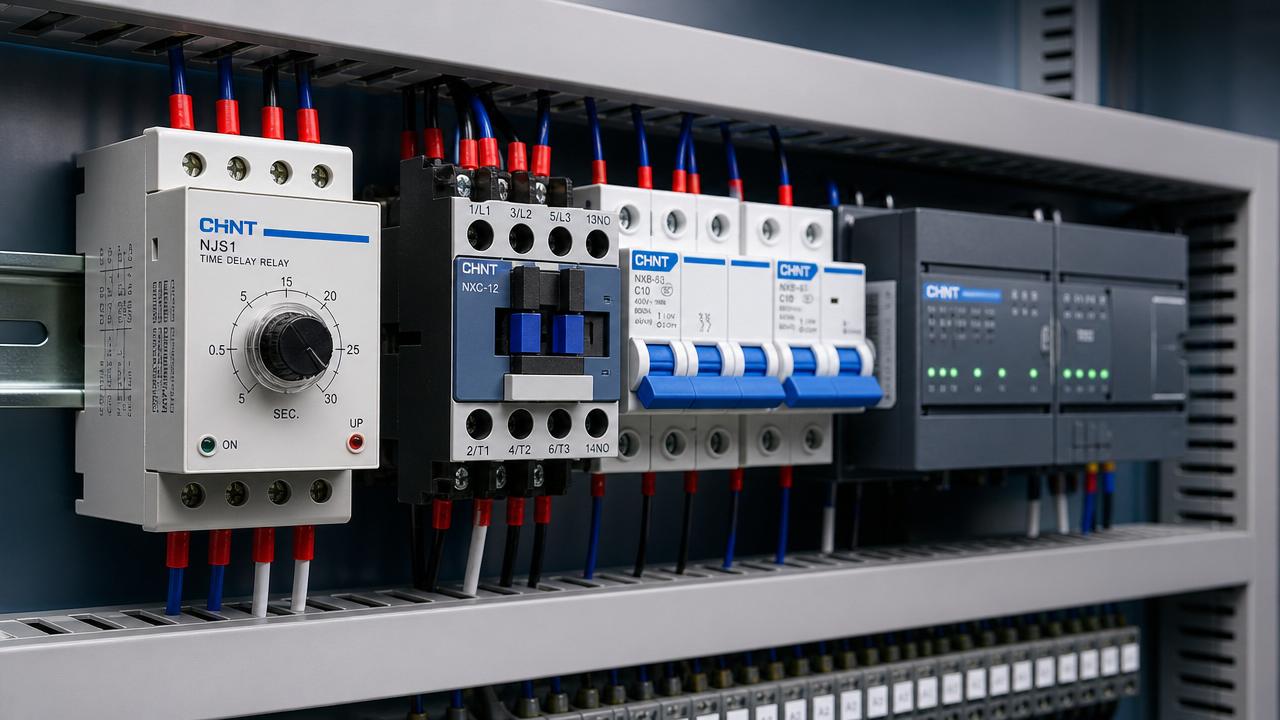
DETAILS
For after-sales maintenance teams, understanding time delay relays is essential to diagnosing startup faults, preventing nuisance trips, and extending equipment life. This guide explains how time delay relays work, which settings matter most in real service scenarios, where they are commonly used, and the mistakes that often lead to downtime, misdiagnosis, or unnecessary component replacement.
What do time delay relays actually do in maintenance work?
Time delay relays are control devices that intentionally delay a switching action. Instead of changing state the moment a control signal appears or disappears, they wait for a preset interval. For after-sales maintenance personnel, that delay is often the difference between smooth sequencing and repeated field complaints.
In industrial electronics, HVAC systems, compressors, pumps, conveyors, power supplies, and semiconductor support equipment, time delay relays help coordinate motors, contactors, heaters, alarms, fans, and safety interlocks. Their role is not only functional but diagnostic. When startup timing drifts, relays are frequently blamed first, even though the real problem may be voltage instability, contact wear, heat, or incorrect settings.
This matters in the broader electronics and EMS supply chain because maintenance teams are expected to restore uptime quickly while controlling replacement cost. SCM’s technical perspective is relevant here: relay behavior cannot be evaluated in isolation. PCB quality, component tolerance, thermal exposure, connector integrity, and environmental stress all influence long-term timing performance.
- They prevent simultaneous inrush events that can trip breakers or sag control voltage.
- They create controlled startup and shutdown sequences between motors, fans, heaters, or alarms.
- They reduce mechanical shock by spacing load transitions instead of switching everything at once.
- They help maintenance teams isolate whether a fault is timing-related, load-related, or caused by another control component.
The most common timing logic you will encounter
Although product labeling differs by manufacturer, most time delay relays fall into a few service-relevant categories. On-delay units wait before energizing the output. Off-delay units keep the output active for a set period after the trigger disappears. Interval timers change output for a fixed duration, while repeat-cycle timers alternate ON and OFF states in a loop.
For troubleshooting, the key question is simple: does the delay occur when power is applied, when the trigger is removed, or in a repeating sequence? Maintenance delays often happen because technicians replace a relay with the wrong timing function even when voltage and terminal layout seem correct.
Which time delay relay settings matter most in real service scenarios?
After-sales teams usually care less about catalog language and more about the settings that decide whether the machine starts, stops, or trips. The practical issue is not just nominal delay range. It is whether the relay’s settings match field conditions such as supply fluctuation, ambient heat, control cabinet density, and actual load behavior.
The table below summarizes the time delay relay parameters that most often affect maintenance outcomes, replacement decisions, and callback rates.
For maintenance teams, contact rating and reset behavior are often underestimated. A relay may appear electrically compatible on paper, yet fail early because it is switching an inductive coil, solenoid, or motor starter without adequate derating. In many service calls, the root cause is not “bad relay quality” but a mismatch between application stress and selected output capacity.
How to interpret timing complaints correctly
If a customer reports delayed startup, random shutdown, or fan sequencing issues, verify three things before replacing the time delay relay. First, measure actual control voltage during the event. Second, confirm the relay mode and knob setting against the wiring diagram. Third, inspect whether ambient temperature or cabinet contamination may be affecting timing stability.
- Record the trigger condition: power-on, signal removal, or recurring cycle.
- Measure control supply under load, not just open-circuit panel voltage.
- Check whether the relay output is driving a contactor coil, alarm lamp, valve, or another relay.
- Review recent changes such as a new power supply, longer cable run, or enclosure heat buildup.
Where are time delay relays commonly used, and why do failures show up there first?
Time delay relays appear in many sectors, but after-sales technicians most often encounter them where sequencing protects equipment from stress. In mixed industrial environments, that includes motor restarts, fan delay shutdown, anti-short-cycle compressor control, pump alternation support, alarm hold, and staged heating or cooling.
Because SCM tracks component reliability across the semiconductor and EMS supply chain, one practical lesson stands out: timing devices are especially vulnerable where electrical transients, heat concentration, and vibration coexist. A relay mounted in a crowded cabinet beside hot power components or noisy switching loads will age differently from the same part in a mild control environment.
The following table helps maintenance teams map common application scenarios to the time delay relay function usually involved and the typical service symptom.
A useful service rule is this: when a machine complaint seems intermittent, review the application context before assuming the time delay relay is defective. Many “relay faults” are actually side effects of overloaded outputs, delayed contactor pull-in, poor ventilation, or unstable sensor signals feeding the timer.
How should after-sales teams choose a replacement time delay relay?
Selecting a replacement time delay relay under service pressure is difficult because the wrong substitute may restore operation temporarily but create another failure mode later. Maintenance teams need a method that balances speed, compatibility, and lifecycle risk.
A practical selection checklist
- Match the timing function first. On-delay and off-delay are not interchangeable, even when terminals look similar.
- Verify supply voltage tolerance, especially in equipment prone to dips during startup or under long cable runs.
- Check contact arrangement and load type. A relay driving an inductive coil needs more caution than one switching a logic input.
- Review environmental conditions such as enclosure heat, dust, moisture, and vibration.
- Assess whether documented standards or internal customer requirements demand traceable components or known suppliers.
For organizations that support electronics-intensive assets, SCM’s benchmarking mindset is valuable during sourcing. Independent review of component consistency, thermal resilience, and long-term reliability helps prevent repeat service visits caused by marginal substitutes. In environments where micro-tolerance and uptime matter, price-only selection often produces the highest total maintenance cost.
Replacement versus redesign decision points
Sometimes replacing the time delay relay is the right fix. Sometimes it only masks a deeper control design issue. If multiple timer failures occur in the same panel position, examine heat sources, snubber protection, contactor coil condition, and power quality. A repeated failure pattern usually indicates stress on the circuit, not bad luck with parts.
What mistakes cause the most downtime with time delay relays?
The biggest service mistakes are rarely complex. They come from assumptions made under time pressure. A technician sees the same package style, the same base, and the same nominal voltage, installs the relay, and the machine still misbehaves. Below are the errors that most often turn a quick repair into repeated downtime.
Common mistakes maintenance teams should avoid
- Confusing timing mode with timing range. A 0 to 10 second unit and a 0 to 10 minute unit may share controls, but a mode mismatch will break sequence logic immediately.
- Ignoring load derating. Switching inductive loads at nameplate maximum can shorten relay life dramatically.
- Adjusting the delay without checking upstream causes. If pressure, temperature, or motor acceleration changed, timing may be compensating for another fault.
- Skipping voltage measurements during operation. Control voltage that looks normal at rest may collapse during actuation.
- Replacing the relay but not inspecting terminals, socket tension, or oxidation. Poor connections can imitate timer instability.
These mistakes are particularly costly in electronics manufacturing support systems and semiconductor-adjacent equipment, where timing can influence thermal stabilization, purge steps, fan management, or sequence interlocks. Even a small deviation can trigger false alarms or process interruptions upstream.
Do standards, reliability data, and supply chain quality matter for time delay relays?
Yes. For after-sales maintenance, compliance and traceability are not abstract procurement concerns. They affect whether a replacement relay performs consistently across sites and over time. In critical support equipment, teams should care about documented manufacturing quality, repeatability, and compatibility with the broader control architecture.
SCM’s role as an independent technical repository is useful here because maintenance decisions increasingly depend on more than a datasheet. Evaluating component durability under thermal stress, confirming manufacturing consistency, and aligning sourcing with recognized quality frameworks can reduce repeat interventions and hidden risk.
- Use documented parts and preserve replacement records for recurring fault analysis.
- When available, align sourcing with suppliers operating under recognized quality systems such as ISO 9001.
- If the equipment supports high-reliability electronics production, consider whether the wider assembly environment targets demanding quality expectations such as IPC-Class 3.
- Do not separate component choice from board quality, thermal design, and cabinet layout. Relay performance depends on the whole system.
FAQ: the questions maintenance teams ask most about time delay relays
How do I know if a time delay relay is bad or just misadjusted?
Start by verifying the intended timing mode and the actual knob or dip-switch setting. Then measure control voltage during the trigger event and inspect the output load. If the delay changes unpredictably between cycles, look for thermal drift, weak sockets, or unstable input signals. A relay that performs consistently but at the wrong interval is often misadjusted, not failed.
Are solid-state timers always better than electromechanical time delay relays?
Not always. Solid-state designs often offer better repeatability and less mechanical wear, but the best choice depends on load type, noise environment, replacement compatibility, and serviceability. In some field situations, a direct form-fit-function replacement is preferable to a theoretically better technology that forces rewiring or changes failure behavior.
Why does a new time delay relay still cause nuisance trips?
Because the relay may not be the root cause. Common reasons include undervoltage at startup, contactor coil issues, wrong timing function, excessive inrush current elsewhere in the panel, or process conditions that changed over time. A new timer can expose these issues more clearly, but it cannot correct them on its own.
What should procurement and maintenance review together before buying replacements?
They should review function type, voltage, contact rating, environmental conditions, mounting format, expected service life, supplier consistency, and any internal documentation requirements. If downtime cost is high, they should also compare lifecycle reliability rather than unit price alone. That is where independent technical benchmarking can support a stronger sourcing decision.
Why work with SCM when evaluating timing components and replacement risk?
For maintenance teams, the challenge is rarely just finding any time delay relay. The real challenge is choosing a component and sourcing path that reduce repeat faults, fit the actual control environment, and align with broader electronics reliability expectations. SCM supports that decision process with data-driven technical insight across PCB fabrication, SMT assembly, active semiconductors, passive components, and thermal packaging.
If you need support, the most useful discussion points usually include timing parameter confirmation, replacement function matching, load and contact rating review, thermal or environmental stress concerns, compliance expectations, sample evaluation, delivery planning, and quote comparison. SCM can help engineering and procurement teams turn those variables into a clearer maintenance and sourcing decision.
Contact us if you want to review a time delay relay application, compare substitute options, assess long-term reliability risk, or organize a more structured component selection process for electronics-intensive equipment and EMS-related supply chains.
Recommended News
- RelaysHow to vet an industrial automation distributor for genuine relaysVet an industrial automation distributor with confidence. Learn how to verify relay authenticity, traceability, and quality controls to reduce downtime and sourcing risks.
- RelaysWhat Standard Tests Measure Relay Contact Resistance Degradation?Are there standard test methods for relay contact resistance degradation? Explore IEC standards, endurance testing, Kelvin measurement, and environmental validation for reliable relay sourcing.
- RelaysVietnam Tariff Shift Favors China-Origin Relays Until 2027Vietnam tariff shift favors China-origin relays until 2027. Learn how the 3% tax on non-ASEAN relay imports impacts sourcing, costs, and procurement strategy in Vietnam.
- RelaysJapan Enforces JIS C 5012:2026 Relay EMI Test RuleJapan Enforces JIS C 5012:2026 Relay EMI Test Rule: learn how the new 1.8-2.4 GHz radiated immunity and IEC 61000-4-3:2024 report requirements may impact relay compliance, cost, and Japan market access.
- RelaysWhen a Relay Switches Factory Becomes a Risk to Product QualityRelay switches factory risks can quietly damage product quality, safety, and reliability. Learn the warning signs, audit points, and how to choose a stable supplier.
- RelaysHow to Compare Relay Switches Factory Capabilities for Stable SupplyRelay switches factory comparison starts with capacity, quality control, traceability, and lead time stability. Learn how to identify reliable suppliers and reduce sourcing risk.