
How to Audit Electronic Parts Before Incoming QC
DETAILS
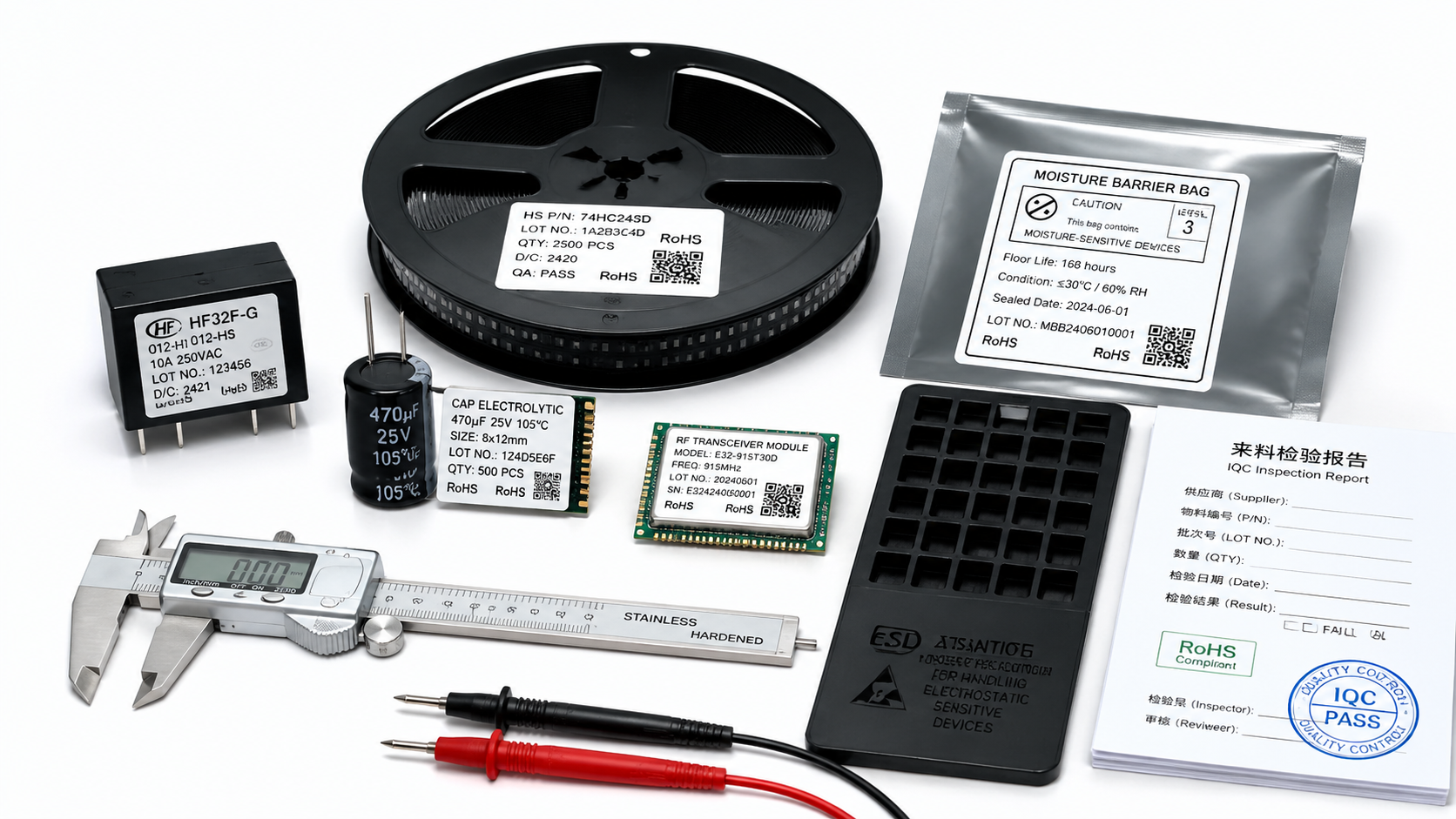
Before incoming QC begins, every batch of electronic parts should be audited against function, traceability, and compliance risks. From electrical relays, industrial capacitors, and circuit capacitors to RF receiver, RF transmitter, and RF transceiver modules, a structured review helps teams verify circuit components, soldering techniques, pick and place specifications, and semiconductor compliance before circuit board assembly delays or failures occur.
For most engineering, procurement, and quality teams, the real question is not whether incoming inspection matters, but how to audit electronic parts efficiently enough to catch high-risk issues before they become production losses, field failures, or supplier disputes. A useful incoming QC audit should confirm three things early: the parts are what they claim to be, they are fit for the intended application, and the shipment meets documentation, handling, and compliance requirements. If these points are missed, even visually acceptable components can create hidden risks in SMT assembly, rework yield, reliability performance, and customer acceptance.
What an Incoming QC Audit Must Prove Before Parts Reach Production
An effective audit of electronic parts is a decision gate, not just a box-checking exercise. Before materials are released to stock or line-side use, the audit should establish whether the batch is authentic, traceable, specification-matched, and safe to process. This matters across active semiconductors, passive components, electromechanical devices, and RF modules because each category can fail differently.
At a minimum, incoming QC should verify:
- Identity: manufacturer, part number, revision, date code, lot code, and labeling consistency
- Traceability: packing list, certificate of conformity, test reports, and supplier chain visibility
- Physical condition: packaging integrity, moisture sensitivity exposure, lead finish condition, corrosion, bent terminals, contamination, and handling damage
- Specification match: electrical rating, capacitance, tolerance, frequency band, package type, footprint, and temperature range
- Compliance: RoHS, REACH, halogen status, IPC expectations, and customer-specific requirements
- Process readiness: solderability, pick and place compatibility, MSL handling, and storage condition
If the audit cannot answer these points clearly, the batch should not move directly into circuit board assembly. The cost of holding suspect material is usually lower than the cost of line stoppage, customer returns, or latent field failures.
Why Teams Audit Before Incoming QC Instead of Relying on Visual Inspection Alone
Visual inspection is necessary, but it is not enough. Many critical defects in electronic parts do not appear obvious at first glance. Counterfeit devices may carry convincing markings. Moisture-damaged ICs may look normal before reflow. A capacitor may meet the package size requirement while missing the voltage derating needed for the real application. An RF transceiver module may be electrically functional but fail regional certification or firmware revision expectations.
This is why a pre-QC audit should combine documentation review, risk classification, and targeted inspection planning. In practice, that means deciding which parts need only standard receiving checks and which require enhanced controls such as sample electrical testing, decapsulation review through specialist labs, X-ray analysis, solderability tests, or dimensional verification.
For procurement and project managers, this structured approach also supports better commercial control. It creates a documented basis for supplier claims, nonconformance reports, debit recovery, and future vendor qualification decisions.
How to Classify Electronic Parts by Audit Risk
Not all incoming parts deserve the same level of scrutiny. A practical audit system prioritizes resources based on component criticality, sourcing route, and failure impact. This is especially important for organizations balancing engineering rigor with purchasing speed and inventory turnover.
A simple risk model often works well:
- High risk: active semiconductors, obsolete parts, broker-sourced items, safety-related components, RF modules, automotive or industrial-grade parts, and components with moisture sensitivity requirements
- Medium risk: standard passives from approved vendors, relays, connectors, inductors, and power management devices with known quality histories
- Lower risk: stable, high-volume commodity parts from tightly controlled and repeatedly validated suppliers
Risk classification should consider:
- Application criticality
- Supplier approval status
- Country and channel of origin
- Part age and life-cycle status
- Sensitivity to ESD, moisture, and oxidation
- History of nonconformance or field returns
- Complexity of verification
By using this model, teams can avoid over-inspecting low-risk material while applying deeper controls where hidden defects are more likely and more costly.
Documentation Review: The Fastest Way to Catch Traceability and Compliance Problems
For many batches, the first audit failure appears on paper before it appears under a microscope. Documentation review is one of the most efficient ways to detect supply chain risk early.
Check the following records against the purchase order, approved vendor list, and engineering requirements:
- Manufacturer name and exact part number
- Lot code, date code, and country of origin
- Certificate of conformity
- RoHS/REACH declarations
- Material safety or special substance statements if required
- Test data or factory inspection reports for controlled items
- Packing method and MSL label details for moisture-sensitive parts
- Any change notification affecting revision, die source, plating, or packaging
Common red flags include inconsistent date codes, relabeled reels, missing manufacturer documentation, mismatched quantity records, nonstandard labels, and vague origin statements. For financial approvers and business evaluators, these issues are not minor clerical gaps; they directly affect liability, warranty exposure, and the ability to make claims if the material later fails.
Physical Inspection Checklist for Electronic Parts at Goods Receipt
Once documentation passes, physical inspection should confirm that the shipped material is intact and process-ready. This step should be tailored by component family.
For semiconductors and ICs:
- Check package marking clarity and consistency
- Inspect for resurfacing, sanding, remarking, or top-coat irregularities
- Review lead coplanarity and oxidation
- Confirm package type matches BOM and land pattern
- Verify moisture barrier bag condition, desiccant, and humidity card status
For capacitors and passive components:
- Confirm value, tolerance, voltage rating, and dielectric type
- Inspect end terminations for chipping, cracking, or contamination
- Check reel condition and orientation for pick and place use
- Verify packaging quantity and label integrity
For relays, connectors, and electromechanical parts:
- Inspect terminals, housings, moving elements, and seal condition
- Check pin geometry and mounting dimensions
- Verify coil or contact ratings against the specification
For RF receiver, transmitter, and transceiver modules:
- Verify module revision and certification markings
- Confirm shield can condition, antenna interface integrity, and pad cleanliness
- Check for storage or transport damage affecting RF performance
These checks should be documented with acceptance criteria, sample size logic, and image-supported evidence where needed.
Electrical and Functional Checks: When Visual Acceptance Is Not Enough
Many organizations ask whether incoming QC should include electrical testing. The answer depends on risk, but for many critical components, some level of functional verification is highly advisable.
Examples include:
- Capacitance, ESR, insulation resistance, and leakage checks for industrial and circuit capacitors
- Coil resistance and switching verification for electrical relays
- Basic power-up, interface response, or current draw screening for modules
- Sampling tests for transistor or diode junction behavior
- Solderability testing for aged or high-risk stock
Electrical verification is especially useful when sourcing through distribution channels with variable storage conditions or when the part has a known counterfeit exposure history. Even limited sample testing can prevent major downstream losses.
For technical evaluators, the key is to align test depth with failure mode. If a part is likely to suffer from moisture damage, solderability degradation, or parameter drift, the audit plan should target those mechanisms rather than applying generic checks that produce little value.
How to Audit Parts for SMT Assembly Compatibility
Incoming quality should not be separated from manufacturing reality. A part can be genuine and compliant yet still cause production problems if it is poorly matched to SMT assembly conditions.
Before release, verify compatibility with the planned process:
- Package dimensions and land pattern fit
- Reel orientation and tape pocket quality
- Pick and place nozzle suitability
- Coplanarity and lead condition
- Moisture sensitivity level and floor-life control
- Reflow profile tolerance
- Solder finish compatibility with the assembly process
This is where incoming audit adds direct operational value. It reduces nozzle pickup failures, feeder jams, tombstoning, insufficient solder joints, head-in-pillow concerns, and unnecessary rework. For project leaders and operations teams, this translates into more stable line performance and more predictable delivery schedules.
Common Audit Failures That Lead to Expensive Downstream Problems
Teams often underestimate how small incoming issues create large downstream costs. The most common audit failures include:
- Wrong part supplied under a similar part number
- Unapproved source substitution
- Mixed date or lot codes in one reel or tray
- Expired or improperly handled moisture-sensitive devices
- Oxidized leads affecting solderability
- Counterfeit or remarked integrated circuits
- Incomplete compliance records
- Dimension mismatch affecting PCB fit or enclosure assembly
- Parts damaged during transport but not visible in outer packaging
When these failures are missed, the result may be line stoppage, abnormal defect rates, engineering investigation time, customer delays, and disputes over liability. A disciplined audit process is therefore both a quality tool and a cost-control mechanism.
How to Build a Practical Incoming Audit Workflow
A strong workflow should be repeatable, risk-based, and easy for quality, procurement, and engineering teams to follow together. A practical sequence looks like this:
- PO and supplier cross-check: confirm source approval and purchasing requirements
- Document audit: verify traceability, conformity, and compliance records
- Risk classification: determine inspection depth by part type and sourcing risk
- Packaging and handling review: inspect MSL, ESD, and transport condition
- Visual and dimensional inspection: check identity and physical integrity
- Sample electrical or functional testing: apply where risk justifies it
- Disposition decision: accept, quarantine, reject, or escalate for engineering review
- Record retention: maintain evidence for audits, claims, and trend analysis
The best workflows also include feedback loops. If repeated issues appear with a vendor, the findings should update supplier scorecards, sourcing restrictions, and approved manufacturer lists.
What Different Stakeholders Need from the Audit Process
Because incoming QC affects multiple business functions, the audit output should serve more than one audience.
- Quality teams need objective acceptance criteria and defect evidence
- Engineers need confidence that parts meet design and process requirements
- Procurement teams need documentation to challenge suppliers and improve sourcing decisions
- Project managers need faster release decisions and fewer production surprises
- Financial approvers need risk visibility tied to warranty, scrap, and delay costs
- After-sales and service teams need stronger prevention of latent field failures
When the audit process is designed around these needs, it becomes easier to justify investment in incoming controls. The return is not only fewer defects, but stronger traceability, better supplier accountability, and more reliable program execution.
Conclusion: A Good Incoming Parts Audit Prevents Problems Before QC Has to Contain Them
Auditing electronic parts before incoming QC is most effective when it focuses on the questions that matter most: Is the part genuine, traceable, compliant, and suitable for the intended assembly and operating environment? A strong process does not rely on appearance alone. It combines documentation review, risk-based inspection, targeted testing, and manufacturing-readiness checks.
For organizations working across semiconductors, passive components, PCB assembly, and RF electronics, this approach reduces quality escapes, sourcing uncertainty, and avoidable production losses. In practical terms, the best incoming audit is the one that helps teams make a confident release or quarantine decision early, with evidence strong enough to support engineering, purchasing, and commercial action.
If incoming QC is expected to protect yield, reliability, and compliance, the audit that comes before it must be structured with the same discipline.
- PCB
- SMT assembly
- active semiconductors
- passive components
- EMS
- PCB assembly
- semiconductor compliance
- circuit board assembly
- pick and place specifications
- soldering techniques
- electronic parts
- circuit components
- semiconductor
- RF modules
- RF transceiver
- RF transmitter
- RF receiver
- electromechanical parts
- circuit capacitors
- industrial capacitors
- relays
- electrical relays
- connectors
Recommended News
- ConnectorsHow to compare connector suppliers when quoted prices differSupplier comparison price guide for connector sourcing: compare technical fit, landed cost, quality, lead times, and supplier risk to make confident purchasing decisions.
- ConnectorsHow to assess connector quality when sourcing electronic components in SingaporeElectronic components Singapore sourcing guide: assess connector quality, traceability, plating, mechanical reliability, and supplier controls to reduce costly failures.
- ConnectorsHow to prevent connector corrosion in aquaculture installationsAquaculture installations need reliable connectors. Discover practical ways to prevent corrosion with smart sealing, material selection, cable routing, and maintenance.
- ConnectorsHow to select automotive connector systems for high-vibration environmentsAutomotive connector systems for high-vibration environments: learn how to evaluate contact stability, sealing, locking, harness support, and qualification evidence.
- ConnectorsWhen should you source from a connector systems wholesaler?connector systems wholesaler: learn when wholesale sourcing reduces supply risk, controls total cost, and protects production with qualified, reliable availability.
- ConnectorsHow to select connector systems for telecom exposed to vibrationConnector systems for telecom exposed to vibration demand more than basic specs. Learn how to protect signal integrity, retention, and reliability with smarter selection criteria.