
Reflow Soldering in 2026: What Is Changing
DETAILS
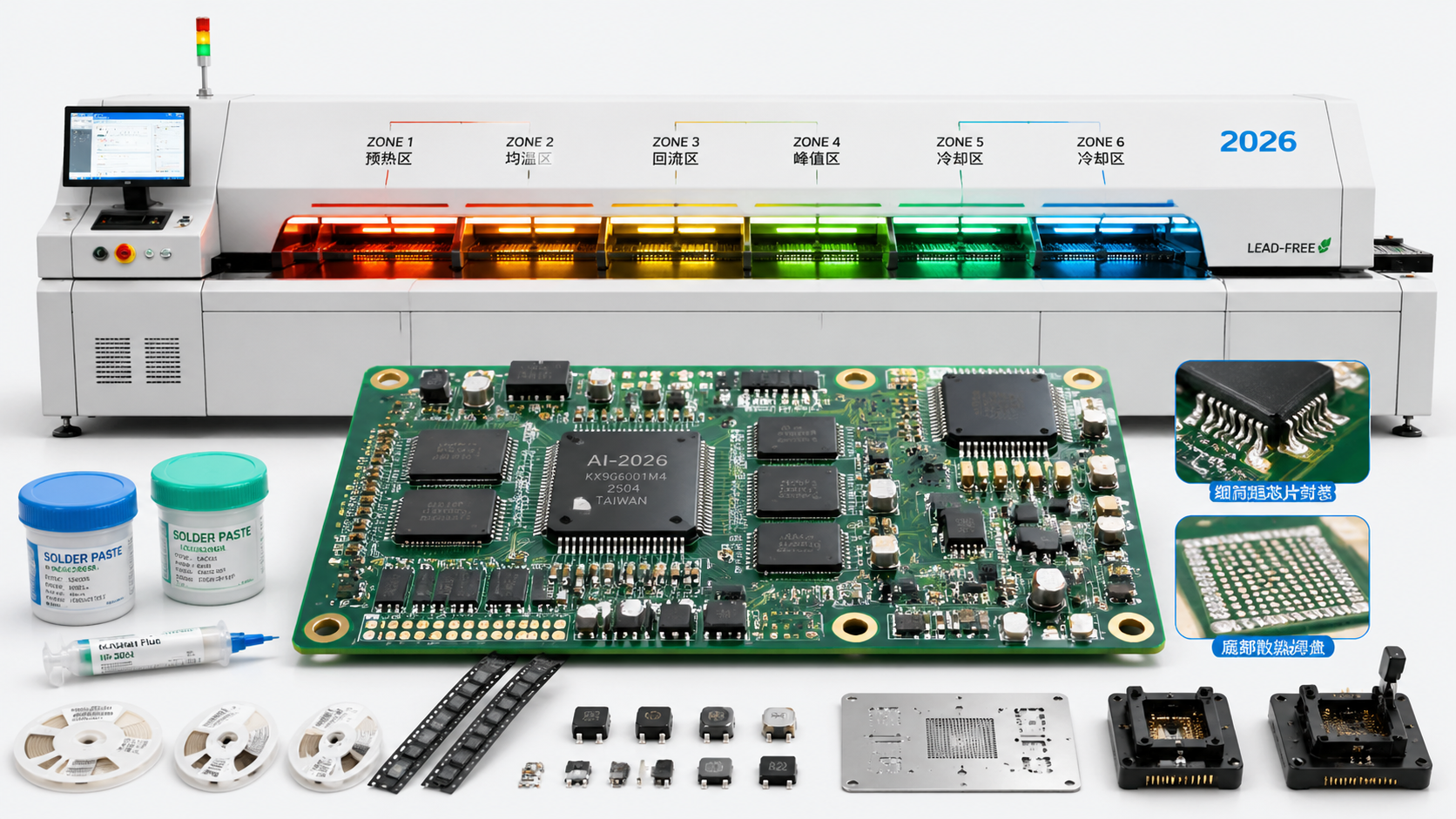
In 2026, reflow soldering is no longer just a standard SMT process checkpoint. It is becoming a control point for yield, reliability, compliance, and total manufacturing cost. For engineers, procurement teams, quality managers, and project leads, the real change is not that ovens suddenly work differently. The change is that process windows are getting tighter, materials are becoming more demanding, component packages are more thermally sensitive, and the cost of a poor profile is rising across the full electronics manufacturing lifecycle. The practical takeaway is clear: companies that still treat reflow as a routine production setting risk more defects, weaker field reliability, and slower qualification cycles.
For most readers searching this topic, the core question is simple: what is actually changing in reflow soldering in 2026, and what should we do differently? The answer centers on five shifts: narrower thermal margins, increasing use of advanced and mixed materials, stronger traceability and compliance requirements, higher expectations for process validation, and closer coordination between design, sourcing, SMT assembly, and quality control. These are the issues that matter most when selecting suppliers, approving process changes, evaluating equipment capability, or maintaining IPC-Class 3 performance targets.
What Is Really Changing in Reflow Soldering in 2026?
The biggest shift in 2026 is that reflow soldering is being evaluated less as an isolated oven step and more as a system-level reliability variable. In past years, many manufacturers could achieve acceptable output with broadly optimized profiles and standard solder paste assumptions. That approach is becoming less effective because assemblies now combine finer-pitch packages, denser PCB layouts, larger thermal mass differences, more sensitive semiconductor packages, and stricter customer qualification criteria.
In practical terms, the process is changing in these ways:
- Tighter process windows: Acceptable peak temperature, time above liquidus, and ramp-rate margins are shrinking for advanced packages and mixed-technology boards.
- More material interaction risk: PCB laminates, surface finishes, solder pastes, underfills, thermal interface materials, and component terminations interact more strongly than before.
- Higher reliability expectations: Reflow is now directly tied to long-term concerns such as voiding, head-in-pillow defects, brittle intermetallic behavior, warpage-driven opens, and early thermal fatigue.
- Data-driven qualification: Customers and internal quality teams increasingly expect validated thermal profiling, Cp/Cpk-style process evidence, and traceable lot-level documentation.
- Closer link to procurement decisions: Supplier comparison now includes not just price and lead time, but actual reflow capability, oven uniformity, profile repeatability, and defect escape rates.
For decision-makers, this means reflow soldering in 2026 is changing from a production setting exercise into a cross-functional engineering and supply chain issue.
Why Are Process Windows Getting Harder to Manage?
The short answer is product complexity. Modern electronic assemblies increasingly combine small passive components, large bottom-terminated components, high-I/O semiconductors, thermal pads, heavy copper regions, and multi-layer PCB structures on the same board. A single profile must often support components with very different thermal behaviors.
This creates several common problems:
- Uneven heating across the assembly: High-mass sections lag while small parts may overheat.
- Package and PCB warpage: As package sizes and densities increase, coplanarity challenges become more serious during peak reflow.
- Solder joint inconsistency: Different pad designs, finishes, and stencil deposits can behave very differently under the same profile.
- Flux activation trade-offs: A profile optimized for one paste chemistry may underperform or over-stress another material system.
This is especially relevant for users involved in circuit board assembly for automotive electronics, industrial controls, communications hardware, power modules, and high-reliability computing systems. In these environments, a profile that merely “passes AOI” is no longer enough. Teams need to understand how the profile affects intermetallic growth, void content, wetting consistency, component stress, and long-term performance under thermal cycling.
For operators and process engineers, the implication is clear: recipe reuse across similar boards is becoming less dependable. For project leaders and buyers, it means supplier claims about “standard reflow capability” should be verified with profile and defect data, not accepted at face value.
How New Materials Are Changing Reflow Requirements
Another major change in 2026 is the growing impact of material selection. Reflow outcomes are increasingly shaped by the combination of solder alloy, flux chemistry, PCB construction, surface finish, and component metallurgy. This matters because many EMS lines are now processing broader product mixes under tighter turnaround schedules.
The most important material-related developments include:
- More demanding lead-free profiles: Lead-free soldering remains standard, but reliability expectations are pushing teams to optimize more carefully around thermal stress and wetting quality.
- Greater sensitivity to laminate performance: High-layer-count and high-frequency PCB materials can respond differently to repeated thermal cycles, moisture exposure, and peak reflow conditions.
- Increased attention to surface finish compatibility: ENIG, OSP, immersion silver, and other finishes can introduce different wetting and shelf-life considerations.
- Higher risk in mixed-material assemblies: Boards with varied component package types, thermal pads, and shielding features are harder to profile consistently.
- Thermal management materials entering the process envelope: As thermal packaging becomes more critical, adjacent material systems must be considered for their heat tolerance and process compatibility.
This is where technical evaluation teams should be especially careful. If a supplier changes solder paste brand, PCB source, laminate stack-up, or component source without equivalent revalidation, reflow results may shift even if the nominal oven profile remains unchanged. Procurement teams often focus on price variance, but in 2026, second-order process effects from material substitutions can erase those savings through scrap, rework, and field failures.
Which Defects and Reliability Risks Matter Most Now?
Not all soldering defects carry the same business impact. In 2026, the most important trend is that latent reliability risks are receiving more attention than cosmetic or easily repairable defects. Quality and safety teams are focusing more on defects that may escape production screening but fail in the field.
Key concerns include:
- Voiding under thermal pads: Particularly critical for power devices and thermal management performance.
- Head-in-pillow and non-wet opens: Often linked to warpage, oxidation, or poorly matched profile settings.
- Excessive intermetallic growth: Can reduce long-term mechanical reliability under cyclic stress.
- Tombstoning and skew: Still relevant for small passive components, especially as placement speed and thermal imbalance interact.
- Package cracking or hidden stress damage: A concern where moisture control and thermal ramp discipline are weak.
- Cold joints or insufficient wetting: More likely where the profile is too conservative for the actual board and paste combination.
What has changed is the way these issues are judged. Companies increasingly want measurable thresholds, not general statements. For example, rather than asking whether a process is “stable,” they want to know:
- How much profile variation exists across lanes and zones?
- What is the voiding distribution by package type?
- How repeatable is time above liquidus across lots?
- What defect types are correlated with specific board designs or material sources?
- How often do process drifts require line intervention?
That shift favors manufacturers and technical partners that can provide benchmark-style evidence rather than general process assurances.
What Engineers, Buyers, and Quality Teams Should Ask Suppliers in 2026
For many readers, the most useful question is not “what is reflow soldering?” but “how do I evaluate whether a supplier or internal line is ready for 2026 requirements?” Below are the questions that create real decision value.
For process and manufacturing engineers:
- What is the validated profile window for this assembly family?
- How is thermal uniformity verified across different board positions and load conditions?
- How are warpage-sensitive or bottom-terminated components characterized?
- What reflow-related defects are currently the top Pareto drivers?
- How often are recipes requalified after material or design changes?
For procurement and commercial evaluation teams:
- Can the supplier provide defect-rate history by package class or board type?
- What evidence shows consistent performance with high-reliability assemblies?
- How are substitute materials approved and documented?
- What are the scrap, rework, and yield impacts associated with this process capability?
- Does the supplier support traceable compliance reporting aligned with IPC and ISO expectations?
For quality, safety, and project leadership teams:
- What controls exist for moisture-sensitive devices and pre-reflow handling?
- How are oven calibration, profiling frequency, and preventive maintenance managed?
- What is the escalation path when thermal drift or solderability anomalies appear?
- What data is retained for root-cause analysis and customer audit readiness?
These questions help separate suppliers with robust SMT assembly discipline from those relying on operator experience without strong process evidence.
How Reflow Soldering Is Becoming a Procurement and Cost-Control Issue
One of the least discussed but most important changes in 2026 is that reflow performance has direct financial implications beyond the production line. Poorly controlled reflow affects not just first-pass yield, but also warranty exposure, field service cost, customer returns, qualification delays, and line utilization.
For finance approvers and business evaluators, the impact appears in several areas:
- Higher hidden cost from rework: Rework may recover appearance but not always full long-term reliability.
- Longer NPI cycles: Boards with unstable profiles need more trial runs, more engineering time, and more validation resources.
- Supplier comparison distortion: The lowest quote may become the most expensive option if thermal process control is weak.
- Field risk concentration: Marginal solder joints can pass outgoing inspection but fail under environmental stress.
- Inventory and change-control complexity: Material substitutions create requalification burdens if process sensitivity is high.
This is why more organizations are using independent technical benchmarking and compliance-oriented reporting when selecting EMS partners or approving process-sensitive component sources. Reflow capability is no longer a purely operational detail. It is part of supplier risk assessment.
What Best Practice Looks Like in 2026
The best-performing organizations are not necessarily the ones with the newest ovens alone. They are the ones that integrate design, materials, process validation, and quality monitoring into one decision framework.
Best practice in 2026 typically includes:
- Board-specific or family-specific profiling: Not relying solely on generic profiles.
- Formal material change control: Revalidating when solder paste, PCB source, finish, or critical components change.
- Defect-mode benchmarking: Tracking which package types and thermal structures are most vulnerable.
- Data-backed supplier qualification: Comparing reflow stability and yield evidence across vendors.
- Cross-functional review: Involving process engineering, sourcing, quality, and program management before scaling production.
- Reliability-oriented validation: Looking beyond immediate solder joint appearance to thermal cycling and service-life implications.
For operators and maintenance personnel, this also means stronger discipline around oven upkeep, conveyor consistency, thermocouple setup quality, and recipe governance. For engineering leaders, it means treating profile development as a strategic manufacturing capability rather than a setup task.
What to Watch Next: The Direction of Reflow Beyond 2026
Looking ahead, the direction is clear. Reflow soldering will continue moving toward tighter integration with digital process control, smarter traceability, and application-specific qualification. As board density rises and semiconductor packages become more thermally complex, manufacturers will rely more on measured evidence and less on historical assumptions.
The most likely developments include:
- More automated profile optimization and process monitoring
- Stronger linking of oven data with MES and quality systems
- Greater customer demand for auditable thermal process records
- More scrutiny of reflow impacts on advanced thermal packaging and high-power assemblies
- Increasing use of independent benchmarking to compare material and supplier capability
For readers across engineering, sourcing, quality, and management, the key message is simple: in 2026, reflow soldering is changing because the cost of getting it slightly wrong is much higher than before.
Conclusion
Reflow soldering in 2026 is not being redefined by one dramatic technology shift. It is being reshaped by tighter tolerances, more complex material combinations, stronger compliance expectations, and a greater need for measurable process control. That matters to engineers who need stable assembly performance, to procurement teams comparing suppliers, to quality leaders managing defect risk, and to finance and project stakeholders trying to avoid expensive downstream failures.
If you need one practical conclusion, it is this: evaluate reflow as a reliability and supplier-capability issue, not just as a standard SMT operation. The organizations that perform best will be the ones that benchmark process windows carefully, validate material interactions, demand traceable evidence, and align manufacturing decisions with long-term field performance. In 2026, that is where reflow soldering creates real strategic value.
Recommended News
- Reflow SolderingHow to compare thermal profiles for reflow process benchmarkingImprove reflow process benchmarking by comparing thermal profiles, process windows, and repeatability. Discover how to evaluate ovens and suppliers with reliable, auditable data.
- Reflow SolderingHow thermal cycling reliability testing reveals solder joint fatigueThermal cycling reliability testing reveals solder joint fatigue through CTE mismatch, crack monitoring, and failure analysis—learn how to build more reliable electronics.
- Reflow SolderingHow automotive PCB assembly processes prevent solder joint failuresPCB assembly process automotive controls help prevent solder joint failures through DFM, paste inspection, precise reflow profiling, and risk-based validation. Learn proven reliability practices.
- Reflow SolderingWhat SMT process capability evidence is needed for AEC-Q100 projects?SMT process capability AEC Q100 evidence: learn the essential controls for reflow, MSL, solder-joint inspection, traceability, and automotive release.
- Reflow SolderingWhen does FR4 PCB assembly need tighter reflow temperature control?FR4 PCB assembly needs tighter reflow control when thermal mass, fine-pitch components, moisture, and reliability demands narrow the process window. Learn key profiling factors.
- Reflow SolderingWhat BGA defects reveal weak SMT process capabilitySMT process capability BGA insights: learn how BGA defects expose weak printing, placement, reflow, and inspection control—and what they mean for reliability, audits, and supplier risk.