
Electronic Parts Cost Drivers Buyers Should Know
DETAILS
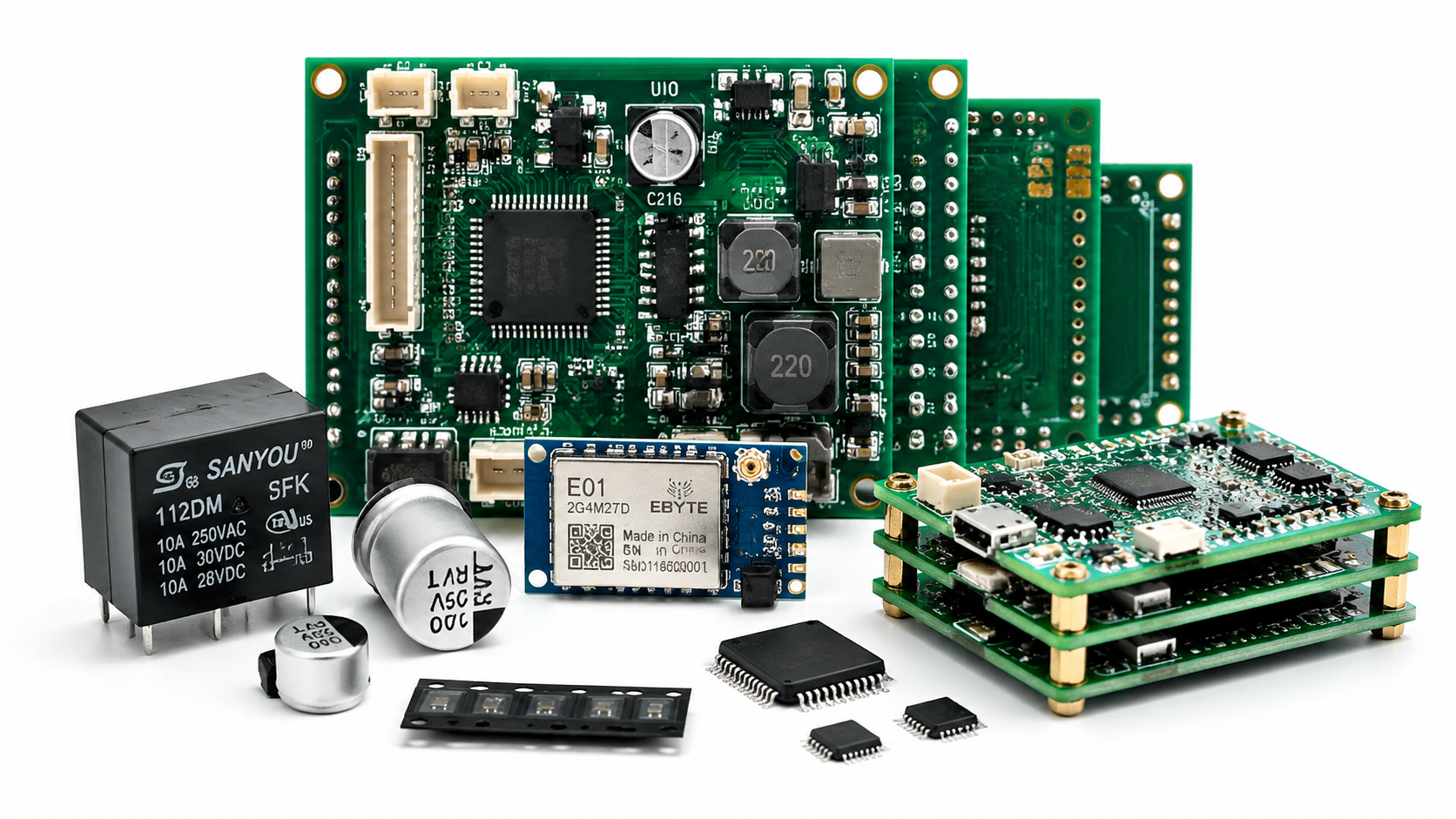
From electronic parts and circuit components to electrical relays, industrial capacitors, and RF transceiver modules, cost is shaped by far more than unit price. This guide helps engineers, buyers, and project stakeholders understand how SMT soldering, reflow soldering, pick and place specifications, circuit board assembly, and compliance demands such as semiconductor compliance, PCB compliance, and thermal management compliance directly influence sourcing decisions and long-term value.
Why electronic parts costs rise beyond the quoted unit price
Many teams begin sourcing with a simple target: lower the price per part. In practice, electronic parts cost is driven by a wider stack of variables, including material grade, manufacturing precision, inspection depth, compliance documentation, yield loss, packaging format, and the stability of the semiconductor and EMS supply chain. A relay that looks inexpensive on paper can become costly after assembly defects, thermal drift, or delayed qualification cycles are included.
For procurement personnel, the challenge is often timing. A quotation may be valid for only 7–15 days, while internal approvals can take 2–4 weeks. During that window, wafer supply, substrate availability, copper prices, and freight conditions can change. For technical evaluators and quality managers, a low initial price may also signal looser tolerances, reduced traceability, or weaker process control in SMT placement and reflow profiles.
End users and maintenance teams feel the impact later. A passive component with marginal long-term stability may pass incoming inspection but fail in field service under vibration, humidity, or continuous thermal cycling. That is why total cost should always include operating reliability, replacement intervals, and rework exposure, not only the purchase order amount.
SCM approaches these questions through measurable engineering data. Instead of treating hardware as a commodity, SCM reviews the variables that change cost in real manufacturing conditions: dielectric behavior in multilayer PCB stacks, pick and place precision metrics, thermal packaging constraints, and component reliability under environmental stress. That perspective helps both sourcing teams and finance approvers connect price to technical risk.
The most common hidden cost drivers
- Tolerance requirements: tighter dimensional, electrical, or placement tolerances usually require more advanced process control and raise screening costs.
- Assembly complexity: fine-pitch packages, mixed-technology boards, and dense layouts increase setup time, AOI coverage needs, and reflow tuning effort.
- Compliance scope: IPC-Class 3, ISO 9001 workflows, material declarations, and traceability packages add documentation and audit overhead.
- Lifecycle risk: components nearing obsolescence or under allocation often carry pricing volatility and secondary sourcing premiums.
Which technical factors most directly affect cost in PCB assembly and component sourcing?
The strongest technical cost drivers usually appear before volume production starts. Engineers may specify a multilayer board stack, impedance control, thermal vias, or RF shielding for valid performance reasons, but each requirement influences fabrication complexity and assembly yield. In circuit board assembly, the difference between a standard layout and a dense high-speed design can be measured in additional process checks across solder paste printing, pick and place alignment, reflow soldering, and post-assembly inspection.
SMT soldering quality is one of the most underestimated variables. If stencil design, solder paste selection, and thermal profile are not matched to package size and board mass, the line may face tombstoning, voiding, head-in-pillow defects, or insufficient wetting. Every extra defect rate point affects rework labor, scrap, and schedule confidence. For project managers handling NPI and pilot runs, even a 1–3 stage delay in validation can disrupt downstream integration.
Thermal management also changes both component choice and assembly cost. Power semiconductors, industrial capacitors, and RF modules can require heat spreaders, copper balancing, interface materials, or derating margin. A lower-cost part that runs close to thermal limits may force added board-level mitigation later. In contrast, a higher-spec component may reduce cooling requirements and support more stable lifetime performance.
SCM’s technical benchmarking is valuable here because it connects datasheet assumptions with manufacturing reality. By comparing dielectric constants, placement precision ranges, and reliability behavior under harsh conditions, procurement teams can avoid false savings created by incomplete technical comparisons.
Key technical cost drivers to review before approval
The table below summarizes how common engineering requirements influence cost, risk, and sourcing decisions for electronic parts and PCB assembly programs.
A useful buying rule is to compare not just part numbers, but process sensitivity. If one option needs narrower process control or longer validation cycles, the practical cost may exceed the nominal savings. This is especially important in mixed portfolios that combine active semiconductors, passive components, RF modules, and industrial power electronics.
Three checkpoints for technical evaluators
- Confirm whether the quoted component can meet the target environment across temperature, humidity, vibration, and duty cycle.
- Ask whether the supplier has process evidence for the intended assembly route, especially SMT soldering and reflow repeatability.
- Review traceability and compliance outputs before sample approval, not after mass production release.
How should buyers compare low-cost options, qualified options, and risk-controlled options?
Not every sourcing decision should prioritize the lowest quote. In many B2B environments, buyers must balance three competing goals: budget control, technical suitability, and supply continuity. A low-cost option may work for non-critical assemblies or short lifecycle products. A fully qualified option may better suit regulated, industrial, or mission-sensitive applications. A risk-controlled option often sits in the middle, with stronger documentation and supply stability even if the piece price is not the lowest.
Finance approvers usually want visible savings within the quarter, while engineering and quality teams focus on failure exposure over 12–36 months. That is why a comparison framework should include at least 5 dimensions: unit price, qualification time, process yield, compliance coverage, and field replacement risk. Without those dimensions, teams tend to underestimate the downstream cost of poor component decisions.
For project leaders managing launch schedules, a slightly higher-cost source can still be preferable if it reduces validation loops and stabilizes delivery. Lead time certainty matters. A component available in 2–3 weeks with full documentation can be more valuable than a cheaper part with an uncertain 6–10 week window and incomplete technical support.
SCM supports this comparison process by translating engineering variables into benchmarking reports that procurement, technical, and business stakeholders can all read. That shared language reduces friction between departments and helps teams justify the best-fit option rather than the cheapest headline number.
Comparison model for sourcing decisions
Use the following structure when comparing electronic parts suppliers or part alternatives across cost, qualification effort, and operational risk.
This framework is particularly useful when multiple teams review the same BOM. Procurement can focus on spend, engineering can assess fit-for-use, and quality can confirm whether the component supports inspection and reliability expectations. The result is a more defensible approval decision.
Questions buyers should ask suppliers before commitment
- What is the normal lead time range for this component family: 2–4 weeks, 6–8 weeks, or longer during allocation periods?
- Can the supplier support sample builds, pilot lots, and mass production with the same process window?
- What documentation is available for PCB compliance, semiconductor compliance, and thermal management compliance?
- How is traceability maintained across lot control, packaging, storage, and shipment?
What procurement and quality teams should check before approving electronic parts
A solid approval workflow should combine technical review, commercial review, and quality verification. Many companies already have supplier onboarding processes, but component-level approval is often less disciplined. That gap creates expensive surprises later, especially when BOM substitutions happen under schedule pressure. A practical review should cover 4 stages: specification matching, process capability review, compliance confirmation, and delivery risk evaluation.
Specification matching is more than checking voltage, capacitance, or package size. Teams should also confirm tolerance range, derating assumptions, operating environment, and assembly compatibility. For example, if the board uses mixed thermal masses or sensitive RF paths, the approved component must fit both electrical and manufacturing needs. If not, hidden cost returns as rework, debug time, or field instability.
Compliance confirmation should be handled early. If a product line must align with IPC-Class 3 expectations, customer quality clauses, or internal audit procedures, buyers should request the relevant records before release. Waiting until first article or shipment inspection adds delay. In real projects, even 3–5 missing documents can hold payment approval, customs clearance, or customer acceptance.
For quality and safety managers, incoming inspection alone is not enough. They need to understand whether the supplier’s upstream controls are stable: moisture-sensitive handling, lot traceability, storage condition management, and packaging protection. These factors are especially important for semiconductors, industrial capacitors, and thermally sensitive modules.
Six-point approval checklist
- Verify core electrical and mechanical parameters against the real application, not only the generic datasheet limits.
- Check assembly compatibility with pick and place equipment, solder profile windows, and board-level thermal constraints.
- Review process capability evidence, especially for fine-pitch, high-density, or high-mix production environments.
- Confirm compliance records and any customer-mandated documentation package before order placement.
- Assess lead time consistency across samples, pilot runs, and scheduled production lots.
- Estimate replacement and field service exposure if the component fails under stress or aging conditions.
Where SCM adds value in the review cycle
SCM’s role is especially relevant when internal teams need independent technical interpretation. Laboratories and analysts can help benchmark multilayer PCB dielectric behavior, SMT placement precision, and component reliability under harsh conditions. That information is useful for procurement, but it also helps project managers defend qualification timelines and helps finance teams understand why two parts with similar nominal specifications can carry different lifecycle cost profiles.
Because SCM follows the global semiconductor and EMS supply chain, buyers also gain context beyond a single quote. Weekly market intelligence and sector-specific insights support faster decisions when material shifts, silicon availability changes, or packaging constraints begin to affect sourcing strategy.
Common mistakes, FAQ, and practical next steps for cost control
The most common mistake is confusing low acquisition cost with low total cost. Another is approving a substitute component without validating assembly behavior, thermal headroom, or traceability quality. In high-mix manufacturing, even a seemingly small deviation can create repeated engineering effort across NPI, test, customer communication, and field support. Cost control works best when teams manage risk before the purchase order is issued.
A second mistake is letting each department evaluate parts in isolation. Procurement looks at budget, engineering looks at fit, and quality looks at compliance, but no one integrates the result. A structured review process with 3–5 agreed decision criteria reduces rework and internal debate. It also gives suppliers clearer expectations during quotation and sample phases.
The right next step is not to slow decisions down. It is to make them more evidence-based. When technical data, supply chain timing, and compliance records are reviewed together, teams can move faster with fewer surprises. That is especially valuable for projects with tight launch windows, budget pressure, or multinational approval workflows.
Below are common questions that buyers, engineers, and project stakeholders often ask when evaluating electronic parts cost drivers.
How should I evaluate electronic parts cost if two suppliers offer similar specifications?
Compare at least 5 points: process capability, compliance documentation, lead time stability, assembly risk, and expected field reliability. Similar datasheet values do not guarantee equal performance in reflow soldering, thermal cycling, or long-term operation. If possible, review pilot build results over 1–2 sample lots before final approval.
Which applications are most sensitive to hidden cost drivers?
High-density PCB assembly, RF modules, power electronics, and industrial control systems are particularly sensitive. These applications often depend on signal integrity, thermal management, and stable component behavior over long operating hours. In these cases, hidden cost usually appears through yield loss, extra validation, or service replacement.
How long does component qualification typically take?
For standard parts in low-risk applications, internal review may take 1–2 weeks. For parts involving new PCB materials, fine-pitch SMT, RF performance, or strict compliance requirements, qualification can extend to 3–6 weeks or more depending on sample availability, test scope, and document readiness.
What is the best way to reduce cost without increasing technical risk?
Start with value engineering, not arbitrary price pressure. Review whether the design truly requires the current tolerance class, thermal margin, or packaging format. Then compare alternative components that maintain assembly compatibility and compliance coverage. A balanced substitution can lower cost while preserving process yield and service life.
Why work with SCM when evaluating electronic parts cost drivers?
SCM supports organizations that need more than catalog data. As an independent technical think tank and engineering repository focused on the semiconductor and EMS supply chain, SCM helps global R&D teams, procurement leaders, quality personnel, and business evaluators understand how manufacturing precision, material behavior, and compliance demands affect total sourcing value.
This is especially useful when decisions involve multilayer PCB materials, SMT assembly precision, active and passive component reliability, or thermal packaging constraints. Instead of relying on assumptions, teams can use standardized reports and data-driven benchmarking to compare options more clearly and reduce avoidable supply chain risk.
If your team is reviewing electronic parts, circuit components, relays, capacitors, RF modules, or full circuit board assembly decisions, SCM can help you examine parameter alignment, supplier capability, delivery windows, and compliance expectations. That support is relevant for early research, technical evaluation, sourcing approval, and post-launch reliability planning.
Contact SCM to discuss component selection, parameter confirmation, SMT and reflow process implications, qualification timelines, compliance documentation, sample support, or quotation comparisons. If you need an independent view on PCB compliance, semiconductor compliance, thermal management compliance, or long-term cost-risk tradeoffs, a structured benchmark review can give your team a stronger basis for the next purchasing decision.
- PCB
- SMT assembly
- active semiconductors
- passive components
- thermal packaging
- signal integrity
- IPC-Class 3
- EMS
- thermal management
- dielectric constants
- SMT placement
- precision metrics
- environmental stress
- ISO 9001
- market intelligence
- PCB materials
- component reliability
- PCB assembly
- passive component reliability
- thermal management compliance
- PCB compliance
- semiconductor compliance
- circuit board assembly
- pick and place specifications
- reflow soldering
- SMT soldering
- electronic parts
- circuit components
- semiconductor
- Power Semi
- power electronics
- RF modules
- RF transceiver
- industrial capacitors
- relays
- electrical relays
- heat dissipation
- RF shielding
- multilayer PCB
Recommended News
- ConnectorsHow to compare connector suppliers when quoted prices differSupplier comparison price guide for connector sourcing: compare technical fit, landed cost, quality, lead times, and supplier risk to make confident purchasing decisions.
- ConnectorsHow to assess connector quality when sourcing electronic components in SingaporeElectronic components Singapore sourcing guide: assess connector quality, traceability, plating, mechanical reliability, and supplier controls to reduce costly failures.
- ConnectorsHow to prevent connector corrosion in aquaculture installationsAquaculture installations need reliable connectors. Discover practical ways to prevent corrosion with smart sealing, material selection, cable routing, and maintenance.
- ConnectorsHow to select automotive connector systems for high-vibration environmentsAutomotive connector systems for high-vibration environments: learn how to evaluate contact stability, sealing, locking, harness support, and qualification evidence.
- ConnectorsWhen should you source from a connector systems wholesaler?connector systems wholesaler: learn when wholesale sourcing reduces supply risk, controls total cost, and protects production with qualified, reliable availability.
- ConnectorsHow to select connector systems for telecom exposed to vibrationConnector systems for telecom exposed to vibration demand more than basic specs. Learn how to protect signal integrity, retention, and reliability with smarter selection criteria.