
How to Source Electronic Parts Without Quality Risks
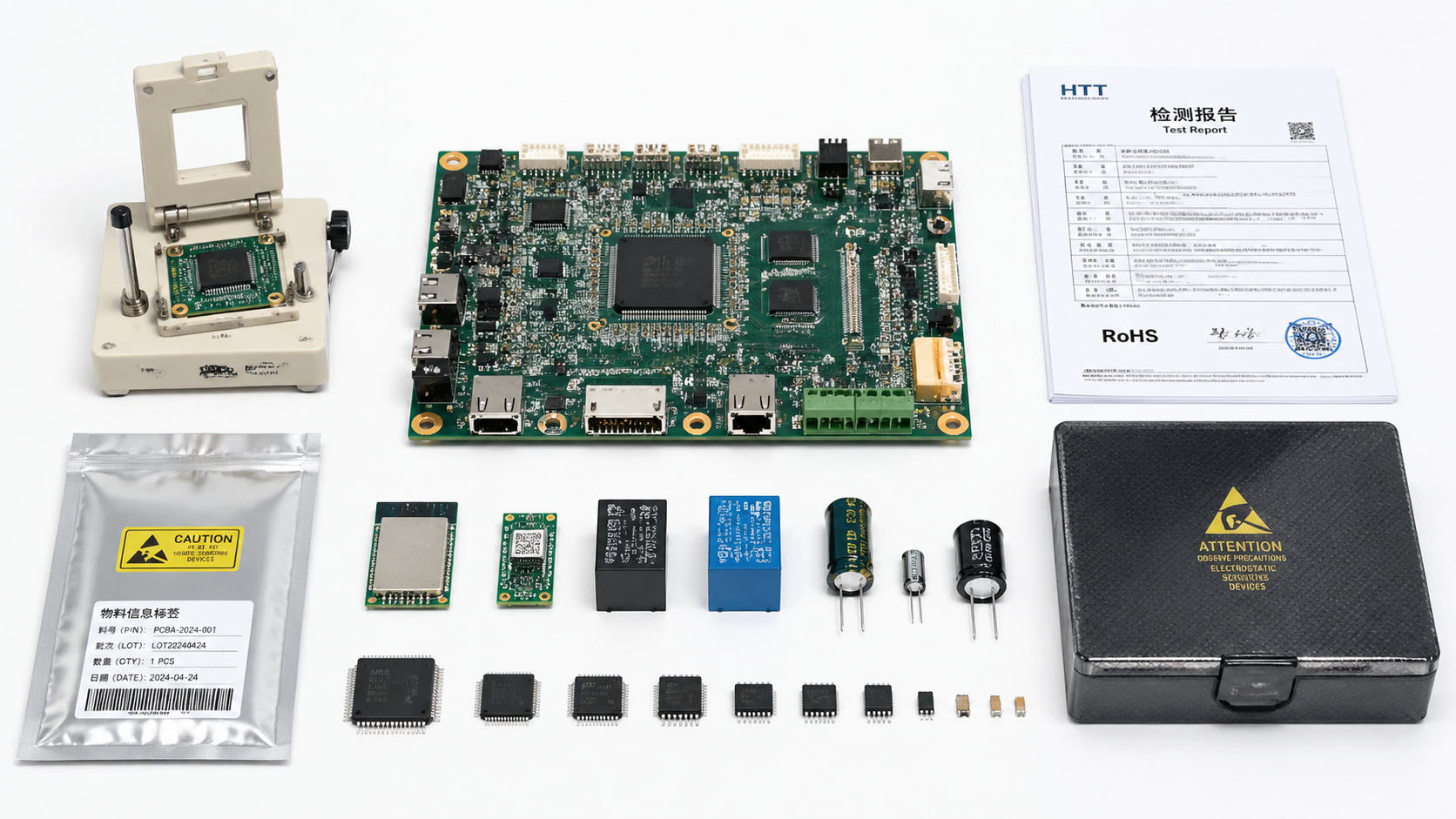
DETAILS
Sourcing electronic parts without quality risks is not just about finding a lower quote or a faster lead time. For engineers, buyers, quality teams, and project owners, the real issue is whether a component will perform as specified, stay reliable in the field, and arrive with traceable compliance evidence. In practice, reducing quality risk means verifying circuit components, semiconductor compliance, PCB compliance, and SMT compliance before purchase orders are released—not after failures appear in production or in customer returns.
That is especially true when sourcing critical parts such as electrical relays, high-performance capacitors, RF transmitter modules, RF receiver modules, and RF transceiver systems. The same applies to circuit board assembly decisions involving pick and place accuracy, SMT soldering quality, reflow soldering control, and thermal management compliance. The safest sourcing strategy is a structured one: qualify the supplier, validate the part, confirm process capability, and document everything needed for procurement, QA, engineering, and financial approval.
What Buyers Actually Need to Verify Before Ordering Electronic Parts
The core search intent behind this topic is practical: how to avoid counterfeit, out-of-spec, unreliable, or poorly manufactured electronic parts when sourcing globally. Most readers are not looking for theory. They want a decision framework they can use to reduce failure rates, warranty costs, production delays, and compliance exposure.
Before placing any order, teams should verify five things:
- Part authenticity: Is the component genuine, traceable, and sourced through a controlled channel?
- Specification fit: Does it truly meet electrical, thermal, mechanical, and environmental requirements for the intended application?
- Manufacturing consistency: Can the supplier or EMS partner repeatedly meet required PCB compliance, SMT compliance, and assembly tolerances?
- Reliability evidence: Is there test data for long-term performance under actual operating stress?
- Documentation quality: Are certificates, inspection records, lot traceability, and compliance reports complete and credible?
If any of these are unclear, price becomes irrelevant. A cheaper part that causes field returns, rework, delayed launches, or safety investigations is usually the most expensive option in the full lifecycle cost model.
Why Quality Risks in Electronic Sourcing Usually Start Earlier Than Most Teams Think
Quality problems often begin at the sourcing stage, not on the production line. Many organizations still rely too heavily on datasheets, distributor claims, or basic sample approval. That approach misses the hidden variables that affect real-world performance.
Common early-stage risk sources include:
- Incomplete supplier qualification: A supplier may show certifications but lack real process control or component traceability.
- Unverified substitutions: “Equivalent” parts may differ in ESR, leakage current, switching response, package tolerances, or thermal behavior.
- Weak process validation: Even approved parts can fail if SMT soldering profiles, reflow soldering windows, or pick and place precision are unstable.
- Insufficient environmental testing: A component that passes room-temperature checks may degrade rapidly under humidity, vibration, thermal cycling, or load spikes.
- Blind sourcing during shortages: Urgent buys from brokers or unknown channels greatly increase counterfeit and mixed-lot risk.
For procurement and finance teams, this means quality risk should be evaluated as a sourcing and governance issue, not only a manufacturing issue. For engineering and QA teams, it means approval standards must include both part-level and process-level validation.
How to Evaluate a Supplier Beyond Certificates and Sales Claims
Certifications such as ISO 9001 are useful, but they are not enough on their own. A low-risk supplier should be evaluated through operational evidence, not just paperwork.
Key supplier assessment points include:
- Traceability control: Can the supplier provide batch, date code, origin, and handling records?
- Inspection capability: Do they perform incoming inspection, X-ray analysis, solderability testing, electrical verification, and packaging integrity checks where needed?
- Process capability: For assembly suppliers, can they document pick and place accuracy, SMT soldering consistency, and reflow soldering process control?
- Change management: How are BOM substitutions, material changes, and line changes approved and recorded?
- Failure response: Is there a defined corrective action process with root cause analysis and containment steps?
For high-reliability applications, independent technical benchmarking is especially valuable. Third-party data on PCB material behavior, SMT placement precision, thermal packaging, and component stress reliability can reveal issues that supplier self-reports do not show.
Which Component Categories Require the Most Careful Quality Screening
Not all parts carry the same risk profile. Some categories deserve much deeper verification because failures can cascade across the whole product.
Active semiconductors: These include ICs, power devices, and RF modules such as RF transmitter, RF receiver, and RF transceiver solutions. Key concerns include authenticity, lot consistency, thermal performance, ESD sensitivity, and long-term stability under real signal and load conditions.
Passive components: High-performance capacitors, resistors, inductors, and filters may look simple, but they often fail through drift, cracking, leakage, dielectric breakdown, or poor high-frequency behavior. Capacitors, in particular, should be screened for temperature stability, ESR, ripple capability, and operating life.
Electromechanical parts: Electrical relays, connectors, switches, and sockets require attention to contact resistance, switching endurance, plating quality, and environmental sealing.
PCB and circuit board assembly inputs: Bare boards, laminates, solder paste, and assembly consumables influence PCB compliance and downstream reliability. Material properties such as dielectric constants, copper adhesion, warpage resistance, and thermal expansion directly affect signal integrity and assembly yield.
This is why risk-based sourcing works better than generic checklists. The approval depth should reflect component criticality, replacement difficulty, safety impact, and field exposure.
What Technical Data Should Be Checked Before Approving a Part
Readers in engineering, quality, and technical evaluation roles usually need more than a datasheet review. They need proof that the part matches design intent and manufacturing reality.
The most useful validation data often includes:
- Electrical performance data: tolerance, frequency response, switching behavior, leakage, power handling, and signal integrity performance
- Thermal data: junction behavior, heat dissipation characteristics, derating curves, and thermal management compliance
- Mechanical data: package dimensions, coplanarity, lead integrity, vibration tolerance, and mounting compatibility
- Environmental reliability data: humidity resistance, thermal shock, salt spray where relevant, and high-temperature operating life
- Assembly compatibility data: solderability, moisture sensitivity level, reflow profile compatibility, and board-level reliability
For PCB compliance and SMT compliance, teams should also review manufacturing evidence such as solder joint inspection results, voiding analysis, tombstoning rates, placement offset capability, and reflow profile repeatability. These factors directly affect the quality of circuit board assembly, especially in dense or high-speed designs.
How PCB Compliance and SMT Compliance Affect Part Quality in Real Production
A good component can still fail in a bad process. That is why sourcing without quality risk must include manufacturing compatibility, especially when parts are used in advanced circuit board assembly environments.
PCB compliance matters because board material and fabrication quality influence electrical stability, thermal behavior, and mechanical reliability. For example, dielectric consistency affects high-frequency performance, while poor layer registration or plating quality can create latent defects.
SMT compliance matters because placement and soldering accuracy determine whether the approved component survives assembly and performs over time. Teams should pay close attention to:
- Pick and place capability: precision, repeatability, nozzle compatibility, and handling of fine-pitch or miniature parts
- SMT soldering quality: paste volume control, wetting consistency, bridging prevention, and joint geometry
- Reflow soldering stability: thermal profile control, peak temperature consistency, soak timing, and cooling rate management
- Post-assembly inspection: AOI, X-ray, functional testing, and reliability sampling
If the sourcing team ignores process compatibility, they may approve parts that look acceptable on paper but perform poorly in line conditions, especially under high-density assembly, thermal cycling, or RF applications.
How to Build a Low-Risk Approval Process for Procurement, Engineering, and QA
The best way to reduce quality risk is to create a cross-functional approval workflow. This prevents procurement from buying on price alone and avoids engineering approvals that ignore supply chain reality.
A practical approval process usually includes:
- Define criticality: Classify parts by safety impact, field failure cost, and replacement difficulty.
- Screen source channels: Prefer authorized or highly traceable suppliers; restrict broker buys to controlled exceptions.
- Review technical fit: Compare datasheets, application demands, derating rules, and assembly requirements.
- Request validation evidence: Obtain test reports, compliance data, lot traceability, and reliability records.
- Inspect and test samples: Use electrical, visual, dimensional, and where appropriate destructive or advanced lab analysis.
- Verify manufacturing compatibility: Confirm PCB compliance, SMT compliance, and thermal management compliance in actual production conditions.
- Approve with controls: Define AVL status, incoming inspection rules, requalification triggers, and deviation procedures.
This structured process helps every stakeholder. Procurement gains clearer supplier selection criteria. Engineers reduce technical uncertainty. QA strengthens preventive control. Finance gets a better basis for approving purchases with lower lifecycle risk.
What Red Flags Suggest You Should Not Buy the Electronic Parts Yet
Some warning signs should immediately slow down or stop a purchase decision. These signs are often visible before any serious failure occurs.
- Pricing is significantly below normal market range without a clear reason.
- Traceability documents are incomplete, inconsistent, or difficult to verify.
- The seller avoids sharing date codes, origin information, or test methods.
- Sample results are good, but lot-to-lot consistency cannot be demonstrated.
- Compliance claims are broad, but no detailed PCB compliance or SMT compliance records exist.
- There is no evidence of thermal stress testing or long-term reliability assessment.
- Substitution is proposed late in the buying cycle with limited engineering review.
- Assembly yield issues appear during pick and place, SMT soldering, or reflow soldering trials.
When these red flags appear, the correct response is not to push the order through faster. It is to increase verification depth, narrow the approved scope, or move to a safer source.
How Independent Technical Intelligence Helps Reduce Sourcing Risk
In many sourcing decisions, the biggest problem is not a lack of documents. It is a lack of trustworthy interpretation. Teams often receive large volumes of supplier material but still struggle to compare options objectively.
This is where independent technical intelligence becomes valuable. Benchmarking on multi-layer PCB materials, SMT placement precision, component reliability under environmental stress, and thermal packaging behavior helps decision-makers separate marketing claims from measurable performance. For buyers and project leaders, that means better supplier comparison. For technical evaluators, it means stronger approval criteria. For quality and safety teams, it means more credible risk controls.
In complex semiconductor and EMS sourcing environments, independent data is often the difference between “appears compliant” and “proven fit for application.”
Conclusion
To source electronic parts without quality risks, companies need a practical rule: verify the part, the supplier, and the manufacturing process as one system. Authenticity alone is not enough. Datasheets alone are not enough. Certificates alone are not enough.
Reliable sourcing decisions depend on traceable component channels, validated circuit components, verified semiconductor compliance, strong PCB compliance, stable SMT compliance, and documented control of circuit board assembly conditions such as pick and place accuracy, SMT soldering quality, reflow soldering stability, and thermal management compliance.
For organizations that want fewer failures, stronger supplier confidence, and better long-term cost control, the right strategy is clear: buy based on evidence, not assumptions. That is the most effective way to protect product reliability, project schedules, and commercial performance at the same time.
- PCB
- LED PCB
- active semiconductors
- passive components
- thermal packaging
- signal integrity
- EMS
- thermal management
- multi-layer PCB
- dielectric constants
- SMT placement
- environmental stress
- compliance reports
- ISO 9001
- PCB materials
- component reliability
- thermal management compliance
- PCB compliance
- SMT compliance
- semiconductor compliance
- circuit board assembly
- reflow soldering
- SMT soldering
- electronic parts
- circuit components
- semiconductor
- high-performance
- RF modules
- RF transceiver
- RF transmitter
- RF receiver
- electromechanical parts
- high-performance capacitors
- relays
- electrical relays
- connectors
- heat dissipation
Recommended News
- ConnectorsHow to compare connector suppliers when quoted prices differSupplier comparison price guide for connector sourcing: compare technical fit, landed cost, quality, lead times, and supplier risk to make confident purchasing decisions.
- ConnectorsHow to assess connector quality when sourcing electronic components in SingaporeElectronic components Singapore sourcing guide: assess connector quality, traceability, plating, mechanical reliability, and supplier controls to reduce costly failures.
- ConnectorsHow to prevent connector corrosion in aquaculture installationsAquaculture installations need reliable connectors. Discover practical ways to prevent corrosion with smart sealing, material selection, cable routing, and maintenance.
- ConnectorsHow to select automotive connector systems for high-vibration environmentsAutomotive connector systems for high-vibration environments: learn how to evaluate contact stability, sealing, locking, harness support, and qualification evidence.
- ConnectorsWhen should you source from a connector systems wholesaler?connector systems wholesaler: learn when wholesale sourcing reduces supply risk, controls total cost, and protects production with qualified, reliable availability.
- ConnectorsHow to select connector systems for telecom exposed to vibrationConnector systems for telecom exposed to vibration demand more than basic specs. Learn how to protect signal integrity, retention, and reliability with smarter selection criteria.