
RF Transceiver or Separate Modules: Which Saves More
DETAILS
Choosing between an RF transceiver and separate RF transmitter and RF receiver modules affects cost, performance, circuit board assembly complexity, and long-term reliability. For engineers, buyers, and project teams evaluating circuit components and electronic parts, this comparison highlights the tradeoffs in thermal management compliance, SMT compliance, and semiconductor compliance to reveal which option truly saves more.
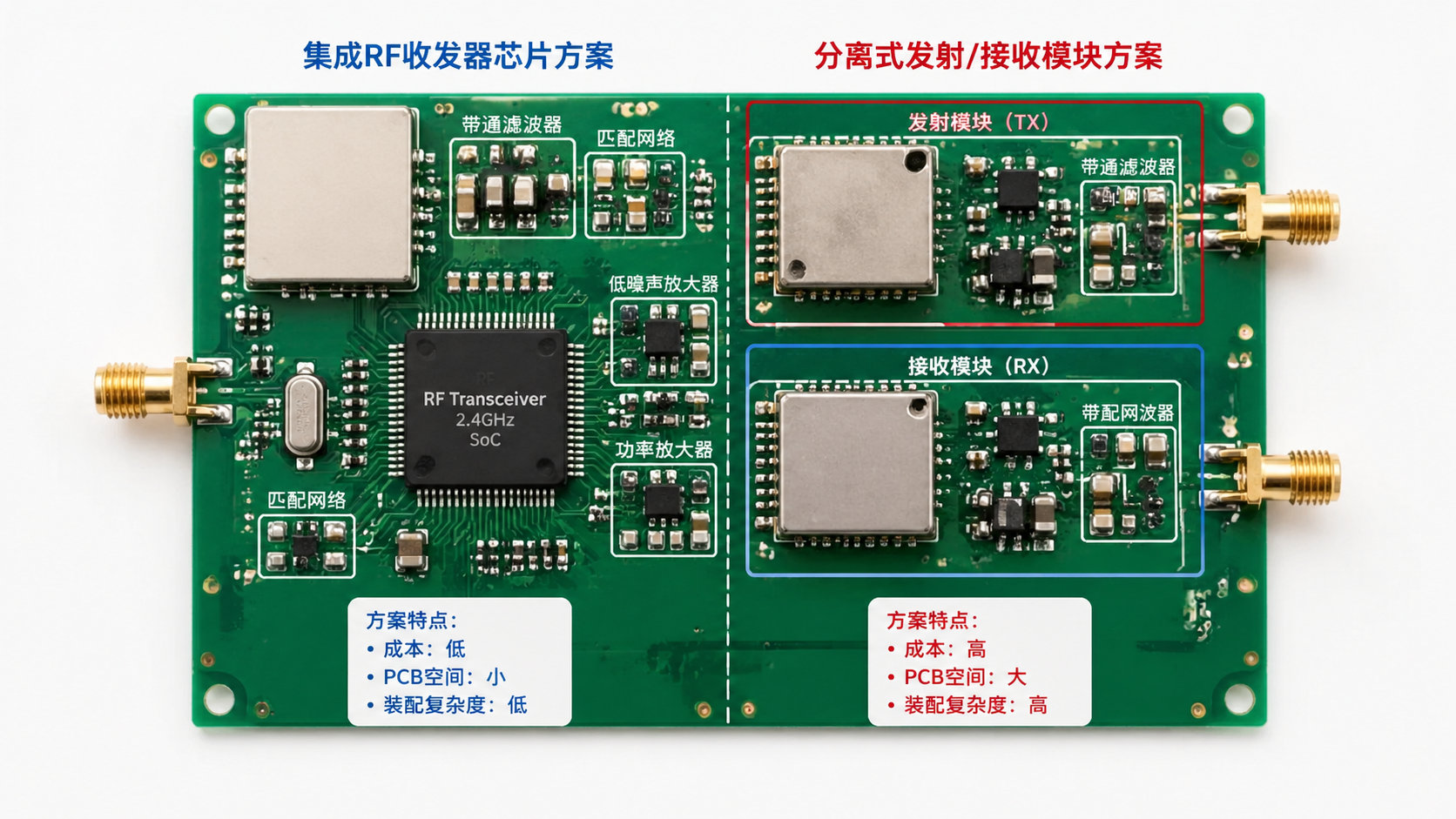
In most projects, an RF transceiver saves more when total system cost, PCB area, assembly effort, and lifecycle management are considered together. Separate RF transmitter and receiver modules can still be the better financial choice in specialized designs that demand higher isolation, easier serviceability, legacy architecture compatibility, or independent performance tuning. The real answer is not just about unit price. It depends on frequency band, production volume, board constraints, certification path, test complexity, and field reliability expectations.
What buyers and engineers really want to know: where does the money actually go?
When teams search for “RF transceiver or separate modules: which saves more,” they are rarely asking only about component pricing. They are usually trying to estimate total cost of ownership across sourcing, design, manufacturing, testing, compliance, and maintenance. That is especially true for cross-functional stakeholders such as R&D engineers, procurement managers, quality teams, project owners, and financial approvers.
The most important cost buckets are usually:
- BOM cost: unit pricing of the RF transceiver IC or separate transmitter and receiver modules, plus matching components, filters, baluns, shielding, and support circuitry
- PCB cost: board area, layer count, controlled impedance routing difficulty, and layout constraints
- SMT and assembly cost: number of placements, reflow sensitivity, inspection complexity, and yield impact
- Validation cost: RF tuning, EMC pre-compliance work, thermal testing, signal integrity analysis, and failure investigation
- Certification and compliance cost: regulatory testing, documentation burden, and product change management
- Field and lifecycle cost: repair strategy, spare inventory, vendor risk, obsolescence management, and long-term reliability
In practical sourcing and engineering reviews, the lowest purchase price often does not produce the lowest total cost. A cheaper separate-module design may increase board size, routing complexity, EMI mitigation work, and assembly risk. Likewise, an integrated transceiver may reduce design complexity but create thermal concentration or vendor dependency issues.
General rule of thumb: integrated RF transceivers save more in mainstream designs
For most commercial and industrial electronics, an RF transceiver provides better overall savings because it combines transmit and receive functionality into one integrated semiconductor solution. This reduces supporting circuitry, shortens interconnect paths, and simplifies board-level integration.
Typical financial and operational advantages include:
- Lower component count, which reduces BOM complexity and procurement overhead
- Smaller PCB footprint, which can lower board cost or free area for power, sensing, or thermal features
- Fewer SMT placements, helping assembly efficiency and lowering placement-related defect opportunities
- Simpler RF path design, often reducing tuning effort and improving repeatability across builds
- Easier inventory control, since fewer line items need forecasting, approval, and replacement planning
- Potentially faster time to market, especially when supported by mature reference designs
For organizations managing multiple SKUs or contract manufacturing across regions, these advantages can be significant. Simpler architectures are generally easier to standardize, qualify, and transfer between EMS partners. That matters in high-mix manufacturing environments where consistency and traceability affect quality outcomes.
When separate RF transmitter and receiver modules can save more
Separate modules are often more economical in edge cases where architecture flexibility matters more than compact integration. This is common in high-performance, legacy, harsh-environment, or service-critical systems.
Separate modules may save more when the project requires:
- Higher isolation between TX and RX paths for demanding RF performance targets
- Independent optimization of transmitter power and receiver sensitivity
- Incremental upgrades without redesigning the entire RF section
- Easier field replacement in maintenance-driven or mission-critical equipment
- Reuse of legacy subsystem designs to avoid requalification cost
- Specialized thermal distribution where spreading heat across modules improves reliability
For example, in certain industrial, defense-adjacent, test equipment, or long-life infrastructure applications, modular separation may reduce long-term service cost even if first-pass manufacturing cost is higher. If replacement logistics, downtime exposure, and qualification continuity are major business risks, a modular architecture can be financially justified.
Cost comparison beyond BOM: PCB area, routing, and assembly often decide the winner
One of the most overlooked factors in RF module selection is how much the decision affects board-level design and manufacturing. This is where many projects discover that the apparent “cheaper” option creates hidden cost.
RF transceiver designs usually reduce footprint and interconnect length. This can simplify controlled impedance routing and minimize signal loss opportunities. Fewer discrete interfaces can also reduce susceptibility to assembly variation. In SMT production, fewer parts generally mean lower placement time, fewer feeder positions, simpler inspection programming, and potentially better line efficiency.
Separate transmitter and receiver module designs may increase board area and routing effort. They often require more careful spacing, shielding strategy, and path isolation planning. If additional passives, filters, or matching networks are needed around each module, assembly complexity increases further. More placements can mean more opportunities for tombstoning, polarity mistakes, solder void concerns, and rework exposure.
From an EMS perspective, the savings calculation should include:
- Number of unique package types
- Fine-pitch placement requirements
- X-ray or AOI inspection difficulty
- Rework accessibility
- Panel utilization impact
- Yield sensitivity caused by RF-critical placements
In many production settings, these manufacturing details outweigh the simple line-item price difference between integrated and discrete RF solutions.
Thermal management and reliability: a cheap design that overheats is not cheaper
Thermal behavior strongly affects whether an RF transceiver or separate modules truly saves more. Integrated transceivers concentrate more function into one package, which can improve efficiency but also create localized heat density. Separate modules may distribute heat spatially, but they can also introduce additional losses through interconnects and duplicated support circuitry.
For thermal management compliance and long-term reliability, teams should evaluate:
- Junction temperature rise under peak TX duty cycle
- Board copper area available for heat spreading
- Need for thermal vias, shielding cans, or heat sinks
- Ambient conditions such as enclosure heat soak or vibration
- Performance drift over temperature
- Solder joint fatigue risk in thermally stressed layouts
An integrated RF transceiver may save money if it enables a compact design without exceeding safe thermal margins. But if the package runs too hot in a sealed enclosure, the cost of redesign, derating, or field failures can erase those savings quickly. Conversely, separate modules may justify their added cost if they improve thermal resilience in harsh operating environments.
This is particularly important for quality-control teams and safety managers. A design that passes functional tests but shows marginal thermal stability can create warranty costs, intermittent field issues, and compliance concerns later in the product lifecycle.
Compliance and qualification: integration can simplify approval, but not always
For semiconductor compliance, SMT compliance, and product-level quality assurance, integration usually helps by reducing the number of interfaces and component interactions that must be validated. Fewer components mean fewer variables in incoming inspection, traceability records, and process control.
RF transceivers often help streamline:
- Design verification planning
- Component qualification matrices
- Supplier approval workflows
- Failure analysis scope
- Change control documentation
However, separate modules can be easier to qualify in cases where each module already has known field history or existing validation records. If your company has approved transmitter and receiver building blocks with proven compliance data, reusing them may reduce technical risk and shorten approval cycles.
Procurement and quality teams should also assess supplier concentration risk. A single integrated transceiver may simplify sourcing today but increase exposure if that part becomes constrained or obsolete. Separate modules can sometimes offer better second-source flexibility, though this depends heavily on architecture and frequency band.
Performance tradeoffs: savings mean little if RF performance misses the target
No architecture is cheaper if it fails the application. An RF transceiver may be more cost-efficient overall, but separate modules can outperform it in designs with strict requirements for transmit power, receiver sensitivity, dynamic range, duplexing behavior, or interference resistance.
Key technical questions include:
- Does the application require simultaneous optimization of TX and RX characteristics?
- Are isolation and crosstalk critical to system stability?
- Will the design operate in a congested RF environment?
- How much margin is needed for regulatory emissions and receiver robustness?
- Is the application sensitive to phase noise, blocking, or adjacent-channel rejection?
For many mainstream wireless products, modern RF transceivers are more than capable and deliver the best price-performance balance. But for specialized designs, using separate modules can avoid performance compromises that would otherwise require expensive mitigation elsewhere in the system.
How different stakeholders should judge “which saves more”
Different teams define savings differently. The best decision usually comes from aligning those perspectives early rather than letting the choice be driven by component price alone.
- Engineers: focus on RF performance, layout risk, thermal margin, and integration effort
- Procurement teams: compare supplier stability, lead time risk, MOQ, and total approved-vendor flexibility
- Finance approvers: evaluate total cost of ownership, not just initial BOM delta
- Project managers: weigh schedule risk, redesign probability, and qualification effort
- Quality teams: assess process robustness, inspection burden, traceability, and field failure risk
- Service and maintenance teams: consider repairability, spare strategy, and downtime cost
If these groups use different assumptions, the organization often ends up making a false economy decision. A slightly cheaper architecture can become more expensive after NPI delays, low yield, thermal fixes, or service complexity are included.
A practical decision framework for RF transceiver vs separate modules
If your team is deciding between an RF transceiver and separate RF transmitter and receiver modules, use this short framework:
- Estimate true cost at system level
Include PCB area, assembly, tuning, testing, compliance, and field support. - Check thermal and RF margin early
Do not assume integration automatically means better reliability. - Review manufacturing impact with your EMS partner
Placement complexity and yield risk can change the cost result. - Assess supplier and lifecycle risk
Compare obsolescence exposure, second-source options, and regional supply resilience. - Map the architecture to service model
If maintenance and modular replacement are important, separate modules may save more over time. - Prioritize the constraint that matters most
For one project it may be compactness; for another, qualification continuity or field uptime.
As a working rule, choose an RF transceiver when you want compact integration, lower assembly complexity, lower PCB overhead, and simpler productization. Choose separate modules when your application depends on independent optimization, better serviceability, legacy reuse, or architecture-level risk reduction.
Final answer: which option usually saves more?
In most modern product designs, the RF transceiver saves more because it reduces component count, board space, SMT complexity, and program management overhead. That makes it the default winner for cost-sensitive, space-constrained, and production-oriented applications.
Separate RF transmitter and receiver modules save more only when their extra flexibility solves a meaningful business or technical problem, such as stricter RF performance needs, thermal distribution requirements, easier field replacement, or reduced requalification risk.
The best choice is the one that minimizes total lifecycle cost, not just the quoted part price. For engineering and procurement teams working in semiconductor and EMS supply chains, that means evaluating BOM, assembly, compliance, thermal management, reliability, and sourcing resilience as one decision, not six separate ones.
Recommended News
- RF ModulesHow to choose wireless communication for battery-powered IoT sensorsChoose wireless communication for IoT sensors with confidence. Compare BLE, Zigbee, LoRaWAN, NB-IoT and LTE-M to balance battery life, coverage and cost. Find your best fit.
- RF ModulesHow PCB layout affects the performance of surface mount RF modulesSurface mount RF modules depend on smart PCB layout. Discover how impedance, grounding, placement, and thermal design affect RF performance—and avoid costly integration errors.
- RF ModulesHow dielectric constant affects impedance stability in RF modulesDielectric constant for RF modules directly affects impedance stability. Learn how Dk variation, stackup control, frequency, and fabrication impact RF performance.
- RF ModulesHow to Choose Low Power Wireless Modules for Battery-Driven DevicesWireless modules low power selection starts with real energy use, not datasheet claims. Learn how to compare RF, protocol fit, battery life, and reliability for smarter device design.
- RF ModulesEU WEEE Rule Takes Effect for Leaded RF ModulesEU WEEE rule now impacts leaded RF modules at import: Bluetooth and Wi-Fi shipments may be blocked without a Pb-exemption code. Learn key compliance steps to avoid customs delays.
- RF ModulesLow Power RF Transmitter Range Limits in Real DeploymentsLow power RF transmitter range depends on antennas, interference, enclosures, and regulations. Learn what really limits field performance and how to plan reliable deployment.