
Technical Trend Reports Worth Tracking in Power Electronics
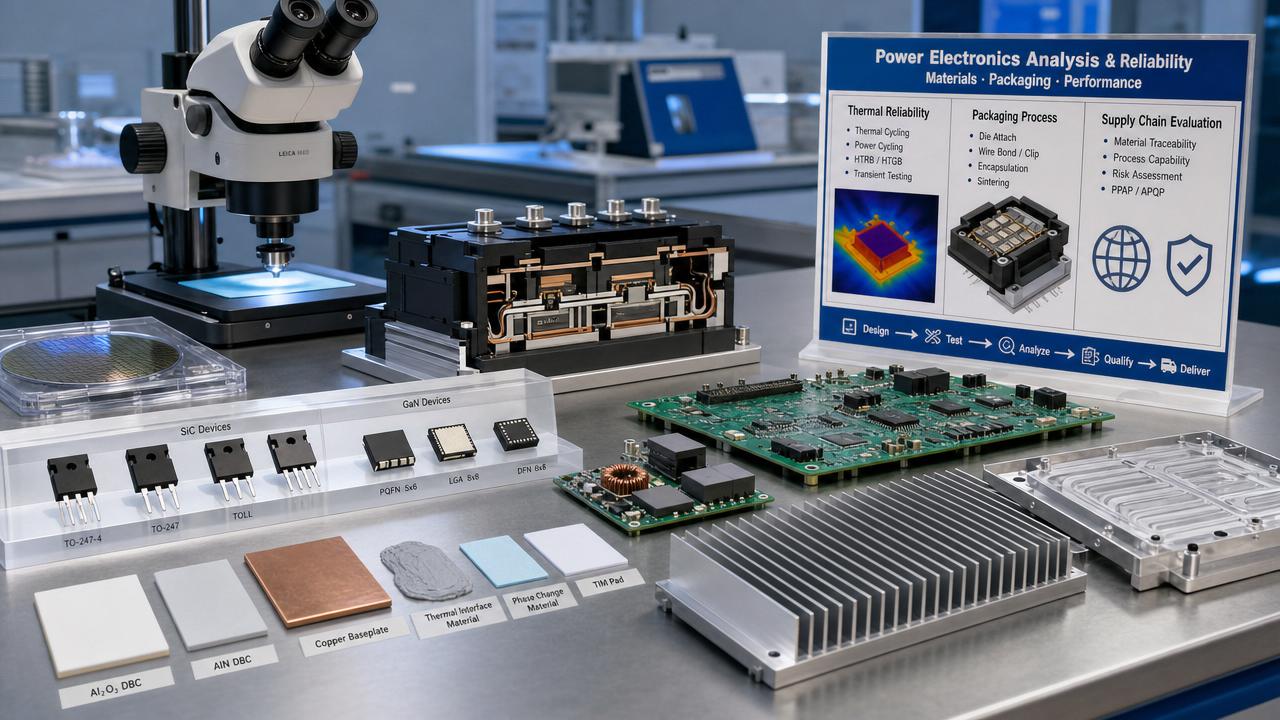
DETAILS
In power electronics, staying competitive means acting on credible data before markets shift. For enterprise decisions, technical trend reports provide a practical view of material change, thermal limits, sourcing exposure, and process capability.
The most useful technical trend reports do more than summarize headlines. They connect engineering evidence with compliance needs, reliability targets, and cost pressure across the semiconductor and EMS supply chain.
For organizations evaluating fast-moving technologies, the right reports can reduce uncertainty. They also support better timing on design updates, supplier qualification, and risk control.
What are technical trend reports in power electronics, and why do they matter?
Technical trend reports are structured analyses of measurable industry change. In power electronics, they track shifts in devices, packaging, substrates, assembly quality, and environmental performance.
Unlike general market commentary, strong technical trend reports rely on validated test data. They compare process tolerances, thermal behavior, reliability outcomes, and manufacturing consistency.
This matters because power systems fail at interfaces. Heat, current density, dielectric loss, solder fatigue, and component drift can quickly outweigh price advantages.
A reliable report helps teams understand whether a trend is commercially mature or still experimental. That difference affects qualification timelines, warranty exposure, and sourcing flexibility.
SiliconCore Metrics supports this need by turning manufacturing and component data into benchmarked intelligence. That approach helps align technical review with supply chain reality.
Which technical trend reports are worth tracking most closely right now?
Not every update deserves equal attention. The most valuable technical trend reports focus on changes that can materially alter performance, compliance, or sourcing resilience.
Five report categories stand out across the broader industry:
- Wide-bandgap semiconductor adoption, especially SiC and GaN switching behavior.
- Thermal packaging and interface material reliability under high cycle stress.
- PCB dielectric stability in high-frequency, high-voltage operating conditions.
- SMT placement precision and void control for power modules.
- Long-term active and passive component endurance in harsh environments.
Wide-bandgap reports deserve close attention because they affect efficiency, switching speed, and thermal design. They also influence gate driver selection and insulation strategy.
Thermal packaging reports matter because advanced power density creates concentrated heat. A small material mismatch can accelerate delamination, warpage, or junction temperature spikes.
PCB and SMT reports are equally important. Inverter boards, converters, and control assemblies depend on stable dielectric behavior and repeatable assembly precision.
The best technical trend reports also compare regional manufacturing capability. That helps clarify whether a material breakthrough is scalable or limited to pilot production.
Signals that a report deserves priority
- It includes test methodology, not only conclusions.
- It compares multiple suppliers or process variants.
- It links technical metrics to operating conditions.
- It references standards such as IPC-Class 3 or ISO 9001.
- It identifies risks, not just opportunities.
How can technical trend reports improve sourcing and engineering decisions?
Good technical trend reports create a shared evidence base. They help engineering, quality, and sourcing evaluate trade-offs using the same data language.
For example, a report on dielectric constants may reveal that one laminate performs well at room temperature but drifts under thermal cycling. That insight changes qualification priorities.
A placement precision report can expose whether fine-pitch power control boards are vulnerable to hidden alignment loss. That may affect yield, field reliability, and rework rates.
Technical trend reports also support dual-source planning. If one component family faces supply tightening, report data can identify realistic substitutes before disruption occurs.
This is especially useful in the global semiconductor and EMS landscape. Lead times can shift rapidly when material shortages, export controls, or regional demand spikes appear.
Another benefit is faster internal alignment. Measured trend data reduces debates driven by assumptions, marketing claims, or isolated lab results.
Practical decision areas supported by technical trend reports
How do you judge whether technical trend reports are credible?
The value of technical trend reports depends on evidence quality. A polished summary is not enough if the source lacks traceable methods or cross-supplier comparisons.
First, review the testing framework. Credible reports explain sample size, environmental conditions, measurement tools, and failure criteria.
Second, check independence. Reports tied too closely to a single sales agenda may hide limitations or exclude negative findings.
Third, look for benchmark context. A useful report shows how one process or component compares with alternatives under equal conditions.
Fourth, verify standards alignment. References to IPC, ISO, JEDEC, or recognized stress protocols improve practical relevance.
Finally, assess update frequency. In power electronics, old data can mislead decisions when package designs, material suppliers, and fab conditions change quickly.
Common credibility checks
- Are raw metrics visible, or only broad claims?
- Do thermal and electrical results match field conditions?
- Are failure modes discussed clearly?
- Does the report separate prototype results from volume production reality?
What risks and misunderstandings should be avoided when using technical trend reports?
One common mistake is treating technical trend reports as forecasts with certainty. They are decision tools, not guarantees.
Another mistake is focusing only on component innovation. In many cases, failure risk comes from assembly interaction, not the headline device itself.
It is also risky to copy conclusions from unrelated applications. A report relevant to telecom power modules may not fully apply to traction or industrial drives.
Cost can be misunderstood as well. New materials sometimes lower operating loss but raise qualification expense, tooling demands, or rework complexity.
Technical trend reports should therefore be read alongside lifecycle and manufacturability analysis. Performance gains mean little if the supply chain cannot sustain them.
Risk reminder table
How should organizations build a report tracking routine that actually works?
An effective routine starts with a short priority list. Focus on technical trend reports tied to revenue-critical products, high-failure risks, or constrained component categories.
Next, define review cadence. Weekly scans work for supply and pricing shifts, while monthly or quarterly reviews fit deeper material and reliability studies.
Then build comparison templates. Standard fields should include source, test method, key metric, affected design area, and action recommendation.
It also helps to separate signal from noise. Not every trend requires a design response. Some only require watch status until manufacturing readiness improves.
Independent intelligence providers are useful here because they connect PCB fabrication, SMT assembly, semiconductors, passive components, and thermal packaging in one view.
That cross-sector visibility is where technical trend reports become especially valuable. Many power electronics risks emerge between disciplines, not inside one category alone.
Simple tracking framework
- List the most exposed materials, components, and processes.
- Assign the most relevant technical trend reports to each area.
- Review evidence, maturity, and sourcing implications together.
- Translate findings into qualification, redesign, or monitoring actions.
The best technical trend reports are not the loudest ones. They are the reports that connect validated engineering data with real manufacturing capability and supply chain constraints.
For power electronics, that means tracking reports on wide-bandgap devices, thermal packaging, PCB material behavior, SMT precision, and long-term component reliability.
A disciplined review process makes these technical trend reports actionable. It supports stronger sourcing choices, clearer engineering priorities, and faster adaptation when industry conditions shift.
To move forward, create a focused watchlist, compare reports using common criteria, and prioritize independent sources that benchmark the global semiconductor and EMS ecosystem with measurable depth.
Recommended News
- Power SemiHow to reduce lead-time risk in 24V component sourcing24V component sourcing made resilient: learn how to qualify alternates, verify lead times, control quality risk, and keep production moving.
- Power SemiWhich semiconductor quality metrics best predict field reliability?Semiconductor quality metrics that best predict field reliability: evaluate parametric drift, stress-test relevance, package integrity, screening coverage, and true mission-profile margin.
- Power SemiWhat Is the Biggest Risk of Skipping Power Electronics Supplier Audits?What is the biggest risk when skipping supplier audits for power electronics? Hidden reliability failures, weak traceability, and costly field failures. Learn how audits protect quality.
- Power SemiHow to qualify semiconductor power devices for reliable switching performanceSemiconductor quality power devices: learn how to qualify switching margins, thermal reliability, gate-drive behavior, and production consistency for demanding converters.
- Power SemiHow to Evaluate Energy Saving Semiconductor Solutions for High-Efficiency Power DesignEnergy saving semiconductor solutions for high-efficiency power design: learn how to compare loss, thermal, EMI, reliability, and supply chain factors to choose the right device.
- Power SemiHow to Evaluate a Power Semiconductors Distributor for Supply Stability and TraceabilityPower semiconductors distributor evaluation guide: learn how to verify supply stability, traceability, sourcing controls, and documentation to reduce risk and choose a reliable partner.