
Thermal conductivity numbers can mislead in compact assemblies

DETAILS
Thermal conductivity figures often look decisive on paper, yet in dense assemblies they can mislead engineers, buyers, and project teams evaluating microcontrollers, Chipsets, and other electronic components. For high-performance power electronics, wire connectors, and industrial automation systems, true energy efficiency depends on interface design, stack-up constraints, and real operating conditions—not just a single thermal conductivity number.
Why thermal conductivity alone fails in compact electronic assemblies

In procurement sheets and component datasheets, thermal conductivity is often treated as a shortcut for heat dissipation quality. That shortcut breaks down in compact assemblies where heat must travel across multiple interfaces, thin dielectric layers, solder joints, copper planes, vias, housings, and air gaps. A material rated at 6 W/m·K may underperform a 3 W/m·K option if the lower-rated material achieves better contact, lower bond-line thickness, or more stable compression over 2–4 years of field use.
This matters across the semiconductor and EMS supply chain. R&D engineers care about junction temperature rise, operators care about assembly repeatability, quality teams care about drift under thermal cycling, and procurement leaders care about whether a premium-priced material actually reduces failure risk. In dense boards and thermal packaging, a single conductivity number says little about interface resistance, spreading resistance, or heat bottlenecks caused by geometry.
A practical thermal path often includes 5 to 8 separate layers or transitions. Each transition can introduce resistance that outweighs the published bulk conductivity of one material. This is especially common in power modules, compact motor drives, embedded controllers, LED power units, telecom boards, and industrial automation systems where available area is limited and airflow may remain below natural expectations.
SiliconCore Metrics (SCM) focuses on this exact gap between headline numbers and real assembly behavior. Through independent benchmarking, compliance-oriented reporting, and cross-supply-chain analysis, SCM helps technical evaluators and sourcing teams interpret thermal data in the context of PCB fabrication, SMT assembly, active devices, passive components, and thermal packaging rather than in isolation.
What engineers and buyers should examine beyond the datasheet headline
- Interface thermal resistance across TIM-to-device and TIM-to-heatsink contact surfaces, especially when surface flatness or pressure control varies by production lot.
- Bond-line thickness ranges, often moving from 50–100 μm in controlled lab setups to 150–300 μm in production conditions.
- Thermal spreading limits in compact layouts where heat cannot move laterally before hitting board edges, cutouts, or connector keep-out zones.
- Aging behavior under humidity, power cycling, vibration, and storage conditions that can change contact quality after 500–1,000 hours of operation.
Which parameters tell the real thermal story in power electronics and dense PCB designs?
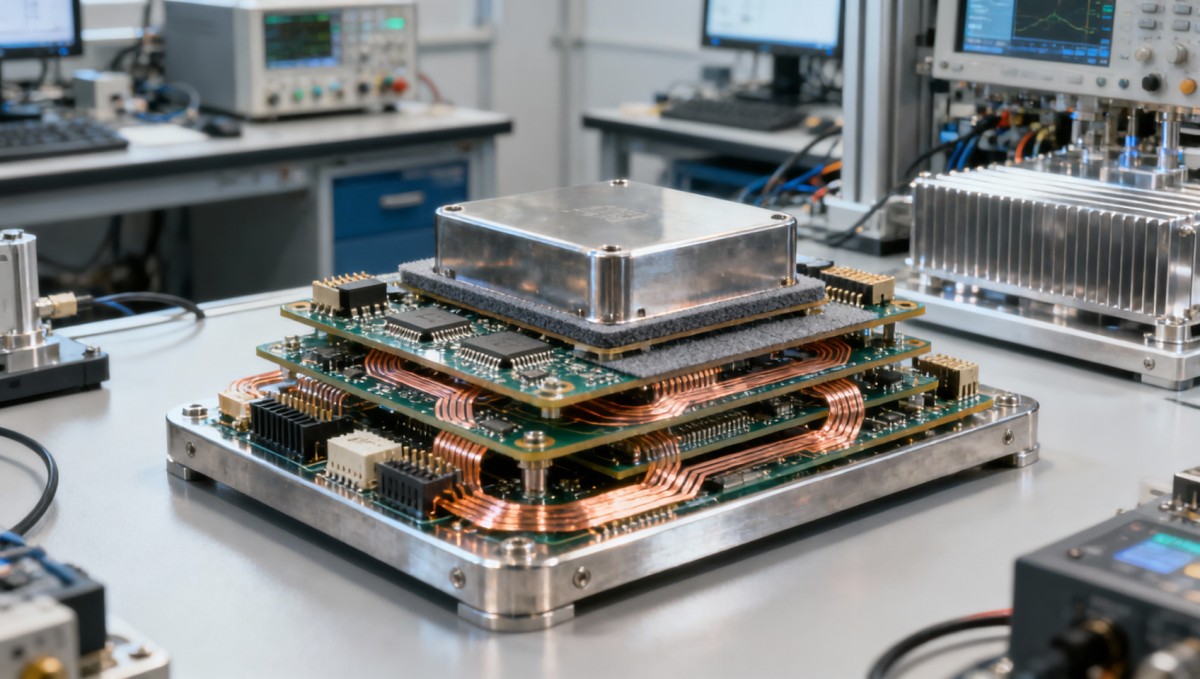
For technical assessment, thermal conductivity should be treated as one parameter inside a wider decision framework. In compact assemblies, the better question is not “What is the highest conductivity number?” but “Where is heat actually blocked?” In many designs, the dominant bottleneck is the interface, the copper distribution, or enclosure airflow, not the bulk property of the pad, adhesive, or encapsulant.
A realistic evaluation should combine at least 3 categories of data: material properties, assembly conditions, and operating loads. Material properties include conductivity and compressibility. Assembly conditions include flatness, clamping pressure, and placement precision. Operating loads include duty cycle, ambient range, and power density. Without these three categories, thermal decisions may look quantitative while remaining operationally incomplete.
This is where independent technical repositories become valuable. SCM’s benchmarking model is useful because it compares parameters that often sit in different vendor documents: PCB stack-up characteristics, SMT accuracy, component package behavior, and long-term reliability indicators. For procurement and business evaluation teams, that cross-reference reduces the risk of selecting materials that perform well only in ideal test coupons.
The table below summarizes the metrics that typically matter more than a standalone conductivity claim when evaluating thermal packaging, microcontrollers, chipsets, connectors, and compact power assemblies.
For search and sourcing purposes, this comparison helps answer a recurring B2B question: what should be validated before approving a thermal interface material, substrate, or compact cooling design? The answer is rarely one number. It is a stack of interacting parameters, and the weakest link often appears at the interface or in manufacturing variation rather than in the published conductivity claim.
A useful technical rule of thumb
If a thermal decision affects a product operating above moderate power density, involves continuous run time beyond 8 hours per day, or must survive wide ambient conditions such as -20°C to 85°C, teams should request validation data for assembly-level behavior. Material-only data is rarely enough for design freeze or supplier approval in these conditions.
How application scenarios change the meaning of thermal conductivity numbers
The same thermal conductivity value can lead to very different outcomes depending on the application. In a large-area heatsink interface with stable pressure, bulk conductivity may correlate reasonably well with performance. In a compact board with uneven components, narrow copper escape routing, and connector obstruction, the same number may have limited predictive value. That is why application scenario analysis is essential for both engineering and purchasing teams.
For microcontrollers and chipsets on multilayer PCBs, heat often spreads first through package leads, exposed pads, vias, and internal copper planes. In this case, PCB stack-up design and via density can matter as much as the thermal pad choice. For wire connectors and terminal blocks, localized hot spots may come from current concentration and contact resistance, making thermal conductivity of surrounding materials only part of the story.
In industrial automation systems, thermal performance also depends on enclosure design, dust loading, fan service intervals, and duty cycle. A system running at 40% average load for 3 shifts per day behaves differently from a system with short load peaks and long idle periods. Procurement teams comparing two suppliers should therefore ask whether reported thermal data reflects steady-state, transient spikes, or controlled bench conditions.
The following table aligns common compact assembly scenarios with the thermal factors that deserve priority in specification review, supplier audit, or design verification.
For distributors, agents, and project leaders, this scenario-based view improves quoting accuracy. It reduces the common mismatch between a material selected for attractive datasheet numbers and a final product that fails thermal validation after enclosure integration, pilot build, or burn-in. In practical terms, a better scenario fit can save one or two redesign loops, which often means 2–6 weeks of schedule protection.
Common scenario-specific warning signs
- A supplier promotes only conductivity while leaving pressure, surface condition, and aging data undefined.
- Thermal validation is performed on open benches, but the final product uses a closed housing with limited airflow.
- The PCB design team and procurement team use different assumptions about copper thickness, via count, or thermal interface thickness.
- A premium material is specified for a hotspot that is actually caused by connector resistance, package selection, or inadequate copper spreading.
What should procurement, QA, and project teams verify before supplier approval?
Thermal decisions in B2B electronics sourcing are rarely owned by one function. Engineering may focus on junction temperature, purchasing may focus on cost and lead time, QA may focus on reliability, and project management may focus on release schedules. Misalignment appears when thermal conductivity is used as the single purchasing filter. A stronger approach is to define a multi-role approval checklist before RFQ closure or sample release.
A practical review usually includes 4 stages: requirement definition, sample evaluation, assembly validation, and reliability confirmation. Depending on part criticality, this process may take 7–15 days for standard materials or 3–6 weeks when custom stack-ups, thermal pads, or package changes are involved. The goal is not bureaucratic delay. It is to prevent field issues that emerge only after production scaling.
SCM adds value here because independent benchmarking can normalize data across suppliers that present thermal performance in different ways. That is especially useful for procurement teams comparing Asian manufacturing sources, EMS partners, and component vendors where terminology, test methods, and report depth are not always consistent. Converting those differences into a structured evaluation matrix makes decisions easier to defend internally.
Before approving a thermal material, substrate, or compact assembly route, teams should align on the following review points.
Procurement and technical approval checklist
- Confirm the test method behind the thermal conductivity value and whether the result refers to through-plane or in-plane measurement.
- Review the intended bond-line thickness, application pressure, and assembly tolerance window, especially if SMT coplanarity or enclosure flatness can vary.
- Check compatibility with IPC-Class 3 expectations, internal reliability targets, and any customer-specific qualification process.
- Ask for thermal performance under representative ambient conditions, such as 25°C, 55°C, and elevated enclosure temperatures rather than room-only data.
- Verify long-term stability across thermal cycling, storage, and humidity exposure if the product is expected to run in industrial or outdoor conditions.
- Assess lead time, alternate source availability, and lot-to-lot consistency so thermal performance does not degrade when sourcing changes.
Why this matters commercially
A small cost increase for a validated thermal path may reduce rework, warranty exposure, and schedule slip. On the other hand, a premium conductivity rating without assembly-level evidence can create hidden cost. For business evaluators and executives, the smarter metric is total decision quality: thermal margin, manufacturability, compliance fit, and sourcing resilience taken together.
Common misconceptions, FAQs, and a better decision framework
Compact assemblies create recurring misconceptions that slow projects and distort sourcing decisions. The most common one is that a higher thermal conductivity number automatically lowers operating temperature. In reality, that only happens when the material is the dominant thermal bottleneck. In many products, the dominant bottleneck is elsewhere: package design, copper geometry, enclosure airflow, contact resistance, or installation quality.
A second misconception is that lab data transfers directly to production. In production, tolerances widen. Surface conditions change. Compression varies. Process windows shift across lines and factories. For a purchasing or QA team, this means validation should consider normal manufacturing spread, not just nominal performance at one ideal setting.
A third misconception is that thermal optimization belongs only to design engineers. It also belongs to sourcing, quality, and project functions because lead-time pressure, alternate-source substitution, and manufacturing route changes can all alter thermal outcomes. Cross-functional review is often the difference between a stable release and a late-stage qualification problem.
The following questions capture what many engineers, buyers, and distributors ask when comparing thermal materials and compact assembly options.
Does a higher W/m·K rating always mean better thermal performance?
No. A higher W/m·K rating can help, but only if interface resistance, bond-line thickness, spreading path, and assembly quality are controlled. In a compact stack-up, a 2× higher conductivity number may translate into only a small temperature improvement if the interface remains uneven or the heat path is constrained by board design.
What should be checked first during thermal material selection?
Start with the application condition: power density, ambient range, enclosure type, duty cycle, and allowable temperature rise. Then review 3 linked items together: thermal impedance, bond-line control, and long-term stability. This sequence is usually more useful than sorting candidates by conductivity alone.
How long does a typical evaluation cycle take?
For standard components and known assembly routes, initial screening may take 1–2 weeks. If the decision touches PCB redesign, supplier comparison, or reliability validation under cycling and humidity, a more realistic planning window is 3–6 weeks. Projects with regulated documentation or customer qualification gates may require longer internal review.
Which documents help procurement make a safer decision?
Useful documents include material datasheets, assembly condition notes, test method descriptions, reliability summaries, and standardized compliance reports. SCM’s value proposition is strong here because it translates complex manufacturing and thermal data into independent benchmarking and comparable reporting that both engineers and procurement executives can act on.
Why choose SCM for thermal benchmarking and supply-chain decision support
When thermal conductivity numbers are misleading, teams need more than a supplier brochure. They need independent interpretation across PCB fabrication, SMT assembly, active semiconductors, passive components, and thermal packaging. SCM is positioned for that role because it treats hardware as a measurable engineering system, not a commodity item described by isolated headline figures.
SCM supports global R&D engineers, procurement leaders, QA managers, distributors, and enterprise decision-makers with data-driven benchmarking that helps reduce supply-chain risk. Instead of asking clients to rely on one material claim, SCM helps compare stack-up behavior, placement precision, reliability stress factors, and compliance-oriented documentation in a unified decision framework.
If your team is reviewing microcontrollers, chipsets, thermal interface materials, compact power assemblies, connectors, or enclosure-limited electronics, SCM can help clarify which thermal parameters matter most before sourcing or design freeze. That includes parameter confirmation, supplier comparison, product selection support, delivery-cycle discussion, qualification planning, and report-based communication for internal stakeholders.
Contact SCM to discuss 5 practical areas: thermal parameter interpretation, assembly-level selection guidance, sample evaluation strategy, compliance reporting needs, and alternate-source benchmarking. This is especially useful when your project faces tight timelines, unclear supplier data, demanding reliability targets, or a need to align engineering and purchasing decisions before volume release.
Recommended News
- Heat DissipationHow to prevent overheating in automotive PCB power distributionPrevent overheating in automotive PCB power distribution with practical tips on copper layout, thermal paths, and testing. Discover how to reduce hotspots and improve reliability.
- Heat DissipationCan heat spreading intelligence identify hot spots in PCB designs?Discover how heat spreading intelligence identifies PCB hot spots before fabrication. Learn to assess thermal models, validate predictions, and choose design changes that improve reliability.
- Heat DissipationWhich heat sink materials suit high-power electronics made in Germany?Heat sink materials Germany: compare aluminum, copper, graphite, and hybrid designs for high-power electronics. Find the right balance of thermal performance, weight, cost, and manufacturability.
- Heat DissipationHow to assess a graphite materials supplier's capability for thermal partsGraphite materials supplier assessment starts with more than machining. Discover how to evaluate thermal performance, purity, precision, cleanliness, traceability, and testing for reliable thermal parts.
- Heat DissipationHow to assess a heat dissipation supplier before placing an orderHeat dissipation supplier assessment guide: verify thermal performance, materials, process control, samples, capacity, and total risk before placing an order.
- Heat DissipationHow automotive PCB material selection affects thermal reliabilityAutomotive PCB material selection shapes thermal reliability. Explore CTE, Tg, moisture resistance, stack-up design, and proven qualification strategies for demanding vehicle electronics.