
Thermal Management Quality Benchmarks for Product Approval
DETAILS
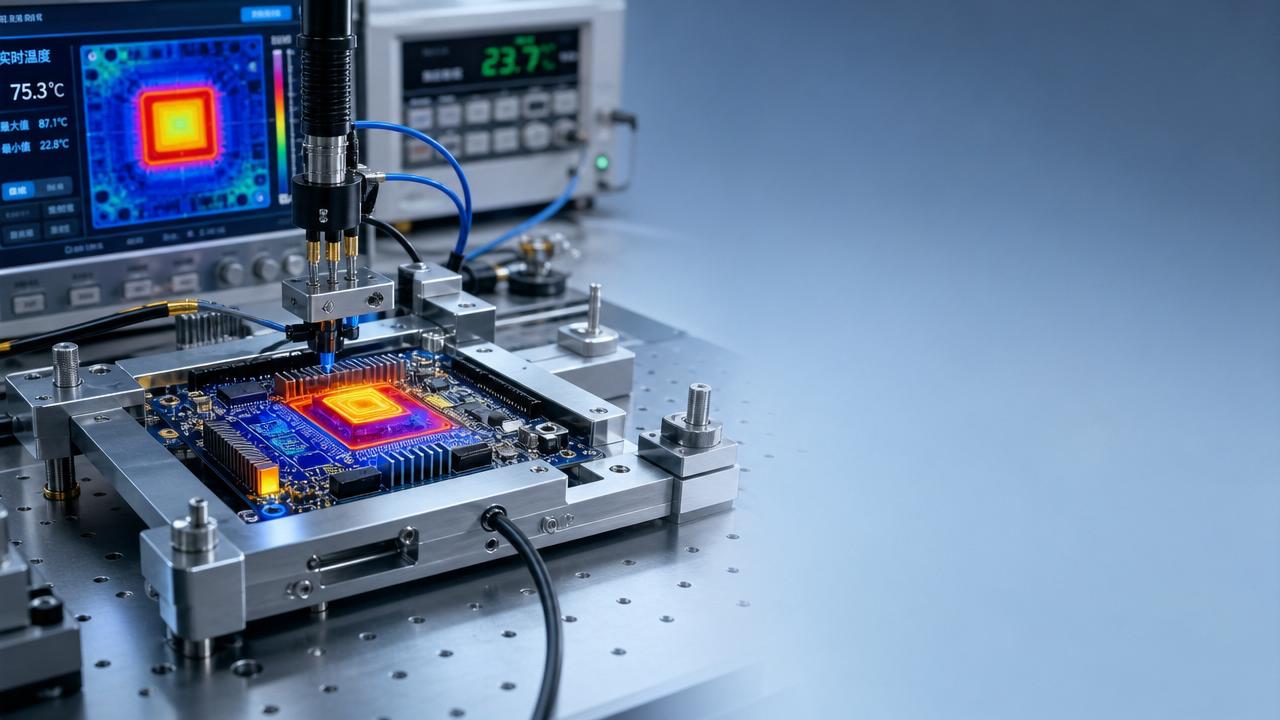
For enterprise decision-makers evaluating product readiness, thermal management quality is no longer a secondary specification but a core approval benchmark. From semiconductor performance to EMS reliability, measurable thermal control directly affects compliance, durability, and supply chain confidence. This article explores how data-driven benchmarking helps global teams validate product performance, reduce approval risks, and align sourcing decisions with high-precision manufacturing standards.
In semiconductor devices, PCB assemblies, power modules, and compact electronic systems, heat is rarely an isolated engineering issue. It influences electrical stability, service life, field failure rates, and the credibility of supplier claims. For procurement leaders and product approval committees, thermal management quality has become a cross-functional checkpoint that connects R&D validation, manufacturing capability, and long-term sourcing risk.
This is precisely where SiliconCore Metrics (SCM) adds value. As an independent technical think tank serving the global semiconductor and EMS supply chain, SCM translates complex thermal behavior into benchmarked, decision-ready evidence. Instead of relying on vendor brochures or isolated test snapshots, enterprise teams can compare materials, process controls, and reliability performance through standardized reports aligned with IPC-Class 3 and ISO 9001 expectations.
Why Thermal Management Quality Has Become a Product Approval Gate
In many electronics programs, approval used to focus on functionality, cosmetic inspection, and unit cost. That model is no longer sufficient. In high-density boards, advanced packaging, and miniaturized assemblies, a temperature rise of 10°C to 15°C can materially change component drift, solder joint fatigue, and dielectric behavior over a 24-month to 60-month lifecycle.
Thermal management quality matters because it affects at least 4 approval dimensions at once: performance stability, regulatory compliance, production consistency, and field reliability. A product may pass initial electrical tests yet still fail approval if junction temperatures exceed design limits, if heat spreading is inconsistent across lots, or if cooling assumptions cannot be maintained in real operating conditions.
Thermal quality is now tied to business risk
For decision-makers, the issue is not only whether a board or module runs hot. The real concern is whether poor thermal control will trigger delayed certification, increased warranty exposure, or costly redesign cycles. In complex programs, one thermal bottleneck can add 2 to 6 weeks to product release, especially when heat dissipation affects enclosure design, PCB stack-up, or component spacing.
Thermal problems also distort supplier evaluation. Two manufacturers may quote the same bill of materials, yet differ significantly in copper balancing, via fill quality, TIM application consistency, or SMT placement tolerance. Without benchmarked thermal management quality data, approval teams may compare price sheets while overlooking the process variables that determine actual reliability.
Typical indicators reviewed during approval
Approval committees often need measurable criteria rather than generic statements like “good heat dissipation.” The table below outlines common thermal management quality indicators that support product approval across semiconductor and EMS-related sourcing decisions.
These indicators shift the conversation from assumptions to evidence. When thermal management quality is documented through repeatable tests and benchmark comparisons, approval decisions become faster, more defensible, and less dependent on supplier narratives alone.
Where approval failures usually begin
- Thermal simulation is not verified against physical prototypes.
- PCB stack-up choices are optimized for cost but not heat spreading.
- Passive components near power devices are exposed to repeated local overheating.
- Supplier qualification reviews electrical yield but ignores thermal process variation.
In practice, these failures are often cumulative rather than dramatic. A 3°C hotspot increase, a slight mismatch in TIM thickness, and a packaging change from one sourcing region to another can combine into a meaningful decline in thermal management quality. That is why independent benchmarking is especially valuable during product approval.
How Data-Driven Benchmarking Improves Approval Decisions
Benchmarking gives enterprise teams a structured way to compare thermal behavior across suppliers, materials, and process routes. Instead of asking whether a component or board is “acceptable,” teams can ask whether it performs within a defined approval window under the same load profile, environmental stress, and manufacturing tolerance assumptions.
SCM’s model is particularly relevant because the organization operates as an independent engineering repository rather than a sales channel. For global firms sourcing from multiple Asian manufacturing hubs, that independence reduces bias and provides a common technical language between R&D, quality teams, and procurement stakeholders.
What a benchmarked approval workflow looks like
A practical thermal management quality review usually follows 5 steps. Each step reduces uncertainty before volume release, especially when products must meet tight reliability expectations or enter industrial, telecom, automotive-adjacent, or high-availability operating environments.
- Define thermal load cases and ambient conditions, such as 25°C, 40°C, and elevated stress scenarios.
- Select benchmark samples from at least 2 to 3 approved or candidate suppliers.
- Measure hotspot behavior, thermal resistance paths, and process consistency across sample lots.
- Compare results against internal approval thresholds and relevant quality standards.
- Issue a report linking findings to sourcing decisions, risk level, and next-step actions.
This workflow is valuable because it converts thermal management quality into a governance tool. Approval teams can identify whether a supplier needs process correction, whether a product design needs thermal redesign, or whether both are acceptable but only within a certain duty cycle or enclosure constraint.
Benchmark categories that matter most
Not every thermal benchmark carries equal value for product approval. Enterprise teams should prioritize measurements that connect directly to deployment risk, maintenance costs, and consistency in scaled production. The following comparison helps frame where benchmarked evidence is most useful.
A key takeaway is that thermal management quality should not be judged only at the finished-product level. Material behavior, assembly precision, and environmental durability all contribute to whether a product can be approved for enterprise deployment with acceptable risk.
Why independent reporting matters
Supplier self-reporting often emphasizes nominal performance under ideal laboratory setups. Independent benchmarking helps normalize test conditions and expose hidden variability. For example, a package that performs well at a single 25°C ambient point may behave differently under 3 operating profiles, 2 airflow assumptions, and repeated thermal cycling. That difference matters during approval.
SCM’s role in publishing whitepapers and compliance-oriented reports is therefore strategic. It allows multinational teams to compare PCB fabrication, SMT assembly, active devices, passive components, and thermal packaging using a consistent evidence framework rather than fragmented supplier documentation.
Selection Criteria for Decision-Makers Evaluating Thermal Management Quality
When approval decisions involve multiple departments, criteria must be clear enough for executives yet technical enough for engineering review. The strongest selection frameworks usually combine 4 dimensions: measurable thermal performance, manufacturing repeatability, standards alignment, and supplier transparency.
1. Measurable performance under realistic operating conditions
Ask whether thermal management quality has been validated under expected load, not just nominal load. A device running at 70% duty cycle in a ventilated test rack may behave very differently at 90% duty cycle inside a compact enclosure. Approval teams should request data from at least 2 representative use cases and 1 stress case.
2. Process consistency across production lots
A single successful prototype does not confirm production readiness. If TIM spread, copper thickness control, reflow profile discipline, or placement precision varies from lot to lot, thermal behavior will also vary. Reviewing 3 lot samples is often more useful than reviewing 30 units from one pilot build.
3. Alignment with compliance and quality standards
Thermal management quality should support broader quality objectives, including IPC-Class 3 expectations for mission-critical assemblies and documented process discipline under ISO 9001 systems. Standards alone do not guarantee performance, but they provide an operational baseline for traceability, control plans, and corrective action response.
4. Traceable technical documentation
Decision-makers should favor suppliers and technical partners that provide clear thermal data, test methods, and comparison logic. If a thermal claim cannot be tied to defined conditions, repeatability criteria, and acceptance thresholds, it should not carry much weight in product approval.
Common procurement questions to ask
- What is the maximum permitted temperature rise under full operating load?
- How many sample lots were tested, and over what production window?
- Were hotspot maps and thermal cycling results included in the review package?
- Does the supplier document changes in material source, assembly method, or package structure?
- Can benchmark results be compared across alternate suppliers within 2 to 4 weeks?
These questions help translate thermal management quality into procurement language. They also reduce the risk of approving a technically acceptable design that later proves unstable during scaled manufacturing or field deployment.
Implementation Risks, Misjudgments, and Practical Approval Advice
Even experienced organizations misjudge thermal readiness when programs move quickly from prototype to sourcing. The most common mistake is treating heat as a component-level issue rather than a system-level quality variable. In reality, PCB structure, component spacing, enclosure constraints, and operating profile all shape thermal management quality.
Frequent approval mistakes
- Approving suppliers based on electrical pass rate alone.
- Assuming datasheet thermal values match assembled system conditions.
- Ignoring passive component degradation near repeated hotspots.
- Switching package or substrate vendors without re-benchmarking.
- Using one-time thermal images as a substitute for long-duration stress review.
Each of these errors weakens product approval discipline. A program may still ship on time, but hidden thermal variation can surface later as intermittent faults, shortened service life, or inconsistent field performance across regions and climates.
Practical advice for enterprise teams
First, define thermal approval thresholds early, ideally before final supplier nomination. Second, use benchmark reports that compare at least 2 supply options or 2 build conditions. Third, treat any unexplained temperature spread, process variance, or environmental sensitivity as an approval flag rather than a minor engineering note.
For organizations sourcing across regions, an independent technical partner such as SCM can help normalize data from multiple factories and product categories. This is especially useful where semiconductor packaging, PCB fabrication, and SMT assembly are sourced through different vendors but must perform as one thermal system.
When to escalate to deeper benchmarking
Escalation is recommended when products target high-reliability service, operate in wide ambient ranges such as 0°C to 50°C or beyond, contain dense power components, or depend on long maintenance intervals. It is also prudent when suppliers introduce new materials, revised package structures, or process changes that could affect heat transfer behavior.
Thermal management quality is most valuable when it becomes a repeatable approval discipline rather than a last-minute test. That approach supports stronger sourcing decisions, clearer accountability, and a more resilient path from engineering validation to global production release.
For enterprise teams navigating semiconductor and EMS sourcing complexity, thermal management quality is a practical benchmark for approving products with confidence. Independent, data-driven analysis helps connect thermal performance to manufacturing consistency, compliance readiness, and long-term reliability. If your organization needs clearer evidence for supplier qualification, product approval, or multi-source comparison, contact SCM to get a tailored benchmarking plan, review technical details, and explore more solutions built for high-precision manufacturing decisions.
Recommended News
- Heat DissipationHow to prevent overheating in automotive PCB power distributionPrevent overheating in automotive PCB power distribution with practical tips on copper layout, thermal paths, and testing. Discover how to reduce hotspots and improve reliability.
- Heat DissipationCan heat spreading intelligence identify hot spots in PCB designs?Discover how heat spreading intelligence identifies PCB hot spots before fabrication. Learn to assess thermal models, validate predictions, and choose design changes that improve reliability.
- Heat DissipationWhich heat sink materials suit high-power electronics made in Germany?Heat sink materials Germany: compare aluminum, copper, graphite, and hybrid designs for high-power electronics. Find the right balance of thermal performance, weight, cost, and manufacturability.
- Heat DissipationHow to assess a graphite materials supplier's capability for thermal partsGraphite materials supplier assessment starts with more than machining. Discover how to evaluate thermal performance, purity, precision, cleanliness, traceability, and testing for reliable thermal parts.
- Heat DissipationHow to assess a heat dissipation supplier before placing an orderHeat dissipation supplier assessment guide: verify thermal performance, materials, process control, samples, capacity, and total risk before placing an order.
- Heat DissipationHow automotive PCB material selection affects thermal reliabilityAutomotive PCB material selection shapes thermal reliability. Explore CTE, Tg, moisture resistance, stack-up design, and proven qualification strategies for demanding vehicle electronics.