
RoHS Thermal Management Components: Compliance Checks That Matter
DETAILS
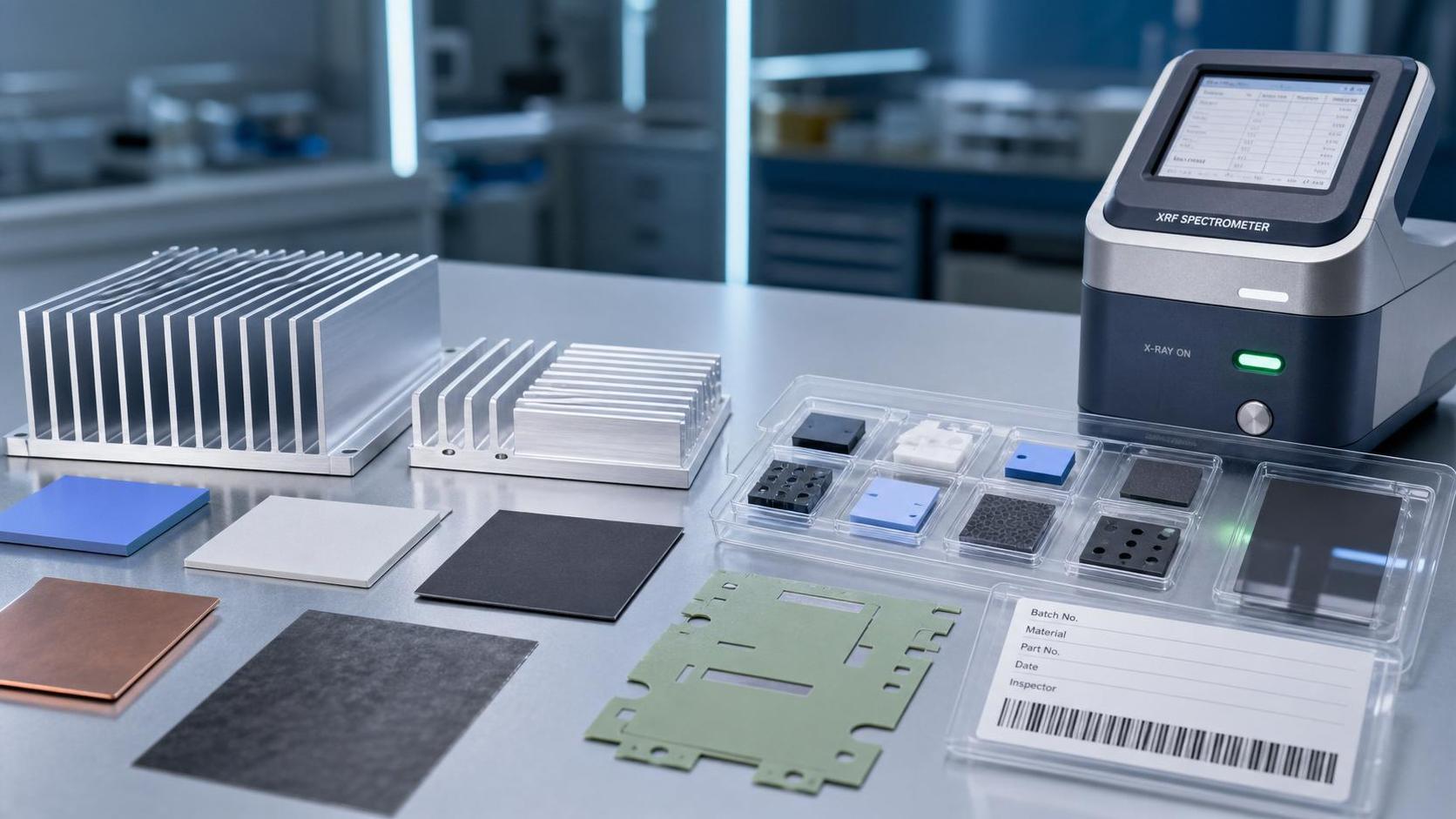
RoHS thermal management components sit at the intersection of compliance, reliability, and product safety. In electronics manufacturing, a heat sink, thermal pad, interface material, fan assembly, or insulated substrate may appear low risk, yet each can introduce restricted substances, unstable formulations, or traceability gaps that surface later during audit, field failure, or market entry review.
That is why compliance checks cannot stop at a supplier statement. Thermal performance, material consistency, coating chemistry, and process control all shape whether a part remains both RoHS-conforming and operational under real thermal stress. In a supply chain defined by tight tolerances and cross-border sourcing, the most useful approach is evidence-based verification rather than paperwork alone.
Why this topic carries more weight now
Thermal loads are increasing across power electronics, telecom systems, automotive control units, industrial drives, LED modules, and compact computing hardware. As power density rises, thermal materials are no longer passive accessories. They become performance-critical elements.
At the same time, RoHS enforcement has matured. Regulators, customers, and auditors increasingly expect documented substance control down to homogeneous material level. A compliant assembly can still fail review if one coating, adhesive filler, solderable finish, or polymer additive exceeds the limit.
This matters in global sourcing environments where the same part number may come from multiple factories, different plating lines, or revised formulations. SiliconCore Metrics (SCM) has built its reputation around this exact gap: translating manufacturing variables into comparable technical evidence for supply chain decisions.
What counts as RoHS thermal management components
The term covers parts and materials used to transfer, spread, dissipate, or isolate heat in electronic assemblies while meeting RoHS substance restrictions. The category is broader than many sourcing files suggest.
Typical examples include aluminum or copper heat sinks, thermal interface pads, gap fillers, greases, phase-change materials, graphite sheets, ceramic insulators, thermally conductive adhesives, and metal-core or insulated thermal substrates.
Some assemblies also include fans, housings, bonded laminates, clips, tapes, and surface finishes. Those secondary elements are often where hidden compliance issues appear, because they mix metals, polymers, fillers, pigments, and processing chemicals.
Compliance is about the whole material system
A thermal pad may pass incoming thermal resistance checks and still carry RoHS risk through brominated flame retardants, lead in pigments, cadmium in colorants, or phthalates in soft polymer systems. Function and compliance must be reviewed together.
The same logic applies to plated heat spreaders, anodized parts, bonded interfaces, and adhesive-backed films. RoHS thermal management components should be assessed as material stacks, not just as finished catalog items.
The compliance checks that matter most
In practice, the strongest controls combine document review, analytical screening, supplier process visibility, and change management. Each check covers a different failure mode.
1. Homogeneous material disclosure
Ask for substance data at homogeneous material level, not only a broad product declaration. A bonded thermal assembly may contain separate risks in foil, adhesive, release liner, coating, and filler package.
2. Validated supplier declarations
A declaration is useful only when it is current, signed, traceable to part revision, and aligned with the applicable RoHS scope. Expired statements, generic templates, and brand-level claims create obvious audit exposure.
3. Material composition consistency
Formulation drift is common in thermal compounds. Filler loading, carrier chemistry, curing agents, and plasticizers may change to improve cost or processability. Those adjustments can alter both restricted substance risk and long-term thermal behavior.
4. Screening and laboratory confirmation
XRF screening helps identify metals of concern in platings, solders, alloys, and coatings. It is fast, but not always enough for complex polymers. High-risk materials often require deeper laboratory methods for phthalates or brominated compounds.
5. Traceability to lot and manufacturing site
RoHS thermal management components should link clearly to lot code, factory, date code, and revision. Without that chain, a nonconforming batch can spread across builds before containment begins.
6. Thermal aging and stability review
A part can start compliant and still fail operationally if heat causes bleed-out, cracking, outgassing, or chemical separation. For thermal materials, compliance review should include behavior under realistic temperature cycling and dwell conditions.
Where hidden risk usually appears
Most failures are not dramatic. They come from overlooked details that seem too minor to challenge during sourcing or incoming inspection.
- Adhesive-backed thermal pads with undocumented release liner chemistry
- Anodized or plated metal parts sourced from an alternate finishing vendor
- Graphite or polymer sheets reformulated for cost without notice
- Silicone greases carrying additive packages that differ by region
- Thermally conductive plastics using recycled feedstock with poor traceability
- Composite assemblies approved under one BOM, then split across multiple sites
These cases are common because thermal parts often move through purchasing channels as support materials rather than regulated design-critical items. Once that assumption takes hold, review depth usually drops.
How compliance and performance connect in real use
A narrow compliance workflow can miss the practical reason these parts matter. Thermal materials live under compression, vibration, humidity, elevated temperature, and repeated power cycling. Their chemistry affects both safety posture and thermal transfer efficiency.
For example, a gap filler that pumps out under cycling can raise junction temperature, shorten component life, and trigger warranty events. If the same material also lacks clean substance documentation, the problem expands from reliability into regulatory risk.
This is where independent technical benchmarking becomes useful. SCM’s research model, built around manufacturing data transparency, reflects a practical truth: compliance evidence has more value when tied to measurable performance under realistic operating conditions.
High-scrutiny application areas
RoHS thermal management components deserve closer review in applications where failure consequences or audit visibility are high.
- Power conversion and energy storage systems
- Automotive electronics and charging hardware
- Telecom base stations and network equipment
- Medical and laboratory electronics
- Industrial control cabinets and motion drives
- LED lighting with compact thermal budgets
A stronger review approach for day-to-day control
The most effective programs treat RoHS thermal management components as controlled technical materials, not routine consumables. That shift changes both approval depth and ongoing surveillance.
A workable review model usually includes four layers.
- Define which thermal items require full substance review by risk, temperature exposure, and product market.
- Map every part to material declarations, lab evidence, and supplier revision history.
- Set triggers for retest after formulation, plant, plating, or raw material changes.
- Link compliance records to reliability data, incoming inspections, and nonconformance trends.
This does not require testing every lot at maximum depth. It requires knowing where risk concentrates and where documentation alone is too weak.
What to evaluate next
A useful next step is to review the thermal components already approved in critical assemblies. Focus on parts with adhesives, polymer carriers, coatings, or multi-site sourcing. Those categories often hide the largest gaps.
Then compare declaration quality against real traceability, incoming controls, and thermal reliability evidence. If those records do not align, the issue is not administrative. It is a signal that the approval basis may be too thin.
For organizations operating across global EMS and semiconductor supply networks, RoHS thermal management components should be reviewed with the same discipline applied to high-value active parts. That is usually where better audits, fewer surprises, and more stable product performance begin.
Recommended News
- Heat DissipationHow to prevent overheating in automotive PCB power distributionPrevent overheating in automotive PCB power distribution with practical tips on copper layout, thermal paths, and testing. Discover how to reduce hotspots and improve reliability.
- Heat DissipationCan heat spreading intelligence identify hot spots in PCB designs?Discover how heat spreading intelligence identifies PCB hot spots before fabrication. Learn to assess thermal models, validate predictions, and choose design changes that improve reliability.
- Heat DissipationWhich heat sink materials suit high-power electronics made in Germany?Heat sink materials Germany: compare aluminum, copper, graphite, and hybrid designs for high-power electronics. Find the right balance of thermal performance, weight, cost, and manufacturability.
- Heat DissipationHow to assess a graphite materials supplier's capability for thermal partsGraphite materials supplier assessment starts with more than machining. Discover how to evaluate thermal performance, purity, precision, cleanliness, traceability, and testing for reliable thermal parts.
- Heat DissipationHow to assess a heat dissipation supplier before placing an orderHeat dissipation supplier assessment guide: verify thermal performance, materials, process control, samples, capacity, and total risk before placing an order.
- Heat DissipationHow automotive PCB material selection affects thermal reliabilityAutomotive PCB material selection shapes thermal reliability. Explore CTE, Tg, moisture resistance, stack-up design, and proven qualification strategies for demanding vehicle electronics.