
What a Component Performance Data Database Should Show First
DETAILS
What a Component Performance Data Database Should Show First
For technical evaluation, speed matters, but speed without structure creates risk. A strong component performance data database should surface the most decision-critical facts before anything else.
That usually means reliability, tolerance stability, thermal behavior, and compliance history. These fields shape qualification, sourcing confidence, and long-term field performance.
In semiconductor and EMS workflows, the wrong data order slows reviews. It also hides risk signals that should be visible within the first few seconds.
A useful component performance data database does not begin with marketing claims. It begins with measurable behavior under real operating conditions and recognized standards.
Why the First Screen Matters
The first screen sets the pace for the entire review process. If the database opens with secondary attributes, users must dig for what actually determines acceptance or rejection.
That is a problem in high-precision electronics. Small shifts in heat response, drift, or process variation can change system behavior more than headline specifications suggest.
A well-structured component performance data database supports faster comparison across suppliers, part numbers, and production lots. It also reduces the chance of approving a part on incomplete evidence.
From a sourcing perspective, this also matters because engineering and procurement rarely read data in the same order. The database must support both without creating two separate truth sets.
The Four Metrics That Should Appear First
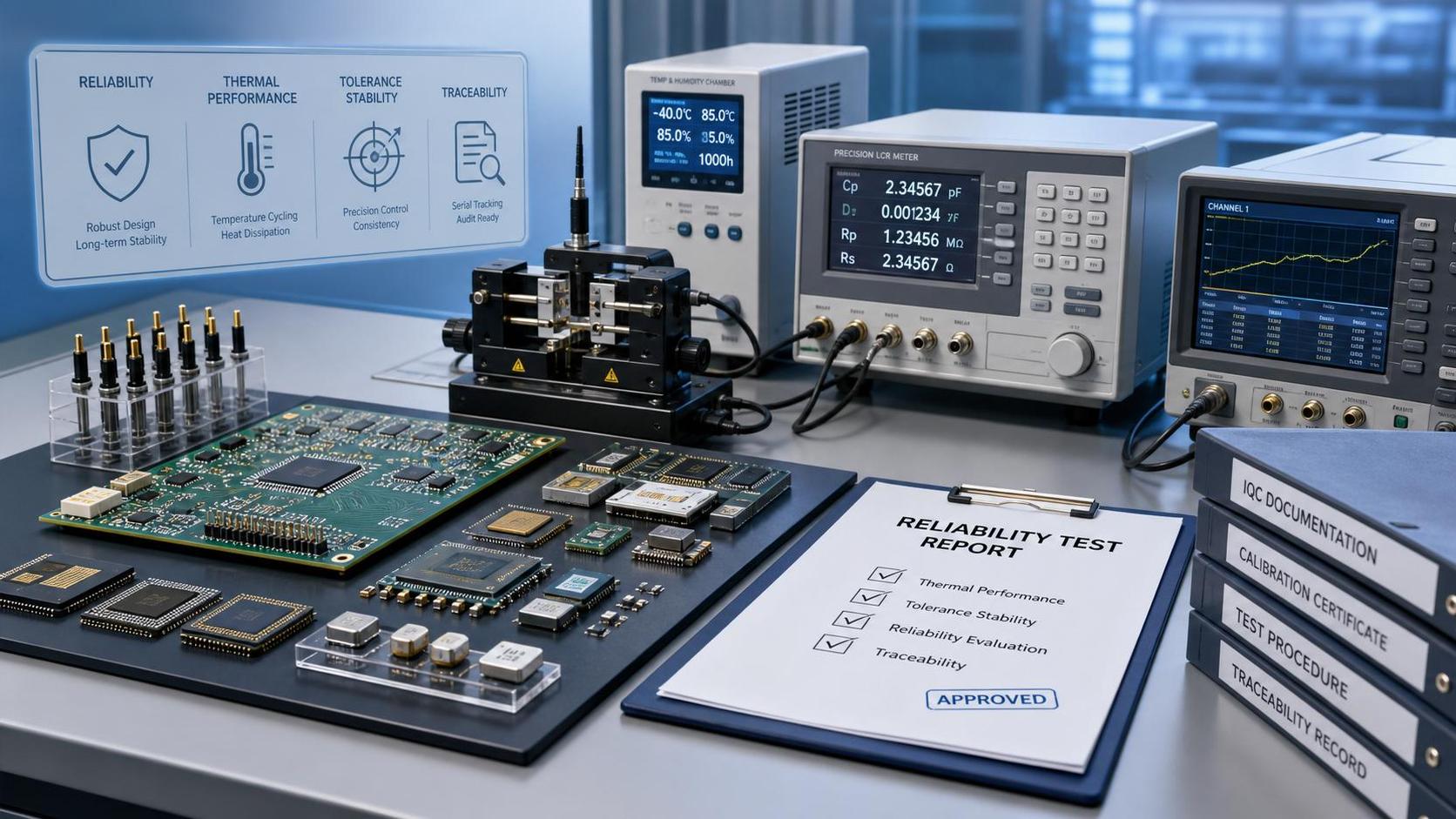
The most useful component performance data database should place four categories at the top. These are the fields that most directly affect qualification risk.
1. Reliability Under Stress
Reliability data should be the first visible layer. That includes life testing, failure rates, accelerated aging, humidity bias results, and cycling performance.
For active and passive components, raw specification values are not enough. The database should show how performance changes after thermal shock, vibration, and extended operating hours.
A component performance data database becomes more useful when it displays test conditions beside results. Without that context, reliability numbers are hard to compare fairly.
2. Tolerance Stability Over Time
Tolerance at shipment is only a starting point. What matters more is tolerance stability after assembly, reflow, aging, and environmental exposure.
In a component performance data database, this should appear as drift trends, deviation windows, and lot-to-lot consistency. These numbers often reveal hidden process weakness.
This is especially important in precision analog circuits, RF modules, sensing systems, and power management designs. Minor deviation can trigger bigger system-level variation.
3. Thermal Behavior
Thermal behavior should be impossible to miss. Heat affects electrical stability, package integrity, solder joint durability, and expected service life.
The right component performance data database should show thermal resistance, derating curves, hot-spot thresholds, and performance at elevated ambient conditions.
For power devices and dense assemblies, thermal data often determines whether a part is actually usable. A nominally compliant part may still fail practical enclosure limits.
4. Compliance and Traceability History
Compliance is not a footer detail. It should sit near the top because it affects approval paths, audit readiness, and customer acceptance.
A serious component performance data database should show IPC-Class 3 relevance, ISO 9001 alignment, RoHS status, REACH status, and revision history.
Traceability also matters. Lot code visibility, test date, lab source, and document version control help teams separate current evidence from outdated claims.
What Should Come Next
Once the top four metrics are visible, the next layer should support deeper screening. This is where comparison becomes more practical and less subjective.
- Electrical parameters across temperature ranges
- Mechanical package dimensions and assembly sensitivity
- MSL, solderability, and reflow survivability
- Supplier change notifications and PCN history
- End-of-life risk and alternate part mapping
This second layer should still be structured around decision flow. A component performance data database should help narrow options, not create extra reading.
How to Structure the Database for Real Decisions
Good content alone is not enough. The structure of a component performance data database determines whether the data can actually guide technical decisions.
The best systems use a layered model. First comes summary risk, then test-backed performance, then documentation, then sourcing context.
That structure reflects how real reviews happen. Teams typically want a quick answer first, then the evidence behind it, then the commercial implications.
This approach is especially valuable when parts come from multiple Asian manufacturing hubs and must be compared against global qualification standards.
Common Database Gaps That Slow Qualification
Many platforms call themselves a component performance data database, yet still bury the most useful fields. That creates friction at exactly the wrong moment.
- Test results appear without conditions or methodology.
- Compliance claims lack document dates or revision control.
- Thermal data is reduced to a single headline number.
- Lot variation and drift trends are missing.
- No direct mapping exists between engineering metrics and sourcing risk.
These gaps force teams into side spreadsheets, supplier emails, and manual document checks. Once that happens, the database stops being a decision system.
What High-Confidence Evaluations Look Like
A high-value component performance data database should help users answer five questions almost immediately.
- Will this part remain stable in the target environment?
- Do the test conditions match the real application profile?
- Is there clear evidence of standards compliance?
- Can the supplier maintain consistency across lots?
- What sourcing risk remains after technical approval?
When those answers are visible early, qualification becomes faster and more defensible. It also becomes easier to explain decisions to internal quality and procurement teams.
Why Independent Data Matters More Now
Recent supply chain shifts have made standardized, independent data more important. Supplier claims alone rarely provide the full picture for advanced electronics programs.
That is where an engineering-led repository adds value. Independent benchmarking makes a component performance data database more credible across regions, labs, and vendor ecosystems.
For organizations working across PCB fabrication, SMT assembly, semiconductors, passives, and thermal packaging, shared data standards reduce interpretation errors and sourcing surprises.
This is also why groups such as SiliconCore Metrics focus on data transparency, stress-tested performance evidence, and standard-based reporting rather than supplier-facing promotion.
Final Takeaway
The best component performance data database shows decision-critical facts first, not just complete records. That means reliability, tolerance stability, thermal behavior, and compliance history must lead.
Everything else should support those signals with test context, traceability, and supply relevance. When the structure is right, teams qualify faster and with fewer blind spots.
For any organization reviewing high-performance components, the practical question is simple: does your component performance data database show what matters first, or only what is easiest to publish?
Recommended News
- MCU & ChipsetsWhat a Component Performance Data Database Should Show FirstComponent performance data database guide: see which metrics should appear first—reliability, tolerance stability, thermal behavior, and compliance—to speed qualification and reduce sourcing risk.
- MCU & ChipsetsDesign Verification ISO 26262: What to Check Before Safety ApprovalDesign verification ISO 26262: learn the critical checks before safety approval, from traceability and fault handling to manufacturing risks, to reduce audit delays and redesign costs.
- MCU & Chipsets200mm Wafer Market Analysis: Supply, Pricing, and Capacity Outlook for 2026200mm wafer market analysis for 2026: explore tightening supply, firmer pricing, and limited capacity expansion shaping sourcing risk, contract strategy, and procurement decisions.
- MCU & ChipsetsMCU Spot Prices Rise 12.7% as China Lead Times ShortenMCU spot prices rise 12.7% while China lead times shorten to 6 weeks. Discover what this means for sourcing, inventory planning, delivery control, and supply-chain decisions.
- MCU & ChipsetsSemiconductor Component Reliability for Automotive: Failure Modes That MatterSemiconductor component reliability for automotive: learn the failure modes that matter most, from wire bond fatigue to corrosion, and reduce supplier, safety, and field risk.
- MCU & ChipsetsMCU Lead Times Reach 22 Weeks as Auto-Grade Capacity TightensMCU lead times reach 22 weeks as auto-grade capacity tightens, reshaping BOM planning, sourcing, and launch timelines. Learn what electronics buyers and manufacturers should do now.