
PCB for LED Lighting: How to Reduce Heat Build-Up and Early Failure
DETAILS
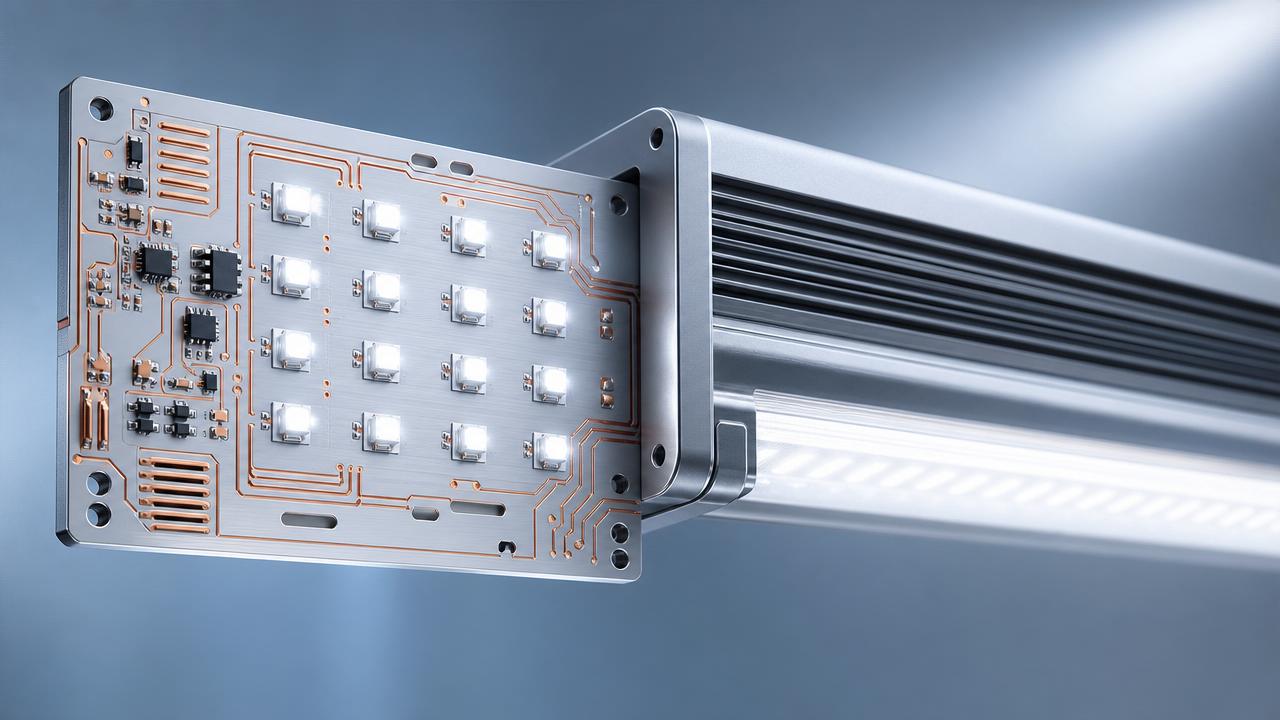
In LED systems, heat is often the hidden cause of dimming, color shift, and premature failure. Choosing the right PCB for LED lighting is essential for after-sales maintenance teams who need to diagnose faults quickly and improve long-term reliability. This article explains how thermal design, material selection, and layout decisions can reduce heat build-up and help extend service life in demanding applications.
Why a checklist approach works best for after-sales teams
When an LED fixture fails in the field, the visible symptom is rarely the true root cause. A lamp may flicker because solder joints have fatigued. A module may lose brightness because junction temperature has stayed too high for too long. A power stage may seem unstable when the real issue is poor heat spreading in the PCB for LED lighting. For maintenance personnel, a checklist method is faster and more reliable than starting with theory alone.
A structured inspection helps teams confirm what must be checked first: board material, copper weight, thermal path, component spacing, driver placement, enclosure airflow, and environmental stress. It also reduces guesswork when comparing replacement boards, evaluating recurring warranty claims, or deciding whether a repair should focus on the LED array, the driver section, or the thermal interface. In practical service work, the best PCB for LED lighting is not just electrically correct; it must also survive real operating temperatures over time.
First-pass checklist: what to confirm before replacing or redesigning a board
Before ordering a replacement module or approving a revised design, after-sales teams should verify the following points. These checks can quickly reveal whether heat build-up is likely to be the primary failure driver.
- Confirm the LED operating temperature history. Look for signs such as lens yellowing, phosphor discoloration, reduced luminous output, or repeated failures after long high-load operation.
- Identify the PCB base material. FR-4 may be acceptable for lower-power products, but many high-density luminaires require metal core PCB, aluminum substrate, or other high thermal conductivity structures.
- Check copper thickness and thermal spreading area. Thin copper and narrow traces often create local hot spots near LED pads and current-carrying paths.
- Inspect thermal vias, pad design, and solder voiding. Poor heat transfer from the LED package into the board can raise junction temperature even when the heatsink looks adequate.
- Review component placement. If the LED array, driver IC, rectifier, and magnetic parts are packed too closely, heat sources may reinforce each other.
- Evaluate enclosure conditions. Dust, sealed housings, or installation near ceilings and outdoor sun exposure can make a good board behave like a weak one.
- Check whether failures follow a pattern by batch, installation site, input voltage condition, or duty cycle. Pattern recognition often points to thermal stress rather than random defect.
Core thermal design checks for PCB for LED lighting
1. Material selection: start with the board, not the symptom
For many field failures, the wrong substrate is the hidden problem. A PCB for LED lighting should be selected according to power density, ambient temperature, expected service life, and enclosure limitations. Standard FR-4 can work in low-power indoor fixtures, indicator boards, and some distributed LED layouts. However, once power density rises, thermal resistance becomes critical. Aluminum-core PCBs are commonly used because they transfer heat away from the LEDs more efficiently and support more stable lumen maintenance.
Maintenance teams should also ask whether the dielectric layer between copper and metal core is optimized for thermal conductivity. Not all metal core boards perform equally. A low-cost replacement may match the dimensions but fail in long-term thermal performance. This is where independent benchmarking, material data transparency, and compliance reporting become valuable for both engineering and procurement teams.
2. Copper design: heat spreading matters as much as current carrying
Copper is often discussed in terms of amperage, but in a PCB for LED lighting it is also a heat spreader. Wider copper pours can lower local temperature rise by distributing heat over a larger area. Heavy copper may help in high-current sections, but layout quality still determines whether thermal energy leaves the LED package efficiently. Watch for narrow neck-down trace sections, isolated thermal islands, or interrupted copper regions caused by mechanical cutouts.
3. Thermal vias and solder interface: small details, large impact
In multilayer boards, thermal vias beneath or near LED thermal pads can significantly improve vertical heat transfer. But their number, size, fill quality, and connection to internal copper planes all matter. Poor via design may trap heat instead of removing it. Likewise, excessive solder voiding under thermal pads increases thermal resistance. For after-sales diagnosis, uneven discoloration across LEDs on the same board can be a sign of inconsistent pad or solder performance.
4. Layout separation: keep heat sources from competing
A common service issue is thermal coupling between the LED section and the driver section. If electrolytic capacitors, inductors, bridge rectifiers, and linear regulators sit too close to the LED array, overall system temperature rises and life drops quickly. Capacitors are especially vulnerable; every increase in operating temperature can sharply reduce their service life. A well-designed PCB for LED lighting should physically separate major heat sources and create clear thermal escape paths.
Practical judging standards: how to tell whether heat is the likely root cause
After-sales teams often need fast criteria, not just general advice. The table below summarizes practical signals that point to thermal design weakness.
Scenario-based checks: what changes by application
Indoor commercial lighting
In office panels, retail tracks, and downlights, thermal issues often come from compact housings and long daily operating hours. Here, the PCB for LED lighting should prioritize stable thermal spreading and driver longevity. Dust accumulation and ceiling void temperature should also be reviewed during maintenance.
Outdoor and street lighting
Outdoor luminaires face solar loading, moisture, temperature cycling, and contamination. In these cases, thermal design must be assessed together with corrosion resistance, sealing strategy, and mechanical stress. A board that passes bench testing may still fail early if repeated expansion and contraction damage solder joints or interfaces.
Industrial and high-bay applications
Factories, warehouses, and process areas often combine high ambient temperature with vibration and long continuous duty cycles. The PCB for LED lighting should be evaluated not only for thermal conductivity but also for structural reliability, component anchoring, and compliance with demanding reliability standards. In these environments, field data and stress-test reports are especially valuable.
Commonly overlooked risks that lead to early failure
- Using a dimensionally compatible replacement board without verifying dielectric thermal performance.
- Assuming heatsink size alone solves overheating while ignoring poor thermal transfer at the PCB level.
- Focusing only on LED package specifications and not on board assembly quality, such as solder voids or placement accuracy.
- Ignoring power supply variation, surge events, or overdrive conditions that increase thermal stress beyond normal design assumptions.
- Placing maintenance attention on failed LEDs while missing degraded capacitors or browned board areas near the driver section.
- Failing to compare field-failure data by installation environment, which can hide a clear thermal pattern.
Execution guide: a step-by-step service workflow
- Document the symptom carefully: dimming, flicker, dead LEDs, color shift, or driver shutdown.
- Measure or estimate operating temperature at board level and near heat-sensitive components.
- Inspect board material, copper area, thermal vias, pad condition, and discoloration marks.
- Review layout interaction between LED array and driver components.
- Compare the failed unit with a known good unit from a lower-stress environment.
- Verify whether the replacement PCB for LED lighting matches not only fit and function, but also thermal path quality and manufacturing consistency.
- Escalate recurring issues with supporting evidence: load profile, ambient condition, photos, failure rate, and board stack-up data.
How data-driven evaluation improves repair and sourcing decisions
For companies managing large installed lighting fleets, thermal failures should not be handled only as isolated repair events. They should feed into broader engineering and procurement decisions. Independent technical resources such as material benchmarking, SMT precision analysis, and long-term reliability reporting can help maintenance teams challenge supplier assumptions and request better evidence. This is especially useful when selecting a PCB for LED lighting for mission-critical or warranty-sensitive deployments.
Organizations like SiliconCore Metrics support this process by translating manufacturing variables into actionable technical intelligence. When after-sales teams can access credible information on dielectric constants, thermal packaging performance, assembly consistency, and compliance benchmarks, they are better positioned to separate a low-cost substitution from a truly reliable solution.
FAQ for after-sales maintenance personnel
Is metal core always the best PCB for LED lighting?
Not always. It is often the safer choice for high-power and compact fixtures, but low-power products with good spacing and moderate ambient conditions may perform well on FR-4. The correct choice depends on thermal load, enclosure design, and service-life target.
Can a good heatsink compensate for a weak board design?
Only partially. If the thermal path from LED package to board is poor, heat cannot reach the heatsink efficiently. The PCB remains a critical part of the thermal system.
What is the fastest sign that overheating may be involved?
Repeated lumen loss, color shift, browned PCB regions, and failures that occur after warm-up are strong warning signs. Check the board and layout before replacing components one by one.
Next action: what to prepare before discussing improvements
If your team needs to improve thermal reliability, prepare a focused information set before contacting engineering, suppliers, or technical analysts. Include the current PCB for LED lighting stack-up, substrate type, copper thickness, LED power density, driver location, enclosure conditions, measured temperatures, failure photos, repair history, and expected service life. Also confirm whether the target standard requires higher reliability, such as IPC-Class 3 or stricter quality controls.
With those details, it becomes much easier to judge whether the problem is material-related, layout-related, assembly-related, or environment-related. More importantly, it helps after-sales teams move from reactive repair to preventive reliability improvement, reducing repeat failures and protecting long-term lighting performance.
Recommended News
- Heat DissipationChip Equipment Parts Lead Times Hit 18–24 MonthsChip equipment parts lead times now reach 18–24 months, with heat dissipation components hardest hit. See key supply chain risks, affected sectors, and sourcing actions.
- Heat DissipationThermal Management PCB: When Heat Becomes a Design RiskThermal management PCB design can make or break reliability. Discover key thermal risks, scenario-based design priorities, and smarter validation steps to prevent failure.
- Heat DissipationHeavy Copper PCB vs Metal Core PCB: Which Handles Heat Better?Heavy copper PCB vs metal core PCB: discover which handles heat better in high-power designs, where each excels, and how to choose the right board for reliability and cost.
- Heat DissipationPCB for Automotive: Heat Dissipation Choices That Cut FailuresPCB for automotive projects fail fast when heat paths are wrong. Discover scenario-based thermal choices that cut hotspots, extend reliability, and reduce warranty risk.
- Heat DissipationIs jouleless HVAC worth the cost for large facilities?Jouleless HVAC for large facilities: learn when the higher upfront cost pays off through energy savings, thermal stability, and lower lifecycle risk before you invest.
- Heat DissipationVietnam E-Invoice Exemption for Heat Dissipation ComponentsVietnam E-Invoice Exemption for Heat Dissipation Components: B2B exporters enjoy extended paper invoice flexibility until Dec 2027 — act now to secure compliance & avoid delays.