
High Conductivity Thermal Management Materials: What Impacts Cooling Performance
DETAILS
High Conductivity Thermal Management Materials: What Impacts Cooling Performance
For engineers and operators seeking stable device temperatures and longer service life, high conductivity thermal management materials play a decisive role in cooling efficiency.
From thermal interface design to material purity, thickness, and contact pressure, several factors directly affect heat transfer performance.
This article examines what truly changes cooling results and how to assess materials with more confidence in demanding electronics environments.
Why High Conductivity Thermal Management Materials Matter
Heat is rarely a secondary issue in modern electronics. It shapes performance, reliability, and even procurement risk.
A processor, power module, LED array, or RF device can fail early when heat stays trapped at interfaces.
That is why high conductivity thermal management materials are not just fillers. They are active parts of the thermal path.
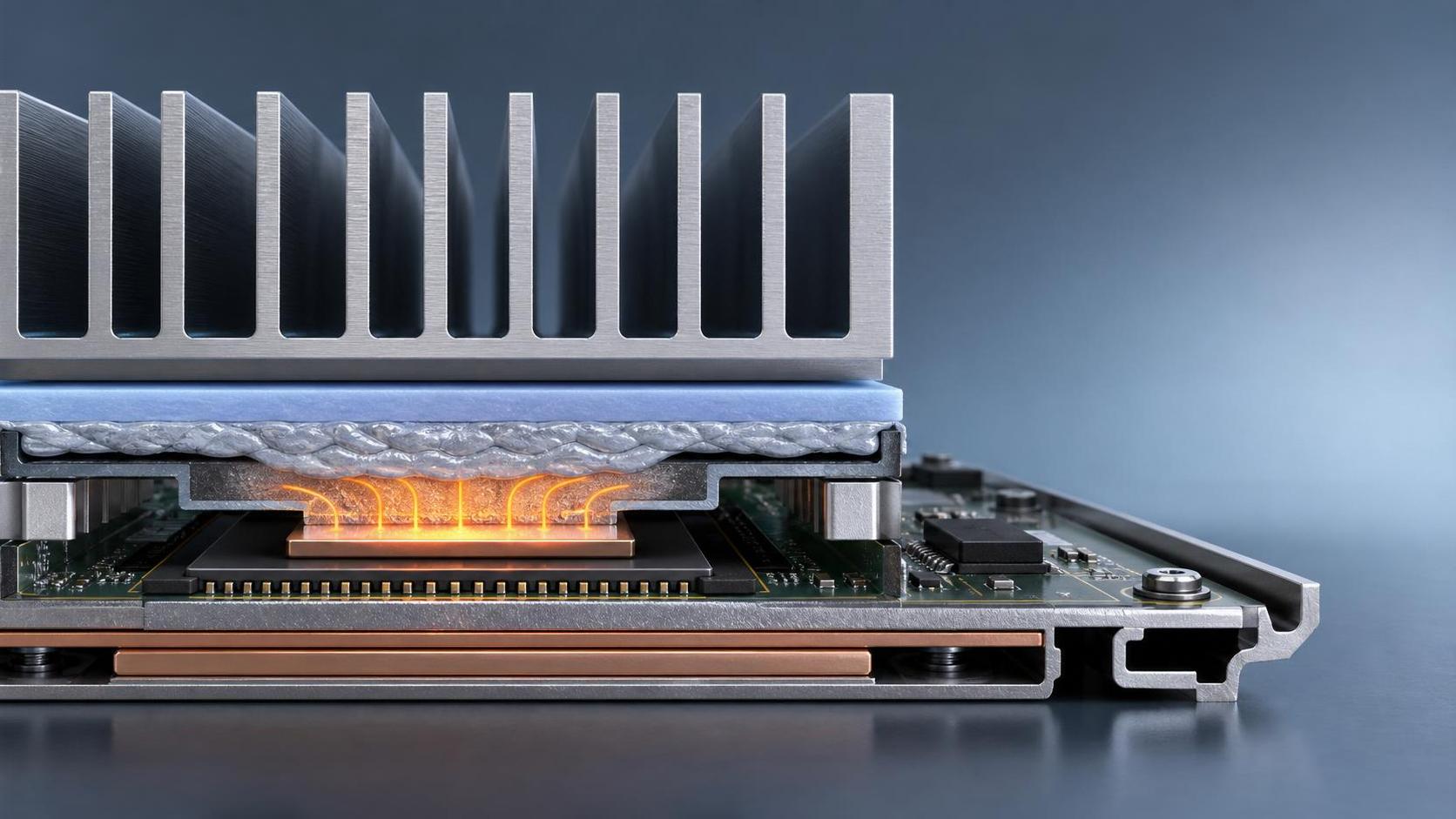
In practical terms, these materials move heat from a source to a sink with lower thermal resistance.
Better heat flow supports lower junction temperatures, tighter thermal control, and more stable output over time.
This also matters for compliance-driven sectors. IPC-Class 3 and ISO 9001 programs reward predictable thermal behavior.
From a sourcing angle, thermal material selection now affects warranty exposure, field returns, and cooling system size.
The Main Factors That Change Cooling Performance
Many teams focus only on conductivity values. That is useful, but it is never the full story.
Cooling performance depends on the whole heat-transfer chain, not one attractive number on a datasheet.
1. Bulk Thermal Conductivity
Thermal conductivity, usually shown in W/mK, describes how well a material carries heat through its body.
Higher numbers can help, especially in dense power electronics, but they must be read in context.
A material rated at 12 W/mK may underperform a 6 W/mK option if contact quality is poor.
2. Total Thermal Resistance
Thermal resistance often predicts field performance more accurately than conductivity alone.
It combines thickness, interface behavior, and heat path efficiency into one practical indicator.
For thin bond lines, a modest material can outperform a thicker, highly conductive pad.
3. Bond Line Thickness
Thickness has a direct effect on heat flow distance. More distance usually means more resistance.
This is why bond line control is central when using high conductivity thermal management materials.
In real assemblies, excessive thickness often comes from surface flatness issues or poor compression control.
4. Contact Pressure
Pressure helps materials fill air gaps and surface roughness. That reduces interfacial resistance.
Still, too much force can damage packages, distort boards, or create pump-out over repeated cycles.
The useful range depends on viscosity, hardness, compression set, and mounting hardware consistency.
5. Surface Flatness and Roughness
Even excellent thermal materials struggle if the mating surfaces are uneven.
Microscopic voids trap air, and air remains a poor thermal conductor.
That is why machining quality, warpage control, and assembly cleanliness matter more than many teams expect.
Material Composition Also Shapes Real Results
The phrase high conductivity thermal management materials covers several material families.
Each family behaves differently under heat, pressure, vibration, and long service exposure.
Common Types
- Thermal greases: strong gap filling, low initial resistance, but possible pump-out risk.
- Thermal pads: easier handling, better tolerance for uneven gaps, but thicker interfaces.
- Phase change materials: stable interface formation near operating temperature ranges.
- Gap fillers: useful for larger distances in battery packs, automotive modules, and telecom hardware.
- Graphite sheets: excellent in-plane spreading, but directional behavior needs careful design review.
- Sintered or metallic interfaces: very high performance for advanced and tightly controlled assemblies.
Purity and Filler Quality
Filler chemistry strongly affects thermal behavior. Aluminum oxide, boron nitride, silver, and ceramic blends behave differently.
Particle size distribution also matters. Poor dispersion can create local hot spots or unstable consistency.
For long-life applications, material purity affects oxidation resistance, contamination risk, and dielectric reliability.
Directional Conductivity
Some high conductivity thermal management materials move heat better in one direction than another.
Graphite is a common example. It spreads heat quickly across a surface, not necessarily through thickness.
That makes orientation and stack-up design essential during early engineering validation.
Why Datasheet Values Often Mislead
A recurring issue in thermal selection is overreliance on idealized test data.
Vendors may report conductivity from different methods, under different pressures, and with different sample conditions.
This makes one-to-one comparison difficult unless the test method is clearly stated.
ASTM and ISO procedures help, but reporting quality still varies across the supply chain.
More importantly, lab results may not capture vibration, humidity, mounting variation, or aging effects.
So when comparing high conductivity thermal management materials, ask for more than one value.
- Request thermal impedance or total resistance at realistic thickness.
- Check pressure conditions used during testing.
- Review aging, pump-out, or thermal cycling data.
- Confirm dielectric strength where electrical isolation is required.
- Look for consistency across lot-to-lot quality reports.
How to Evaluate High Conductivity Thermal Management Materials in Practice
A practical evaluation process saves time and avoids expensive redesign work later.
The most reliable approach combines material data, assembly conditions, and real thermal measurements.
A Useful Review Sequence
- Define the heat source, power density, and target junction temperature.
- Map the thermal path, including surfaces, gaps, fasteners, and sink geometry.
- Shortlist high conductivity thermal management materials by interface type, not conductivity alone.
- Test at actual bond line thickness and expected clamping force.
- Run thermal cycling, humidity, and vibration checks where field exposure demands it.
- Compare post-aging results, not only fresh sample performance.
What to Watch During Validation
Compression set can change gap behavior over time. This is common in pads and gap fillers.
Pump-out can reduce interface coverage after repeated power cycling. Greases are especially sensitive here.
Oil bleed, outgassing, and contamination may also affect optical, RF, or fine-pitch assemblies.
This is where independent benchmarking becomes valuable, especially across multiple suppliers and lots.
Application-Specific Decisions Matter More Than Generic Rankings
No single material wins in every design. The right answer depends on thermal path geometry and reliability needs.
For compact consumer devices, thin interfaces and controlled assembly often matter more than extreme conductivity claims.
For telecom, industrial control, and automotive electronics, long-term stability usually carries greater weight.
In battery systems, gap management and electrical insulation may be just as important as cooling capacity.
For high-frequency modules, surface condition and contact repeatability can dominate overall thermal behavior.
This also explains why standardized compliance reports support better purchasing decisions than isolated samples do.
A Smarter Way to Improve Cooling Performance
High conductivity thermal management materials improve cooling only when the full interface system is engineered well.
Bulk conductivity matters, but thickness, pressure, surface quality, aging, and test conditions often decide real outcomes.
The strongest decisions come from comparing thermal resistance, validating under real loads, and checking long-term stability.
In day-to-day engineering work, that approach reduces guesswork and lowers the risk of hidden thermal failures.
For organizations managing advanced electronics supply chains, independent data and repeatable benchmarks remain the clearest path forward.
Recommended News
- Heat DissipationHow to prevent overheating in automotive PCB power distributionPrevent overheating in automotive PCB power distribution with practical tips on copper layout, thermal paths, and testing. Discover how to reduce hotspots and improve reliability.
- Heat DissipationCan heat spreading intelligence identify hot spots in PCB designs?Discover how heat spreading intelligence identifies PCB hot spots before fabrication. Learn to assess thermal models, validate predictions, and choose design changes that improve reliability.
- Heat DissipationWhich heat sink materials suit high-power electronics made in Germany?Heat sink materials Germany: compare aluminum, copper, graphite, and hybrid designs for high-power electronics. Find the right balance of thermal performance, weight, cost, and manufacturability.
- Heat DissipationHow to assess a graphite materials supplier's capability for thermal partsGraphite materials supplier assessment starts with more than machining. Discover how to evaluate thermal performance, purity, precision, cleanliness, traceability, and testing for reliable thermal parts.
- Heat DissipationHow to assess a heat dissipation supplier before placing an orderHeat dissipation supplier assessment guide: verify thermal performance, materials, process control, samples, capacity, and total risk before placing an order.
- Heat DissipationHow automotive PCB material selection affects thermal reliabilityAutomotive PCB material selection shapes thermal reliability. Explore CTE, Tg, moisture resistance, stack-up design, and proven qualification strategies for demanding vehicle electronics.