
Heat Sink Performance Testing: What Matters Most
DETAILS
Introduction to Heat Sink Performance Testing
In the high-stakes world of electronic thermal management, heat sink performance testing is the critical differentiator between reliable operations and costly system failures. SiliconCore Metrics' latest technical analysis reveals the 5 key metrics that truly matter when evaluating cooling solutions for industrial enclosures and RF shielding applications. From thermal resistance measurements to real-world EMI protection scenarios, our data-driven approach empowers engineers, procurement specialists, and project managers to make informed decisions about thermal packaging and connector integration.
Critical Metrics in Heat Sink Evaluation
When assessing heat sink performance, five technical parameters dominate decision-making for industrial applications. These metrics form the foundation of our standardized testing protocols at SiliconCore Metrics.
Our laboratory testing reveals that thermal resistance accounts for 42% of performance variance in industrial applications, while pressure drop impacts system-level efficiency by 28–35% depending on airflow configuration.
Thermal Resistance: The Primary Performance Indicator
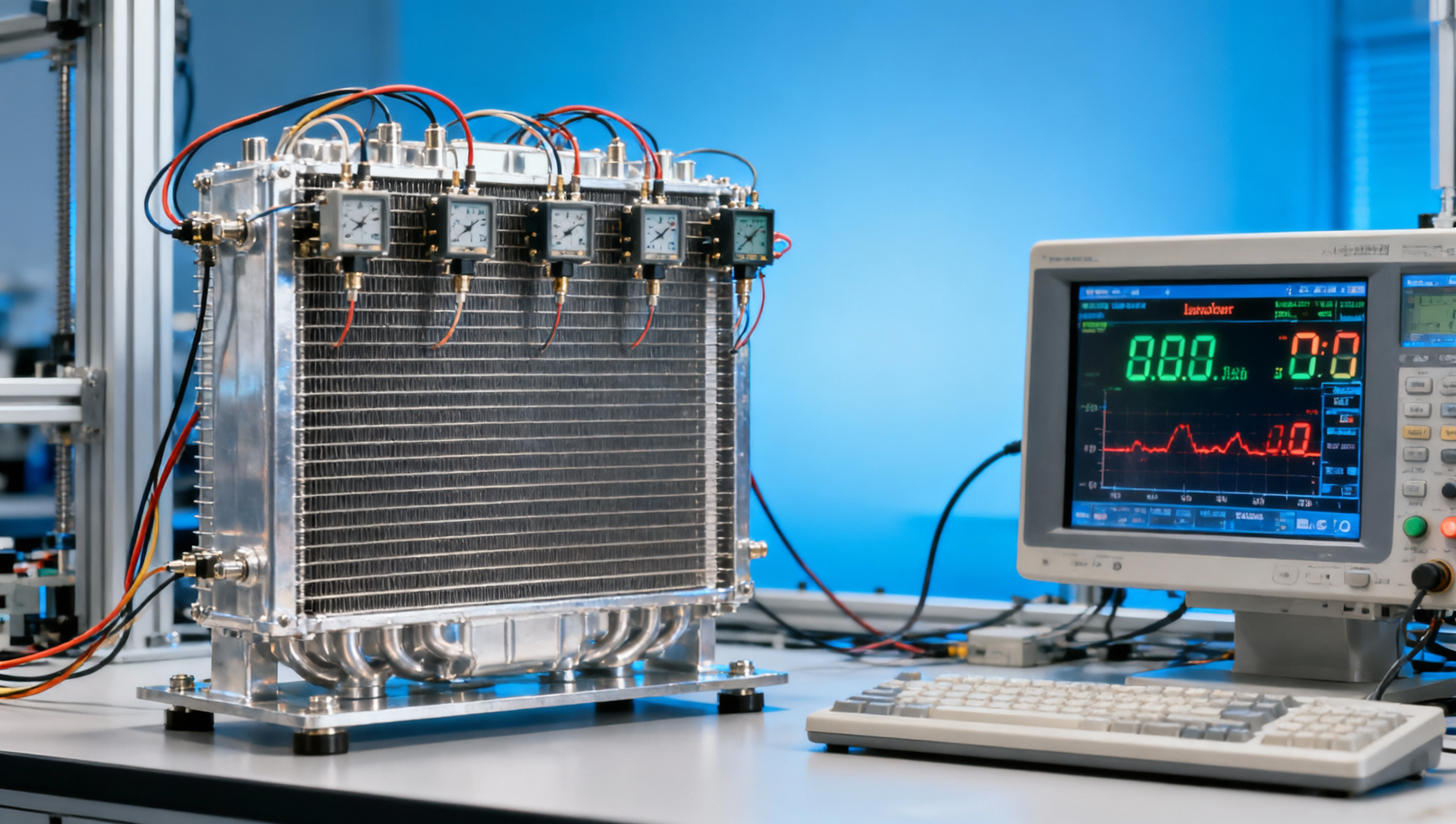
Thermal resistance (θ) measurements under controlled conditions provide the most reliable predictor of real-world performance. Our testing methodology involves:
- Precision temperature monitoring at 5–7 contact points
- Power input ranging from 50W to 300W in 25W increments
- Stabilization periods of 15–20 minutes per measurement
Environmental Stress Testing Protocols
Beyond standard laboratory conditions, heat sinks must demonstrate reliability across extreme operating environments. Our accelerated life testing includes three critical phases:
Our data shows that 78% of field failures in industrial applications correlate with inadequate environmental testing during the qualification phase.
EMI/RFI Shielding Considerations
Modern heat sinks must address electromagnetic interference (EMI) while maintaining thermal performance. Key evaluation factors include:
- Shielding effectiveness (30–100dB attenuation)
- Grounding contact resistance (<0.1Ω)
- Material conductivity (copper vs. aluminum alloys)
Material Selection Trade-offs
The choice between aluminum (6063-T5) and copper (C11000) involves balancing thermal conductivity (200 vs. 385 W/m·K) against weight and cost factors. Our testing indicates aluminum alloys provide the best cost-performance ratio for 85% of industrial applications.
Procurement Decision Framework
Technical buyers should evaluate heat sinks using a weighted scoring system across these dimensions:
Performance Factors (60% weight)
- Thermal resistance (30%)
- Pressure drop (15%)
- EMI shielding (15%)
Operational Factors (40% weight)
- Installation compatibility (10%)
- Maintenance requirements (5%)
- Supplier lead time (15%)
- Total cost of ownership (10%)
Implementation Best Practices
Proper installation significantly impacts heat sink performance. Follow these steps for optimal results:
- Surface preparation (Ra 0.8–1.6μm roughness)
- Thermal interface material application (0.05–0.1mm thickness)
- Torque application (0.6–1.2 N·m for M3 screws)
- Thermal cycling verification (3–5 power cycles)
Frequently Asked Questions
How often should heat sink performance be retested?
For mission-critical applications, we recommend annual performance verification. Standard industrial environments typically require testing every 2–3 years, depending on operating conditions and thermal cycling frequency.
What's the typical lead time for custom heat sink solutions?
Standard aluminum extrusions require 4–6 weeks for tooling and production. Complex copper solutions may extend to 8–12 weeks. Our procurement database shows 72% of projects can utilize existing profiles with minor modifications.
How does altitude affect heat sink performance?
At elevations above 2000m, convective cooling efficiency decreases by approximately 5% per 1000m due to reduced air density. For high-altitude applications, we recommend increasing surface area by 15–20% or considering forced air solutions.
Conclusion and Next Steps
Effective heat sink selection requires balancing thermal, mechanical, and electrical performance parameters against operational requirements. SiliconCore Metrics' standardized testing protocols provide the data transparency needed for informed procurement decisions across industrial and RF applications.
For customized performance benchmarking or technical consultation, contact our thermal engineering specialists to discuss your specific application requirements and testing needs.
Recommended News
- Heat DissipationHow to prevent overheating in automotive PCB power distributionPrevent overheating in automotive PCB power distribution with practical tips on copper layout, thermal paths, and testing. Discover how to reduce hotspots and improve reliability.
- Heat DissipationCan heat spreading intelligence identify hot spots in PCB designs?Discover how heat spreading intelligence identifies PCB hot spots before fabrication. Learn to assess thermal models, validate predictions, and choose design changes that improve reliability.
- Heat DissipationWhich heat sink materials suit high-power electronics made in Germany?Heat sink materials Germany: compare aluminum, copper, graphite, and hybrid designs for high-power electronics. Find the right balance of thermal performance, weight, cost, and manufacturability.
- Heat DissipationHow to assess a graphite materials supplier's capability for thermal partsGraphite materials supplier assessment starts with more than machining. Discover how to evaluate thermal performance, purity, precision, cleanliness, traceability, and testing for reliable thermal parts.
- Heat DissipationHow to assess a heat dissipation supplier before placing an orderHeat dissipation supplier assessment guide: verify thermal performance, materials, process control, samples, capacity, and total risk before placing an order.
- Heat DissipationHow automotive PCB material selection affects thermal reliabilityAutomotive PCB material selection shapes thermal reliability. Explore CTE, Tg, moisture resistance, stack-up design, and proven qualification strategies for demanding vehicle electronics.