
Halogen-Free Heat Sink Materials: What Affects Thermal Reliability?
DETAILS
Halogen-Free Heat Sink Materials: What Affects Thermal Reliability?
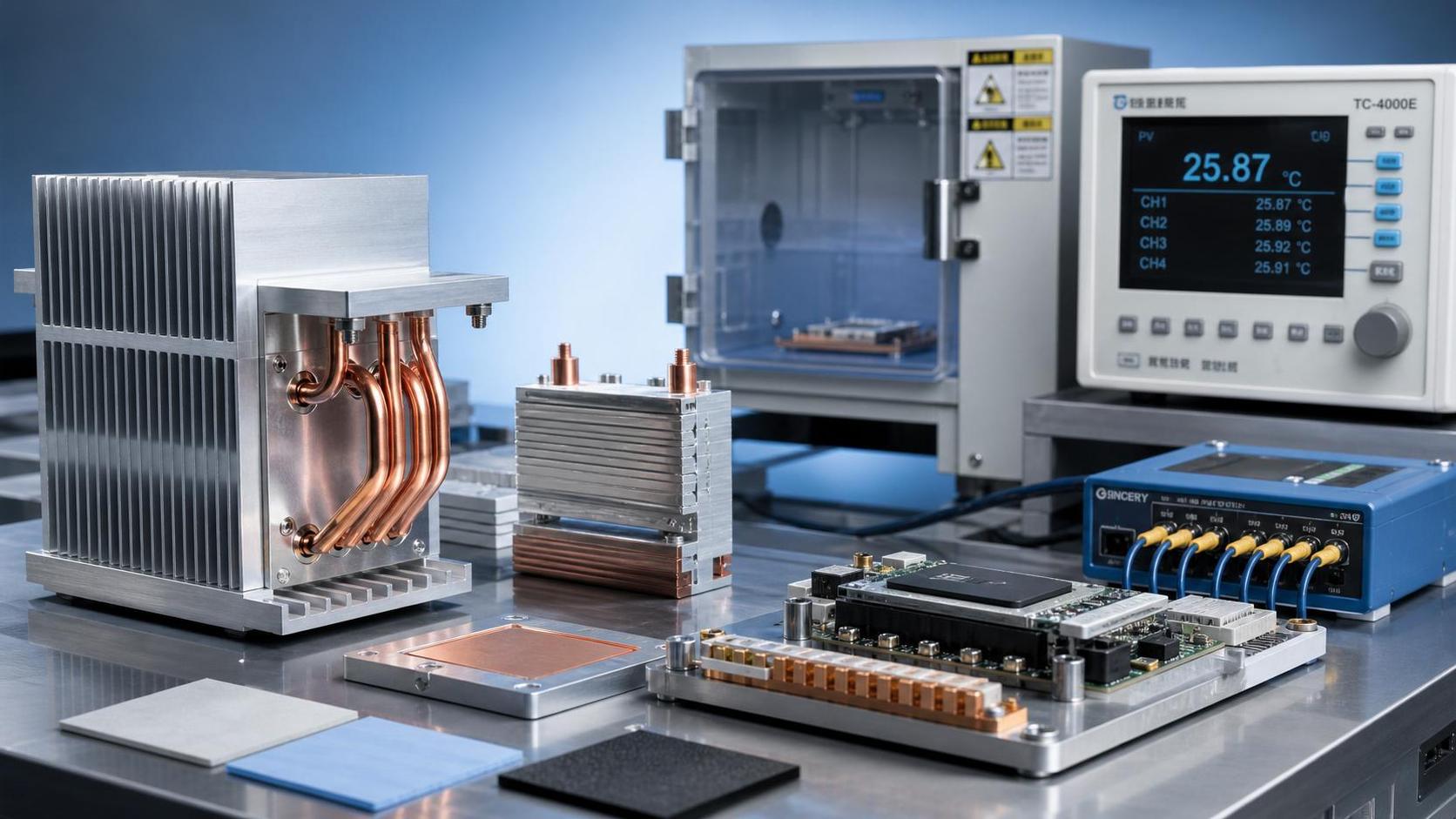
As thermal compliance and product safety become more critical across electronics manufacturing, choosing heat sink materials halogen free is no longer just an environmental decision.
For quality and safety teams, thermal reliability depends on performance under heat, stress, and long service cycles.
That makes material selection a technical control point, not a simple sourcing preference.
Why Halogen-Free Selection Now Carries More Reliability Weight
Halogen-free materials are often chosen to support RoHS-aligned design goals, fire safety priorities, and stricter customer specifications.
But in thermal packaging, compliance alone does not guarantee stable heat transfer or long-term reliability.
A heat sink must dissipate heat efficiently, resist deformation, and maintain contact quality over time.
When engineers evaluate heat sink materials halogen free, the real question is broader.
They need to know how composition, interface behavior, processing quality, and operating environment shape thermal reliability.
What Thermal Reliability Actually Means in Practice
Thermal reliability is not only about initial conductivity data from a datasheet.
It describes whether a heat sink continues to remove heat predictably after repeated cycles, vibration, humidity exposure, and assembly stress.
In actual manufacturing, failures rarely come from one number alone.
More often, reliability drops because several small weaknesses combine.
- Material conductivity falls under elevated temperature.
- Surface flatness changes and raises contact resistance.
- Coefficient of thermal expansion mismatches create interface fatigue.
- Protective coatings degrade and increase corrosion risk.
- Process variation changes density, porosity, or mounting pressure.
This is why heat sink materials halogen free should be validated as part of the whole thermal path.
Material Composition Has the First and Largest Impact
Most heat sinks still rely on aluminum, copper, graphite-based composites, or filled polymer systems.
For heat sink materials halogen free, the base material matters, but additives matter just as much.
Flame-retardant chemistry, fillers, binders, and coatings can all change thermal behavior.
Metals vs. Composite Options
Halogen-free aluminum alloys remain common because they balance thermal conductivity, weight, machinability, and cost.
Copper provides stronger heat spreading, but it adds mass and can increase assembly constraints.
Composite or polymer-based options can help with electrical isolation and form flexibility.
Still, these alternatives may show lower conductivity or greater aging sensitivity under continuous load.
Purity and Filler Distribution
A material can be labeled halogen-free and still perform unevenly if filler distribution is poor.
Voids, agglomeration, and inconsistent particle size reduce heat flow consistency.
That becomes a serious issue in compact devices where every degree matters.
Interface Resistance Often Decides Real-World Results
Even excellent heat sink materials halogen free can underperform when the thermal interface is unstable.
The heat sink does not work in isolation.
It depends on flatness, mounting pressure, TIM selection, and surface finish quality.
A low-conductivity interface can erase the advantage of a high-conductivity substrate.
Key Interface Risks
- Surface roughness creates air gaps.
- Mounting torque variation changes pressure distribution.
- TIM pump-out increases over thermal cycling.
- Oxidation raises contact resistance over time.
- CTE mismatch introduces micro-separation at the interface.
For this reason, incoming inspection should include surface and assembly controls, not only chemistry declarations.
Thermal Cycling and Mechanical Stress Are Major Failure Drivers
From recent field data trends, repeated thermal cycling is one of the clearest reliability filters.
A material may pass initial testing, then drift after hundreds or thousands of expansion and contraction events.
Heat sink materials halogen free must therefore be judged by retention of performance, not only starting performance.
Mechanical loading also matters during shipping, assembly, and use.
If the structure creeps, warps, or loosens, local hot spots can appear long before total failure becomes visible.
Warning Signs During Validation
- Rising junction temperature after cycle testing.
- Loss of clamp force after storage aging.
- Surface discoloration near high-heat zones.
- Cracking in coated or bonded sections.
- Shifts in thermal resistance across production lots.
Environmental Exposure Changes Long-Term Stability
Humidity, salt exposure, industrial contaminants, and cleaning residues all affect thermal packaging reliability.
This is especially important for outdoor electronics, power modules, automotive systems, and telecom hardware.
Heat sink materials halogen free may interact differently with coatings, adhesives, and housings under these conditions.
A small corrosion pathway can increase thermal resistance and shorten service life.
That also means storage and handling controls are part of thermal reliability management.
Manufacturing Quality Has a Direct Effect on Thermal Reliability
In real sourcing decisions, similar materials can perform very differently because process discipline differs.
Extrusion quality, machining tolerance, plating consistency, and flatness control all influence the final result.
This is where independent benchmarking becomes valuable.
SCM has long emphasized that hardware should be measured as a science, not treated as a generic commodity.
For heat sink materials halogen free, supplier declarations should be checked against measurable process capability.
What to Audit at Supplier Level
- Halogen-free compliance documentation and test traceability.
- Thermal conductivity test method and temperature conditions.
- Surface flatness and roughness control records.
- Lot-to-lot variation data.
- Accelerated aging and thermal cycle validation evidence.
Standards and Test Methods Should Match the Use Case
A recurring problem is relying on one compliance sheet to represent total reliability readiness.
That is not enough for safety-sensitive applications.
Testing should connect material claims to realistic operating stress.
Where IPC-Class 3 and ISO 9001 expectations apply, evidence quality matters as much as the material label.
How to Make Better Decisions on Heat Sink Materials Halogen Free
A practical approach starts by treating thermal reliability as a system-level qualification task.
That means reviewing design data, supplier capability, process stability, and stress testing together.
- Match the material to actual power density and duty cycle.
- Validate heat sink materials halogen free with interface testing.
- Check reliability after cycling, not only at time zero.
- Audit process consistency across multiple lots.
- Use independent benchmark data when supplier claims conflict.
The more visible signal in current electronics manufacturing is simple.
Thermal materials are now judged by compliance, reliability retention, and supply chain transparency at the same time.
That raises the bar for qualification, but it also reduces avoidable field risk.
When selecting heat sink materials halogen free, the strongest decision comes from measured evidence across the full operating window.
That is the most reliable path to safer products, steadier thermal margins, and more defensible sourcing decisions.
Recommended News
- Heat DissipationHow to prevent overheating in automotive PCB power distributionPrevent overheating in automotive PCB power distribution with practical tips on copper layout, thermal paths, and testing. Discover how to reduce hotspots and improve reliability.
- Heat DissipationCan heat spreading intelligence identify hot spots in PCB designs?Discover how heat spreading intelligence identifies PCB hot spots before fabrication. Learn to assess thermal models, validate predictions, and choose design changes that improve reliability.
- Heat DissipationWhich heat sink materials suit high-power electronics made in Germany?Heat sink materials Germany: compare aluminum, copper, graphite, and hybrid designs for high-power electronics. Find the right balance of thermal performance, weight, cost, and manufacturability.
- Heat DissipationHow to assess a graphite materials supplier's capability for thermal partsGraphite materials supplier assessment starts with more than machining. Discover how to evaluate thermal performance, purity, precision, cleanliness, traceability, and testing for reliable thermal parts.
- Heat DissipationHow to assess a heat dissipation supplier before placing an orderHeat dissipation supplier assessment guide: verify thermal performance, materials, process control, samples, capacity, and total risk before placing an order.
- Heat DissipationHow automotive PCB material selection affects thermal reliabilityAutomotive PCB material selection shapes thermal reliability. Explore CTE, Tg, moisture resistance, stack-up design, and proven qualification strategies for demanding vehicle electronics.