
SMT Soldering Defects and How to Prevent Them
DETAILS
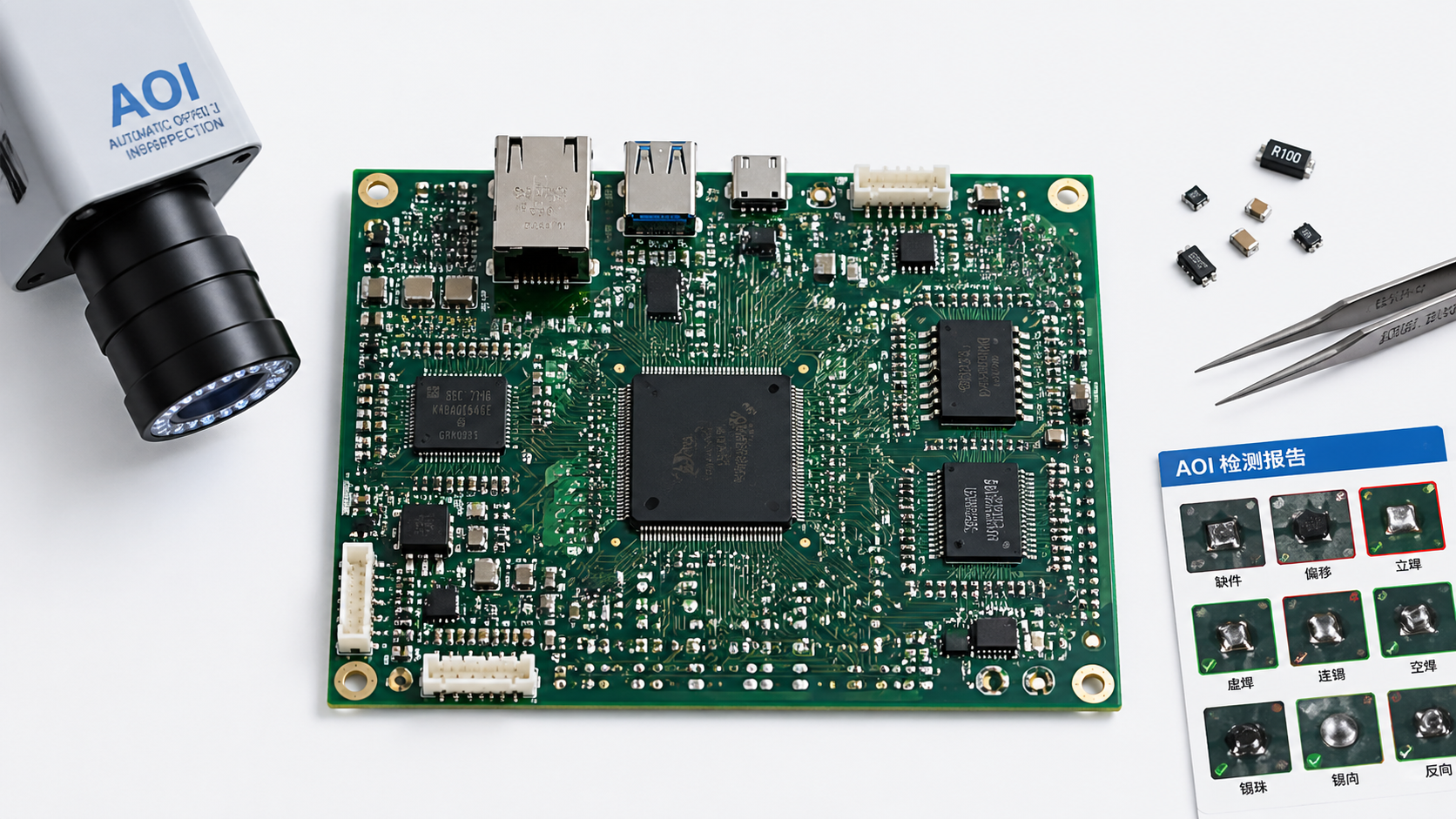
SMT soldering defects can undermine circuit board assembly, semiconductor compliance, and long-term product reliability. From reflow soldering issues to pick and place machine errors, even minor deviations affect circuit components, electronic parts, and thermal management compliance. This guide explores common failure modes, practical soldering techniques, and prevention strategies to help engineers, buyers, and quality teams improve SMT compliance, PCB compliance, and manufacturing performance.
Why SMT soldering defects matter across engineering, procurement, and quality teams
SMT soldering defects are not only a shop-floor issue. They directly affect first-pass yield, field reliability, warranty exposure, and procurement risk. In high-density PCB assembly, a defect as small as insufficient wetting on one pad can create intermittent electrical behavior that only appears after thermal cycling, vibration, or 24–72 hours of powered operation. For project managers and financial approvers, this means schedule slippage, rework cost, and delayed product release.
For operators and maintenance teams, defects often start with process drift rather than a single obvious mistake. A stencil aperture that is slightly oversized, a reflow profile with an overly steep ramp rate, or a feeder alignment error of even tens of microns can change solder joint formation. In assemblies using fine-pitch packages, bottom-terminated components, or mixed-technology boards, the tolerance window becomes even narrower.
For sourcing and business evaluation teams, the challenge is different. Many suppliers can quote SMT assembly, but fewer can document placement precision, paste inspection criteria, thermal process controls, and long-term component reliability. That is where independent benchmarking becomes valuable. SiliconCore Metrics helps global engineering and procurement teams compare SMT process capability using standardized technical criteria rather than marketing claims.
In practical terms, defect prevention usually depends on 4 linked factors: material compatibility, machine capability, process window control, and inspection discipline. If one of these four is weak, defect rates rise disproportionately in NPI builds, low-volume mixed runs, and boards with high thermal mass variation.
- Engineering teams need defect root-cause visibility before approving layout, land pattern, and reflow settings.
- Procurement teams need supplier comparison metrics such as traceability depth, incoming material controls, and inspection coverage.
- Quality teams need measurable acceptance criteria linked to IPC workmanship requirements and internal risk thresholds.
- Project leaders need predictable ramp-up behavior, especially during the first 2–4 production weeks.
What makes modern SMT defect control more difficult?
Three industry shifts have made soldering defect prevention more complex. First, component miniaturization has reduced process tolerance. Second, lead-free soldering has increased thermal demands compared with legacy tin-lead processes. Third, global supply chains now introduce more variation in paste chemistry, PCB finish, and component storage history. These factors interact, so defects cannot be solved by a single machine setting alone.
SCM’s role is especially relevant here because defect analysis should connect assembly behavior with broader supply chain variables. A board may pass visual inspection but still contain reliability risk if dielectric structure, pad finish condition, or component coplanarity falls outside normal manufacturing ranges. Independent whitepapers and compliance reports help teams verify those conditions before failures appear in the field.
Which SMT soldering defects appear most often, and what do they usually indicate?
Most SMT soldering defects can be grouped by where they originate: solder paste deposition, placement accuracy, reflow behavior, component condition, or board design. Understanding the defect pattern helps teams separate symptom from cause. A solder bridge does not always mean excess paste; it may also signal poor alignment, warped PCB sections, or excessive soak duration.
The table below summarizes common SMT defects, the production stage where they often emerge, and the most likely process signals. This format is useful for technical evaluators, quality engineers, and procurement teams reviewing contract manufacturers or EMS partners.
This table shows why defect names alone are not enough for decision-making. The same visible failure can arise from multiple variables. A serious review therefore needs process data from SPI, AOI, X-ray, reflow profiling, and incoming material controls rather than relying on final inspection only.
High-impact defect patterns that deserve faster escalation
Some defects warrant immediate cross-functional review within the same shift or within 8–24 hours of detection. These include repeated BGA head-in-pillow findings, widespread voiding under power devices, recurring insufficient solder on fine-pitch leads, and pattern-specific bridging on one PCB zone. These patterns often point to systemic causes such as board flatness, heat distribution, stencil wear, or component lot variation.
For after-sales and service teams, hidden defects are especially costly because they may survive outgoing inspection but fail under thermal stress in the field. That is why SCM emphasizes long-term reliability metrics and extreme-environment testing insights, not just line-side appearance. In sectors where thermal packaging and signal integrity matter, defect prevention must consider in-use conditions, not just assembly completion.
A quick diagnostic checklist
- Is the defect random, panel-specific, or repeated on the same reference designator?
- Did it begin after a paste lot change, stencil cleaning interval shift, or feeder replacement?
- Does X-ray or cross-section suggest voiding, opens, or incomplete collapse under hidden joints?
- Was the board running within the validated profile window, often defined across 3–5 monitored thermal points?
How to prevent SMT soldering defects during paste printing, placement, and reflow
The most reliable defect prevention strategy starts before reflow. In many lines, paste printing contributes a large share of downstream variation because solder volume, aperture release, and registration define the initial joint geometry. If paste deposits vary beyond the accepted range for height, area, or offset, placement and reflow can only partially compensate. This is why SPI should be treated as a process control gate, not as a passive data collection tool.
Placement quality is equally important. Pick and place machines must be evaluated not only for nominal speed but also for repeatable alignment under actual production conditions. A line running mixed package types, frequent changeovers, and small batches may experience more nozzle wear, feeder errors, and vision calibration drift than a dedicated high-volume line. Technical evaluation should therefore focus on repeatability over 1 shift, 1 day, and 1 full production week.
Reflow control is where many latent defects either form or become visible. Lead-free assembly typically requires tighter thermal control, especially when large copper planes and sensitive packages share the same board. A process engineer usually reviews at least 4 profile regions: ramp, soak, time above liquidus, and peak. The correct balance depends on solder alloy, PCB thickness, component thermal mass, and package moisture sensitivity.
From a procurement perspective, the key question is whether a supplier can demonstrate stable process capability. It is not enough to claim inspection coverage. Buyers should ask for evidence of stencil maintenance frequency, profile validation intervals, feeder setup verification, and nonconformance handling within a defined reaction window such as same-shift containment or 24-hour corrective action initiation.
A practical 5-step prevention framework
- Verify material readiness: confirm solder paste storage, thawing practice, PCB finish condition, and component moisture handling before line release.
- Control printing variables: review stencil thickness, aperture design, squeegee pressure, print speed, and cleaning interval after a defined number of prints.
- Stabilize placement: check nozzle condition, feeder accuracy, component centering, and vision library integrity during each setup change.
- Validate thermal profile: confirm ramp and peak behavior at multiple test points, especially on dense boards with uneven heat distribution.
- Close the loop with inspection and feedback: link SPI, AOI, X-ray, and repair findings to root-cause categories, not only defect counts.
In advanced environments, prevention also includes DFM review before release. Land pattern symmetry, thermal relief strategy, via-in-pad treatment, and component spacing all affect solder joint outcomes. SCM’s independent analysis is useful in this stage because it helps teams compare PCB and SMT parameters using standardized benchmarks rather than supplier-specific language.
Process windows buyers and quality teams should ask about
When auditing an SMT partner, it is practical to ask about 5 measurable controls: stencil cleaning interval, profile verification frequency, traceability depth by lot, rework authorization criteria, and hidden-joint inspection method. These are concrete indicators of process maturity. If the supplier cannot define acceptable operating ranges or escalation triggers, the risk of recurring soldering defects is materially higher.
A mature supplier should also explain how process settings change between prototype, medium-volume, and sustained high-volume production. Defect prevention is not static. The right setup for 50 boards may not be sufficient for 5,000 boards over several weeks, where stencil wear, paste age, and machine drift become more significant.
What should buyers compare when selecting an SMT assembly partner or technical data source?
Choosing an SMT partner is often treated as a cost exercise, yet defect-related cost frequently appears later through scrap, rework, delayed shipments, or field returns. Procurement, business reviewers, and finance teams should compare suppliers using technical and commercial dimensions together. The most useful approach is to combine process capability evidence with compliance reporting, response speed, and support for engineering decisions during NPI and supplier qualification.
The following comparison matrix is designed for organizations sourcing PCB assembly, qualifying EMS vendors, or evaluating technical intelligence providers. It helps align engineering concerns with purchasing and risk management requirements.
A comparison like this changes procurement discussions. Instead of asking only for unit price and lead time, teams begin to ask whether the supplier can support IPC-Class 3 expectations, whether traceability extends to paste and component lots, and whether reliability concerns are evaluated under realistic thermal conditions. That shift lowers hidden cost over the full program lifecycle.
Where SCM adds value in the selection process
SCM supports decision-makers by translating complex manufacturing variables into standardized, comparable technical outputs. For example, engineers may need multi-layer PCB dielectric insights, SMT placement precision benchmarks, or long-term component reliability analysis under environmental stress. Procurement teams need the same data in a decision-ready form that supports supplier comparison and risk mitigation.
This is particularly useful when sourcing across regions. A supplier may claim equivalent capability, but cross-market comparability depends on common reporting language and consistent benchmarks. SCM bridges that gap by turning manufacturing science into practical reports that support R&D, sourcing, compliance, and commercial evaluation simultaneously.
A 6-point sourcing checklist
- Request process documentation for SPI, AOI, X-ray, and corrective action flow.
- Confirm whether prototype and mass-production controls are documented separately.
- Review traceability down to PCB lot, paste lot, and critical component lot where applicable.
- Ask how thermal profile verification is maintained over 2–4 week production windows.
- Check whether IPC-Class 3 or other customer-specific workmanship criteria can be supported.
- Use independent benchmark reports to validate capability claims before final award.
How standards, compliance, and reliability testing reduce soldering risk
SMT defect prevention is stronger when linked to recognized standards and disciplined verification methods. In electronics manufacturing, process control and product acceptance often reference IPC workmanship expectations, while management systems may align with ISO 9001. These standards do not eliminate defects by themselves, but they create a common framework for acceptance, traceability, and corrective action.
For quality managers and safety-related reviewers, compliance matters because it turns subjective judgments into repeatable criteria. A solder joint should not be accepted simply because it “looks acceptable.” It should be reviewed against documented conditions such as wetting behavior, alignment, voiding acceptability where relevant, and evidence that the process remained within the qualified operating window.
Reliability testing extends this logic beyond the production line. Assemblies that pass AOI can still fail under temperature cycling, humidity exposure, or long-duration power loading. This is especially important for thermal packaging, power electronics, and dense semiconductor applications. A useful reliability plan may include preconditioning, thermal cycling over multiple cycles, and post-test inspection using X-ray or cross-section depending on the risk profile.
SCM’s analytical strength lies in connecting these quality and reliability dimensions. Because the organization studies PCB fabrication, SMT assembly, semiconductors, passive components, and thermal packaging together, it can help teams interpret defect risk across the broader supply chain rather than in isolation.
Common compliance checkpoints before supplier approval
- Documented workmanship criteria tied to the product class and application criticality.
- Controlled nonconformance flow with segregation, disposition, and root-cause response timing.
- Lot traceability retained for a commercially reasonable period, often aligned with customer or regulatory needs.
- Evidence of process validation updates after major material, stencil, or equipment changes.
Frequent misconceptions that weaken SMT quality programs
One common misconception is that AOI coverage alone is enough. It is not. AOI is strong for visible geometry issues but limited for hidden solder joints and internal voiding. Another misconception is that rework can solve any assembly issue. In reality, excessive rework can introduce secondary thermal stress and distort the original defect picture, making root-cause analysis harder.
A third misconception is that defects are mainly operator errors. Operator skill matters, but many recurring defects are process design or material interaction problems. That is why technical data transparency is so valuable. When teams can compare actual process capability and material behavior, they make faster and more defensible decisions.
FAQ: practical questions about SMT soldering defects, sourcing, and prevention
How can we reduce SMT soldering defects during new product introduction?
Start with a controlled NPI plan that combines DFM review, trial stencil assessment, component risk screening, and profile validation. During the first 3 production stages—pilot print, pilot placement, and pilot reflow—collect SPI, AOI, and X-ray data and compare defect patterns rather than isolated counts. NPI builds usually benefit from tighter review intervals and same-day engineering feedback because early process drift is easier to correct than repeated downstream rework.
What should procurement ask about when reviewing SMT assembly quotations?
Beyond price, ask about inspection scope, process traceability, reflow profile validation, fine-pitch experience, and response time for nonconformance. A useful quotation review includes at least 5 checkpoints: workmanship standard support, material lot traceability, hidden-joint inspection capability, changeover control, and engineering support during qualification. These items often explain why two similar quotations carry very different quality risk.
Which SMT defects are most dangerous because they may remain hidden?
Head-in-pillow, hidden opens under BGA packages, excessive voiding beneath thermal pads, and intermittent insufficient wetting are among the most concerning. They may pass basic visual review yet create thermal instability, intermittent operation, or early-life failure. If your product faces vibration, high current density, or repeated thermal cycling, these hidden defects deserve more attention than cosmetic surface irregularities.
How long does a meaningful technical assessment or benchmark review usually take?
Timing depends on scope. A focused supplier comparison or process document review may take several working days, while deeper benchmarking involving PCB materials, placement precision, and reliability criteria may take 2–4 weeks. The important point is not speed alone but whether the review provides actionable conclusions on compliance, manufacturability, and sourcing risk.
When does it make sense to involve an independent technical think tank?
Independent support is valuable when internal teams face cross-border sourcing decisions, unexplained reliability failures, conflicting supplier claims, or high-stakes qualification projects. It is also useful when finance and procurement need objective evidence before approving a more expensive but technically safer option. In those cases, benchmarked engineering data can shorten debate and improve final selection quality.
Why work with SCM when SMT defects, compliance, and sourcing risk are all connected?
When SMT soldering defects affect delivery, reliability, or supplier approval, teams need more than generic advice. They need traceable technical interpretation across PCB fabrication, SMT assembly, semiconductor behavior, passive component reliability, and thermal packaging. SCM is built for that intersection. Its value lies in converting manufacturing complexity into standardized, decision-ready intelligence for engineers, buyers, quality teams, and project leaders.
If your current challenge involves recurring reflow soldering issues, supplier comparison, placement precision concerns, IPC-Class 3 expectations, or uncertainty around long-term reliability, SCM can support a clearer evaluation path. Typical consultation topics include 4 practical areas: parameter confirmation, supplier capability benchmarking, compliance requirement interpretation, and risk-focused sourcing review.
You can also engage SCM for more targeted needs such as sample assessment logic, PCB and SMT selection criteria, delivery-cycle evaluation, or component and material benchmarking under demanding thermal conditions. This is especially helpful when internal stakeholders need one shared technical basis for engineering approval, commercial negotiation, and financial sign-off.
If you are evaluating an SMT assembly source or trying to prevent soldering defects before they escalate, contact SCM with your key questions: process parameters to verify, inspection methods to compare, expected lead-time windows, qualification milestones, reporting requirements, or custom benchmarking scope. A focused discussion at the start often prevents costly corrective action later.
- PCB
- PCB fabrication
- SMT assembly
- passive components
- thermal packaging
- signal integrity
- IPC-Class 3
- EMS
- thermal management
- multi-layer PCB
- SMT placement
- environmental stress
- compliance reports
- ISO 9001
- PCB materials
- component reliability
- SMT process
- PCB assembly
- SMT quality
- passive component reliability
- thermal management compliance
- PCB compliance
- SMT compliance
- semiconductor compliance
- circuit board assembly
- pick and place machine
- reflow soldering
- SMT soldering
- soldering techniques
- electronic parts
- circuit components
- semiconductor
- power electronics
Recommended News
- Reflow SolderingHow to compare thermal profiles for reflow process benchmarkingImprove reflow process benchmarking by comparing thermal profiles, process windows, and repeatability. Discover how to evaluate ovens and suppliers with reliable, auditable data.
- Reflow SolderingHow thermal cycling reliability testing reveals solder joint fatigueThermal cycling reliability testing reveals solder joint fatigue through CTE mismatch, crack monitoring, and failure analysis—learn how to build more reliable electronics.
- Reflow SolderingHow automotive PCB assembly processes prevent solder joint failuresPCB assembly process automotive controls help prevent solder joint failures through DFM, paste inspection, precise reflow profiling, and risk-based validation. Learn proven reliability practices.
- Reflow SolderingWhat SMT process capability evidence is needed for AEC-Q100 projects?SMT process capability AEC Q100 evidence: learn the essential controls for reflow, MSL, solder-joint inspection, traceability, and automotive release.
- Reflow SolderingWhen does FR4 PCB assembly need tighter reflow temperature control?FR4 PCB assembly needs tighter reflow control when thermal mass, fine-pitch components, moisture, and reliability demands narrow the process window. Learn key profiling factors.
- Reflow SolderingWhat BGA defects reveal weak SMT process capabilitySMT process capability BGA insights: learn how BGA defects expose weak printing, placement, reflow, and inspection control—and what they mean for reliability, audits, and supplier risk.