
How AOI Improves Semiconductor Quality in Dense Assemblies
DETAILS
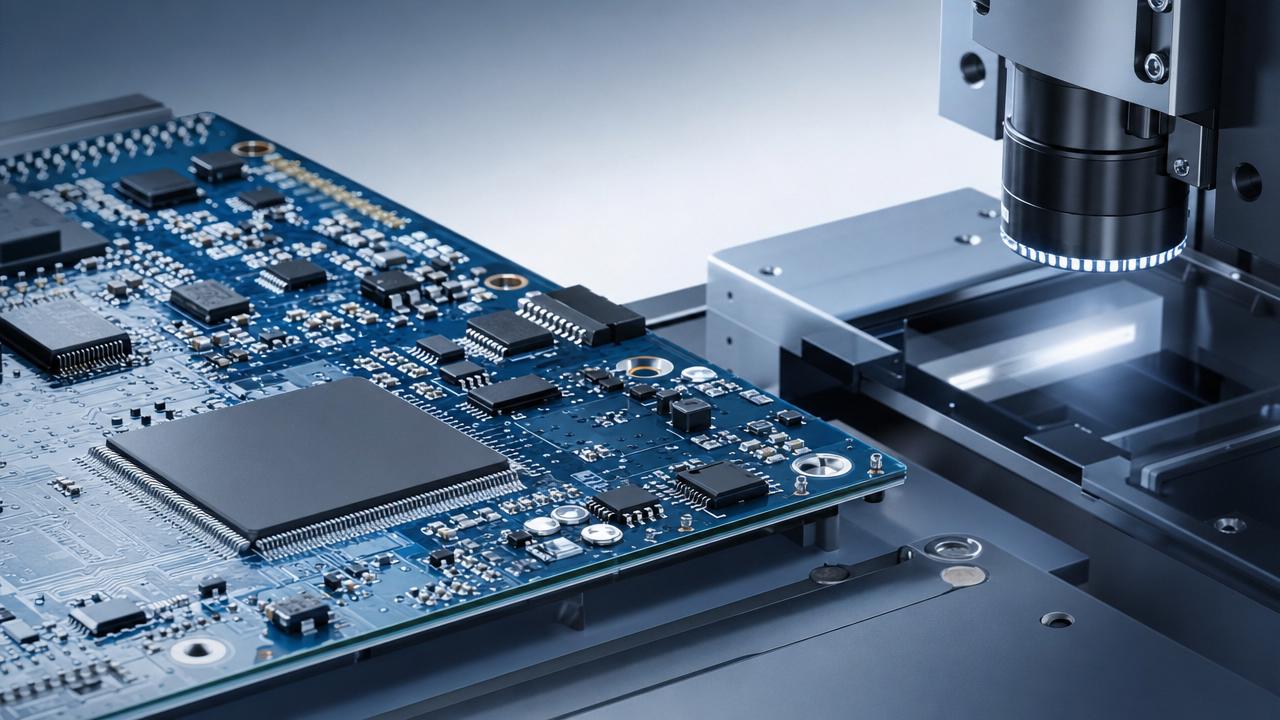
In dense semiconductor assemblies, even microscopic placement errors or hidden solder defects can undermine semiconductor quality, yield stability, and field reliability. Automated Optical Inspection, or AOI, gives engineering teams a fast and repeatable method to verify alignment, detect visible defects, and control process variation before failures move downstream.
As package density rises, optical inspection becomes more than a convenience. It becomes a practical control point for protecting semiconductor quality in fine-pitch, high-speed, and thermally sensitive builds where rework costs are high and escape risk is unacceptable.
Why Dense Assemblies Need a Checklist-Driven AOI Approach
Dense assemblies compress pads, traces, vias, and component bodies into extremely small spaces. In that environment, a single offset, bridge, or insufficient solder joint can alter electrical behavior or trigger latent reliability issues.
A checklist-based AOI approach improves consistency. It helps standardize what must be verified, which defect thresholds matter, and when a defect should trigger reinspection, process correction, or root-cause analysis.
This matters across the broader electronics supply chain. PCB fabrication accuracy, stencil quality, placement repeatability, reflow profile control, and package warpage all influence semiconductor quality long before final test begins.
Core AOI Checklist for Improving Semiconductor Quality
Use the following checklist to evaluate whether AOI is truly supporting semiconductor quality rather than simply generating defect images and pass-fail counts.
- Verify component presence and orientation against approved CAD and BOM data to catch missing, reversed, or misloaded devices before functional defects propagate into later stages.
- Measure placement offset and rotation on fine-pitch packages to confirm that actual assembly performance remains inside process capability limits and does not threaten semiconductor quality.
- Inspect solder joint geometry for bridges, opens, insufficient wetting, excess solder, and lifted leads using tuned libraries matched to package type and board finish.
- Check lead coplanarity and body seating on QFP, QFN, and leadless packages because subtle lift conditions may pass placement review but still weaken long-term reliability.
- Correlate AOI findings with stencil wear, paste volume variation, and reflow drift so defect trends become actionable process data rather than isolated inspection events.
- Review false-call rates regularly and refine thresholds, lighting, and image libraries to ensure the AOI program remains trusted, efficient, and relevant to semiconductor quality goals.
- Classify defects by severity, recurrence, and electrical risk so the response matches the real consequence instead of treating every visual anomaly as equivalent.
- Link AOI records to lot, line, machine, operator, and material traceability data to support closed-loop quality control and faster root-cause verification.
- Validate AOI coverage limits on bottom-terminated components and shadowed regions, then supplement with AXI or targeted inspection where visible access is restricted.
- Trend recurring defect signatures over time to reveal systematic issues in PCB flatness, package warpage, nozzle condition, feeder accuracy, or thermal process stability.
How AOI Supports Different Semiconductor Assembly Scenarios
Fine-Pitch SMT on High-Density PCBs
In fine-pitch SMT, pad spacing is narrow and solder bridging can occur with minimal process drift. AOI helps maintain semiconductor quality by detecting offset, skew, and polarity issues immediately after placement or reflow.
When tied to paste inspection and placement data, AOI also shows whether defects originate from print variation, pick-and-place instability, or localized board design constraints.
QFN, BGA, and Bottom-Terminated Packages
For QFN and BGA devices, semiconductor quality depends on precise positioning and controlled solder formation. AOI remains valuable for body alignment, adjacent component clearance, and visible perimeter conditions.
However, these packages also expose AOI limits. Hidden joints and center pads may require AXI, cross-section analysis, or process validation studies to confirm real solder integrity.
Power Devices and Thermally Stressed Assemblies
Power semiconductors face strong thermal cycling and current loading. AOI improves semiconductor quality by finding solder spread anomalies, lead lift, void-related visual indicators, and assembly inconsistencies around thermal interfaces.
In these builds, visual defects are often early warnings of thermal imbalance. AOI data becomes more useful when reviewed with reflow profiles, substrate thickness, and package coplanarity records.
High-Reliability and IPC-Class 3 Applications
In high-reliability assemblies, defect acceptance criteria are tighter and rework decisions carry higher consequences. AOI strengthens semiconductor quality by enforcing repeatable inspection against documented workmanship standards.
This is especially important where compliance evidence matters. Archived AOI images, defect coding, and traceable review decisions support structured quality documentation and continuous process improvement.
Commonly Overlooked Risks in AOI Programs
Overtrusting Pass Results
A pass result does not guarantee complete semiconductor quality. AOI only evaluates what the camera can see and what the library is trained to classify under existing thresholds.
Ignoring False-Call Fatigue
Excessive false calls slow review, weaken discipline, and increase the chance that a real defect will be dismissed. Poor tuning can reduce confidence in the entire semiconductor quality workflow.
Separating Inspection from Process Control
AOI is most valuable when it drives corrective action. If defect data is not connected to printing, placement, and reflow adjustments, inspection becomes reactive instead of preventive.
Using Generic Libraries for Complex Packages
Dense semiconductor assemblies often require package-specific lighting, thresholds, and algorithms. Generic settings may miss subtle defects or flag harmless cosmetic variation as critical.
Practical Execution Steps
- Start with the highest-risk package families and define visible defect modes that directly affect semiconductor quality, yield loss, or long-term reliability.
- Build inspection libraries from verified golden boards, then validate them against known defect samples before releasing them to production.
- Set measurable review targets for escape rate, false-call rate, and response time so AOI performance can be managed objectively.
- Connect AOI outputs with SPI, placement logs, reflow history, and traceability records to create a closed-loop semiconductor quality system.
- Audit programs regularly whenever board design, package mix, solder paste, surface finish, or thermal profile conditions change.
Conclusion and Next Action
AOI improves semiconductor quality by making dense assembly inspection faster, more consistent, and more data-driven. Its real value appears when defect detection is tied to process control, traceability, and package-specific validation.
The most effective next step is to review AOI coverage package by package, map visible defect risks, and compare inspection results with yield and reliability trends. That approach turns AOI from a checkpoint into a measurable semiconductor quality advantage.
For organizations tracking PCB precision, SMT capability, component reliability, and compliance performance, independent benchmarking and technical analysis can further strengthen inspection decisions across the semiconductor and EMS supply chain.
Recommended News
- AOI TestingHow to verify ISO 9001 certification when sourcing electronicsISO 9001 certification electronics: learn how to validate certificates, audit scope and accreditation, and reduce quality risks when sourcing PCBs, EMS, and components.
- AOI TestingHow to verify a UL certified PCB assembly before production approvalUL certified PCB assembly verification made practical: review PCB markings, materials, components, traceability, and safety controls before production approval.
- AOI TestingHow to qualify an AOI inspection supplier for PCB defect detectionAOI inspection supplier qualification guide for reliable PCB defect detection. Learn how to validate detection accuracy, control false calls, assess traceability, and choose dependable support.
- AOI TestingHow to catch solder joint defects in through hole assembly testingThrough hole assembly testing: discover how visual inspection, electrical tests, X-ray, and process controls catch hidden solder joint defects before they cause costly failures.
- AOI TestingWhich AOI inspection standards apply to PCB assembly quality control?AOI inspection standards for PCB assembly: learn how IPC-A-610, J-STD-001, IPC-1782, and ISO 9001 guide defect criteria, traceability, validation, and reliable quality control.
- AOI TestingHow AOI testing supports electronics quality control in the USAElectronics quality control USA teams use AOI testing to catch visible PCB assembly defects early, improve traceability, and strengthen reliable production outcomes.